

Why Does Baby Look One Way? Spotting Torticollis Early at Home
Have you noticed your little one always seems to be striking the same cute pose, head tilted just so? Or maybe they have a clear favorite side they prefer to look toward, no matter where the action is. As a new parent, you’re a professional baby-gazer, and it’s natural to notice these little quirks. Sometimes, this consistent head tilt or turn preference is more than just a habit—it could be a sign of something called torticollis.
Now, don’t let that medical-sounding word scare you! My goal today, as a pediatric nurse who has supported thousands of families, is to take the worry out of the equation. Torticollis is very common and, in most cases, very treatable, especially when caught early. Think of this as your friendly, reassuring guide to understanding what’s going on, what to look for, and how you can become your baby’s best little helper right from the comfort of your home. Let’s dive in together.
What Exactly is Torticollis? (And Why You Shouldn’t Panic)
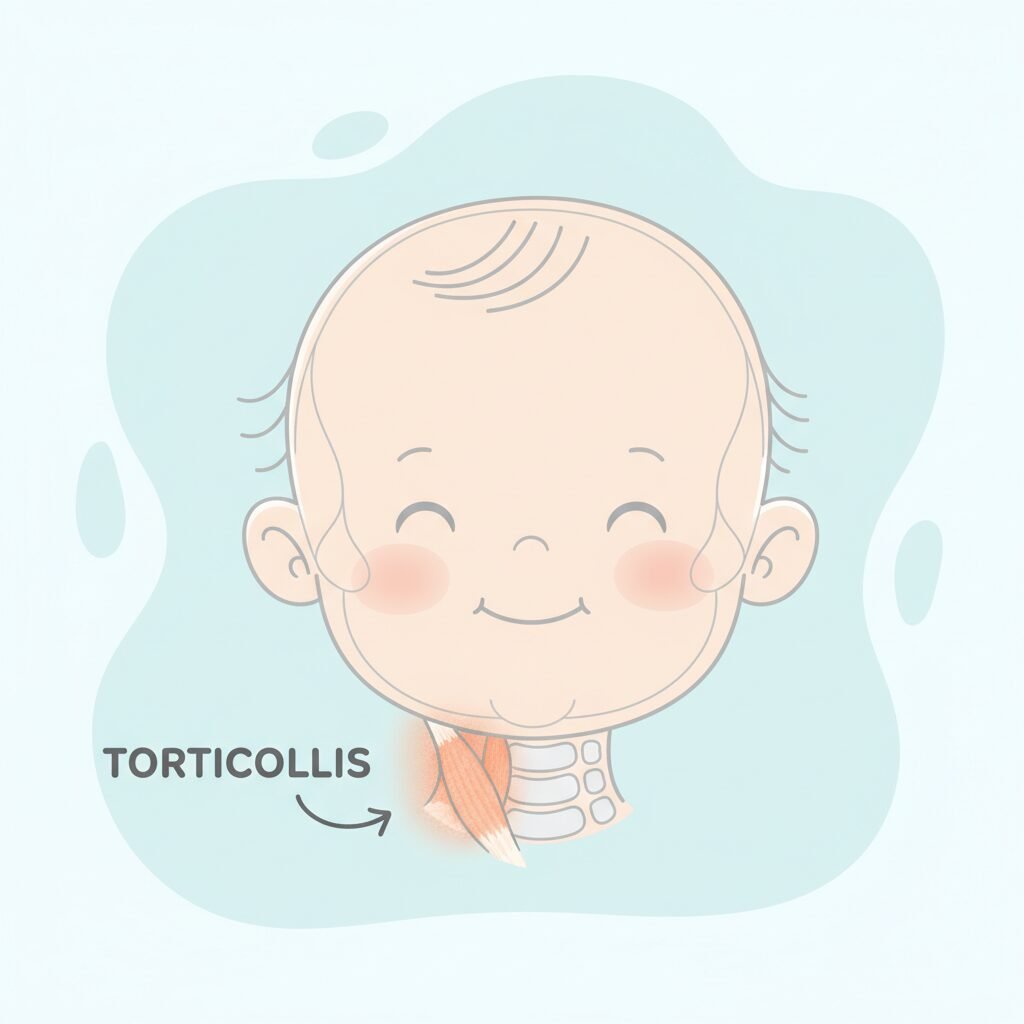
Let’s break it down in the simplest terms. Torticollis, which literally means “twisted neck,” is a condition where a neck muscle becomes tight, shortened, or spasmed. This tightness pulls your baby’s head into a tilted and/or rotated position. The main muscle involved is a long, rope-like one that runs up both sides of the neck, from the collarbone to behind the ears. It’s called the sternocleidomastoid muscle, or SCM for short.
Imagine you slept on your neck wrong and woke up with a painful crick that makes it hard to turn your head. That’s a bit like what your baby is experiencing, except they can’t tell you about it or stretch it out on their own. This tightness causes them to:
- Tilt their head, bringing one ear toward the shoulder on the same side.
- Rotate or turn their chin toward the opposite shoulder.
There are two main types you might hear about:
- Congenital Muscular Torticollis (CMT): This is the most common type, usually noticed within the first couple of months of life. It’s often caused by the baby’s position in the womb or a tricky journey through the birth canal that put a little extra pressure on that SCM muscle.
- Acquired Torticollis: This type can appear later and might be due to other reasons. However, for most new babies, we’re dealing with the congenital kind.
Please hear me when I say this: This is not your fault. Torticollis is not caused by something you did or didn’t do during pregnancy or after birth. It’s a mechanical issue that simply needs a little gentle guidance to resolve.
Your At-Home Detective Kit: Signs of Torticollis to Look For

Spotting torticollis is all about observation. You’re already an expert at watching your baby, so you’re halfway there! Here are the key clues to look for during your daily routines. Think of it as a little detective checklist.
Key Observational Clues:
- A Persistent Head Tilt: Does your baby’s head almost always seem to be tilted to one side? For example, their right ear is often closer to their right shoulder.
- Limited Range of Motion: When you try to attract their attention with a toy or your voice, do they easily turn their head both ways? Or do they turn their whole body to look to one side instead of just their neck?
- A Strong Preference for One Side: Maybe they only like looking to the left while in their car seat, or they strongly prefer to breastfeed on your right breast because it allows them to turn their head to their favorite side.
- Struggles with Feeding: A baby with torticollis might have a harder time latching or feeding on one breast because it forces them to turn their neck in the uncomfortable direction.
- Getting Fussy: Do they seem frustrated or cry when you gently try to turn their head to their non-preferred side?
- A Small Lump in the Neck: In some babies, you might feel a small, soft, pea-sized lump in the tight SCM muscle. This is called a fibromatosis colli. It’s not painful and is simply a small mass of fibrous tissue that almost always goes away on its own over a few months.
- Developing a Flat Spot: Because the baby’s head is always resting in the same position, you might start to notice a flat spot on the back or side of their head. This is called plagiocephaly, and we’ll talk more about it in a bit!
Take a few days to observe your baby during different activities—playtime, feeding, sleeping, and in their car seat. If you’re ticking a few boxes on this list, it’s a good sign to bring it up with your pediatrician.
Playtime with a Purpose: Simple Activities to Help at Home

The great news is that the primary treatment for torticollis is stretching and strengthening, and you can incorporate these things right into your daily playtime! The goal is to encourage your baby to actively turn their head in the non-preferred direction and stretch that tight SCM muscle. Make it a game, keep it positive, and never force anything.
1. Tummy Time is Your Best Friend
Tummy time is crucial! It encourages your baby to lift their head against gravity, which strengthens the neck, back, and shoulder muscles on both sides. To make it more effective for torticollis:
- Get down on the floor with them, face-to-face.
- Position yourself and exciting toys (like a black-and-white contrast card or a gentle rattle) on the side they don’t like to turn to. This will motivate them to turn their head and work that tight muscle.
- Aim for short, frequent sessions throughout the day, building up to a total of at least 30-60 minutes by the time they are 3 months old.
2. Strategic Positioning
Think about how you can set up their environment to do the work for you. When you lay them down in their crib, position them so that the most interesting thing in the room (the door, a window, you!) is on their non-preferred side. This naturally encourages them to look that way.
3. The “Football Hold” Carry
This is a great way to carry your baby to gently stretch the neck. If their head tilts to the right, hold them tummy-down along your right forearm, with your hand supporting their chest and between their legs. Their head will be nestled in the crook of your elbow. This position lets gravity help gently stretch the tight muscle while they work to lift their head.
4. Feeding Finesse
Whether you are breast or bottle-feeding, try to position your baby so they have to turn their head toward their less-favored side to eat. For example, if they prefer looking left (and tilt right), try holding them in a way that encourages them to turn their head to the right to reach the nipple or bottle.
Important Safety Note: While gentle stretches are a cornerstone of treatment, it’s always best to have your pediatrician or a pediatric physical therapist show you exactly how to do them first. Never stretch to the point of pain or strong resistance. Your baby’s safety and comfort are the top priorities.
The Torticollis & Flat Head Syndrome (Plagiocephaly) Connection
It’s very common to see torticollis and positional plagiocephaly, or “flat head syndrome,” go hand-in-hand. It makes perfect sense when you think about it. Your newborn’s skull is very soft and made of bony plates that haven’t fused yet. This is what allows their head to pass through the birth canal and for their brain to grow rapidly.
Think of their little head like soft dough. If a baby with torticollis is always resting their head in the exact same spot—tilted and turned to their preferred side—that constant pressure can cause the skull to flatten in that area. This is why the “Back to Sleep” campaign, while absolutely critical for preventing SIDS, has contributed to a rise in plagiocephaly. Babies are spending more time on their backs, and if they have a turning preference, one spot gets all the pressure.
Tips to Prevent and Improve Flatness:
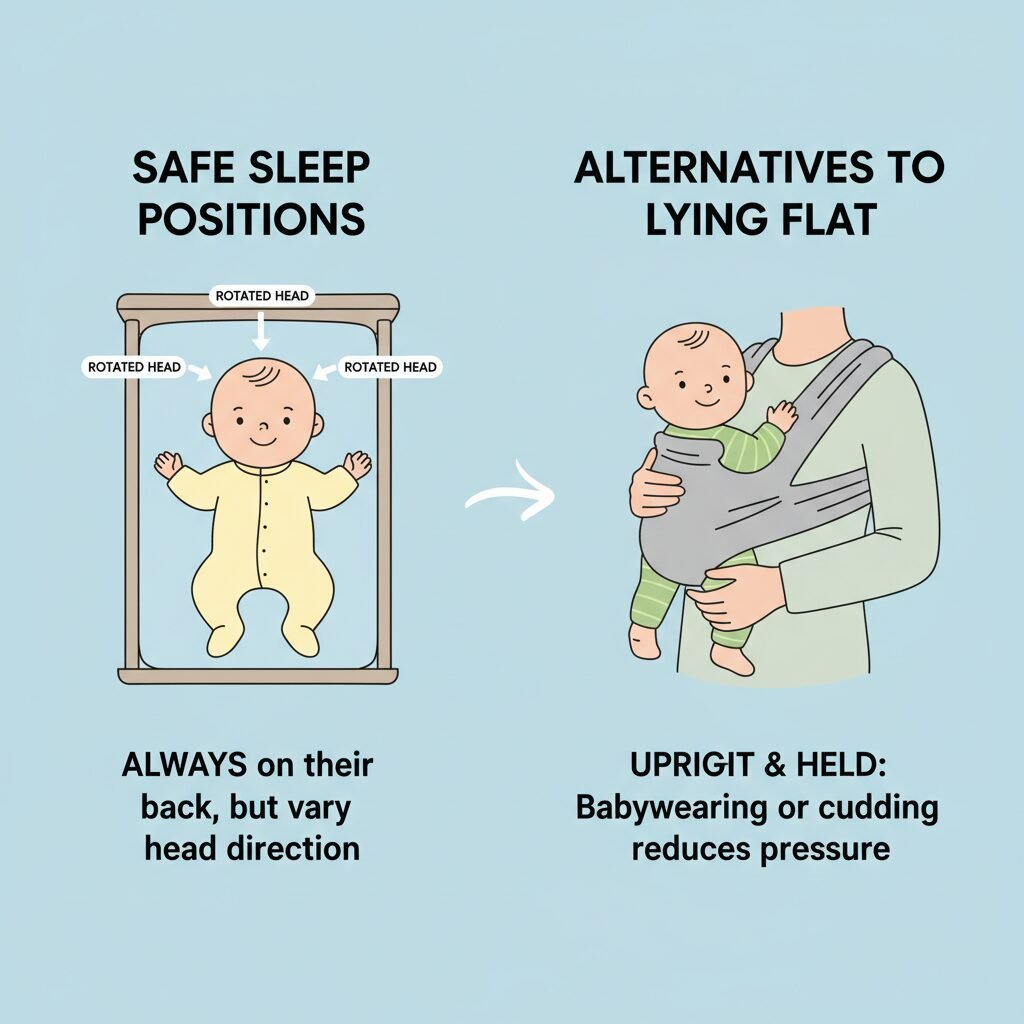
- Vary Their Head Position in the Crib: Alternate which end of the crib you place their head at each night. Since babies often like to look out into the room, this will encourage them to turn their head in different directions.
- More Tummy Time: We can’t say it enough! The best way to prevent a flat spot is to keep them off the back of their head when they are awake and supervised.
- Limit Time in “Containers”: Reduce the amount of time your baby spends in car seats, swings, and bouncers when they’re not traveling. These devices can put continuous pressure on the back of the head.
- Carry Them More: Using a baby carrier or sling keeps your baby upright and completely off the back of their head.
For most babies, addressing the torticollis and using these repositioning techniques is enough to help the head round out on its own as they grow and gain more head control.
When to Call in the Pros: Your Pediatrician and Physical Therapy

While home exercises are fantastic, sometimes you need to call in the professionals for a little extra support, and that is perfectly okay! Your pediatrician is your partner in this journey.
You should schedule an appointment if:
- You’ve been trying these playful exercises for a few weeks and aren’t seeing any improvement in their range of motion.
- The head tilt seems to be getting more severe.
- Your baby seems to be in pain or cries every time you try to encourage a head turn.
- You are worried the flat spot on their head is becoming more noticeable.
- You simply feel unsure and want professional guidance and peace of mind.
Trust your instincts! You know your baby better than anyone.
What to Expect from Professional Help
First, your pediatrician will do a physical exam to confirm the diagnosis and rule out any other issues. More often than not, they will give you a referral to a pediatric physical therapist (PT).
Please don’t be nervous about this! A pediatric PT is like a fun personal trainer for your baby. They are experts in child development and use play-based activities to achieve therapeutic goals. A session might look like a lot of fun and games, but every activity is strategically designed to stretch that tight SCM muscle and strengthen the weaker muscles on the other side. They will also give you a personalized home exercise program with stretches you can do confidently and safely.
In some cases of more significant plagiocephaly, a special helmet (called a cranial orthosis) might be recommended to gently guide the skull’s growth into a rounder shape. This is a non-invasive and very effective tool. Your team will guide you if this is a necessary step.
Conclusion
Seeing your baby favor one side can be worrying, but I hope you now feel empowered and reassured. Torticollis is a common, manageable condition that you have the power to influence every single day through loving, purposeful play. Remember the key takeaways: observe your baby’s habits, make tummy time a fun and frequent activity, and use your environment to encourage them to explore the world on both sides.
You are your baby’s greatest advocate. By noticing these little details and seeking information, you are already doing an incredible job. Be patient and consistent with the exercises, celebrate the small improvements, and never hesitate to reach out to your pediatrician for support. You’ve got this, and you’re not alone.