Umbilical Granuloma: What To Do If The Belly Button Won’t Heal
Welcome to parenthood! You’re probably discovering that you now pay incredibly close attention to things you never thought about before—like the healing of a tiny belly button. For the first week or two, you diligently cared for the umbilical cord stump, waiting for it to dry up and fall off, revealing your baby’s cute little ‘innie’ or ‘outie’. But what happens when, instead of a clean, dry navel, you find a small, pink, and sometimes weepy bump? Your heart might skip a beat. Is this normal? Is it an infection? Is my baby in pain?
Take a deep, calming breath. What you’re likely seeing is something called an umbilical granuloma. As a pediatric nurse who has seen countless newborn belly buttons, I can tell you this is a very common and usually very minor hiccup in the healing process. It’s not a sign that you’ve done anything wrong, and most importantly, it’s highly treatable.
In this guide, we’ll walk through exactly what an umbilical granuloma is, what it looks like, how you can manage it with simple home care, and what to expect if you need to see your pediatrician. Let’s get that little tummy on the path to perfect healing, together.
What Exactly Is an Umbilical Granuloma (And What Does It Look Like)?
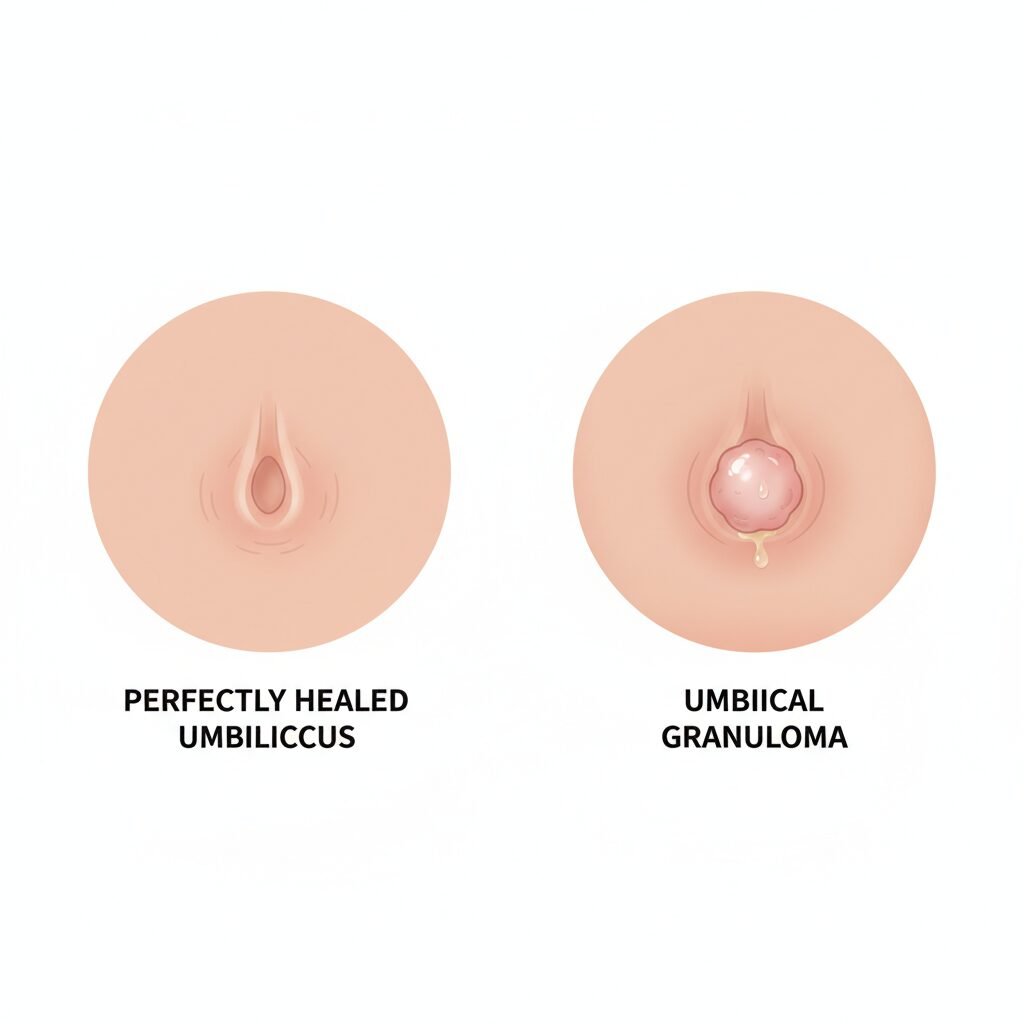
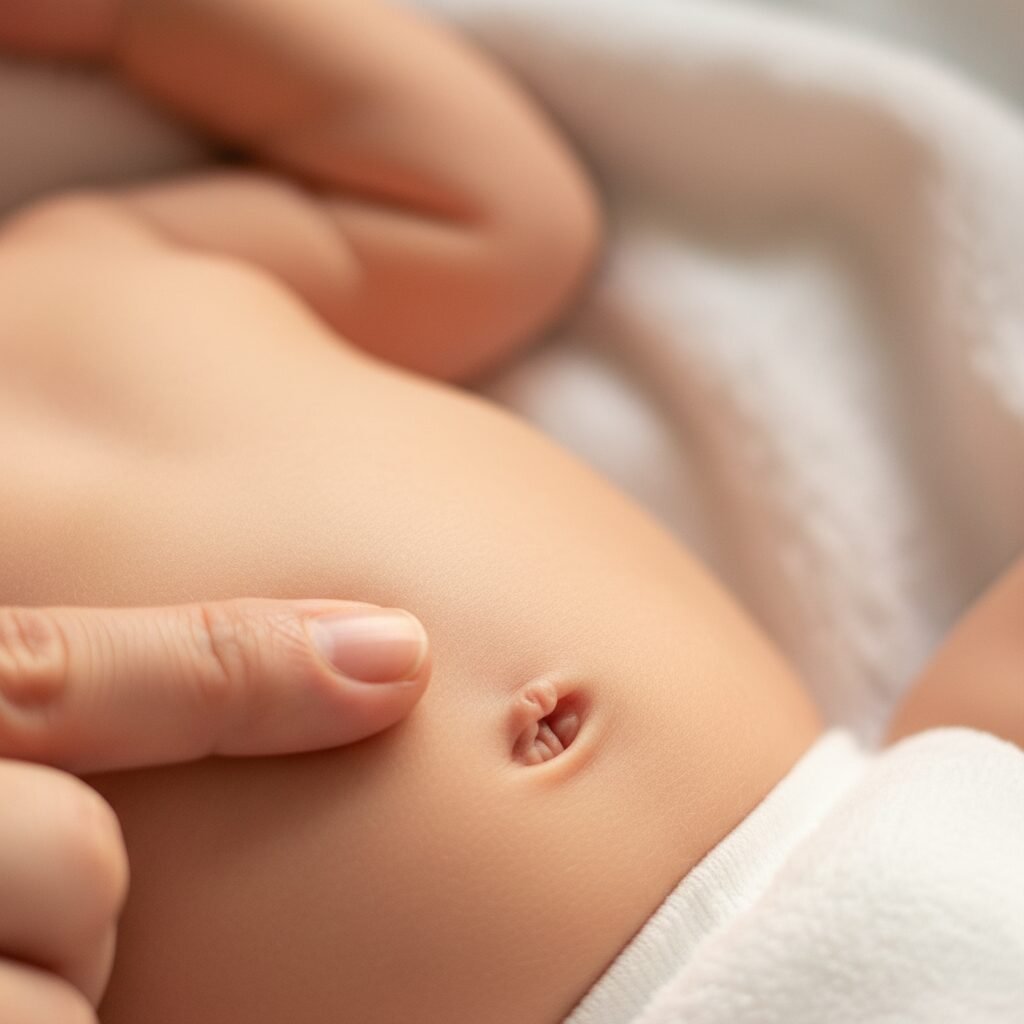
Let’s start by demystifying this little bump. After the umbilical cord stump falls off, the area underneath is essentially a small wound that needs to heal. Sometimes, the body’s healing process goes into a bit of overdrive, creating a small overgrowth of scar tissue. That’s all an umbilical granuloma is—a little ball of extra healing tissue.
Think of it like a scab that forms over a scrape, but in this case, the tissue is soft and moist instead of hard and dry. It’s a sign of healing, just a slightly overenthusiastic version of it!
Key Characteristics of an Umbilical Granuloma:
- Appearance: It typically looks like a small, soft, round lump of tissue right in the center of the navel.
- Color: The color is usually a vibrant pink or reddish, similar to the color of raw ground beef.
- Texture: It’s moist and can sometimes have a slight, clear or yellowish sticky discharge. This is normal weeping from the tissue, not pus.
- Size: Most granulomas are quite small, ranging from just a few millimeters to about the size of a pencil eraser.
- Painless: This is the most important part! A granuloma is made of granulation tissue, which does not have any nerve endings. It doesn’t hurt your baby at all. They won’t feel it if it’s touched or cleaned.
A key takeaway is that a baby with a simple umbilical granuloma is a happy, healthy baby. They feed well, sleep (as much as a newborn does!), and don’t have a fever or seem irritable because of their belly button.
The presence of a slight, non-smelly discharge can be alarming, but it’s often just serous fluid, a normal part of the healing process for this type of tissue. The main difference between this and an infection is the quality of the discharge and the overall health of your baby, which we’ll cover in detail later.
First Steps: Gentle Home Care and Observation
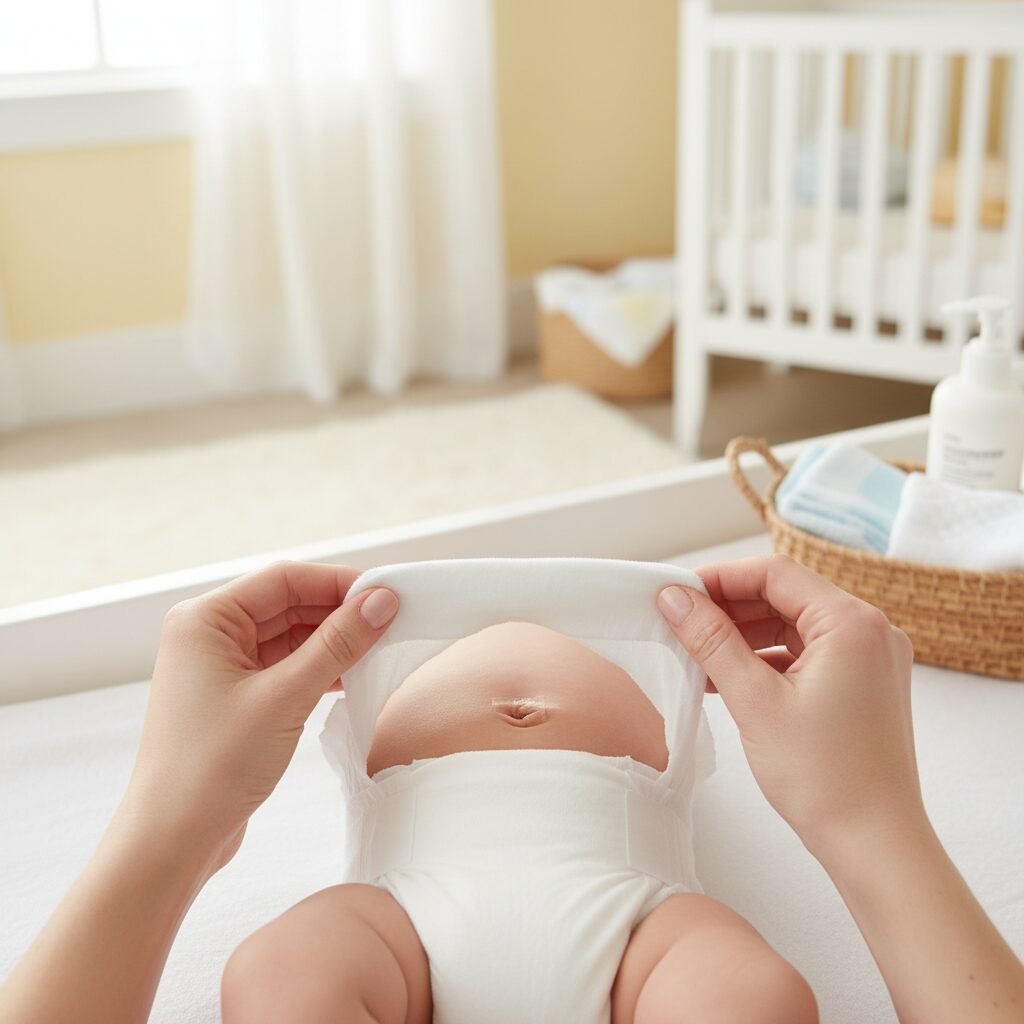
When you first spot what looks like a granuloma, you don’t necessarily need to rush to the doctor’s office. Often, simple and diligent home care can help it resolve on its own. The golden rule for all umbilical cord and navel care is: Keep it clean and dry.
Your Home Care Toolkit:
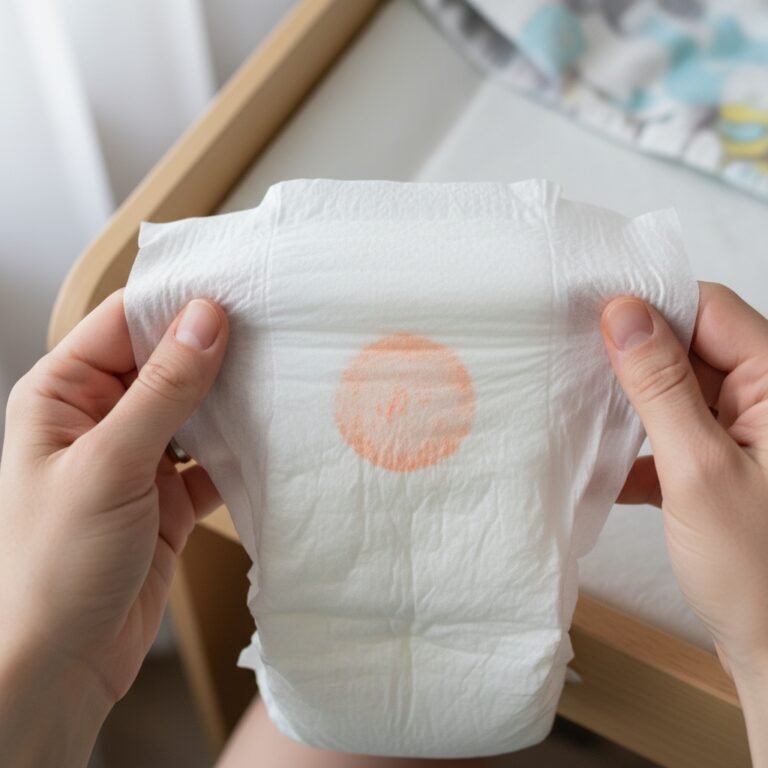
- Air Exposure is Key: The most powerful tool for healing is fresh air. Whenever possible, let the area air out. You can do this by folding the top of your baby’s diaper down, creating a little cuff that sits well below the navel. This prevents the diaper from rubbing against the area and trapping moisture or urine. Many newborn diapers even come with a little U-shaped cutout for this exact purpose!
- Cleaning Routine: You don’t need harsh soaps or alcohol (which is no longer recommended for routine cord care anyway). Simply use a cotton ball or soft cloth dipped in warm water to gently clean around the base of the granuloma once or twice a day. The goal is to remove any crusty discharge.
- Thorough Drying: After cleaning, it’s crucial to dry the area completely. Gently pat it dry with a clean, soft cloth or let it air-dry for a few minutes before putting on a clean diaper (folded down, of course!). Moisture is what allows the granuloma to persist.
- Bathing: It’s best to stick with sponge baths until the belly button is fully healed. Submerging the area in a tub bath can introduce too much moisture and bacteria, slowing down the healing process.
For many small granulomas, a week or two of this dedicated ‘clean and dry’ routine is enough to encourage them to shrink and disappear. Your job is to be a patient observer. If the granuloma stays the same size, gets bigger, or you’re just not seeing improvement, that’s your cue to check in with your pediatrician.
When to See the Doctor and Common Medical Treatments
So, you’ve been diligently keeping the area clean and dry, but that little pink bump is stubbornly sticking around. It’s time to call your pediatrician. This is a super common reason for a newborn visit, and your doctor will have a simple, effective solution.
The most common, go-to treatment for an umbilical granuloma is an in-office application of silver nitrate.
What is Silver Nitrate?
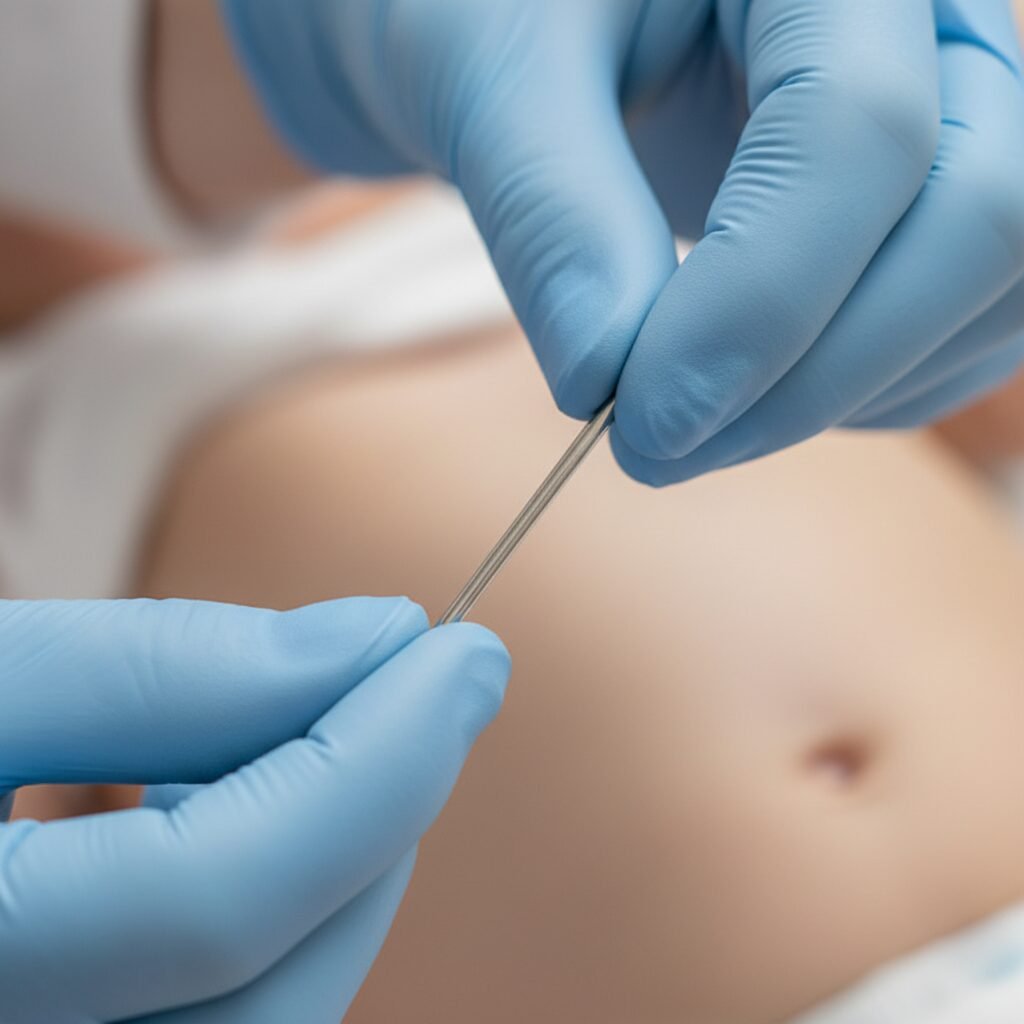
It sounds a bit intimidating, but it’s a very safe and standard procedure. Silver nitrate is a chemical compound that is used to cauterize tissue—which is a fancy way of saying it chemically burns and dries it out. It comes on a thin wooden stick that looks like a giant matchstick.
- The Process: Your pediatrician will simply touch the tip of the silver nitrate stick to the surface of the granuloma for a moment.
- Is it Painful? Absolutely not. Remember how we said the granuloma has no nerve endings? Your baby won’t feel a thing. They might fuss a little from being undressed or held still, but the procedure itself is painless.
- What to Expect After: The silver nitrate will cause the granuloma to turn a grayish-black color and begin to shrink. You might notice some dark, watery discharge on your baby’s clothes or diaper for a day or two—this is normal. You can protect the surrounding skin with a little petroleum jelly if your doctor recommends it.
- Follow-Up: Often, one treatment is all it takes! Within a few days, the granuloma will shrivel up and fall off. Sometimes, a larger or more persistent granuloma might need a second application a week or so later.
Other, Less Common Treatments
In rare cases, if silver nitrate isn’t effective, your doctor might consider other options. These are not typical first-line treatments.
- Topical Steroid Cream: Sometimes a prescription cream can be used to help reduce the inflammation and tissue overgrowth.
- Ligation: For a larger granuloma with a distinct stalk, a doctor might tie a small piece of surgical thread around the base. This cuts off the blood supply, causing it to dry up and fall off, similar to the original umbilical cord stump.
The bottom line is that your pediatrician has simple, painless tools to resolve this issue quickly and get your baby’s belly button looking perfect.
Red Flags: Is It a Granuloma or Something More Serious?
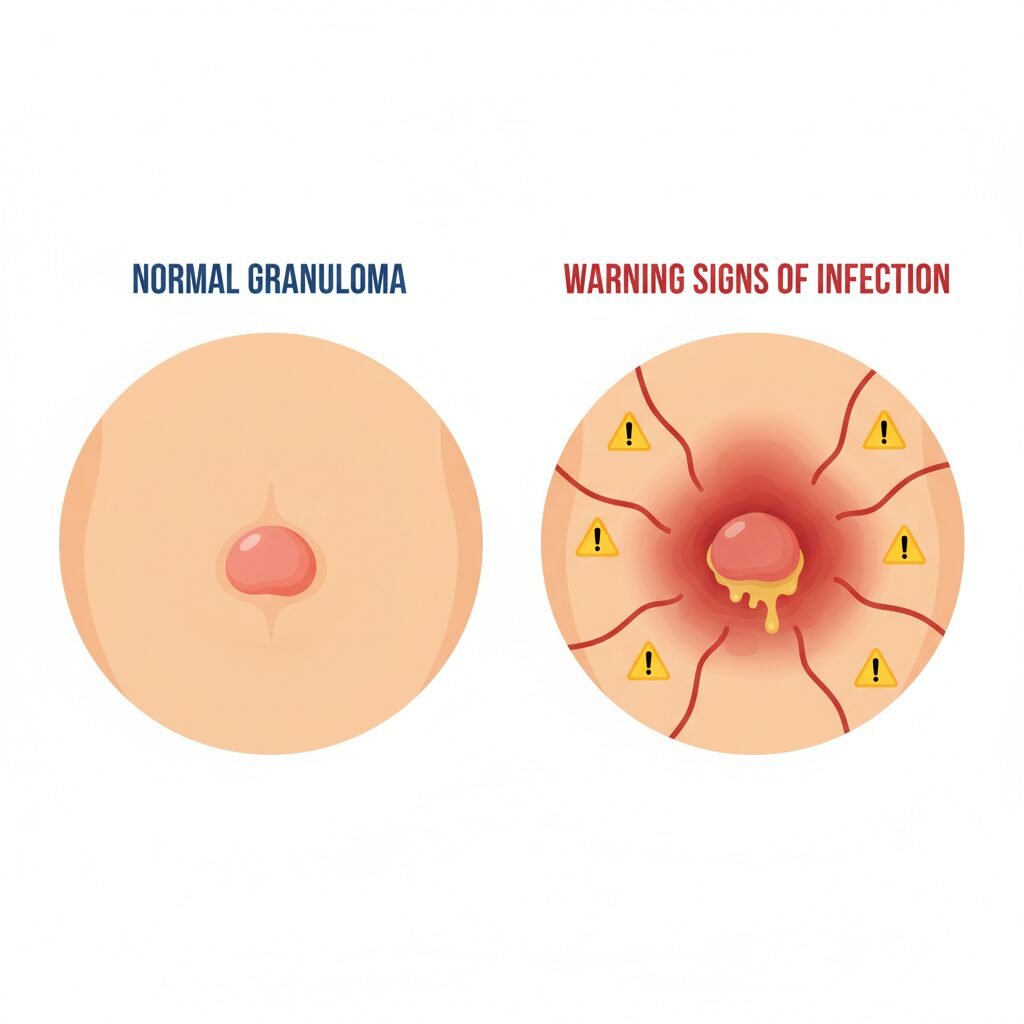
As a new parent, it’s natural to worry. Your brain is wired to ask, “What if it’s something worse?” While umbilical granulomas are far more common, it’s important to know the signs of a true umbilical infection, known as omphalitis. Omphalitis is rare but serious, so knowing the difference is key to your peace of mind and your baby’s safety.
Let’s break it down with a simple comparison.
| Symptom | Umbilical Granuloma (Common, Not Urgent) | Umbilical Infection / Omphalitis (Rare, Urgent) |
|---|---|---|
| Appearance | Small, pink/red, moist, fleshy lump confined to the navel. | Redness, swelling, and warmth on the skin around the navel. The redness spreads outwards onto the belly. |
| Discharge | Minimal, clear or slightly yellow, sticky fluid. | Pus-like, cloudy, thick yellow or green discharge. |
| Smell | No odor. | A distinct foul or rotten smell. |
| Pain/Tenderness | Painless. Baby is not bothered when the area is touched. | The area is very tender. Your baby will likely cry or guard the area when you touch it. |
| Baby’s Overall Health | Baby is happy, active, eating well, and has no fever. | Baby may have a fever, be very sleepy or lethargic, be irritable, or have a poor appetite. |
SAFETY WARNING: When to Call 911 or Go to the ER
Omphalitis is a medical emergency. If you notice ANY of the signs in the ‘Infection’ column—especially spreading redness on the belly, foul-smelling pus, or if your baby has a fever or is acting sick—do not wait. Contact your pediatrician immediately or go to the nearest emergency room. Early treatment with antibiotics is critical.
Trust your parental instincts. A granuloma is a localized, non-painful issue in an otherwise healthy-acting baby. An infection involves the surrounding skin and makes your baby feel sick. If you are ever in doubt, a quick call to your doctor’s office is always the right choice.
Conclusion
Navigating the little bumps of newborn care—sometimes literally—is part of the journey. An umbilical granuloma is one of the most common and least worrisome issues you might encounter. It’s a simple sign of an overachieving healing process, not a reflection of your care.
Remember the key takeaways: keep the area clean, expose it to air by folding down the diaper, and watch for any changes. Most of the time, this simple routine is all that’s needed. And if it’s not, your pediatrician has a quick and painless fix with silver nitrate.
Most importantly, you’ve learned how to spot the difference between this minor issue and a true infection. You’re equipped with the knowledge to act confidently. You’re doing an amazing job paying attention to every little detail of your new baby. Keep trusting your instincts, asking questions, and reaching out for help when you need it. That’s not a sign of worry; it’s a sign of a wonderful, attentive parent.