

Toddler Won’t Sleep Since Baby Arrived? 5 Gentle Ways to Fix Bedtime Chaos
You probably pictured this moment a thousand times: your older child gently patting the new baby, sweet sibling whispers, and a home filled with a new kind of love. And you have those moments! But what you probably didn’t picture was a nightly showdown with your toddler, who suddenly treats their bed like it’s made of hot lava. If you’re reading this, bleary-eyed, after another hour of bedtime battles, please hear this first: You are not alone, and you are doing a great job.
A toddler’s sleep suddenly going off the rails right after a new baby arrives is one of the most common challenges families face. From their perspective, their entire world has been turned upside down. The person who was their everything now has to divide their attention, their routine is different, and there’s a noisy little stranger getting a lot of cuddles. This isn’t malicious behavior; it’s a cry for connection and reassurance. Their protest at bedtime is often their loudest way of saying, ‘Hey! Remember me? Do you still love me?’
The good news is that you don’t have to resort to harsh methods or ‘cry-it-out’ to reclaim your evenings. We’re going to walk through five gentle, effective, and connection-based strategies to help your toddler feel secure, loved, and ready for sleep again. Let’s turn this bedtime chaos into bedtime calm.
Strategy 1: Fill Their ‘Attention Cup’ During the Day

Imagine your toddler has an invisible ‘attention cup.’ Throughout the day, it gets filled by interactions with you. When the cup is full of positive attention, they feel secure and connected. But when a new baby demands so much of your time, their cup can run low. By bedtime, they are desperate for a refill, and they’ll do anything to get it—even if it means endless curtain calls and requests for water.
The solution is to be proactive about filling that cup during daylight hours. This doesn’t mean you need to entertain them for hours on end. It’s about quality, not quantity.
How to Fill Their Cup:
- Schedule ‘Special Time’: Carve out just 10-15 minutes a day that is 100% dedicated to your toddler. Put your phone away, let the baby be with your partner or nap in a safe space, and set a timer. Let your toddler lead the play. Whether it’s building towers, having a tea party, or reading a book, this focused attention is like a super-shot of love directly into their cup.
- Make Them Your ‘Special Helper’: Toddlers love to have a purpose. Instead of seeing the baby as competition, help them see the baby as their baby, too. Give them important jobs like ‘Chief Diaper Fetcher,’ ‘Official Burp Cloth Holder,’ or ‘Head of Lullaby Singing.’ This praise and inclusion helps them feel valued and part of the new team.
- Narrate Your Love: While you’re feeding the baby, talk to your toddler. Say things like, ‘I’m so glad you’re sitting here with me while I feed your little sister. You’re such a great big brother.’ Or, ‘Remember when you were a little baby and I used to rock you just like this? You were so snuggly.’ This connects them to the experience instead of leaving them feeling on the outside looking in.
Remember, a toddler whose need for connection is met during the day is far less likely to demand it by stalling at night. You’re not just playing; you’re investing in a peaceful bedtime later.
Strategy 2: Double-Down on a Predictable Bedtime Routine
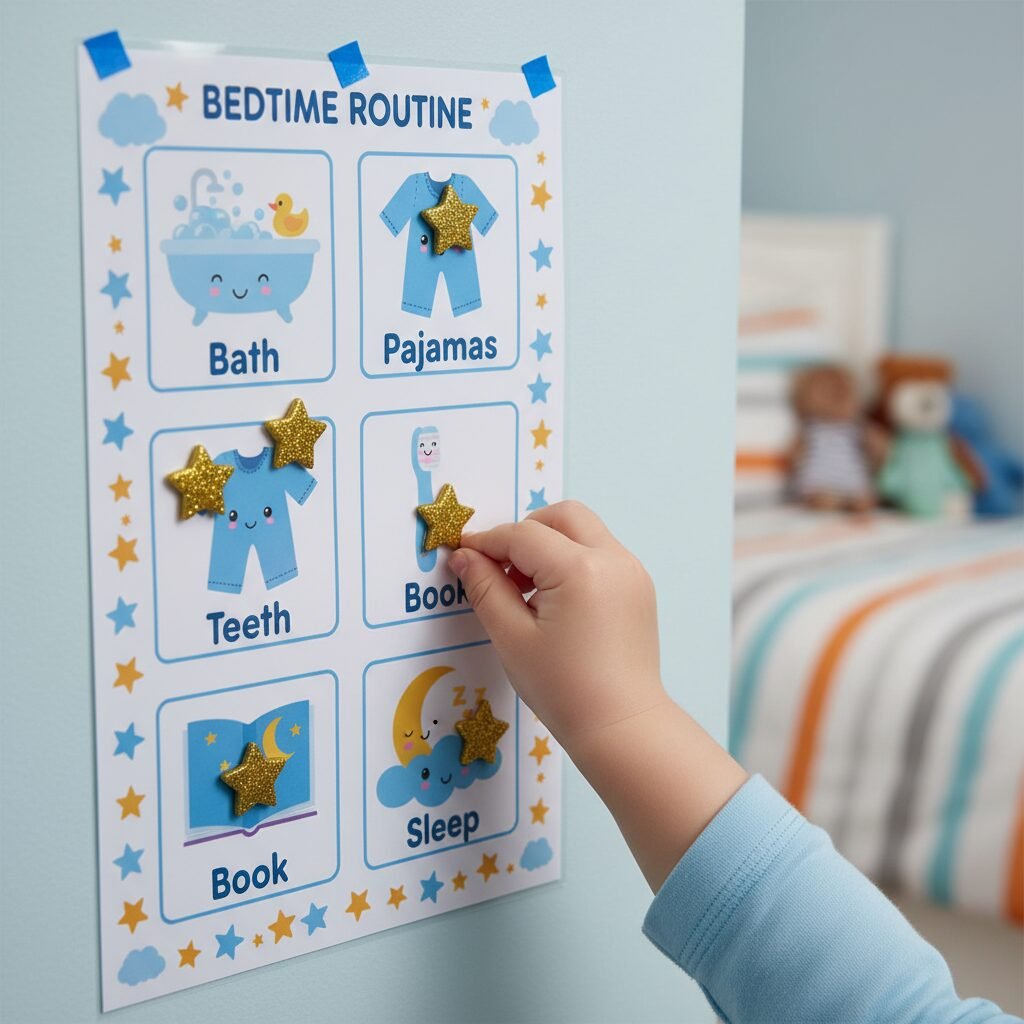
When a toddler’s world feels chaotic and unpredictable, a solid routine is their anchor. It provides a sense of safety and security, signaling to their brain and body that it’s time to wind down. The arrival of a baby has likely thrown your old schedule into a blender, so now is the time to re-establish a clear, consistent, and comforting bedtime routine.
The key here is predictability. Your toddler should know exactly what’s coming next. This eliminates power struggles because it’s not you versus them; it’s just ‘what we do next’ in the routine.
Building a Rock-Solid Routine:
A great routine doesn’t have to be long or complicated. Aim for 20-30 minutes of calm, connecting activities that happen in the same order every single night.
| Step | Activity | Why It Works |
|---|---|---|
| 1. Warm Bath | A calming bath with lavender soap (optional). | The slight drop in body temperature after a warm bath naturally promotes sleepiness. |
| 2. PJs & Potty | Get into comfy pajamas and use the potty/put on a diaper. | Simple, practical steps that are clear markers of the transition to nighttime. |
| 3. Brush Teeth | A quick but thorough tooth brushing session. | An essential health step that also serves as a routine anchor. |
| 4. Reading Time | Read 2-3 favorite, calming books in their bed or a comfy chair. | A powerful connection point. It’s quiet, cuddly, and signals the end of the day. |
| 5. Final Connection | A specific lullaby, a back rub, or saying your ‘goodnights’ to stuffed animals. | This is the final, loving step that ends the routine on a secure and happy note. |
Consider creating a visual routine chart with pictures for each step. This gives your toddler a sense of control as they can see (and even point to) what’s coming next. Let them be the one to move a magnet or flip a card after each step is completed.
A crucial tip: Consistency is more important than the clock. If the baby has a feeding marathon and bedtime gets pushed back by 30 minutes, still go through every step of the routine in order. The sequence is what provides the security, not the specific time on the clock.
Strategy 3: Empower Them with a ‘Big Kid’ Role and Space

The language we use matters immensely to a toddler. If the narrative around the new baby is all about what the toddler is losing (‘You can’t sleep in the crib anymore,’ ‘You have to be quiet for the baby’), they will naturally feel resentful. Instead, frame every change as a promotion to the exciting role of ‘Big Kid’!
This is all about giving them a sense of ownership and control in a situation where they have very little. When they feel powerful and proud of their new status, they are less likely to fight for control at bedtime.
Ways to Promote Your Toddler:
- Celebrate Their New Bed: If they’re moving to a toddler bed, make it a huge, exciting event. Let them help pick out new ‘big kid’ bedding. Talk about how cozy and special their new bed is and how only big kids get to have a bed like this. If possible, make this transition at least a month or two before the baby arrives to avoid direct association.
- Give Them Bedtime ‘Jobs’: Toddlers thrive on responsibility. Create a few simple ‘jobs’ that are theirs alone. This could be turning on their special nightlight, choosing which two stuffed animals get to sleep with them, pulling up their own blanket, or giving the ‘final kiss goodnight’ to you.
- Designate a ‘No Baby Zone’: If space allows, make their room or a corner of their room a special ‘big kid’ space where baby toys aren’t allowed. This gives them a sense of territory and a place to retreat when they need a break from all the ‘baby’ stuff.
By empowering them, you shift their mindset from one of loss to one of gain. They aren’t just being displaced; they are leveling up in the family hierarchy, and that’s something to be proud of.
Strategy 4: Validate Their Feelings, But Hold Loving Boundaries

This is perhaps the most challenging, yet most important, strategy. Your toddler’s feelings of jealousy, sadness, and frustration are 100% valid. A new baby is hard for them. Our job as parents isn’t to stop them from having those feelings, but to teach them how to handle them. At bedtime, this means acknowledging their sadness while firmly holding the boundary that it’s time to sleep.
When your toddler cries, ‘I want you to stay!’, they are expressing a real need for connection. Ignoring it or getting frustrated will only escalate the situation. Instead, try a technique that combines empathy and firmness.
The ‘Acknowledge and Reassure’ Method:
- Get on their level: Sit or kneel so you are at eye level. Make gentle eye contact and use a soft, calm voice.
- Acknowledge the feeling: Put their feelings into words. For example: ‘I can see you’re sad that I have to leave. It’s hard to say goodnight. You wish we could cuddle all night long.’
- State the boundary clearly and lovingly: ‘I love you, and it’s time for sleep now. Big kids and grown-ups all need to sleep to have energy for playing tomorrow.’
- Offer a brief moment of connection: ‘I will give you one more hug and a kiss, and then I am going to walk to the door. I’ll be just in the other room.’
- Follow through consistently: This is the hard part. After that final hug, you must leave. If they get out of bed, you begin the ‘silent return.’
The silent return is exactly what it sounds like. You take their hand, and without making eye contact or speaking, you calmly and gently lead them back to their bed. You tuck them in, maybe pat their back once, and leave again. You may have to do this two times or twenty times. The key is to be as boring and unemotional as a robot. They will soon learn that getting out of bed doesn’t result in more attention, and it’s much more rewarding to just stay put.
Please remember: Setting a boundary is an act of love. You are providing the security your child craves by showing them that the rules are predictable and that you are a confident, calm leader, even when they are falling apart. You are their safe harbor in a storm of big feelings.
Strategy 5: Tweak the Schedule—Are They Overtired or Undertired?

Sometimes, the problem isn’t just emotional; it’s logistical. The chaos of life with a newborn can easily wreck a toddler’s delicate sleep schedule, leading to a child who is either too tired or not tired enough at bedtime.
An overtired toddler is running on adrenaline and stress hormones like cortisol. They may seem hyper, wired, and completely out of control. They fight sleep because their body is in a state of stress. On the other hand, an undertired toddler simply doesn’t have enough ‘sleep pressure’ built up to fall asleep easily. They will happily play, sing, and stall in their crib for an hour or more.
Take a step back and objectively look at your toddler’s whole day. Are they still napping? For how long? What time are they waking up and going to bed?
| The Problem | Signs to Look For | Possible Solutions |
|---|---|---|
| Overtired | Hyperactivity at bedtime, frequent meltdowns in the late afternoon, clumsy, emotional, falls asleep fast but wakes up overnight. | Move bedtime 15-20 minutes earlier. Ensure a very calm, screen-free wind-down period for at least 30 minutes before the routine starts. Protect the nap—don’t let it get too late, but don’t skip it. |
| Undertired | Takes longer than 30 minutes to fall asleep, plays happily in bed, doesn’t seem sleepy, stalls with cheerful energy, short naps or refusing naps. | Move bedtime 15-20 minutes later. Make sure they get plenty of physical activity and sunlight in the afternoon. If they still nap, consider capping it (e.g., wake them after 90 minutes) or ensuring it ends by 3 PM. |
It can feel like a bit of a science experiment, so only make one small change at a time and give it 3-4 days to see if it makes a difference before trying something else. Tracking their sleep for a few days in a notebook can reveal patterns you might not have noticed in the fog of exhaustion.
Conclusion
Navigating the transition from one child to two is a marathon, not a sprint. The bedtime battles you’re facing right now are a temporary, and very normal, part of that journey. By focusing on connection over correction, you can guide your toddler through this huge life change and restore peace to your home.
Let’s quickly recap the gentle strategies:
- Fill their attention cup during the day to reduce their neediness at night.
- Create a predictable routine to serve as their anchor in the chaos.
- Empower them with a ‘big kid’ role to foster pride instead of resentment.
- Validate their big feelings while holding firm, loving boundaries about sleep.
- Analyze their schedule to make sure biology is on your side.
Most importantly, be kind to yourself. You are juggling the intense needs of a newborn and the emotional world of a toddler, all while recovering yourself. Some nights will be better than others. Progress isn’t always linear. Keep showing up with love and consistency, and trust that this phase will pass. You’ve got this.