Tiny Space Hacks: How To Organize A Changing Table That Actually Stays Tidy
Hello, new parent! Take a deep breath. I know that your world has just been turned upside down in the most wonderful, chaotic way. As a pediatric nurse who has visited countless homes, I’ve seen it all, and let me tell you, the mountain of tiny things that comes with a tiny human can feel like a giant challenge, especially if you’re working with a small nursery or a corner of your bedroom. One of the biggest clutter magnets? The changing table.
This little station becomes the command center for so much of your day. It’s where you’ll handle countless diaper changes, get your baby dressed, and share little moments. But when it’s messy, it can feel like one more source of stress. So, let’s change that. I’m going to walk you through some simple, sustainable hacks to transform your changing station from a pile of chaos into a pocket of calm. These aren’t about perfection; they’re about function, safety, and making your life just a little bit easier. You’ve got this!
Choosing Your ‘Command Central’: The Right Changing Station for Your Space
Before we can organize, we need to make sure your foundation is right for your home. Not everyone has room for a full-sized, dedicated changing table, and that is completely okay! The ‘best’ changing station is the one that is safe, comfortable for you, and fits your space. Let’s look at the most popular options for tight quarters.
Top Contenders for Small Spaces
Thinking through how you’ll use the space long-term can save you a lot of hassle. A dresser can grow with your child, while a fold-down unit is the ultimate space-saver. Here’s a quick comparison:
| Changing Station Type | Pros | Cons |
|---|---|---|
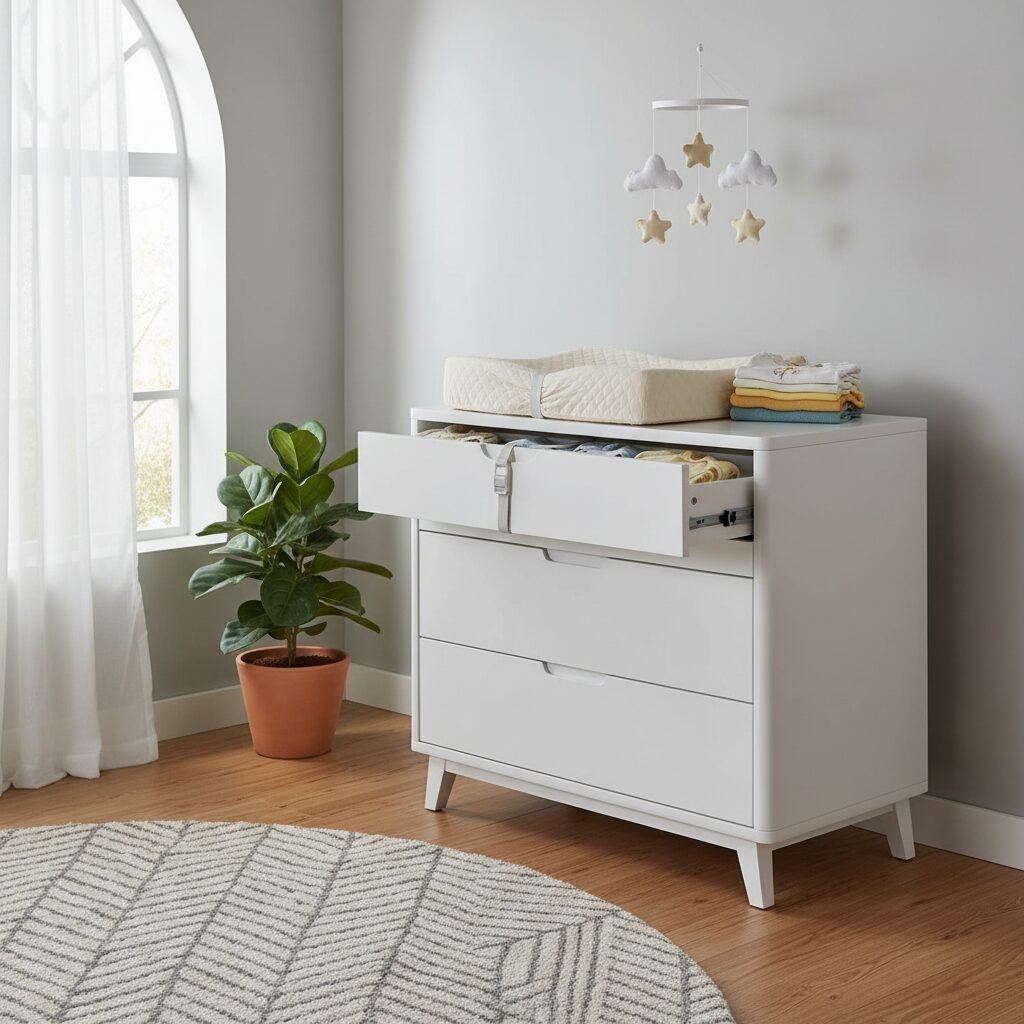
| Dresser with Topper | Excellent storage, long-term use (becomes a regular dresser later), very sturdy. | Larger footprint than other options, can be a bigger initial investment. |
| Dedicated Changing Table | Often has open shelving for easy access, designed for the correct height to save your back. | Limited use; becomes obsolete once baby is out of diapers. |
| Wall-Mounted Fold-Down | Saves the most floor space, folds away neatly when not in use. | Minimal to no storage, must be installed correctly and securely into wall studs. |
| Portable Caddy System | Use it on any safe, flat surface (bed, floor), completely mobile, budget-friendly. | Requires bending over, no dedicated storage for backstock items. |
A Critical Safety Note: No matter which option you choose, if it’s a piece of furniture like a dresser or table, it must be securely anchored to the wall. Babies get wiggly and strong faster than you can imagine, and preventing furniture tip-overs is non-negotiable.
The ‘Within Arm’s Reach’ Rule: Zoning Your Table for Safety and Speed
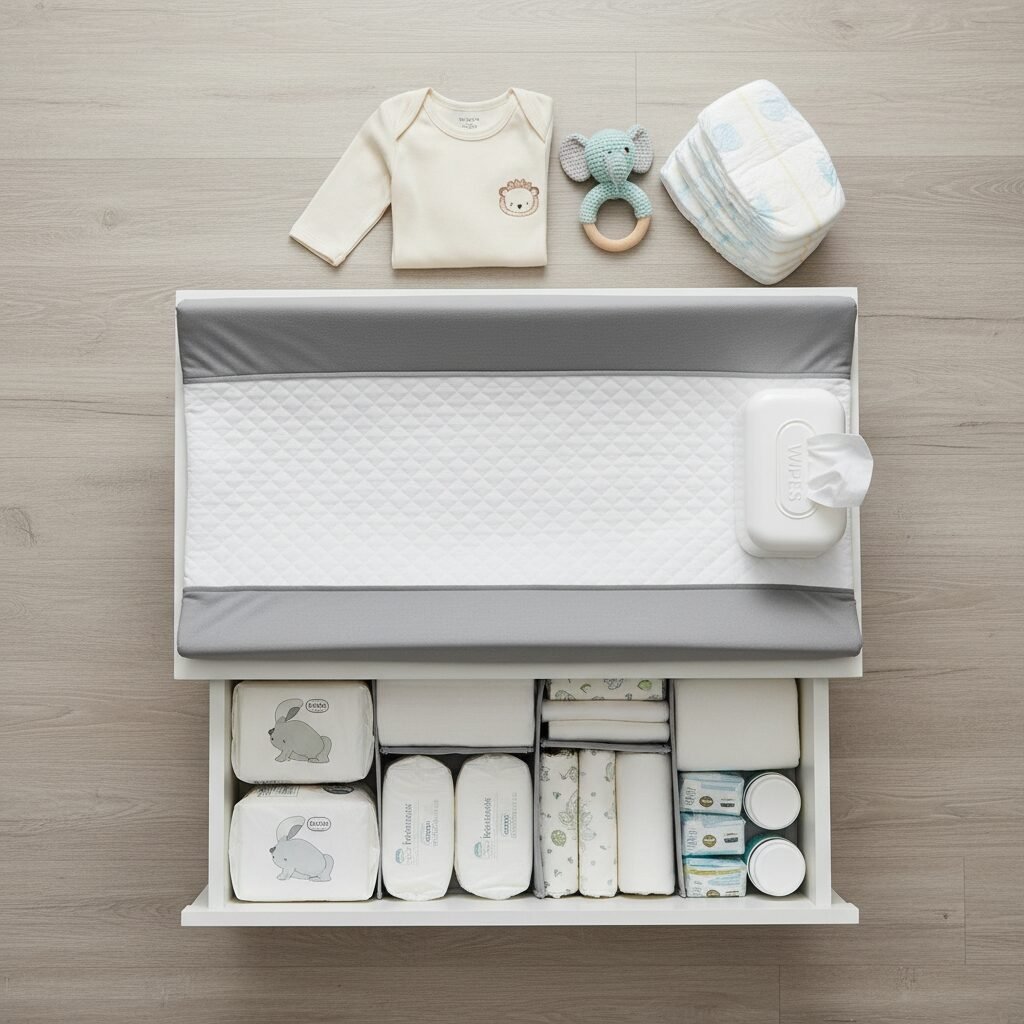
Okay, this is the most important organizational principle I can teach you. Imagine this: you have a wiggly baby on the pad, one hand firmly but gently holding them, and you realize the diaper cream is across the room. It’s a classic new-parent panic moment! We can avoid this entirely by creating zones. Everything you need should be accessible without ever taking your hand or your eyes off your little one.
The golden rule of the changing table: never, ever leave your baby unattended, not even for a second. Organizing with this in mind makes safety second nature.
Let’s break down the zones:
-
Zone 1: The Essentials (Immediate Reach)
These are the items you need for every single change. They should be close enough to grab without even looking. Think of it as your diapering tool belt.
- A small stack of 6-8 diapers
- Wipes (in a pop-top container for one-handed access)
- Diaper pail or disposal bags
- Your preferred diaper cream or ointment
- Hand sanitizer for you
-
Zone 2: The Next-Ups (Close By)
These are things you often need right after the change is done. They can be on a shelf right next to you or in the top drawer.
- A clean outfit (or two!)
- A burp cloth for any spit-up
- A pacifier or small, safe toy for distraction
- Clean changing pad liners or covers
-
Zone 3: The Backstock (Storage)
This is the bulk supply. These items can be stored in lower drawers, baskets on the floor, or in a nearby closet. You’ll use this zone to restock Zones 1 and 2.
- The rest of the box of diapers
- Extra packages of wipes
- Backup tubes of cream
- Baby grooming supplies (nail clippers, nasal aspirator)
- Baby lotion and bath supplies
Mastering the Vertical Space: Wall-Mounted Solutions
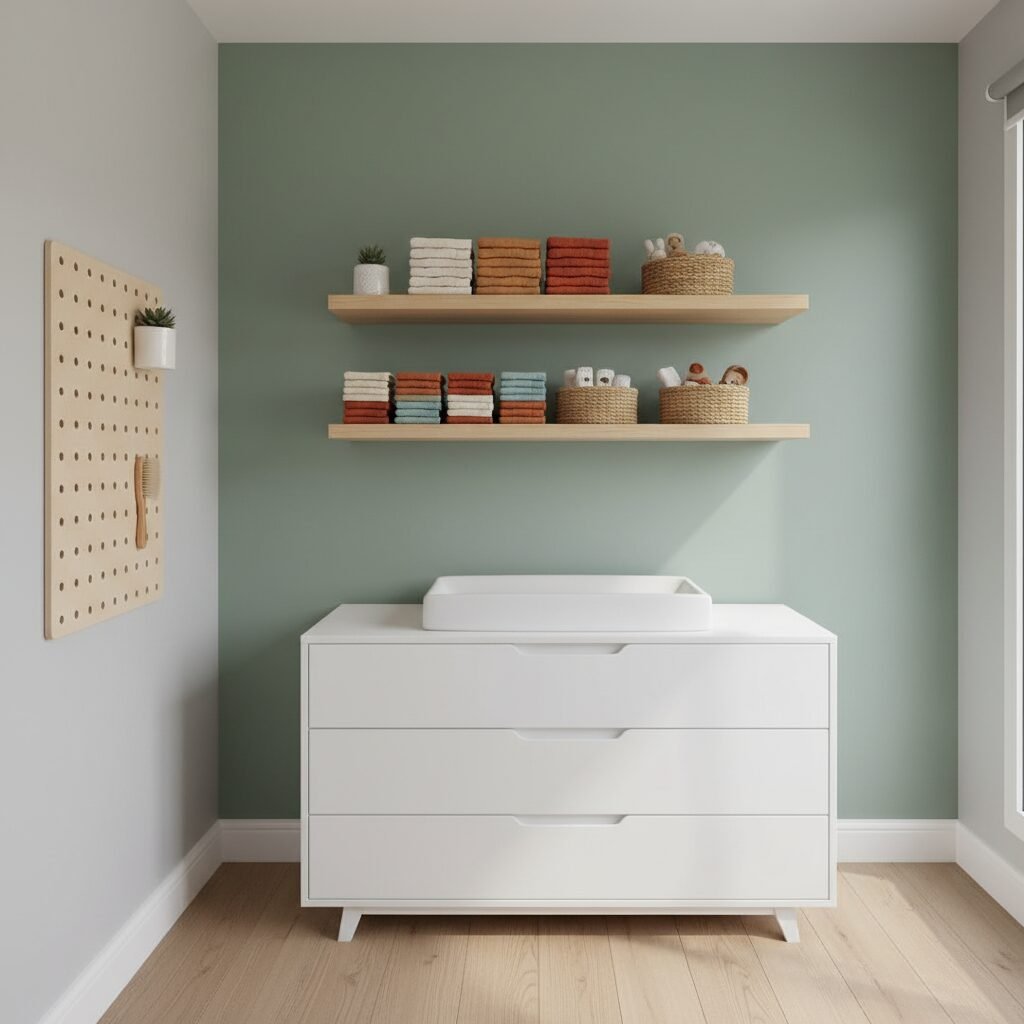
When you can’t build out, build up! The wall space around your changing table is prime real estate. Using it wisely can double your storage and keep essentials visible and accessible, all while keeping your floor space clear.
Ideas for Going Vertical:
- Floating Shelves: Install one or two shelves a safe distance above the changing table. This is the perfect spot for things you don’t need mid-change but want nearby. You can use them for cute baskets holding socks or hats, extra swaddles, or even a few decorative items to make the space feel joyful. Safety first: Ensure shelves are properly installed into studs and don’t place heavy items directly over where your baby’s head will be.
- Pegboard Organizer: A pegboard with various hooks and small shelves is the ultimate customizable solution. You can hang baskets for lotions, hooks for pacifier clips, and small shelves for grooming kits. It keeps everything off the table surface but perfectly in sight.
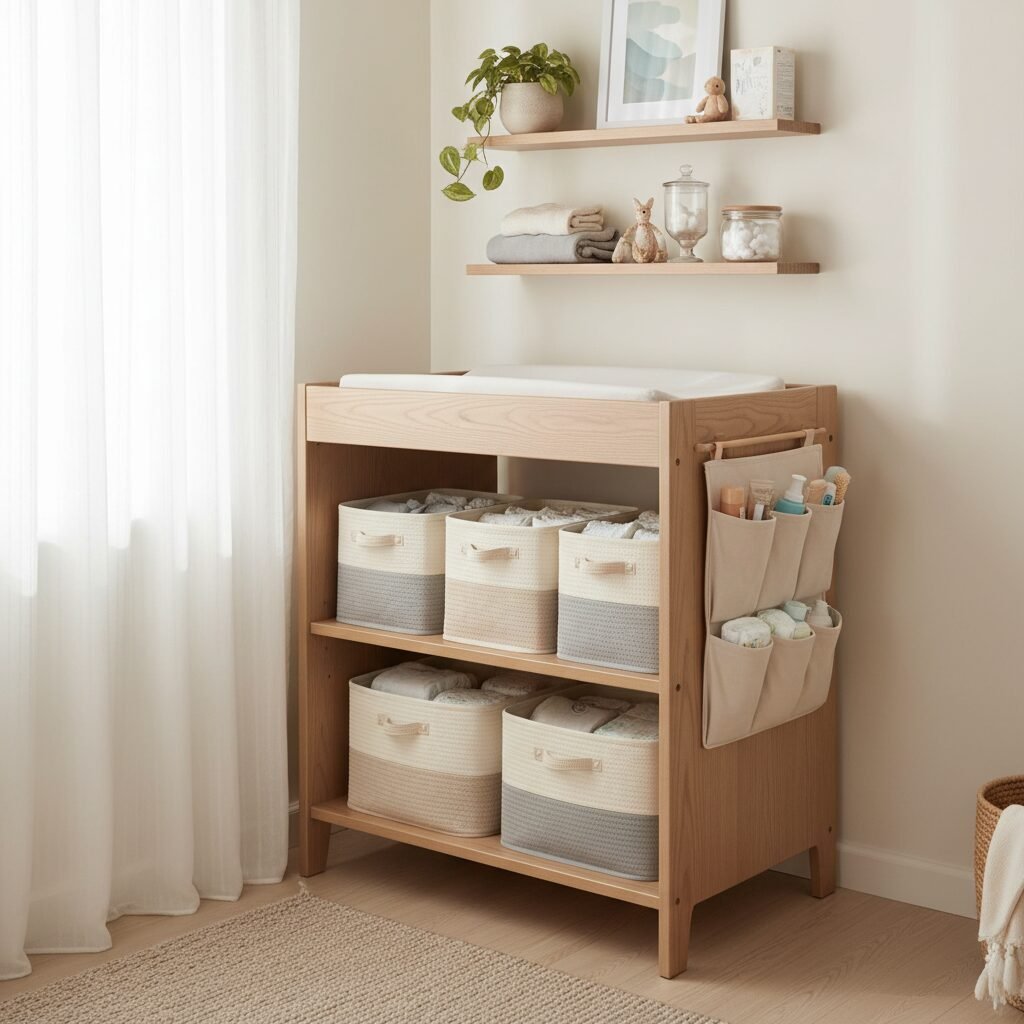
- Hanging Caddies: Look for organizers that can hang on the side of the changing table or dresser. These fabric pockets are brilliant for storing items you grab frequently, like burp cloths, pacifiers, or your favorite hand lotion.
- Wall-Mounted Bookshelves: Those slim, picture-ledge style bookshelves are fantastic for more than just books! They can hold diaper creams, lotions, and other small bottles neatly in a row.
By using your walls, you free up the drawers and surface of the changing table for the most critical items, which instantly makes the whole area feel less cluttered and more manageable.
Divide and Conquer: Using Bins and Baskets Like a Pro
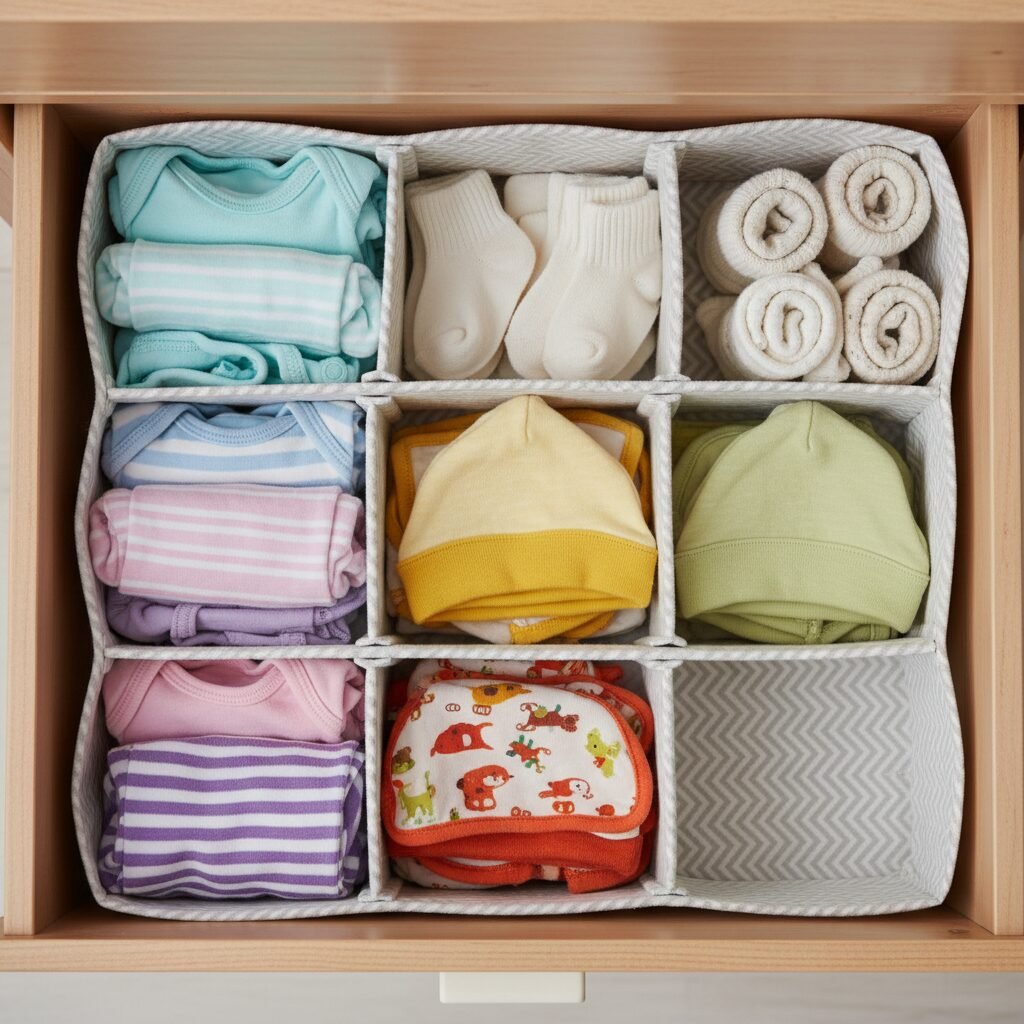
The secret to taming tiny baby items? Give everything a home. Open drawers and shelves can quickly become a jumbled mess of onesies, socks that have lost their partners, and half-empty tubes of cream. The solution is simple: dividers, bins, and baskets!
Your New Best Friends:
- Drawer Dividers: These are non-negotiable for baby clothes. Use simple tension-rod dividers or honeycomb-style inserts to create specific spots for rolled onesies, pajamas, socks, and hats. When you can see everything at a glance, you’ll save precious time and sanity during those 3 a.m. outfit changes.
- Open Baskets for Shelves: Instead of stacking items directly on shelves, group them into categories within baskets. Have one for ‘Health & Grooming’ (thermometer, nail clippers, etc.), one for ‘Linens’ (extra changing pad covers, crib sheets), and one for ‘Toys & Distractions.’ It looks tidier and you can just pull out the whole basket you need.
- A Rolling Cart: If you’re really tight on space, a slim, three-tiered rolling cart can act as a mobile extension of your changing table. You can stock it with your Zone 1 and 2 items and roll it wherever you need it. It’s a lifesaver in apartments where the ‘nursery’ might be in the living room one day and the bedroom the next.
- Label Everything: It might feel a bit extra at first, but trust me, when you’re functioning on three hours of sleep, you won’t want to guess which basket holds the gripe water. Simple clip-on or stick-on labels are a game-changer.
This ‘divide and conquer’ strategy stops clutter before it starts and makes it incredibly easy for anyone—a partner, a grandparent, a babysitter—to find exactly what they need without tearing the whole place apart.
The Two-Minute Tidy: How to Keep It Organized for Good
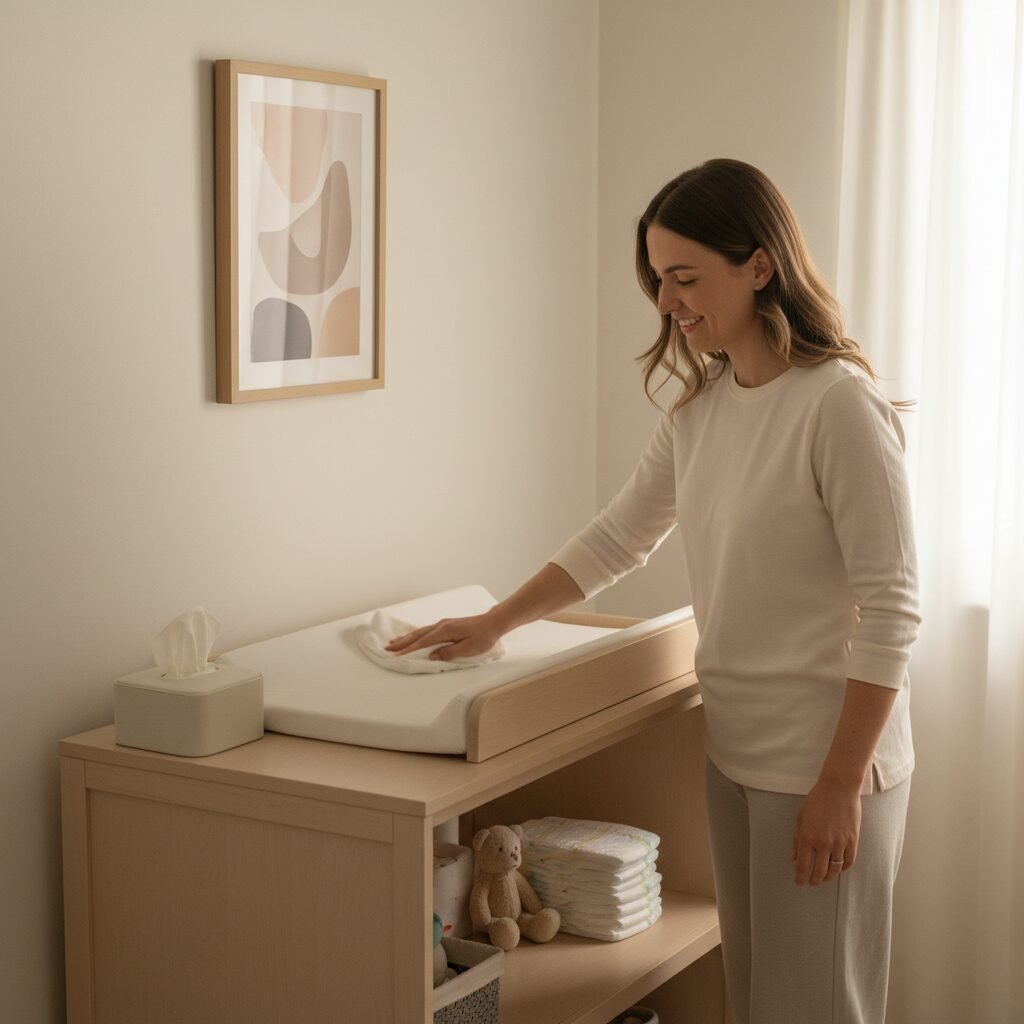
You’ve done all this amazing work to create a beautifully organized changing station. So how do you keep it that way? The secret isn’t a massive weekly cleanup; it’s a tiny, daily habit. I call it the ‘Two-Minute Tidy.’ It’s a small reset you can do once a day (maybe while the baby is safely in their crib for a moment) that prevents chaos from creeping back in.
Your Daily Two-Minute Tidy Checklist:
- Restock the Essentials: Look at your Zone 1 stash. Are you low on diapers? Grab a handful from your backstock. Is the wipe container half-empty? Pop in a new refill. This one step prevents mid-change emergencies.
- Clear the Decks: Put away the clean onesie you decided not to use. Move the lotion back to its designated basket. Take any used burp cloths to the laundry hamper.
- Wipe It Down: Give the changing pad a quick wipe with a baby-safe cleaner or a damp cloth. A clean surface feels so much better to start with.
- Trash Check: Empty the Diaper Pail or take out the trash if it’s getting full.
That’s it! It truly takes less than two minutes, but doing it consistently means your changing table is always ready for action. It’s a small act of kindness to your future, sleep-deprived self. You’re not just organizing a space; you’re building a system that supports you and gives you one less thing to worry about. And that, dear parent, is priceless.
Conclusion
There you have it! Creating a functional, tidy changing station in a tiny space isn’t about having the perfect nursery or the most expensive organizers. It’s about being intentional. By choosing the right setup for your home, creating smart zones for safety, using every inch of vertical space, and committing to a tiny daily reset, you can create a system that truly works.
Remember to give yourself grace. There will be days when it’s messy, and that’s okay. The goal is progress, not perfection. This organized little corner will become a place of calm connection between you and your baby during the thousands of changes to come. You are creating a loving, safe, and supportive environment for your little one, and that starts with creating supportive systems for yourself. You’re doing an amazing job.