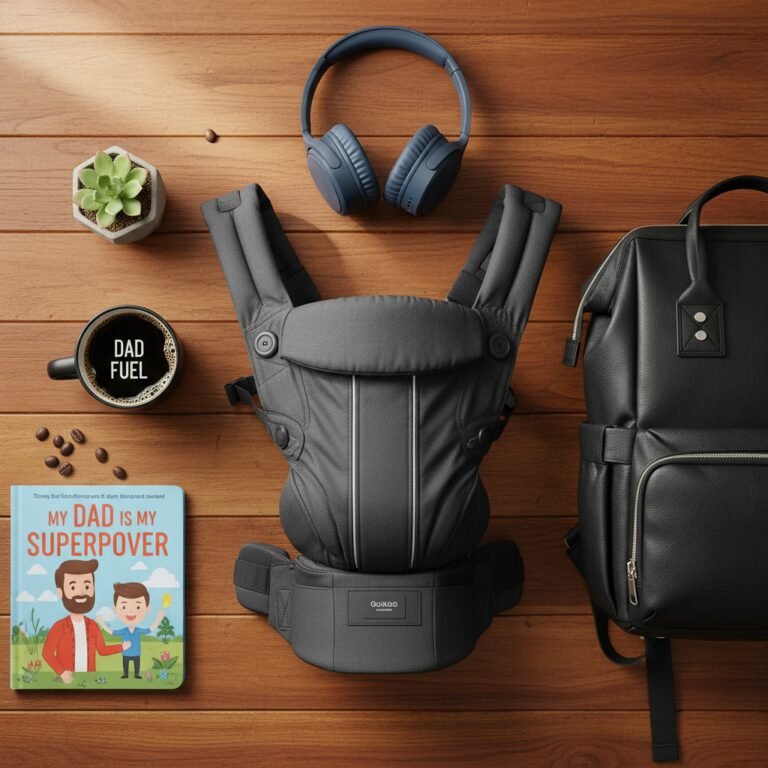

The Ultimate Paternity Leave Checklist: How Dads Can Actually Help in Week 1
Hey Dad, welcome to the club! That tiny human you just met is about to turn your world upside down in the most incredible, exhausting, and beautiful way imaginable. You’ve probably spent months preparing the nursery and reading books, but now that your baby is here, you might be thinking, ‘Okay… now what?’
Let me tell you something from my decades as a pediatric nurse: your role during this first week is absolutely, unequivocally critical. Forget the old notion of being a ‘helper’ who just waits for instructions. You are an equal parent, a partner, and for this first week, you are the protector of the bubble, the chief of logistics, and the emotional rock for your partner. Your partner’s only job is to recover from a major medical event and feed the baby. Your job is… well, everything else. And you know what? You can totally do this. This checklist is designed to give you concrete, actionable tasks to make you the MVP of week one.
Your First Mission: Become the Family Gatekeeper and Protector

Think of your home as a peaceful sanctuary, and you are the head of security. Your partner and baby need rest, quiet, and time to bond. The outside world, with all its well-meaning excitement, can wait. Your primary job is to protect this sacred space.
Key Responsibilities of the Gatekeeper:
- Manage Visitors: Everyone wants to see the baby, which is lovely, but it can be overwhelming. You are in charge of the guest list. Keep visits short (30-60 minutes max). Don’t be afraid to say, ‘We’d love to see you, but we’re keeping things very quiet for the first week. Can we schedule something for next week?’ A simple group text can manage expectations: ‘Mom and baby are doing well and resting. We’ll let everyone know when we’re ready for visitors!’
- Be the Phone Person: Field all calls, texts, and social media updates. Let your partner’s phone be a non-factor. You can provide updates to key family and friends so she doesn’t feel pressured to respond to dozens of ‘How are you?’ messages.
- Create a Calm Environment: Keep the lights dim, the TV volume low, and the general household noise to a minimum. This helps the baby adjust to the world and allows your partner to nap whenever the opportunity arises (which you should encourage!).
- Champion Safe Sleep: This is a non-negotiable. Your baby should always sleep alone, on their back, in a crib, bassinet, or play yard with a firm, flat mattress and nothing else in it. No blankets, no pillows, no bumpers, no stuffed animals.
A Crucial Safety Note: The ‘ABCs’ of safe sleep are easy to remember: Alone on their Back in a Crib. Drowsiness is real for new parents. If you feel like you might fall asleep while holding the baby, please put them in their safe sleep space first.
Fueling the Family: The Role of Chief Provider and Chef
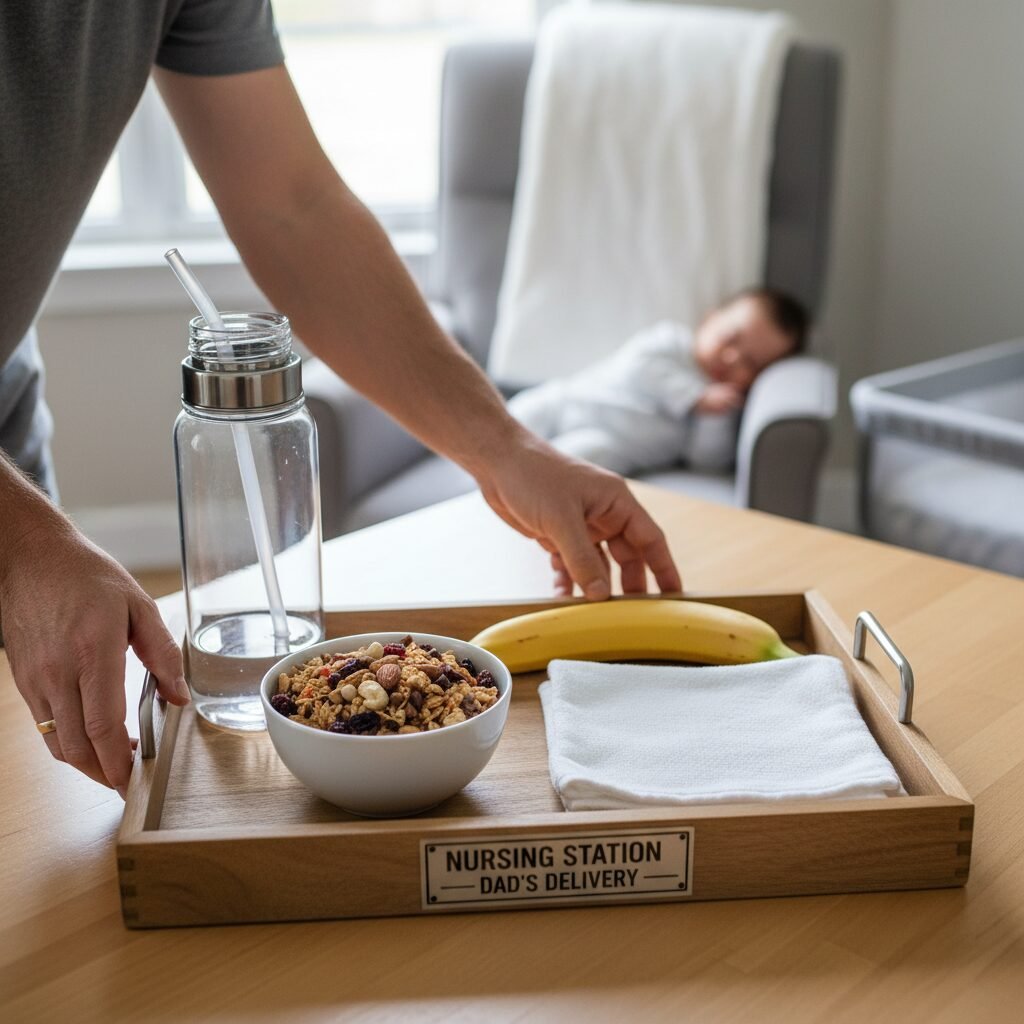
Your partner just ran a marathon, and now she’s starting an ultra-marathon of feeding a newborn, all while recovering. She needs calories and, most importantly, hydration. Think of yourself as her personal chef and hydration specialist.
Your Kitchen To-Do List:
- Hydration Station: Get her a large water bottle with a straw (it’s easier to drink from while holding a baby) and keep it filled. Every single time you walk past it, check if it’s full. If she’s breastfeeding, she’ll need a ton of water.
- One-Handed Snack Master: New moms often eat with one hand while the other holds a baby. Your job is to stock the fridge and pantry with easy-to-grab, nutritious, one-handed snacks.
- Meal Management: You are in charge of breakfast, lunch, and dinner. This might mean warming up meals people have brought, cooking simple dishes, or managing takeout orders. The goal is to ensure she never has to think, ‘What are we going to eat?’
- Breastfeeding Support Crew: If your partner is breastfeeding, you’re a vital part of the team. Before she even sits down to nurse, bring her the nursing pillow, a glass of water, her phone, the TV remote, and a snack. Your support can make or break the early breastfeeding experience.
- Formula Prep Pro: If you’re using formula, take the lead. Learn how to properly mix the bottles, warm them safely (never in a microwave!), and wash and sterilize all the parts. Owning this process from day one is a huge help.
Here are some great snack ideas to keep on hand:
| Snack Category | Easy One-Handed Examples | Why It’s Great |
|---|---|---|
| Proteins | Hard-boiled eggs, cheese sticks, Greek yogurt cups, protein bars | Keeps her full and helps with tissue repair. |
| Healthy Fats | Avocado toast, handful of almonds or walnuts, trail mix | Provides lasting energy and is great for baby’s brain development via breast milk. |
| Complex Carbs | Oatmeal, whole-wheat crackers, granola bars | Offers sustained energy without a sugar crash. |
| Fruits & Veggies | Bananas, apples, pre-cut melon, baby carrots | Packed with vitamins, minerals, and fiber. |
Mastering the Basics: Your Hands-On Newborn Care Checklist

This is where you get to shine and build your own confidence as a father. Don’t wait to be asked—jump in and become an expert in baby care. The more you do it, the easier it gets, and the more you’ll bond with your new little one.
Become the Diaper Dude:
You’ll be changing 10-12 diapers a day, so you might as well be the best at it. Set up the changing station with everything you need: diapers, wipes, cream, and a change of clothes. The first few days, you’ll see black, tarry stools called meconium. This is normal! It will gradually transition to a greenish and then yellowish color.
Learn the Art of the Burp:
Babies swallow a lot of air when they feed, which can make them gassy and miserable. Your strong, steady shoulder is the perfect place for a good burp. Try a few positions: over your shoulder, sitting up on your lap while you support their head, or lying face down across your lap.
Soothe Like a Pro: The 5 S’s
When the baby is fussy and you don’t know why, turn to Dr. Harvey Karp’s ‘5 S’s’. It’s like a magic off-switch for fussiness.
- Swaddle: A tight, snug swaddle recreates the feeling of the womb. Learn how to do it properly (snug around the arms, loose at the hips).
- Side or Stomach Position: Hold the baby on their side or stomach in your arms (but remember, only on their back for sleep!).
- Shush: Make a loud, continuous ‘shushing’ sound near their ear. It mimics the sound of the womb.
- Swing: Use a gentle, rhythmic, jiggly motion. Think less ‘rocking chair’ and more ‘jiggling Jell-O.’
- Suck: Offer a pacifier or a clean finger. Sucking is incredibly calming for newborns.
Embrace Skin-to-Skin:
This isn’t just for moms. Take off your shirt and let your baby lie on your bare chest. It helps regulate their heart rate, temperature, and breathing. It also releases bonding hormones in you! It’s a powerful tool for calming a fussy baby and building a deep connection.
More Than an Extra Pair of Hands: Being Her Emotional Rock

Dad, this might be the most important job on the entire list. The first week postpartum is an emotional rollercoaster for your partner. Her body is healing, her hormones are crashing, and she’s suddenly responsible for a new life, all on very little sleep. She needs your unwavering emotional support more than anything.
How to Be Her Rock:
- Listen, Don’t Fix: She might cry because she’s happy, sad, overwhelmed, or for no reason at all. Your job isn’t to solve it. It’s to listen, hug her, and say, ‘I’m here for you. We’re in this together.’
- Give Specific, Genuine Compliments: Don’t just say ‘You’re a great mom.’ Try, ‘I was so impressed with how you calmed the baby down just now,’ or ‘You look so beautiful holding our child.’ These specific affirmations mean the world.
- Mandate Rest: She won’t ask for it. You need to insist. Say, ‘I’ve got the baby for the next two hours. Please go take a shower and a long nap. I will not wake you unless it’s an emergency.’ And then, don’t. Handle whatever comes up.
- Be Her Advocate: If a family member is overstaying their welcome or offering unsolicited advice that’s stressing her out, it’s your job to step in and politely handle it. You are her buffer.
Watch for the ‘Baby Blues’ vs. Postpartum Depression: The ‘baby blues’ are very common in the first two weeks—mood swings, anxiety, sadness. However, if these feelings are severe, last longer than two weeks, or if she expresses feelings of hopelessness or wanting to harm herself or the baby, it could be postpartum depression (PPD). This is a serious but treatable medical condition. Call her doctor or midwife right away. Your observation and support are key.
Running the Show: Managing the Household Like a Pro

For this first week (and beyond, really), you are the CEO of the household. Every chore that isn’t ‘recovering’ or ‘feeding the baby’ falls into your domain. Taking these tasks off her plate is a massive act of love and support that allows her to focus on the two things only she can do.
Your Household Domain Checklist:
- Laundry: Babies create a surprising amount of laundry. Stay on top of it. One load a day keeps the mountain of onesies and burp cloths from taking over.
- Dishes: Keep the sink empty. A clean kitchen can make a chaotic time feel a little more under control.
- Pets & Other Kids: If you have pets or older children, they need your attention now more than ever. Make sure they are fed, walked, and given some special one-on-one time.
- Trash & Recycling: Just get it done without anyone having to think about it.
- Baby Tracking: In the early days, pediatricians will ask how often the baby is eating and how many wet/dirty diapers they have. Be the one to track this. You can use a notepad or a simple app. It’s invaluable information for the first doctor’s visit.
Here’s a simple log you can recreate on a notepad by the changing table:
| Time | Feeding (Breast/Formula & Amount) | Wet Diaper? | Dirty Diaper? | Notes (e.g., fussy, sleepy) |
|---|---|---|---|---|
| 8:15 AM | Breast – Right side, 20 min | Yes | Yes | Very sleepy during feed |
| 10:30 AM | Breast – Left side, 15 min | Yes | No | Wide awake after |
| 12:00 PM | Formula – 2 oz | Yes | Yes | Fell asleep after bottle |
Conclusion
Dad, you made it through the first week. Take a deep breath. Look at your new family. You did this. You were the gatekeeper, the chef, the comforter, the rock, and the CEO. By taking on these roles, you didn’t just ‘help’—you parented. You set the foundation for a true partnership and showed your child from day one what a dedicated, loving father looks like.
This is just the beginning of the most amazing journey. There will be more challenges and countless moments of joy. Remember to take care of yourself, too. Sleep when you can, accept help when it’s offered, and give yourself grace. You’ve got this. You are exactly what your family needs.