

The Ultimate Combo Feeding Schedule: Best Of Both Worlds For Sanity
Hey there, new parent. Take a deep breath. You’re doing an amazing job. I know because I’ve been in the trenches with thousands of families just like yours. One of the biggest sources of stress? Feeding. You’re bombarded with messages about ‘breast is best,’ but you’re also exhausted, maybe your supply is a concern, or you’re heading back to work. It can feel like you have to make an all-or-nothing choice, and the pressure is immense.
What if I told you there’s a middle ground? A flexible, beautiful, and completely valid option that gives you and your baby the best of both worlds? Welcome to the world of combination feeding, or ‘combo feeding.’ It’s about supplementing breastfeeding with formula in a way that meets your baby’s needs while protecting your mental and physical health. This isn’t about giving up; it’s about smart, compassionate parenting. In this guide, we’ll walk you through everything you need to know to create a combo feeding schedule that brings balance, peace, and yes, sanity, back into your life.
Why Choose Combo Feeding? The Many Paths to a Happy, Fed Baby

Before we dive into schedules, let’s get one thing straight: choosing to combo feed is a personal decision, and every reason for doing so is valid. For decades, I’ve seen parents thrive with this approach. It’s not a compromise; it’s a solution. Let’s explore some of the common reasons families embrace combo feeding:
- Concerns About Milk Supply: This is a huge one. Maybe your baby isn’t gaining weight as quickly as your pediatrician would like, or you’re worried you’re just not producing enough. Supplementing can ensure your baby gets all the calories they need while you work on your supply, taking immense pressure off of you.
- Returning to Work: Pumping at work is a huge commitment. For many, it’s just not feasible to pump enough to cover every single feeding while away. Combo feeding allows you to continue breastfeeding when you’re home and ensures your baby is happily fed by their caregiver during the day.
- Sharing the Load: Parenthood is a team sport! Combo feeding allows your partner or other caregivers to take over some feedings, giving you a much-needed break. That uninterrupted stretch of sleep you’ve been dreaming of? A bottle-feeding partner can make that a reality.
- Medical Reasons: Sometimes, medical issues—for either you or the baby—can make exclusive breastfeeding challenging. Combo feeding can be a wonderful way to continue the breastfeeding relationship while accommodating these health needs.
- Your Mental Health Matters: Let me say it louder for the people in the back: Your mental health is not just important, it’s essential. If the stress of exclusive breastfeeding is causing anxiety or depression, introducing formula can be an act of self-care. A happier, more relaxed parent is the best thing for a baby.
Remember this mantra: Fed is best. A nourished baby and a sane parent are the ultimate goals. How you get there is your unique journey.
Getting Started: How to Introduce a Bottle Without the Battle

Okay, so you’ve decided to give it a try. The next step is introducing a bottle. For some babies, this is a breeze. For others, it’s a bit of a negotiation. The key is to be patient and strategic.
When to Start?
If possible, it’s ideal to wait until breastfeeding is well-established, which is usually around 3-4 weeks postpartum. This gives you and your baby time to get your nursing rhythm down and helps establish your milk supply.
Choosing Your Gear
The baby aisle can be overwhelming! When it comes to bottles, look for one with a slow-flow nipple. This is crucial. Breastfed babies have to work to get milk from the breast, whereas a fast-flow nipple can be like a firehose. We want to mimic the pace of nursing to avoid ‘flow preference,’ where the baby gets lazy and starts to prefer the easy-peasy bottle.
The Art of Paced Bottle Feeding
This technique is a game-changer for combo-fed babies. It puts the baby in control of the feeding, just like at the breast. Here’s how to do it:
- Hold your baby in an upright position, not lying flat.
- Keep the bottle horizontal to the floor, just tilting it enough to fill the nipple with milk.
- Gently touch the nipple to your baby’s lips and let them draw it into their mouth.
- Allow your baby to take a few sucks, then gently tilt the bottle down to pause the flow, giving them a little break.
- Watch your baby for cues of fullness (turning their head, getting sleepy) and stop when they seem done, even if there’s milk left in the bottle.
Safety Tip: Never prop a bottle. Paced feeding not only helps with switching between breast and bottle but also prevents overfeeding and reduces gas and spit-up.
Who Gives the Bottle?
Babies are smart! They associate mom with the breast (and that wonderful milky smell). Sometimes, they’re more willing to accept a bottle from another caregiver, like a partner or grandparent, especially for the first few tries. Have someone else step in while you step out of the room.
Building Your Combo Feeding Schedule: Sample Plans for Every Stage
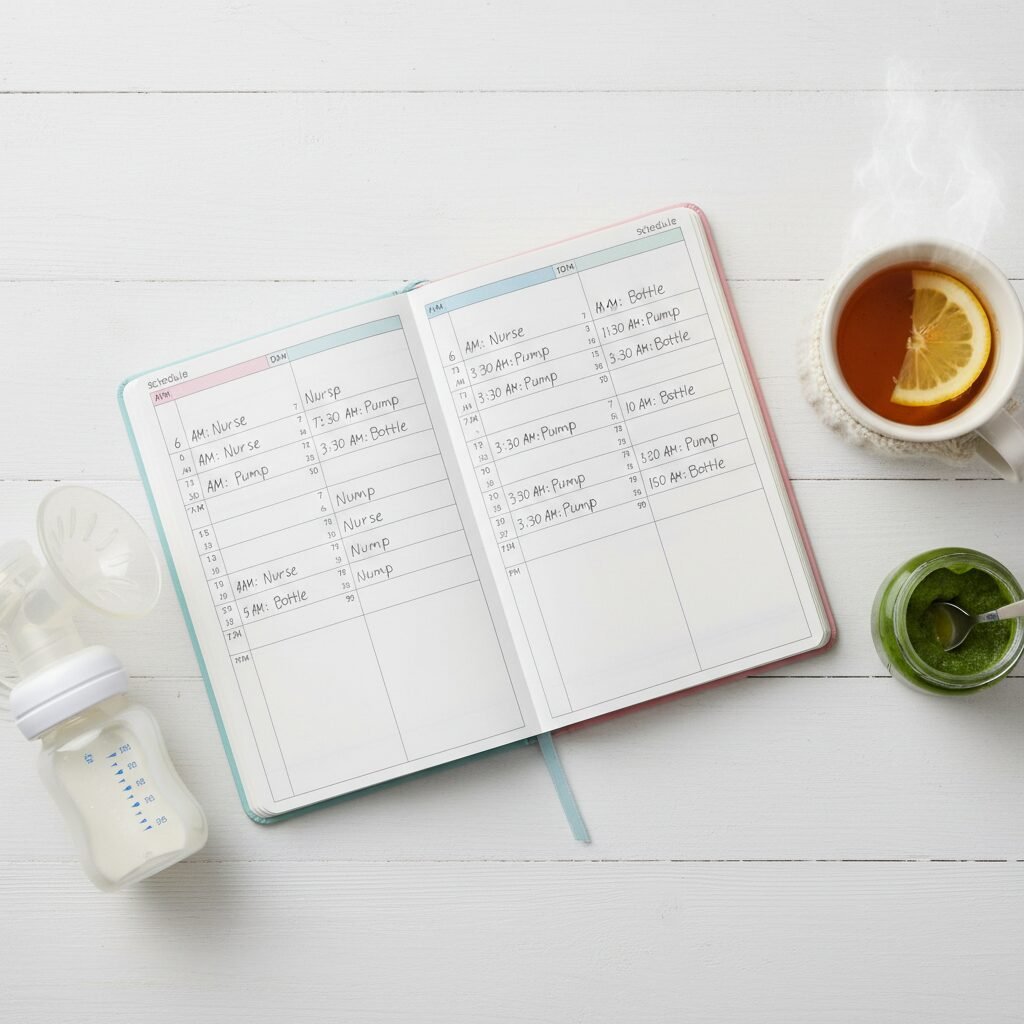
Here’s where the rubber meets the road! Remember, these are just templates. The most important thing you can do is learn your baby’s hunger cues (rooting, sucking on hands, fussing) and feed them on demand. Use these schedules as a starting point and adjust to fit your life and your baby’s unique needs.
For the Newborn (0-3 Months): Prioritizing Milk Supply
In the early days, the focus is on establishing a robust milk supply while introducing 1-2 bottles per day. This is often a ‘sanity saver’ feed, like a late-night one given by a partner so you can get a solid block of sleep.
| Approximate Time | Mom’s Action (Nurse or Pump) | Baby’s Feed |
|---|---|---|
| 7:00 AM | Nurse (both sides) | Breast |
| 9:30 AM | Nurse | Breast |
| 12:00 PM | Nurse | Breast |
| 2:30 PM | Nurse | Breast |
| 5:00 PM | Nurse | Breast |
| 7:30 PM | Nurse (cluster feeding common) | Breast |
| 10:00 PM | Pump while partner feeds baby | Bottle (Pumped Milk or Formula) |
| 2:00 AM / 3:00 AM | Nurse | Breast |
For the Working Parent (3-6 Months): Navigating the Day Apart
This schedule is designed for a parent working a standard 9-5 day. The goal is to pump at work to replace the feedings your baby is getting from a bottle and to nurse frequently when you are together to reconnect and stimulate supply.
| Approximate Time | Location | Feeding Method |
|---|---|---|
| 6:30 AM | Home | Nurse before leaving for work |
| 9:30 AM | Daycare/Caregiver | Bottle (Pumped Milk or Formula) |
| 10:00 AM | Work | Mom Pumps |
| 12:30 PM | Daycare/Caregiver | Bottle (Pumped Milk or Formula) |
| 1:00 PM | Work | Mom Pumps |
| 3:30 PM | Daycare/Caregiver | Bottle (Pumped Milk or Formula) |
| 4:00 PM | Work | Mom Pumps |
| 5:30 PM | Home | Nurse upon reunion |
| 7:30 PM | Home | Nurse before bed |
| Overnight | Home | Nurse as needed |
For a Gentle Weaning or Sleep-Focused Approach (6+ Months)
At this stage, with solids introduced, you have even more flexibility. You might choose to replace specific feeds consistently, like the one right before bed, with a larger formula bottle to encourage a longer stretch of sleep.
| Approximate Time | Meal / Feed Type |
|---|---|
| 7:00 AM | Nurse upon waking |
| 8:30 AM | Solids (Breakfast) |
| 11:30 AM | Bottle (Formula or Pumped Milk) |
| 12:30 PM | Solids (Lunch) |
| 3:30 PM | Nurse after nap |
| 5:30 PM | Solids (Dinner) |
| 7:30 PM | Formula Bottle before bed |
Protecting Your Milk Supply While Combo Feeding

This is often the biggest worry for parents who want to continue breastfeeding: ‘Will giving formula tank my supply?’ It’s a valid concern, but you can absolutely manage it. Breast milk production works on a simple principle: supply and demand. The more milk that is removed, the more milk your body will make.
When you replace a nursing session with a bottle, you’re telling your body that less milk was needed at that time. If you do this consistently without removing milk in another way, your supply will naturally decrease. So, how do you prevent that?
- Pump for Missed Feeds: The golden rule, especially in the first 6 months, is to pump whenever your baby has a bottle. This tells your body to keep production up. If your partner gives a 10 PM bottle, you should do a 10 PM pumping session.
- Consider ‘Power Pumping’: If you feel your supply is dipping, you can mimic a baby’s growth spurt with a power pump session once a day for a few days. The pattern is: pump for 20 minutes, rest for 10, pump for 10, rest for 10, pump for 10. It’s an hour-long commitment, but it can be very effective.
- Nurse, Nurse, Nurse When You’re Together: Make the most of the time you have with your baby. Nurse frequently on mornings, evenings, and weekends. This skin-to-skin time and frequent stimulation are powerful signals to your body to keep making milk.
- Stay Hydrated and Nourished: You can’t pour from an empty cup. Making milk is hard work! Make sure you’re drinking plenty of water (keep a water bottle with you wherever you nurse or pump) and eating regular, nutritious meals.
Troubleshooting Common Combo Feeding Challenges

Even with the best plan, you might hit a few bumps in the road. Don’t worry, this is totally normal! Here are some common challenges and how to navigate them.
‘My baby refuses the bottle!’
This is so frustrating! Try not to get discouraged. Some things to try: have a different person offer the bottle, try when the baby is calm and not starving, experiment with different bottle and nipple brands (what works for one baby might not work for another), and check the milk temperature—some babies are very particular!
‘Help! My baby is starting to prefer the bottle!’
This is that ‘flow preference’ we talked about. The solution is to double down on paced bottle feeding. Make sure every single bottle feed is done this way. You can also try offering the breast for a few minutes before a bottle feed when the baby is really hungry, or save nursing for sleepy, cuddly times when they are less likely to get frustrated.
‘My baby’s poop looks… different.’
Yep! This is expected. The poop of a formula-fed baby is typically different in color (often tan or brown), consistency (more paste-like), and smell than that of an exclusively breastfed baby. As long as your baby isn’t in pain and the stool isn’t hard and pellet-like, this change is normal.
‘I feel so guilty about giving my baby formula.’
Oh, mama. Let me wrap you in a virtual hug. The guilt is real, but it’s not deserved. You are making a thoughtful, loving choice to ensure your baby is nourished and that you are a healthy, present parent for them. Your worth is not measured in ounces. Your baby needs YOU more than they need any specific type of milk.
Your baby will not remember how they were fed. They will remember being held, loved, and comforted by you. You are their world, and you are doing a phenomenal job.
Conclusion
There you have it—your roadmap to the balanced, flexible world of combo feeding. It’s not about perfection; it’s about finding what works for your family. Whether you supplement one bottle a day or move to a 50/50 split, you are providing your baby with everything they need: nutrition, comfort, and a parent who is supported and sane.
Trust your instincts. Listen to your baby. And please, give yourself so much grace. You are navigating one of the most challenging and rewarding journeys of your life. By choosing to combo feed, you’re not just feeding your baby; you’re nurturing your entire family. And that’s something to be incredibly proud of.