The Ultimate Baby Clothes Sizing Guide: Which Brands Run Small?
Welcome to one of the most universal (and surprisingly tricky) parts of new parenthood: figuring out baby clothes sizes. If you’ve ever held up two “3-6 month” onesies from different brands and noticed they are wildly different lengths, please know you are not going crazy! It’s a common frustration that can make shopping for your little one feel like a guessing game.
As a pediatric nurse, I’ve seen countless parents worry they’re doing something wrong when their perfectly average-sized baby doesn’t fit into the “right” size. Let me reassure you: it’s not you, and it’s not your baby. It’s the wild west of the baby fashion industry! But don’t worry, I’m here to be your friendly guide. Together, we’ll decode those confusing labels, talk about which brands to watch out for, and arm you with practical tips so you can shop with confidence. Let’s get your sweet baby dressed comfortably and cutely, without the sizing stress.
Decoding the Labels: What Do ‘Newborn,’ ‘0-3M,’ and ‘3M’ Even Mean?
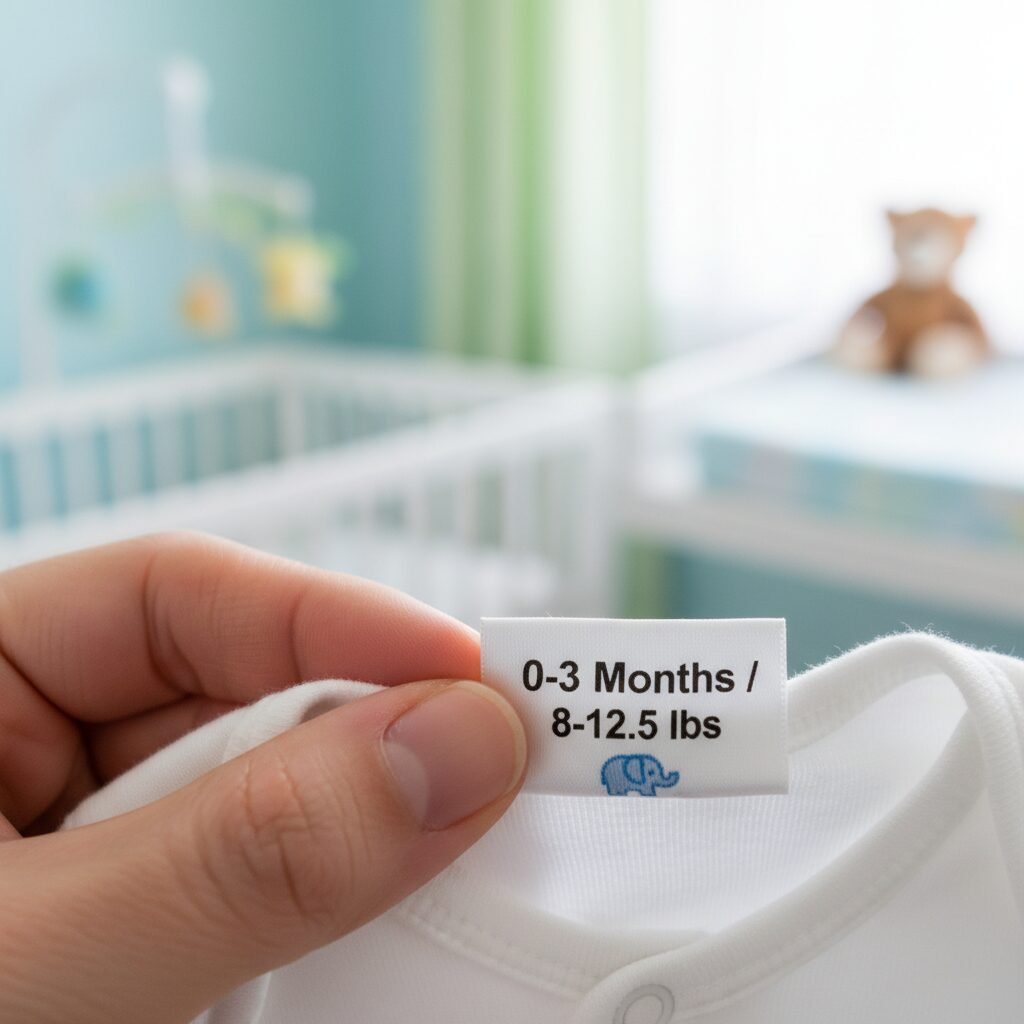
The first hurdle is understanding what the labels are trying to tell you. Most baby clothes are sized by age (like ‘Newborn’ or ‘3-6 Months’), but here’s the secret: a baby’s weight and length are far more reliable indicators of fit than their age. Just like adults, babies come in all beautiful shapes and sizes! A long, lean 2-month-old might need a ‘3-6 month’ size for length, while a delightfully chunky 2-month-old might need it for width.
Think of the age on the tag as a starting point, not a rule. The real truth is usually in the fine print on the brand’s website or sometimes on the tag itself, where they list weight and height ranges. To give you a general idea, here is a standard sizing chart. Always remember to check the specific chart for the brand you’re buying!
| Size Label | Typical Weight Range (lbs) | Typical Height Range (inches) |
|---|---|---|
| Preemie (P) | Up to 5 lbs | Up to 17″ |
| Newborn (NB) | 5 – 8 lbs | Up to 21.5″ |
| 0-3 Months | 8 – 12.5 lbs | 21.5″ – 24″ |
| 3-6 Months | 12.5 – 16.5 lbs | 24″ – 26.5″ |
| 6-9 Months | 16.5 – 20.5 lbs | 26.5″ – 28.5″ |
| 12 Months | 20.5 – 24.5 lbs | 28.5″ – 30.5″ |
| 18 Months | 24.5 – 27.5 lbs | 30.5″ – 32.5″ |
| 24 Months / 2T | 27.5 – 30 lbs | 32.5″ – 34″ |
A Nurse’s Tip: Don’t remove the tags from all those gifted outfits at once! Wash a few items in each size range and see how they fit your baby. You might find you skip the ‘Newborn’ size entirely or live in ‘0-3 Months’ for what feels like forever. Every baby’s growth journey is unique.
The Great Sizing Showdown: A Brand-by-Brand Guide
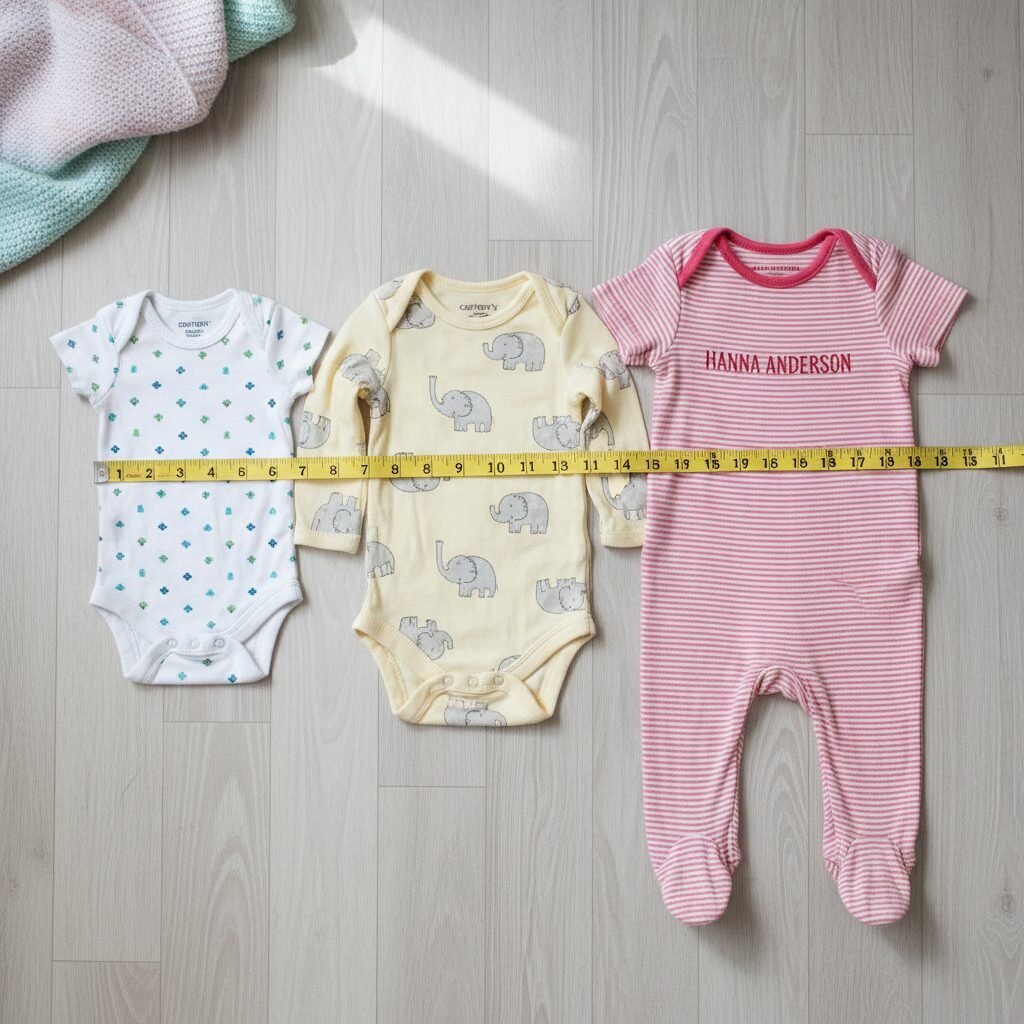
Alright, this is the moment you’ve been waiting for! Here’s the inside scoop on how some of the most popular baby brands typically fit. I’ve chatted with thousands of parents over the years, and this is the consensus. Use this table as your secret weapon when shopping online or building your registry.
| Brand | General Sizing | Best For… | Notes |
|---|---|---|---|
| Carter’s / OshKosh B’gosh | Runs slightly long & slim (True-to-Size) | Average to long & lean babies. | A reliable baseline. Their sizing is fairly consistent. Often sold in multi-packs, making them a registry staple. |
| Gerber | Runs very small & narrow | Smaller, more petite babies. | This is the classic one! Always size up at least one, if not two, sizes with Gerber. Their onesies are notoriously snug. |
| Hanna Andersson | Runs large / Generous fit | Babies of all sizes, great for longevity. | Known for high-quality organic cotton that lasts. The fit is generous, and cuffs can be rolled, so you get more wear out of each size. |
| Old Navy / Gap | Runs long & slim | Long & lean babies. | Great for babies who are high on the height chart but average on the weight chart. Sizing can sometimes be inconsistent between styles. |
| H&M | Runs long & very slim | Very long & slender babies. | Their European sizing often translates to a much longer, narrower fit. Excellent for ‘string bean’ babies, but can be tight on chunky thighs. |
| Zara Baby | Runs small & slim | Petite or average babies. | Similar to H&M with a slim, European fit, but often runs shorter. It’s wise to size up, especially in their knits. |
| Burt’s Bees Baby | Runs long & slim (especially after washing) | Average to long babies. | Their organic cotton is famously soft but can shrink a bit. The fit is generally snug, especially their footed pajamas. |
| Kyte Baby | Runs long & slim (True-to-Size for length) | Long babies, babies with sensitive skin. | The bamboo fabric is incredibly stretchy, which provides flexibility in fit. The length is generous, but the overall fit is designed to be snug. |
| Cloud Island (Target) | Runs slightly large & wide | Average to chunky babies. | A great option for babies with adorable baby rolls! The fit is generally roomier than Carter’s. Check their sleeper zippers, which can be a game-changer. |
| Cat & Jack (Target) | Runs True-to-Size, slightly wide | Average babies. | Generally considered very true-to-size and durable. A solid, reliable choice for everyday play clothes. |
Remember, this is a general guide. Brands can change their manufacturing, and even within a single brand, one style of sleeper might fit differently than another. The best strategy is to know your baby’s current height and weight and use that as your primary guide.
Pro Tips for the Perfect Fit Every Time
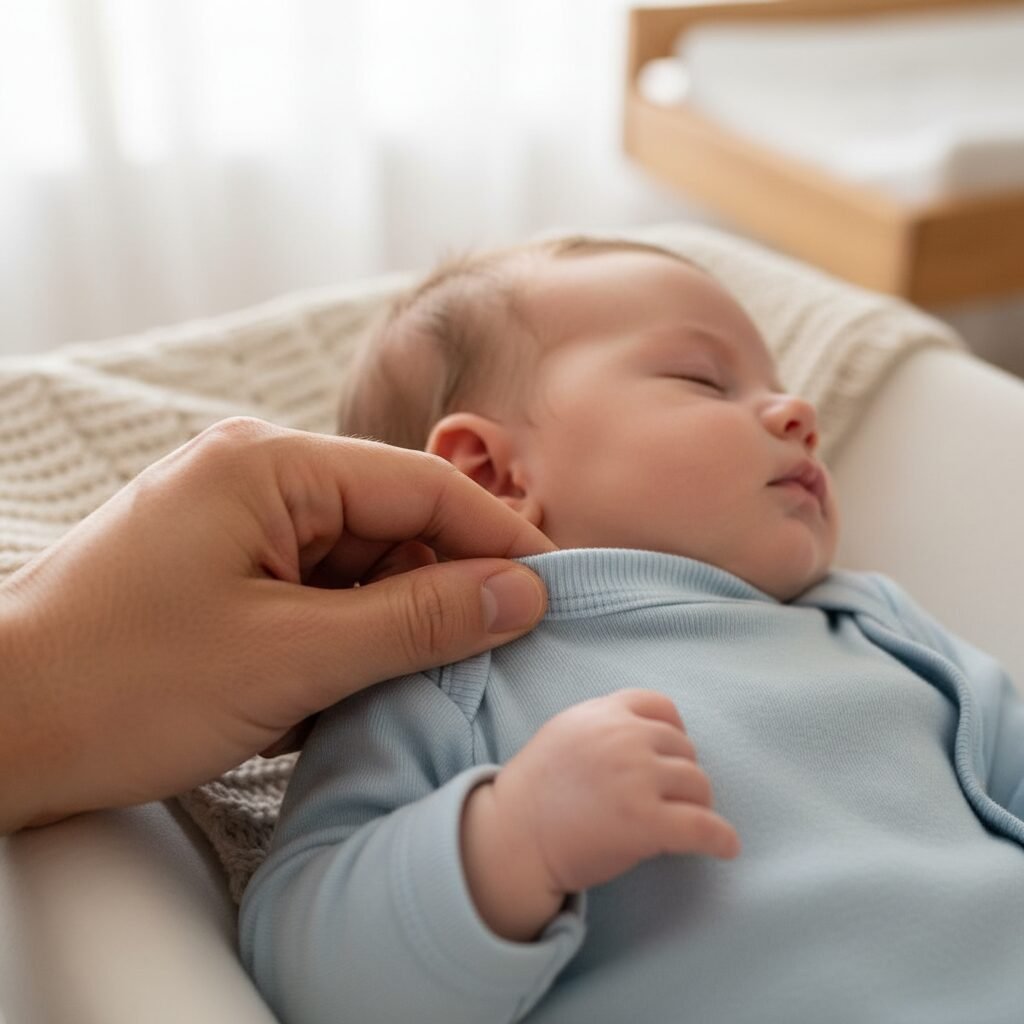
Now that you’re an expert on brand sizing, let’s talk strategy. Here are my tried-and-true tips for making sure your baby is always comfortable and you’re not wasting money on clothes that get worn once.
- Know Your Measurements: Keep a note on your phone with your baby’s current weight and height. When shopping online, always, always look for the brand’s specific size chart and buy based on those numbers, not the age on the label.
- When in Doubt, Size Up: This is the golden rule of baby clothes. They will always grow into it. A little extra room is fine, but clothes that are too tight are uncomfortable and can even be unsafe, especially for sleep.
- The Pre-Wash Test: Baby clothes, especially 100% cotton items, are notorious for shrinking. Before you commit to a brand, buy one piece, wash and dry it, and see how it fits. If it shrinks significantly, you’ll know to size up for future purchases.
- Consider the Diaper: Are you using bulky cloth diapers? You will almost certainly need to size up in pants and onesies to accommodate the extra fluff in the trunk!
- The One-Finger Rule: For a safe and comfortable fit, you should be able to easily slip one finger between the fabric and your baby’s neck, wrists, and ankles. If it’s a struggle, it’s too tight.
- Shop Secondhand to Experiment: A great way to try out different brands without a big investment is to shop at consignment stores or online marketplaces. You can see how different brands fit your baby and find your favorites.
- Keep Receipts and Tags: It’s so tempting to wash everything from your baby shower at once, but resist! Keep tags on and receipts handy. You might receive a dozen ‘Newborn’ outfits only to have a 9-pound baby who goes straight into ‘0-3 Months’.
Beyond the Onesie: Sizing for Sleepers, Socks, and Outerwear
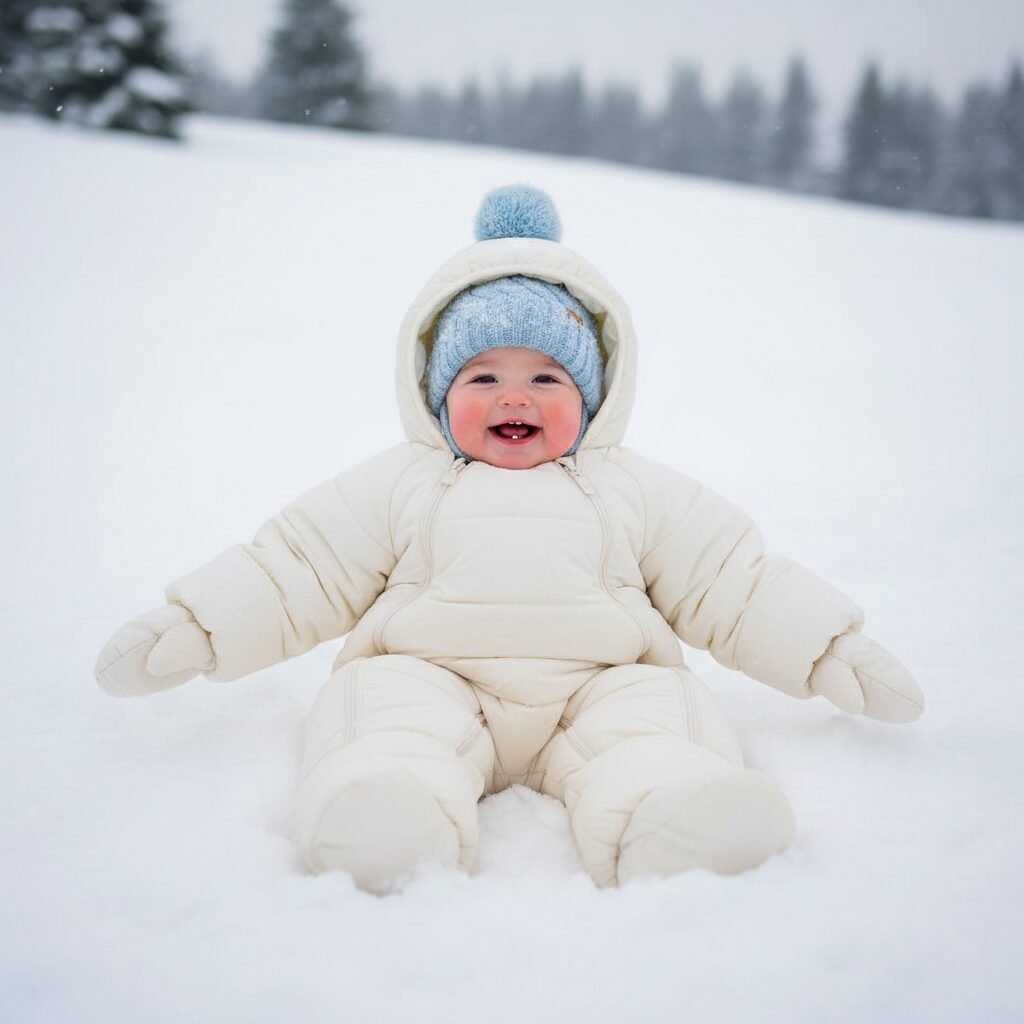
Sizing woes don’t stop at onesies! Other essential items have their own quirks. Here’s a quick rundown on how to navigate them.
Pajamas & Sleepers
This is where fit is a matter of safety, not just comfort. To reduce fire risk, the Consumer Product Safety Commission (CPSC) mandates that baby and children’s sleepwear must be either flame-resistant or snug-fitting. Most of the soft, breathable cotton or bamboo sleepers you love fall into the snug-fitting category. This is why they often look so long and skinny! Don’t be tempted to size up too much for sleepwear. You want it to be close to the body without being constricting.
Socks & Booties
The eternal quest to find a baby sock that actually stays on! Sock sizing is often grouped into larger age ranges (e.g., 0-6 months). Look for socks with good elastic at the ankle but not so tight that it leaves a mark. Brands like Bombas or Zutano booties are often parent-favorites for their ability to stay put.
Outerwear & Layers
For jackets, fleece buntings, and snowsuits, you should definitely size up! You need to account for the layers of clothing your baby will be wearing underneath. It’s better for a snowsuit to be a little roomy than to be too tight to zip up over their regular clothes. This is one area where buying for them to ‘grow into’ is a very smart strategy.
Conclusion
My dear new parent, I hope this guide helps you feel more confident and less stressed when it comes to dressing your baby. Remember to give yourself grace. Navigating the world of baby clothes is a learning process, and you will become an expert on your own baby’s needs faster than you think. Don’t worry about the number on the tag. Focus on your baby’s comfort and cues. As long as they are happy, safe, and cozy, you are doing a fantastic job. Now go enjoy those sweet baby snuggles—they grow out of those even faster than they grow out of their clothes!