

The Snot Sucker Hack: Clear Your Baby’s Stuffy Nose in Seconds
That little snuffling sound. The tiny, congested breaths. The struggle to nurse or take a bottle. If there’s one thing that can send a new parent into a spiral of worry, it’s a baby with a stuffy nose. You feel so helpless! But what if I told you there’s a simple, game-changing tool that can clear those tiny nasal passages in seconds? Welcome, dear parent, to the world of the nasal aspirator—or as we lovingly call it, the snot sucker.
Before you get grossed out, hear me out. As a pediatric nurse and lactation consultant, I’ve seen this little device work miracles. Babies are what we call ‘obligate nose breathers’ for the first few months of life, meaning they haven’t quite mastered breathing through their mouths yet. So, when their nose is blocked, it can disrupt everything from feeding to sleeping. In this guide, we’ll walk through everything you need to know to become a confident, snot-sucking pro. Let’s get your little one breathing easy again!
Understanding Your Baby’s Tiny Nasal Passages
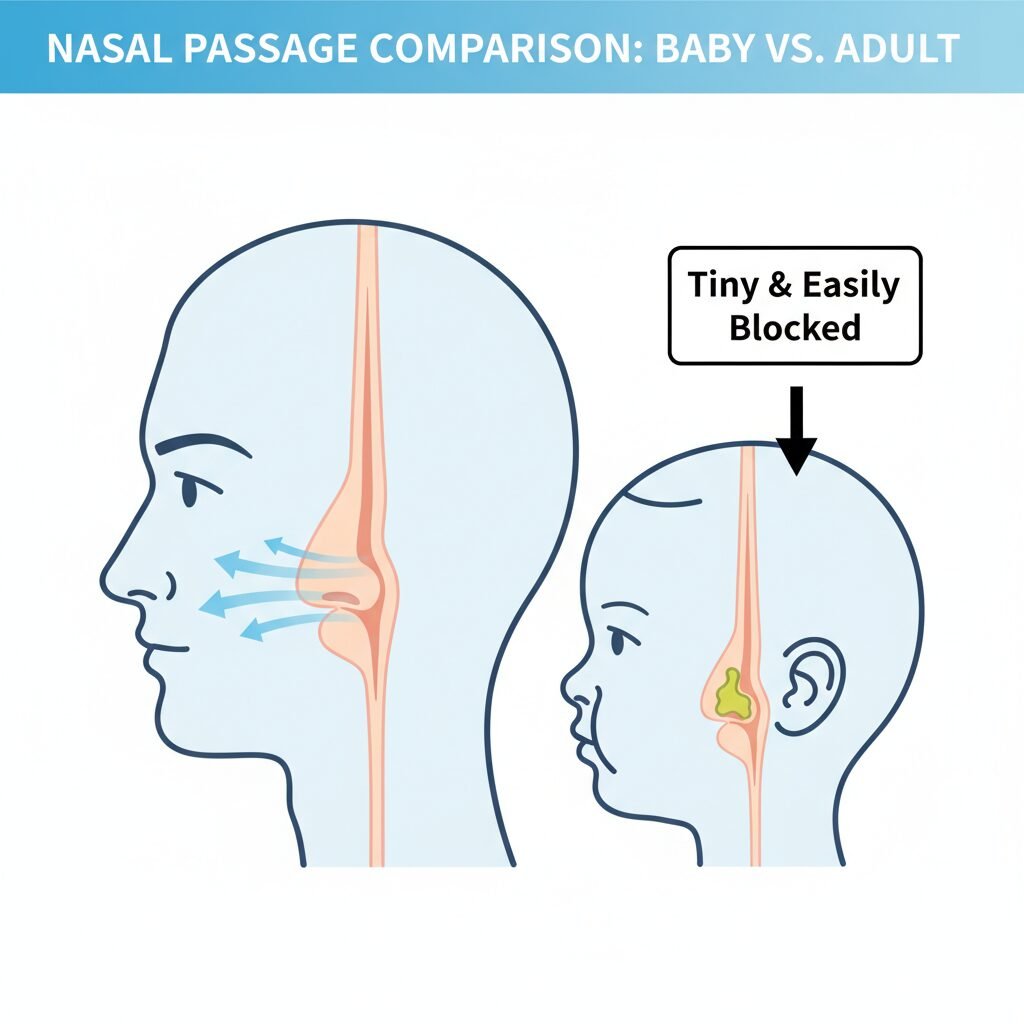
Why Is My Baby Always So Congested?
First things first, let’s normalize this. It can be alarming, but it’s incredibly common for newborns and infants to sound like a tiny freight train. Their nasal passages are minuscule—seriously, think the diameter of a coffee stirrer! It doesn’t take much to cause a blockage.
Here are the usual suspects behind that stuffiness:
- Leftover Amniotic Fluid: In the first few days of life, it’s very common for babies to be clearing out fluid from their time in the womb. This usually resolves on its own.
- Dry Air: Indoor heating in the winter or air conditioning in the summer can dry out the air and, in turn, your baby’s delicate nasal membranes. This can cause mucus to thicken and become trapped.
- Irritants: Things that are harmless to us can be major irritants for a baby. Think dust, pet dander, strong perfumes, or cigarette smoke. Their systems are brand new and highly sensitive.
- The Common Cold: Yes, even tiny babies can catch colds. Their immune systems are still developing, making them more susceptible to viruses. While it’s usually mild, it will definitely come with a runny, stuffy nose.
- Spit-Up: Sometimes, a little milk can come up and go into the back of the nasal passage, causing temporary congestion and sneezing.
For the most part, a stuffy nose is more of a nuisance than a danger. But because it impacts feeding and sleep—two of the most important things for a growing baby (and a sane parent!)—learning how to manage it is a key parenting skill.
The Snot Sucker Showdown: Choosing Your Tool
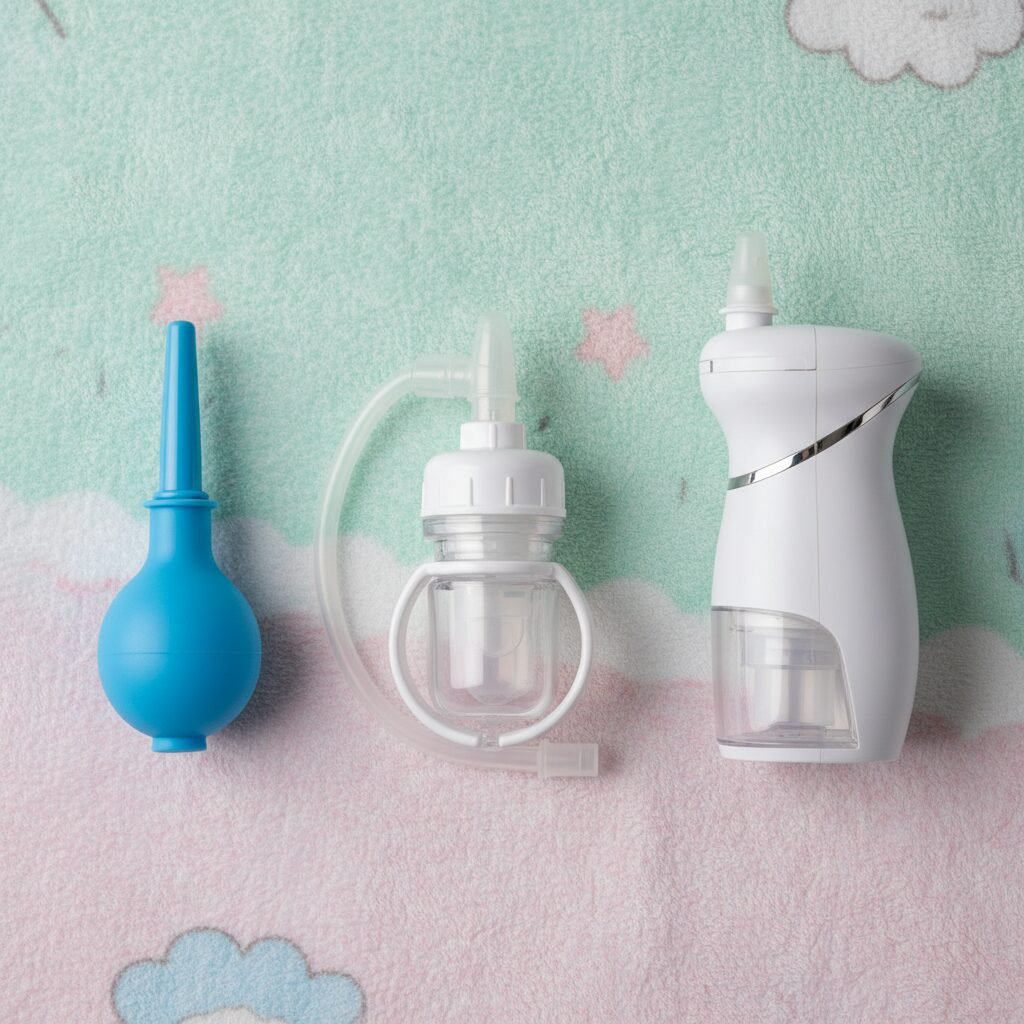
Not All Snot Suckers Are Created Equal
When you walk down the baby aisle, you’ll see a few different options. Let’s break down the pros and cons of each so you can choose the best one for your family.
| Type of Aspirator | How It Works | Pros | Cons |
|---|---|---|---|
| The Bulb Syringe | The classic blue or green rubber bulb you get from the hospital. You squeeze the air out, gently insert the tip, and release to create suction. | Inexpensive, readily available, familiar. | Weak suction, impossible to see if it’s truly clean inside (which can lead to mold growth), can be difficult to control. |
| Human-Powered Aspirator | This is the ‘hack’! A tube goes against baby’s nostril, and you use your own mouth on a mouthpiece to gently suck the mucus out. A disposable filter prevents any transfer. | Excellent, controllable suction, easy to clean, hygienic filter system, very effective. | The ‘ick’ factor can be a mental hurdle for parents (but it’s perfectly safe!), requires purchase of filters. |
| Electric Aspirator | A battery-powered device with a soft tip. You press a button, and it creates a continuous, gentle suction. | Consistent suction, no ‘ick’ factor, can be less intimidating for some parents. | Can be expensive, the noise and vibration can scare some babies, requires batteries or charging. |
A Nurse’s Tip: While all types can work, I almost always recommend the human-powered aspirator to new parents. The level of control you have is unmatched, and it’s by far the most effective at clearing stubborn, thick mucus. Just take a deep breath and get over the mental block—you’ll be so glad you did!
The Gentle & Effective Technique to Clear That Nose
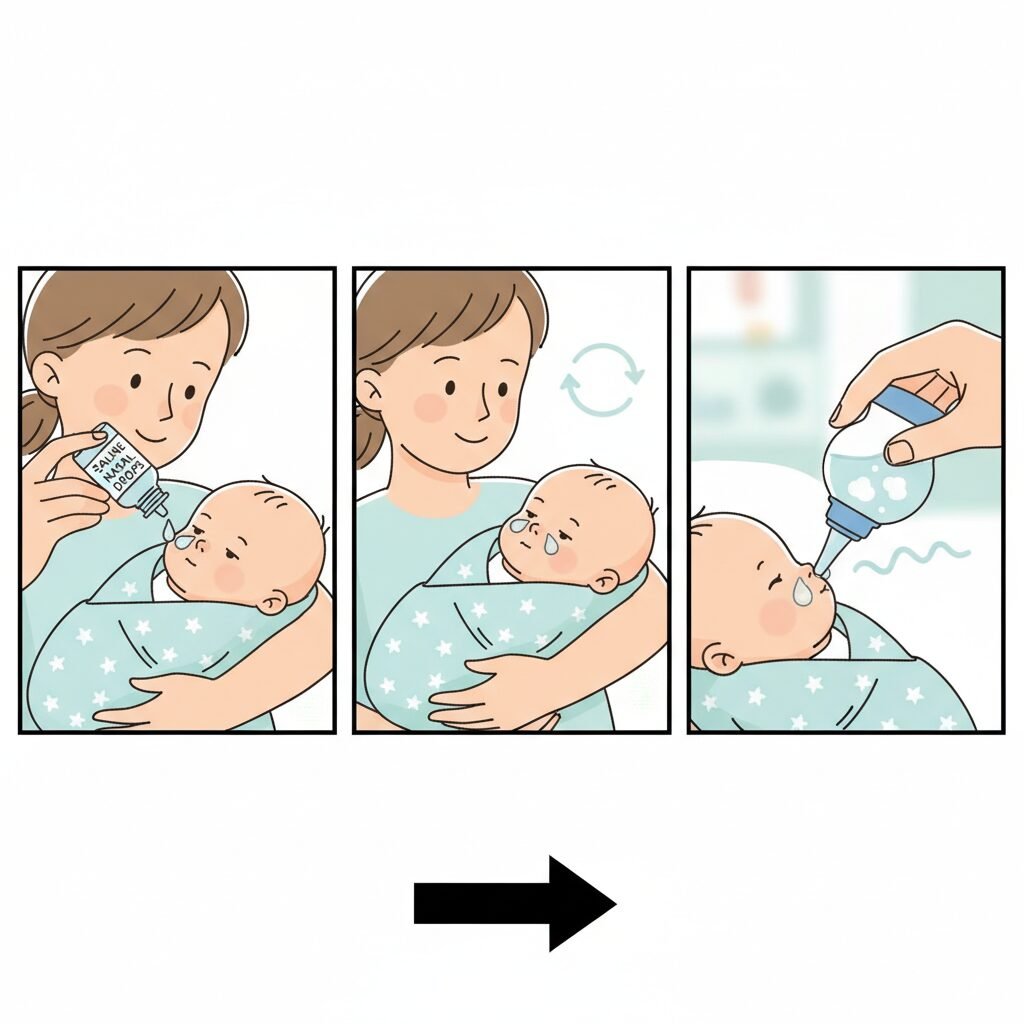
The Snot Sucker Hack: A Step-by-Step Guide
Alright, it’s go-time. You’ve got your tool, and your baby is sniffling. Don’t be nervous! With the right technique, this can be a quick and painless process for everyone. Just think of yourself as the ‘Congestion Relief Officer’.
- Step 1: Assemble Your Toolkit. Get everything ready before you get the baby. You’ll need your nasal aspirator (clean and ready to go), a gentle saline spray or drops for infants, and a soft burp cloth or tissue for cleanup. A calm environment helps, so maybe put on some soft music.
- Step 2: The Magic Ingredient – Saline! This is the most important step, and the one most parents skip. You can’t suck out dry, sticky mucus. Saline spray or drops will loosen and liquefy everything, making it a hundred times easier to remove. Lay your baby on their back, tilt their head back slightly, and put 1-2 drops of saline in each nostril.
- Step 3: Wait a Moment. Let the saline work its magic for about 30 to 60 seconds. You might even see some mucus start to run out on its own. This is a good sign! You can use this time to sing a little song or talk to your baby reassuringly.
- Step 4: Position and Suction. If your baby is squirmy, you can try swaddling them to keep their arms secure. Keep their head supported.
For a Human-Powered Aspirator:
Place the large, soft tip of the tube so it creates a seal against the outside of the nostril—you don’t need to shove it way up inside! Put the red mouthpiece in your mouth. Now, inhale as if you’re sipping a thick milkshake. Start gently and increase the suction as needed. You’ll see the mucus collect in the tube (it’s surprisingly satisfying!) and the filter will stop anything from reaching you. Repeat on the other side.
For a Bulb Syringe:
Squeeze all the air out of the bulb first. While still squeezing, gently insert the tip just inside the nostril. Release the bulb slowly to suction out the mucus. Remove it from the nose before squeezing it out onto a tissue. Repeat on the other side.
- Step 5: Clean Up and Cuddle. Gently wipe your baby’s nose with a soft cloth. Most importantly, give them lots of praise and cuddles! They did a great job. Immediately wash your aspirator with hot, soapy water to keep it hygienic for the next use.
Important Safety Warning: Be gentle! Your baby’s nasal lining is very delicate. Avoid suctioning more than 3-4 times in a 24-hour period, as overdoing it can cause inflammation and make the congestion worse.
Making Snot Sucking Less Scary (For Both of You!)

Pro Tips for a Tear-Free Experience
Some babies don’t mind this process at all, while others act like you’re performing a tiny exorcism. If your baby falls into the latter category, don’t worry. Here are a few tricks to make it a more positive experience.
- Timing is Everything: The best time to suction is about 15-20 minutes before a feeding or a nap. A clear nose will make it much easier for them to eat and fall asleep. Avoid suctioning right after a feed, as this can sometimes trigger spit-up.
- Bring in the Steam: Run a hot shower and sit in the steamy bathroom with your baby for 10-15 minutes before you suction. The warm, moist air is fantastic for loosening stubborn mucus.
- Use a Humidifier: Running a cool-mist humidifier in the nursery, especially at night, can prevent the air from getting too dry. This helps keep nasal passages moist and less prone to getting clogged. Just be sure to clean it regularly according to the manufacturer’s instructions to prevent mold growth.
- Make it a Duet: If you have a partner, make it a two-person job. One person can hold, distract, and soothe the baby while the other focuses on the suctioning. This can make the process much faster and less stressful.
- Stay Calm and Cheerful: Babies are incredibly perceptive. If you’re anxious and tense, they will be too. Use a calm, happy voice. Sing a silly song about the ‘Nose Monster’. Your relaxed energy will make a huge difference.
When a Stuffy Nose Is More Than Just a Stuffy Nose

Red Flags: When to Call the Pediatrician
As a new parent, it’s easy to worry about every little sniffle. Let me reassure you: 99% of the time, a stuffy nose is just that. However, it’s also important to know the signs that something more serious could be going on. You should call your doctor or seek medical advice if you notice any of the following:
- Signs of Labored Breathing: This is the most important thing to watch for. Look for nostrils flaring out with each breath, grunting sounds, or ‘retractions,’ which is when the skin between the ribs or at the neck sucks in with each breath.
- A Fever: For a baby under 3 months old, any rectal temperature of 100.4°F (38°C) or higher is considered a medical emergency. For older babies, a high or persistent fever is cause for a call.
- Refusing to Eat: If the congestion is so bad that your baby is consistently refusing to nurse or take a bottle, or is showing signs of dehydration (like significantly fewer wet diapers), it’s time to call.
- Extreme Irritability or Lethargy: If your baby is crying inconsolably and cannot be soothed, or if they are unusually sleepy and difficult to wake, you should have them checked out.
- Congestion Lasting More Than 10-14 Days: A typical cold should start to improve within about a week or so. If the stuffiness is lingering without improvement, it’s worth mentioning to your doctor.
Please remember this cardinal rule of parenting: Trust your gut. You know your baby better than anyone. If you feel like something is wrong, it is never a bother to call your pediatrician’s office. We are here to help and would much rather you call for peace of mind.
Conclusion
Navigating the world of baby care can feel like a series of puzzles, and a stuffy nose is one of the first and most common ones you’ll face. But now, you’re equipped with the knowledge and the technique to solve it. By combining the gentle power of saline with an effective nasal aspirator, you can provide your baby with quick, comforting relief, helping them get back to the important business of eating, sleeping, and growing.
Remember to be patient with your baby and with yourself. You’re learning, and you’re doing a fantastic job. Every sniffle you clear is another way you’re showing your baby love and care. You’ve got this!