The “Pinch Test”: Is Your Newborn’s Winter Coat Car Seat Safe?
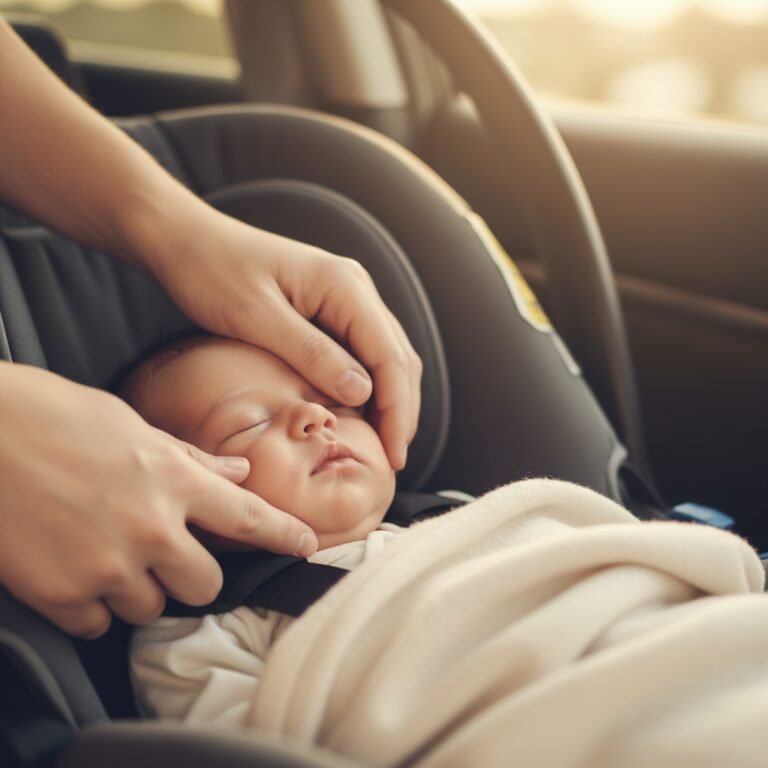
Welcome to parenthood, where your heart now lives outside your body and your brain is on constant high alert for potential dangers! As the temperature drops, your first instinct is to bundle up your precious newborn in the coziest, puffiest winter coat you can find. It’s a picture of pure winter sweetness. But what if I told you that this very act of love could be a serious safety hazard in the car?
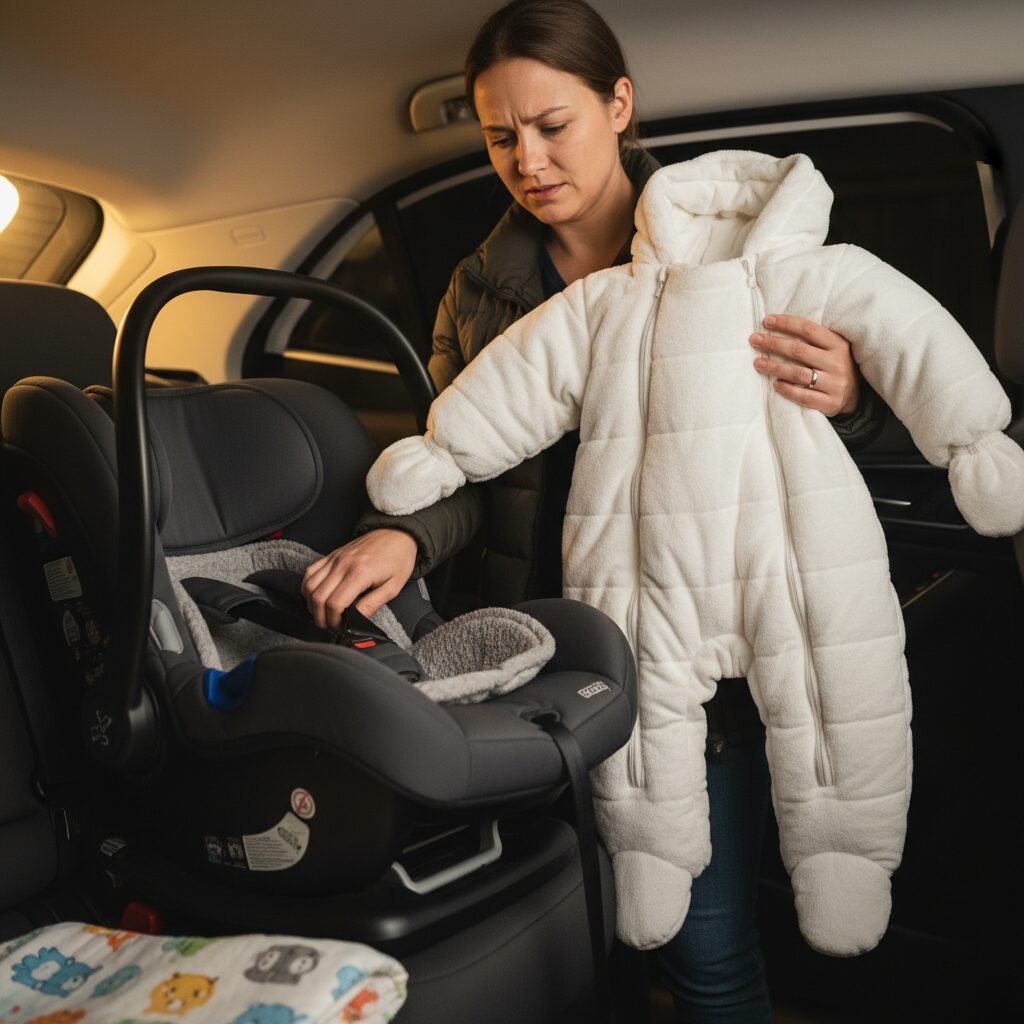
It sounds completely backward, I know. We want them warm! We want them snug! But when it comes to car seat safety, bulky winter coats and snowsuits are a major no-no. In the event of a crash, the fluffy padding in a coat can compress, creating a dangerous amount of slack in the harness straps. This means the harness that you thought was tight is suddenly far too loose to hold your baby securely.
Don’t panic! You are not a bad parent for wanting to keep your baby warm. You’re a great parent for being here and learning how to do it safely. I’m going to introduce you to a simple, foolproof trick that child passenger safety technicians swear by: The Pinch Test. It’s a quick check that will give you peace of mind all winter long, ensuring your little one is both perfectly warm and perfectly safe on every journey.
The Hidden Danger of Puffy Coats: Why Fluff is a Foe in the Car Seat
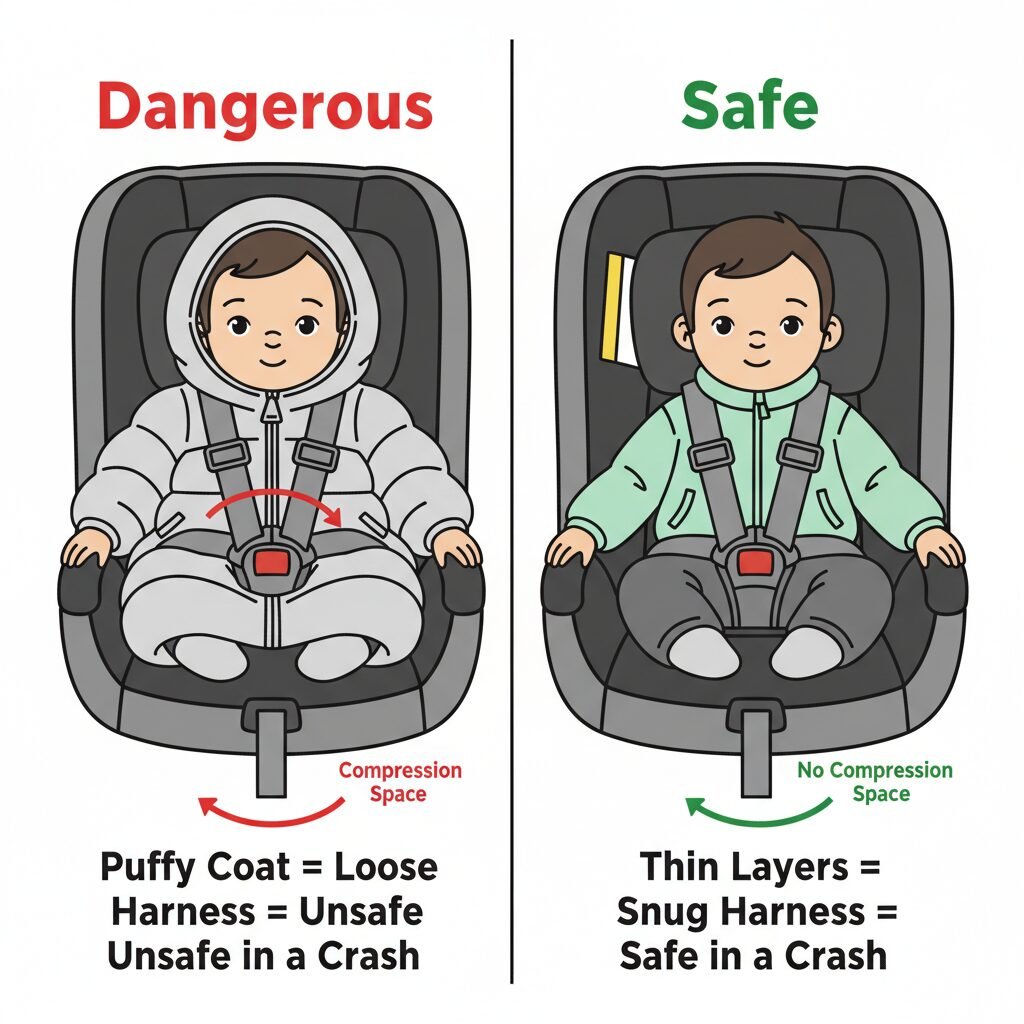
Let’s break down exactly what’s happening between that puffy coat and the car seat harness. Imagine you’re trying to securely wrap a gift, but you put a big, fluffy blanket around it first. No matter how tightly you pull the ribbon, you’re really just tightening it around the blanket, not the gift itself. If the blanket were to vanish, the ribbon would be incredibly loose.
That’s what happens with a winter coat in a crash. The forces of a collision are immense, and they instantly compress all the air and fluffy padding out of the coat. A harness that felt snug against the coat suddenly has several inches of slack. This extra space can be enough for a child to be ejected from their seat in the worst-case scenario. It’s a terrifying thought, but understanding the ‘why’ is the first step to preventing it.
The Physics of Fluff
Car seat harnesses are designed to work in direct contact with a child’s body. They need to fit snugly against their strong, bony points like the collarbones and hips. This allows the harness to distribute the immense forces of a crash over the strongest parts of their little bodies.
When you add a bulky layer, you’re creating a soft, compressible buffer. The harness is no longer against the bone; it’s against the fluff. The crash happens in milliseconds, and in that time:
- The force of the impact pushes your baby forward into the harness.
- The air and padding in the coat are instantly squeezed flat.
- The harness is now loose, allowing your baby to travel much farther forward than they should.
- This can lead to severe head, neck, and spinal cord injuries.
This isn’t about a specific brand of coat or car seat—it’s about physics. Any compressible material, whether it’s a snowsuit, a puffy vest, or even multiple thick sweaters, can create this dangerous situation. That’s why the ‘pinch test’ is your best friend.
Your Step-by-Step Guide to the Car Seat “Pinch Test”
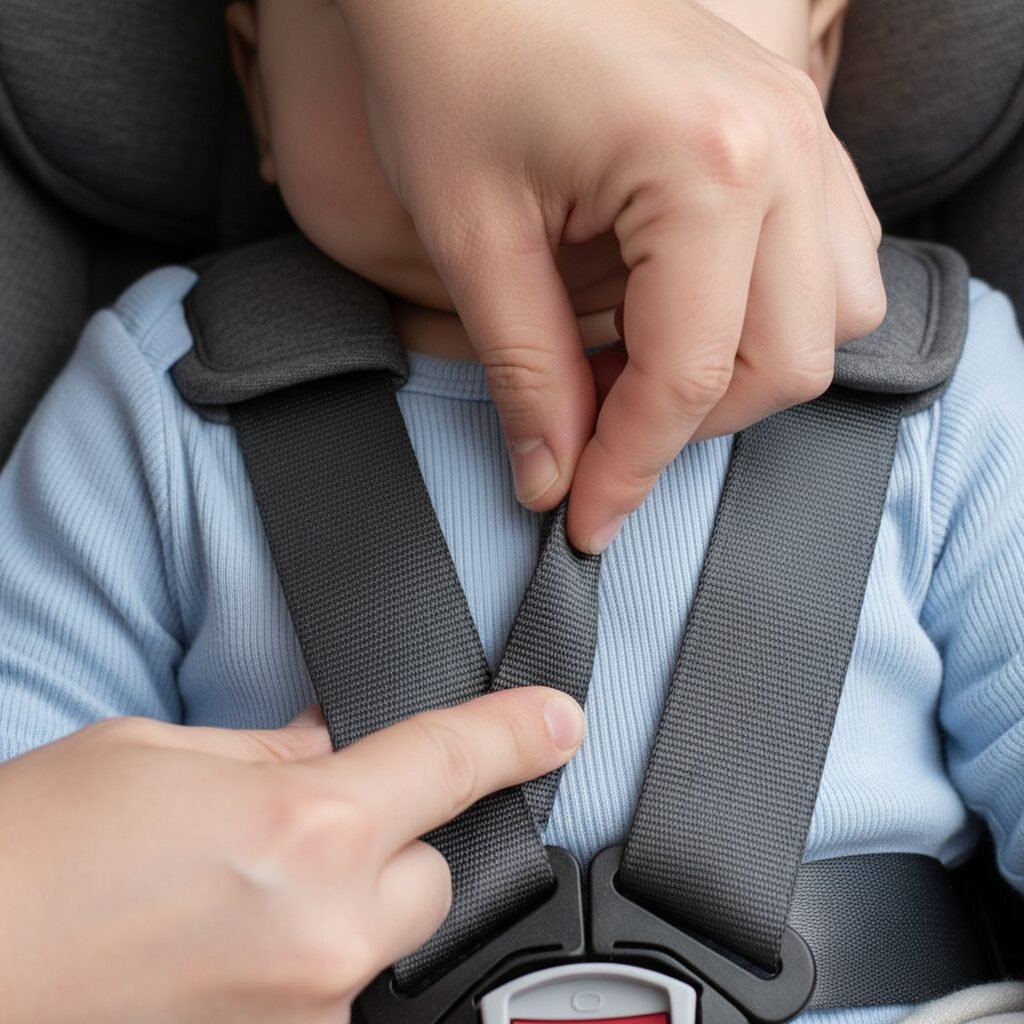
Okay, enough with the scary science, let’s get to the simple solution! The pinch test is your hands-on, confidence-building tool. I recommend trying this at home first when you’re not in a rush to get out the door. Grab your baby, their winter coat, and head to the car seat.
Here’s how to do it:
- Step 1: Dress for Success (Indoors). Put your baby in their regular indoor clothes—a onesie, a thin long-sleeved shirt, and pants is perfect.
- Step 2: The Initial Fit. Place your baby in the car seat and buckle the harness system. Clip the chest clip so it’s at armpit level. Now, pull the harness tightening strap until the straps are snug on your baby.
- Step 3: Perform the Pinch Test. Now for the key move. Using your thumb and forefinger, try to pinch a horizontal fold of the harness webbing at your baby’s collarbone. If your fingers slide right off because you can’t get a pinch of excess webbing, the harness is perfectly tight. If you can pinch some webbing, it’s too loose—tighten it a bit more and try again.
- Step 4: The ‘Aha!’ Moment. This is crucial. Without loosening the harness straps at all, unbuckle your baby and take them out of the seat.
- Step 5: Add the Puffy Coat. Now, put your baby’s puffy winter coat or snowsuit on.
- Step 6: The Reality Check. Place your baby back into the car seat with the straps still at that same, perfect tightness. Try to buckle them in. You’ll immediately see that the straps are way too short. You can’t even get the buckle to connect without a struggle. This right here is the visual proof of how much bulk that coat adds, and how much slack you would have to introduce to make it fit.
By doing this little experiment, you’ve just proven to yourself why puffy coats and car seats don’t mix. Now, you can be 100% confident in your decision to find a safer way to keep your little one warm.
Safe and Cozy Alternatives: How to *Really* Keep Your Baby Warm
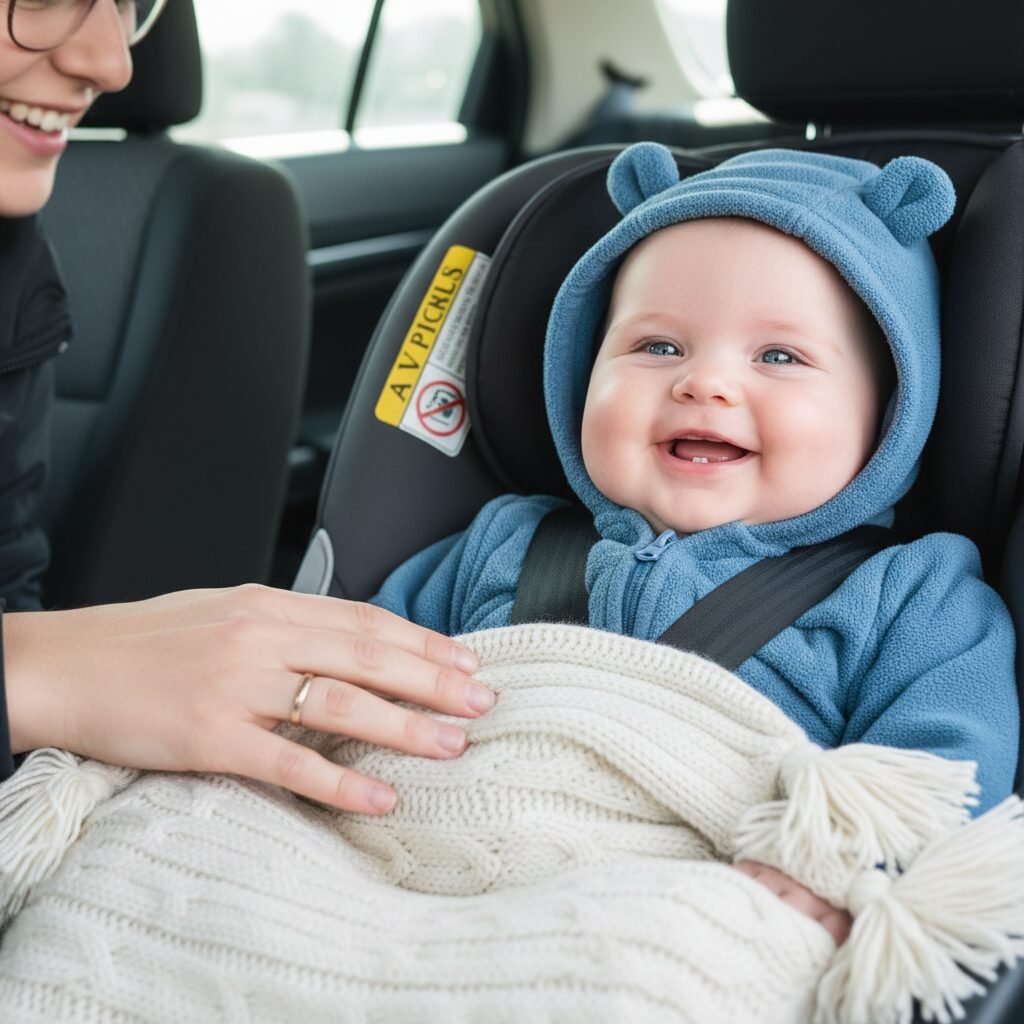
So, the puffy coat is out. How do you keep your baby from turning into a tiny icicle on the way to the car and while the car warms up? It’s all about smart, safe layering and using accessories correctly. You have so many great options!
The Golden Rules of Warmth
- Thin Layers are Your Best Friend: Dress your baby in several thin, snug layers. Think a long-sleeved onesie, followed by leggings or pants, and then a thin fleece jacket or a close-fitting sweater. Materials like fleece and wool are great insulators without being bulky.
- Hats, Mittens, Socks, and Booties: A huge amount of body heat is lost through the head and feet. A warm hat, cozy socks, and mittens can make a massive difference and are perfectly safe to wear in the car seat.
- Use the Coat Backwards: This is a genius hack! Once your baby is securely buckled into their seat, you can put their coat on them backward, over their arms and chest. It acts like a cozy blanket they can’t kick off.
- Blankets, Blankets, Blankets: The simplest solution is often the best. After buckling your baby in snugly, lay one or two thick blankets over them. Tuck the blankets in around their sides.
- Shower Cap-Style Car Seat Covers: These are a fantastic option. They are specifically designed for infant car seats and fit over the top like a shower cap, with an opening for the baby’s face. They do not go underneath the baby or interfere with the harness in any way, making them a safe choice.
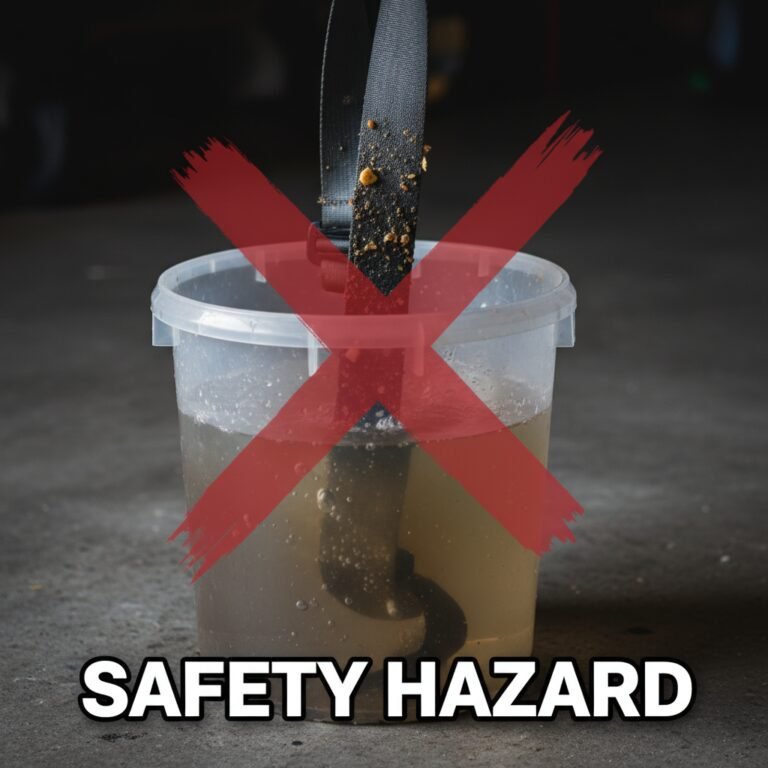
A Critical Safety Warning: Be very wary of any car seat product sold separately that requires you to thread the harness through it. This includes thick, plush inserts, buntings, or sleeping-bag style products. These are known as ‘aftermarket products’ and are not approved by car seat manufacturers. They have not been crash-tested with your specific seat and can interfere with the harness’s performance. Stick to products that go over the baby and the harness.
Safe vs. Unsafe Winter Wear: A Quick Guide
| Safe for Car Seats ✅ | Unsafe for Car Seats ❌ |
|---|---|
| Thin, snug layers (fleece, wool) | Puffy winter coats and snowsuits |
| Hats, mittens, and warm socks | Thick, bulky sweaters |
| Blankets tucked over the harness | Aftermarket harness inserts or buntings |
| Putting a coat on backward over the harness | Leaving a coat unzipped (it still adds bulk under and behind) |
| Approved ‘shower-cap’ style car seat covers | Anything that goes between your baby and the car seat |
Conclusion
See? You absolutely can keep your baby warm, cozy, and exceptionally safe all winter long. It just requires a small shift in your routine. That puffy snowsuit is perfect for a walk in the stroller or for making snow angels when they’re older, but for the car, layers and blankets are the way to go.
Remembering the ‘pinch test’ empowers you. It takes the guesswork out of the equation and replaces it with confidence. You’re navigating so many new challenges as a parent, and you’re doing an incredible job. Taking the time to learn these little safety details proves it. Now you can face the cold weather with peace of mind, knowing your precious cargo is as secure as can be.