
The “No-Kissing” Rule: How To Politely Tell Family To Back Off Your Newborn
Bringing a new baby home is a whirlwind of pure joy, tiny socks, and an overwhelming love you never knew was possible. It also brings visitors—lots of them! Grandparents, aunts, uncles, and friends are all desperate to meet your precious new arrival. And while their excitement is wonderful, it can also spark a major source of anxiety for new parents: the kissing. You have a primal instinct to protect this tiny, vulnerable human, and that instinct is spot on. That seemingly innocent smooch from a well-meaning relative can pose a real health risk to your baby.
But how do you enforce a ‘no-kissing’ rule without offending the people you love? How do you navigate hurt feelings and accusations of being ‘overprotective’? It’s a delicate dance, and you’re not alone in feeling stressed about it. As a pediatric nurse and lactation consultant, I’ve guided countless new parents through this exact situation. The goal isn’t to build walls, but to create a safe, healthy bubble for your baby during their most fragile first months. In this guide, we’ll walk through why this rule is so important, and I’ll give you the exact words and strategies to communicate your wishes with love, confidence, and kindness.
Why All the Fuss? The Very Real Risks of a Seemingly Innocent Kiss

Before we get into the ‘how,’ let’s talk about the ‘why.’ Understanding the science behind the no-kissing rule can empower you to stand firm in your decision. It’s not about being dramatic; it’s about being your baby’s best and only advocate for their health.
A newborn’s immune system is like a brand-new, empty library. It hasn’t had the time to ‘read’ or build up defenses against the millions of germs we adults carry around every day. For the first 6-8 weeks, they are operating primarily on the passive immunity they received from you during pregnancy, which is amazing but not foolproof. Their own immune system is still learning and developing, making them incredibly susceptible to infections.
The Unseen Dangers
When an adult with a healthy immune system gets a cold, it’s a nuisance. For a newborn, that same virus can be incredibly serious. Here are a few key concerns:
- Respiratory Syncytial Virus (RSV): This is a major one. In adults and older children, RSV usually just causes cold-like symptoms. But in infants, it can lead to bronchiolitis (inflammation of the small airways in the lungs) or pneumonia, often requiring hospitalization. It’s highly contagious and spread through respiratory droplets—from a cough, a sneeze, or a kiss.
- Herpes Simplex Virus (HSV-1): This is the virus that causes cold sores. An estimated 50-80% of adults carry HSV-1, and many don’t even know it because they never have symptoms. However, if transmitted to a newborn, it can cause neonatal herpes, a devastating and potentially fatal disease that can affect the skin, eyes, mouth, or even the central nervous system. A simple kiss from someone with an active (or even impending) cold sore can transmit the virus.
- Common Viruses: Even the common cold, influenza (the flu), or whooping cough (pertussis) can be very dangerous for a baby whose tiny airways can easily become blocked and whose body isn’t ready to fight back.
Remember this: Your baby’s health is not worth protecting someone else’s feelings. You are not being rude by setting a boundary; you are being a responsible and loving parent.
So when you ask someone not to kiss the baby, you’re not rejecting their love. You’re simply protecting your child from germs their brand-new body just isn’t equipped to handle yet. Think of yourself as their gentle, loving security guard for the first few months.
Preparing for ‘The Talk’: Setting Expectations Before Baby Arrives

One of the best ways to avoid awkward in-the-moment confrontations is to be proactive. Setting expectations with family and friends before they come to visit can make a world of difference. People are generally more receptive to rules when they’re presented as a general policy ahead of time, rather than a personal reaction to their actions in the heat of the moment.
The Group Announcement
A great way to inform a wider circle of friends and family is through a gentle, public-style announcement. You can do this via a social media post, a group chat, or an email update. This approach normalizes the rules and makes it clear they apply to everyone.
Example Post:
“We are so incredibly excited for everyone to meet Baby [Name]! As we prepare for visitors, we’ve been given some strict guidelines from our pediatrician to keep our little one safe during these early months. To protect their brand-new immune system, we’re asking everyone to please wash their hands upon arrival and to save all kisses for when they’re a bit older. We promise there will be plenty of time for cuddles! We can’t wait to celebrate with you all safely.”
The One-on-One Chat
For close family, especially grandparents who will likely be the most hands-on, a personal conversation is a wonderful idea. This allows you to explain your reasoning with warmth and love, making them feel like part of your ‘protection team’ rather than a potential threat.
Find a calm moment before the baby arrives or early on to say something like: “Mom, we are so, so grateful for your help and so excited for you to be a grandma. I wanted to chat about something our pediatrician was really serious about. They’ve asked us to be super careful and not let anyone kiss the baby on the face or hands for the first couple of months because of things like RSV. I know it’s hard because she’s so kissable, but it would mean the world to us if you could help us stick to this rule. We want you to have all the snuggles in the world, though!”
By framing it this way, you’re sharing information and asking for their help, which is a much softer approach than laying down the law.
Your Script Book: Gentle Yet Firm Ways to Say ‘Please Don’t Kiss the Baby’

Even with the best preparation, you’ll likely find yourself in a situation where you need to gently remind someone in the moment. It can feel incredibly awkward, but having a few phrases ready in your back pocket can make it so much easier. The key is to keep your tone light, friendly, and non-accusatory. Smile as you say it!
For the Proactive Parent
You can often prevent the kiss before it even happens by setting the ground rules as soon as a visitor arrives.
- “We’re so happy you’re here! Go ahead and wash your hands, and then you can have a cuddle. We’re just doing a ‘no-kissing’ policy for now while she’s so little.”
The ‘Blame the Doctor’ Technique
This is a classic for a reason! It shifts the focus from your personal preference to a professional medical recommendation, which is much harder for people to argue with.
- “Oh, he’s so sweet, I know! Our pediatrician put the fear of God in us about germs, though. They asked us to make sure no one kisses his face or hands for a while.”
- “I know it’s tough, but we’re on strict doctor’s orders to avoid kisses. Her immune system is still in training!”
The In-the-Moment Redirect
If you see someone leaning in for a smooch, you can physically and verbally redirect them with a warm and gentle touch.
- As they lean in, you can slightly turn the baby and say, “Oh, aren’t his little feet just the cutest? You can kiss his toes all you want!”
- “Let’s stick to cuddles for now. He loves being held close!”
The Humorous Approach
Sometimes, a little humor can diffuse any potential tension.
- “We’re accepting all applications for kisses, but they’ll be approved when he’s about three months old! For now, he’s only taking cuddles.”
- “She’s collecting a million ‘air kisses’ to start! We’re keeping her lips germ-free for a bit longer.”
Pick the phrases that feel most natural to you. Practice them with your partner. The more comfortable you are saying the words, the more kindly and confidently they will come out when you need them.
Handling Pushback: What to Do When Grandparents Get Their Feelings Hurt

This is often the trickiest part. Grandparents have waited for this baby with so much love and anticipation, and a ‘no-kissing’ rule can feel like a personal rejection. If you’re met with hurt feelings or comments like, “I kissed all of my babies and you turned out fine!” it’s important to respond with empathy, not defensiveness.
Step 1: Validate Their Feelings
Start by acknowledging their perspective. This shows you understand where they’re coming from and that you aren’t dismissing their love.
- “I know, Mom. It must feel like we’re being crazy, and I totally get that things were different when we were little. It’s not that we don’t trust you; it’s that we’re just scared first-time parents trying to follow all the new advice.”
- “I hear you. It must be so hard to want to shower him with kisses and be told you can’t. Your love is the most important thing to us and to him.”
Step 2: Offer Alternatives for Bonding
Immediately follow up by redirecting their affection to other meaningful, safe interactions. Make it clear that you want them to bond with the baby.
- “While we’re skipping face kisses, you can kiss the top of his head or his little feet all day long!”
- “Honestly, the best thing you can do is just hold her. Skin-to-skin contact is so amazing for her, and she will love cuddling on your chest.”
- “Would you like to give him his bottle? Or read him a story? He already loves the sound of your voice.”
Step 3: Gently Reiterate the ‘Why’
If they continue to push, you can gently but firmly return to the medical reasoning. Keep it brief and focused on the baby’s well-being.
- “I know you would never want to get him sick, and that’s all we’re trying to prevent. The recommendations from doctors have just changed a lot over the years, and we feel it’s best to be extra cautious.”
Remember, their hurt feelings are usually coming from a place of love. By meeting them with understanding and offering plenty of other ways for them to show that love, you can usually navigate this bump in the road and get everyone back on the same team: Team Baby.
Beyond Kissing: Other Important Visitor Etiquette
Establishing a no-kissing rule opens the door to setting a few other healthy boundaries for visitors. Creating a clear, consistent set of ‘house rules’ for visiting a newborn helps protect your baby and also preserves your sanity during the fragile postpartum period. These rules should apply to everyone, which helps prevent anyone from feeling singled out.
Here are a few other gentle guidelines you can communicate to your visitors:
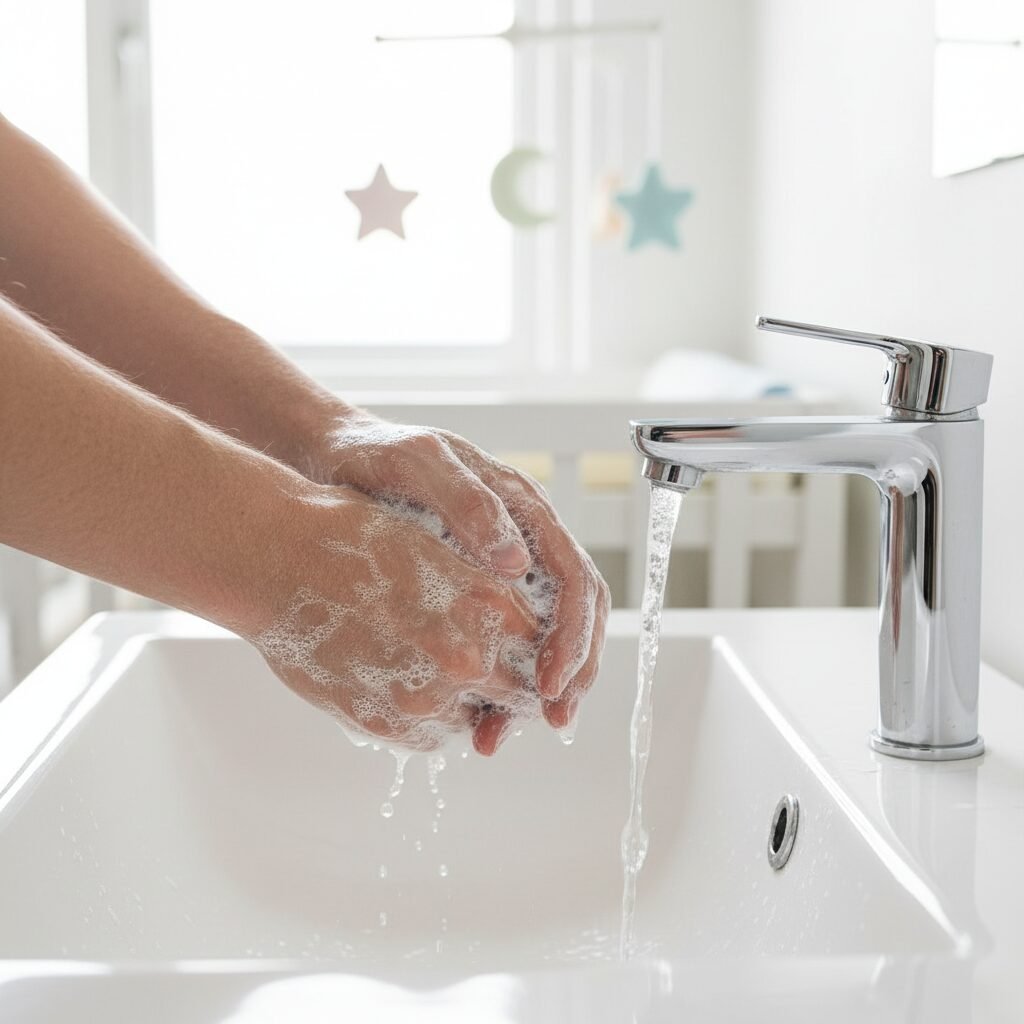
- Hand-Washing is Non-Negotiable: This is the single most effective way to prevent the spread of germs. Put a bottle of hand sanitizer by the front door and politely ask everyone, “Would you mind just washing your hands or using some sanitizer before you hold the baby?” No exceptions!
- If You’re Sick, Stay Home: This is a hard and fast rule. Make it clear ahead of time. “We’re so excited to see you, but if you’re feeling even a little bit under the weather—a sniffle, a cough, a sore throat—we’ll need to reschedule. The baby’s health is our top priority.”
- Ask Before You Pick Up: It’s courteous for guests to ask before swooping in and grabbing the baby from you or from their bassinet. This respects your role as the parent and allows you to manage the baby’s feeding and sleeping schedule.
- Keep Visits Short and Sweet: You are recovering from a major medical event and learning to care for a new human. It’s perfectly acceptable to say, “We’d love for you to visit between 2 and 3 p.m.” or to gently say after an hour, “It has been so wonderful seeing you. We’re going to try and get a nap in now while the baby is sleeping.”
- No Strong Scents: A baby’s respiratory and nervous systems are sensitive. Politely request that visitors avoid wearing strong perfumes, colognes, or lotions that could irritate the baby.
Remember, these are your rules for your baby and your home. You are in charge. Friends and family who truly love and respect you will understand and happily comply.
Conclusion
Navigating the ‘no-kissing’ rule can feel like your first big test in setting parental boundaries, and it’s a tough one. Please hear me when I say this: Your desire to protect your newborn is a beautiful, powerful instinct. Trust it. You are not being difficult, rude, or overprotective. You are being a wonderful parent who puts your child’s health and safety above all else.
Communicating these boundaries may feel awkward at first, but by being proactive, using gentle language, and speaking from a place of love, you can create a safe and healthy environment for your baby without alienating your loved ones. This is just the beginning of your journey as your child’s greatest advocate. Lead with confidence, lean on your partner for support, and soak in every single one of those precious, germ-free cuddles. You’ve got this.