
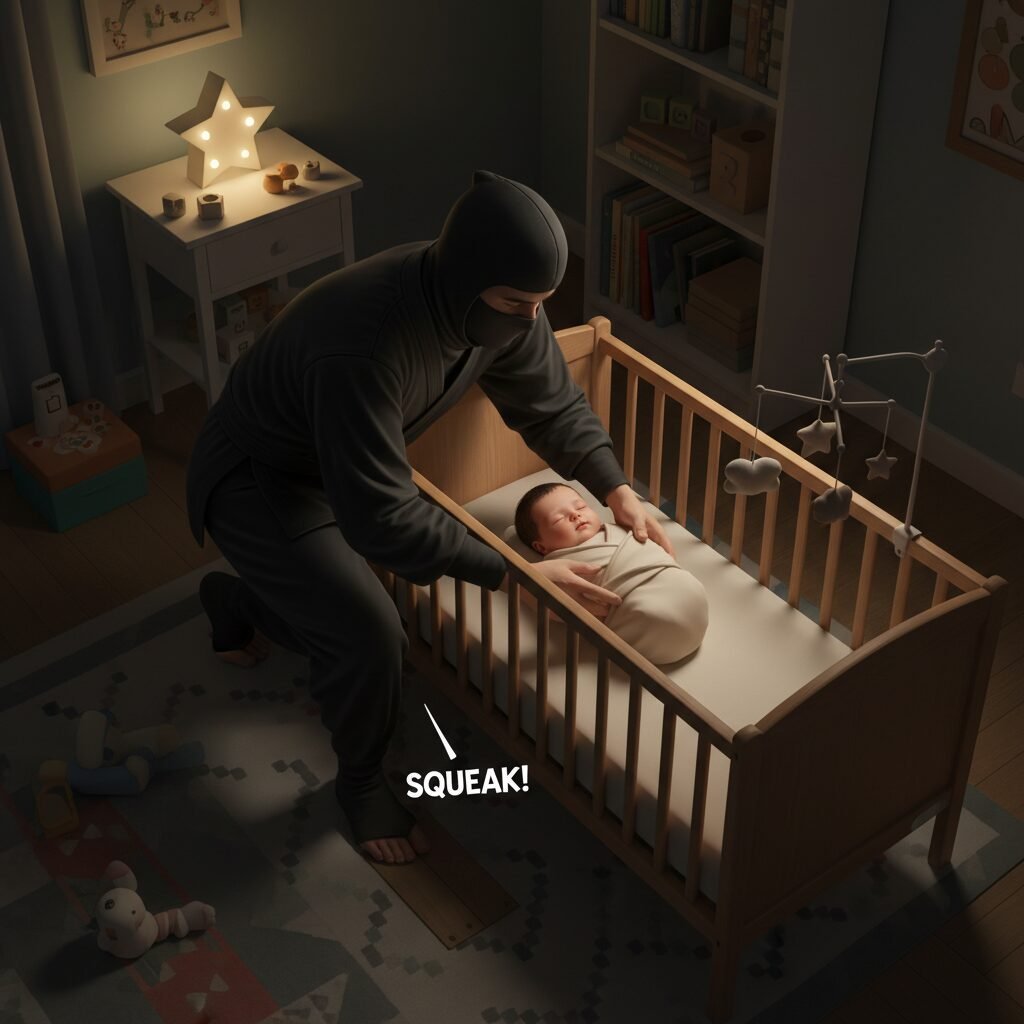
The Ninja Roll: How to Transfer a Sleeping Baby to the Crib Without Waking Them
You did it. After rocking, shushing, swaying, and singing, the tiny human in your arms has finally succumbed to sleep. Their breathing is deep and even, their little body is a warm, dead weight against your chest. A wave of relief washes over you. But then, the dread sets in. It’s time for… the transfer.
Every new parent knows this heart-pounding moment. You hold your breath, you move with the glacial pace of a sloth, you pray to every deity you can think of. But the second your baby’s back touches that cool crib mattress, their eyes pop open. The spell is broken. The mission has failed.
If this sounds familiar, take a deep breath. You are not alone, and you are not doing anything wrong! Transferring a sleeping baby is one of the most delicate operations in modern parenting. Their little systems are wired to want to be close to you. But what if I told you there was a technique—a gentle, proven method that could dramatically increase your success rate?
As a pediatric nurse and lactation consultant, I’ve shared this little secret with thousands of exhausted parents. We call it the ‘Ninja Roll.’ It’s not about magic; it’s about understanding your baby’s biology and working with it, not against it. So, let’s get you ready to master the art of the transfer and win back a few precious moments of freedom.
Preparing the Landing Zone: Pre-Transfer Prep
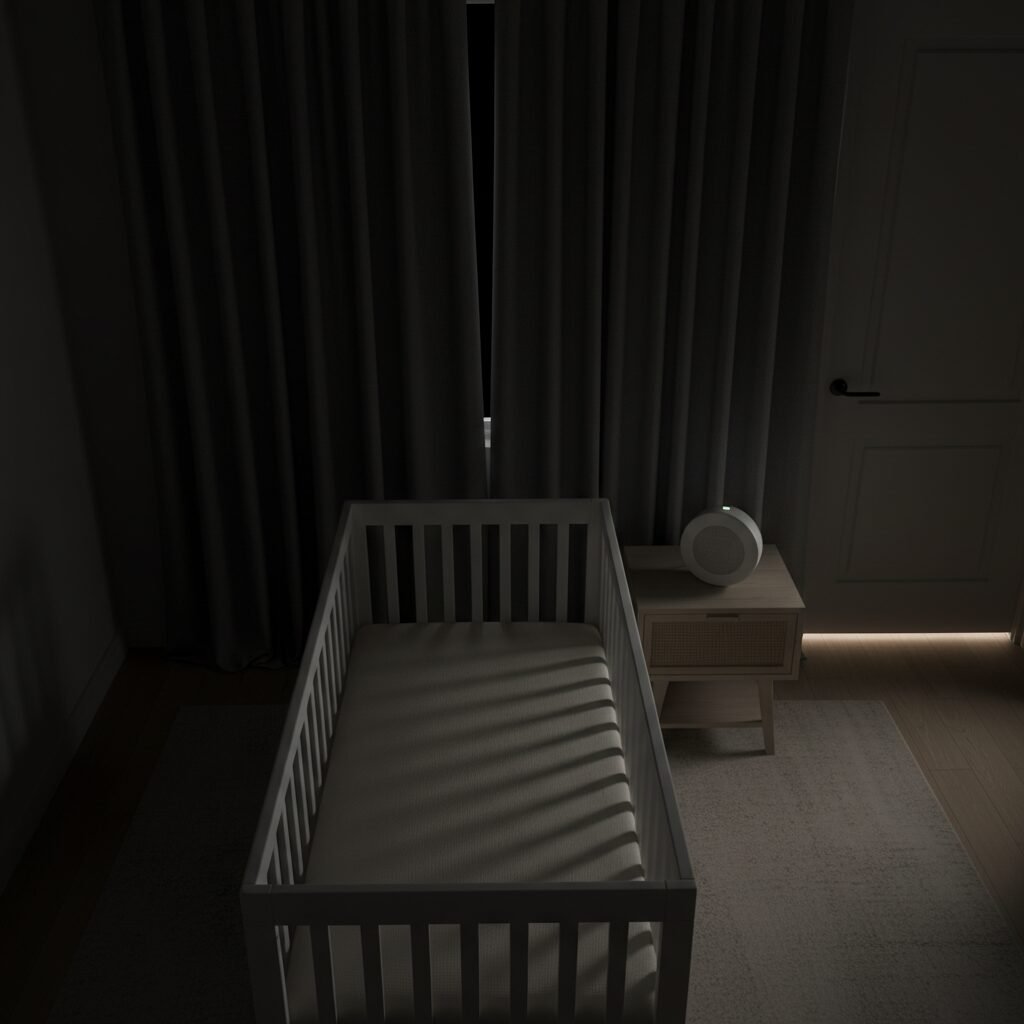
A successful ninja mission begins long before the main event. You wouldn’t sneak into a castle without a plan, and you shouldn’t attempt a crib transfer without preparing the environment first. Setting the stage properly can make the difference between a seamless handoff and a startling wake-up.
Create a Sleep Sanctuary
Your baby’s nursery should be a haven for sleep. This means optimizing it for comfort and minimizing potential disturbances.
- Safety First: The crib should have a firm, flat mattress with only a fitted sheet. There should be absolutely no loose blankets, pillows, bumpers, or stuffed animals. The safest sleep is solo sleep on their back in a clear crib.
- The Sound of Silence (or… Noise): A silent room can actually be more startling for a baby. Sudden creaks in the floorboards or a dog barking outside can easily wake them. A continuous white noise machine is your best friend. It mimics the constant sounds of the womb and masks jarring household noises. Aim for a volume similar to a running shower.
- Embrace the Dark Side: Melatonin, the sleepy hormone, is produced in darkness. Use blackout curtains to make the room as dark as possible, even for daytime naps. This helps regulate their circadian rhythm and signals that darkness means sleep.
Warm the Sheets
One of the biggest culprits of a failed transfer is the temperature change. Imagine being snuggled in a warm, 37°C (98.6°F) embrace and then being placed on a cool, flat surface. It’s a shock to the system! You can pre-warm the crib sheet to make the transition less jarring.
Safety Warning: A safe way to do this is by placing a heating pad on the crib sheet for a few minutes before you bring the baby into the room. ALWAYS remove the heating pad from the crib before you place your baby down. Never leave a baby with a heating pad or hot water bottle. A quick touch with the back of your hand will tell you if it’s pleasantly warm, not hot.
The Swaddle is Your Secret Weapon
For newborns, a snug swaddle is non-negotiable for a successful transfer. It recreates the secure feeling of the womb and, most importantly, helps contain the Moro reflex (or startle reflex). This is that involuntary arm-flailing movement that often wakes a baby the moment they feel like they’re falling. A good swaddle keeps their arms tucked in, preventing them from startling themselves awake during the delicate descent into the crib.
Reading the Signs: Is Your Baby in a Deep Sleep?

Timing is everything. Moving your baby too early, while they are still in a light stage of sleep, is a rookie mistake that almost guarantees a wake-up. You need to wait for them to enter a deep, non-REM sleep cycle. This typically happens about 15-20 minutes after they first drift off.
So, how can you tell if they’ve reached that magical state of deep slumber? You need to become a baby sleep detective and look for these key clues:
The Deep Sleep Checklist
- The Limp Limb Test: This is the gold standard. Gently lift one of your baby’s arms and let it go. If it drops heavily back down like a wet noodle, they are likely in a deep sleep. If there’s any resistance or they pull their arm back, they’re still in a light sleep phase. Abort the test and wait another 5-10 minutes.
- Slow, Rhythmic Breathing: In light sleep, a baby’s breathing can be irregular, with little sighs, grunts, and pauses. In deep sleep, their breathing becomes slow, steady, and profound.
- Relaxed Muscles: Look at their face and hands. Are their fists still clenched? Is their brow furrowed? In deep sleep, their hands will unfurl and their facial muscles will be completely relaxed and still.
- No More Eye Fluttering: The rapid eye movement (REM) phase is a hallmark of light, active sleep. You might see their eyes fluttering or moving beneath their eyelids. Once this stops completely, it’s a good sign they are transitioning into a deeper sleep stage.
Patience is your greatest virtue here. It can feel like an eternity when you’re desperate to put them down, but waiting that extra five or ten minutes for them to enter a deep sleep cycle will exponentially increase your chances of a successful transfer. Use this time to take a few deep breaths yourself and prepare for the main event.
Executing the Move: The Step-by-Step Ninja Roll
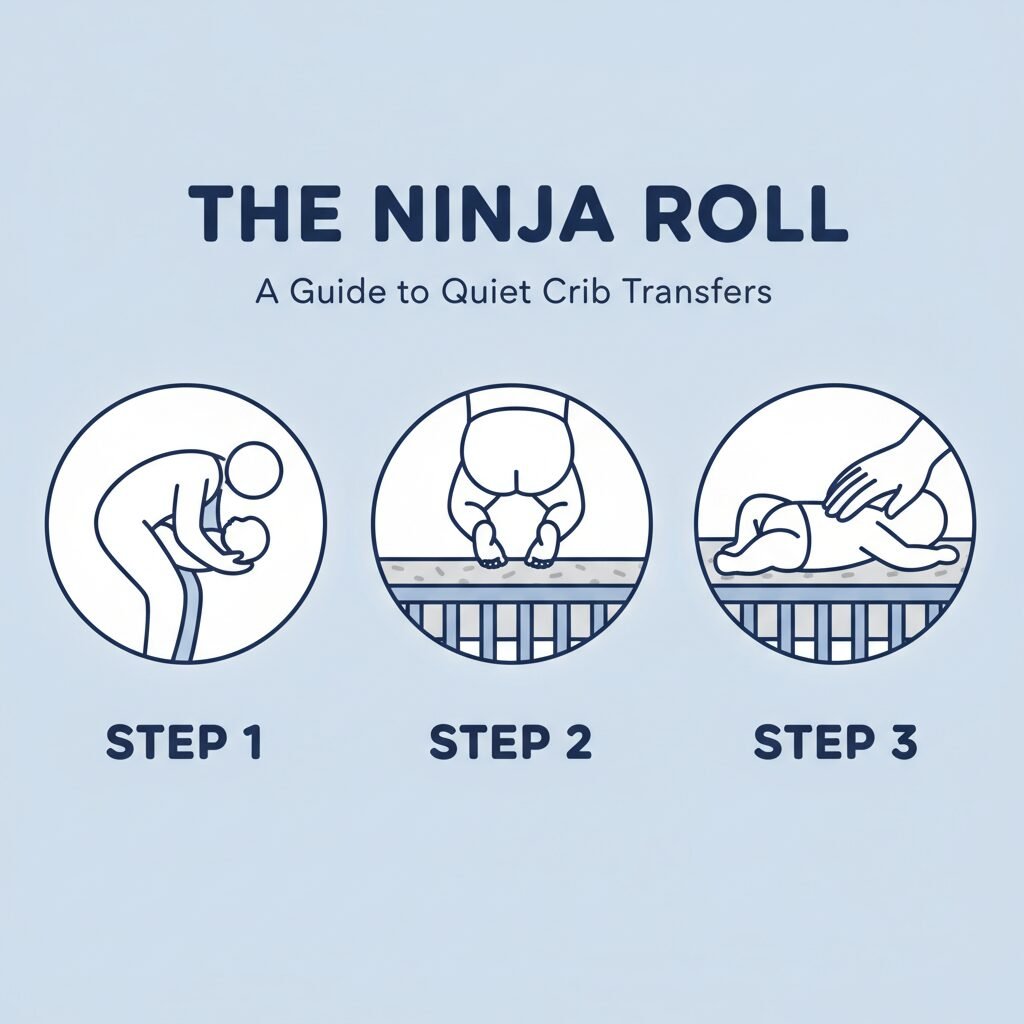
Alright, ninja parent. The room is dark, the white noise is humming, and the baby is a limp noodle in your arms. The landing zone is prepped. It’s go-time. This is the moment where technique and grace come together. Follow these steps precisely and, most importantly, move slowly and confidently.
Here is your mission briefing:
- The Approach: Cradling your baby securely against your chest, walk toward the crib. Move with a fluid, deliberate motion. No sudden jerks.
- The Descent: This is a critical step. Do not bend over at your waist. This changes the baby’s orientation to gravity and can trigger their startle reflex. Instead, get as close to the crib as possible, widen your stance, and bend at your knees and hips, like you’re doing a squat. Your goal is to lower your entire torso and the baby together, keeping them as horizontal and stable as possible.
- The Touchdown Sequence: The order in which your baby makes contact with the mattress is paramount. The biggest mistake is leading with their head or back. This mimics the sensation of falling. Instead, aim for this order:
- Feet/Bottom First: Let their little feet or bottom touch the mattress first.
- Side/Back Second: Gently roll them from their side onto their back.
- Head Last: Their head should be the very last thing to touch down. This sequence provides a sense of stability and helps prevent that dreaded Moro reflex.
- The Hand-Off: Don’t pull away immediately! This is where so many missions fail. Once your baby is on their back in the crib, keep one hand firmly and reassuringly on their chest. You can even keep your other hand cupping their head for a few moments. Your warmth and the gentle pressure are incredibly calming and help them transition from your arms to the crib.
- The Extraction: After a minute or two of stabilization, begin the final, most delicate step. Remove your hands one at a time, and do it unbelievably slowly. I mean, snail’s pace. Inch by inch. If they stir, pause and reapply gentle pressure. Once your hands are free, don’t just stand up. Back away from the crib slowly, like you’re disarming a laser grid in a spy movie.
Breathe. You did it. Now, exit the room as quietly as you entered.
Mission Aborted? What to Do When They Stir

Even the most seasoned ninja parent will have a transfer that goes awry. The key is not to panic. A little stir doesn’t always mean it’s over. Your calm and quick response can often salvage the mission and lull your little one back to sleep.
Scenario 1: The Wiggle and Grunt
You’re at the ‘Extraction’ phase, slowly lifting your hand, and suddenly your baby squirms, grunts, or lets out a tiny cry. Do not panic and snatch them up! This is the moment for a ‘tactical pause.’
Your Move: Immediately place your hand back on their chest with firm, gentle pressure. You can try a gentle, rhythmic patting on their chest or bottom. Lean in close and make a soft ‘shushing’ sound right by their ear. Often, this is enough to soothe them through the transition and back into a deep sleep. Wait until they are completely still again before re-attempting the extraction.
Scenario 2: The Eyes Pop Open
This is the red alert moment for most parents. You see those little eyes open and your heart sinks. But it’s not always a lost cause.
Your Move: Freeze. Don’t make any sudden movements. Sometimes, babies will briefly open their eyes between sleep cycles and drift back off if there are no other stimulating inputs. Keep your calming hand on their chest and continue shushing. If they seem to be settling, wait it out. If they start to escalate towards a full cry, you may need to abort the mission. Pick them up, soothe them back to a drowsy state, and decide whether to try again in 10-15 minutes or to simply hold them a bit longer.
A gentle reminder: This is a skill, not a science. Some nights will be flawless, and others will be a mess. It is not a reflection of your parenting. Be patient and kind with your baby, and most importantly, with yourself. You are both learning this dance together.
Understanding the Startle Reflex
The Moro, or startle, reflex is a primitive, involuntary response present in newborns. It’s triggered by a sudden loss of support and creates the sensation of falling. This is why bending at the waist is so problematic—it tilts the baby backward. By keeping them horizontal and ensuring their bottom and back are secure before their head, you are providing constant support and reassuring their nervous system that they are safe and not falling.
Beyond the Roll: Fostering Independent Sleep Skills
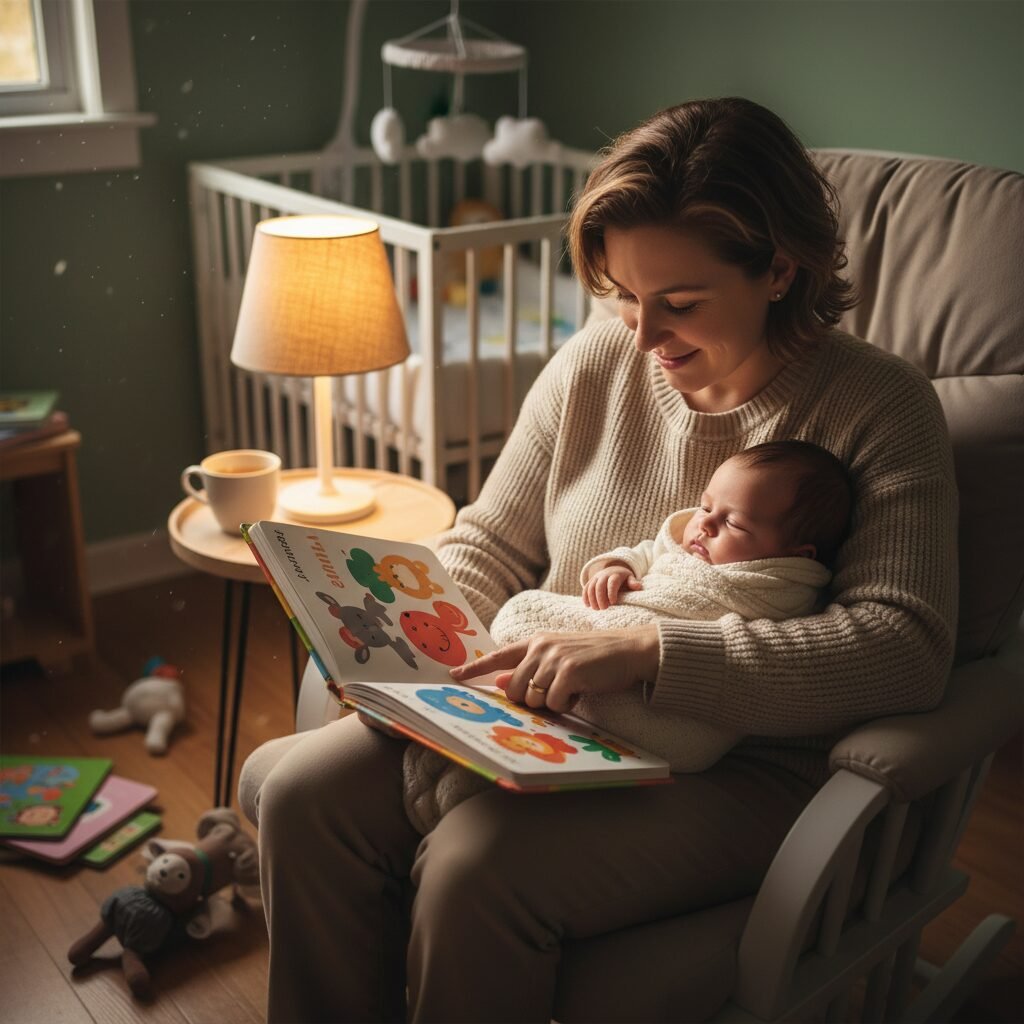
The Ninja Roll is an invaluable tool for your parenting toolkit, especially in those hazy first few months. But the ultimate goal is to help your baby learn to fall asleep on their own, without needing to be in your arms first. Think of the Ninja Roll as a bridge to help you get there, not the final destination.
As your baby grows and develops (usually around 3-4 months), you can start gently working on building independent sleep skills. This will make bedtimes and nap times easier for everyone in the long run.
Introduce a Consistent Bedtime Routine
Babies thrive on routine. A predictable sequence of events signals to their brain and body that sleep is coming. This doesn’t need to be long or complicated. A simple routine could be:
- A warm bath
- A change into pajamas and a fresh diaper
- A feed in a dimly lit room
- A short story or a lullaby
- A final cuddle and swaddle
Performing the same 3-4 steps in the same order every night helps create powerful sleep cues.
The Magic of ‘Drowsy But Awake’
This is the holy grail of infant sleep. The idea is to put your baby down in their crib when they are calm and drowsy, but not fully asleep. This gives them the opportunity to practice the skill of drifting off to sleep on their own. In the beginning, they might protest. You can offer comfort with your hand on their chest or gentle shushing. It takes practice, but it’s the foundation of healthy, independent sleep habits.
You can start practicing this for just the first nap of the day, or at bedtime, which is often the easiest time. Don’t feel pressured to do it for every single sleep. Progress, not perfection, is the goal.
Remember, the need for the Ninja Roll will naturally fade as your baby matures. They’ll become less reliant on being held to sleep and more capable of settling themselves. Enjoy the sleepy snuggles while they last, and know that by using these techniques, you’re not just getting them into the crib—you’re lovingly guiding them on the path to restful, independent sleep.
Conclusion
There you have it—the secrets of the Ninja Roll, revealed. From preparing the perfect sleep environment and learning to read your baby’s deep sleep cues, to mastering the slow, deliberate movements of the transfer itself, you are now equipped to tackle the crib transition with confidence. Remember to be patient, move slowly, and always lead with their little feet, not their head.
And on those nights when the mission fails? That’s okay, too. Give yourself grace, cuddle your baby, and remember that this phase is fleeting. Every attempt is practice, and you’re doing an incredible job. Now go forth, ninja parent. Peaceful sleep (for both of you) awaits.