

The “I Love You” Massage Technique That Helps Your Baby Poop In Minutes
There’s nothing quite like the worry that creeps in when you see your sweet baby scrunching up their face, straining, and crying from discomfort. As a new parent, every grunt and grimace can send your mind racing. One of the most common culprits for this fussiness? A backed-up baby tummy. It’s a completely normal part of newborn life, but it’s still tough to watch. Before you start worrying, I want to let you in on a little secret that pediatric nurses and seasoned parents have used for years: a simple, loving massage technique that can work wonders. It’s called the “I Love You” massage, and it’s not just an incredibly effective way to help your baby poop; it’s also a beautiful way to bond and communicate your love through touch. Let’s walk through this gentle solution together, step-by-step, so you can bring your little one (and yourself!) some much-needed relief.
Decoding Your Baby’s Tummy Troubles: Gas vs. Constipation
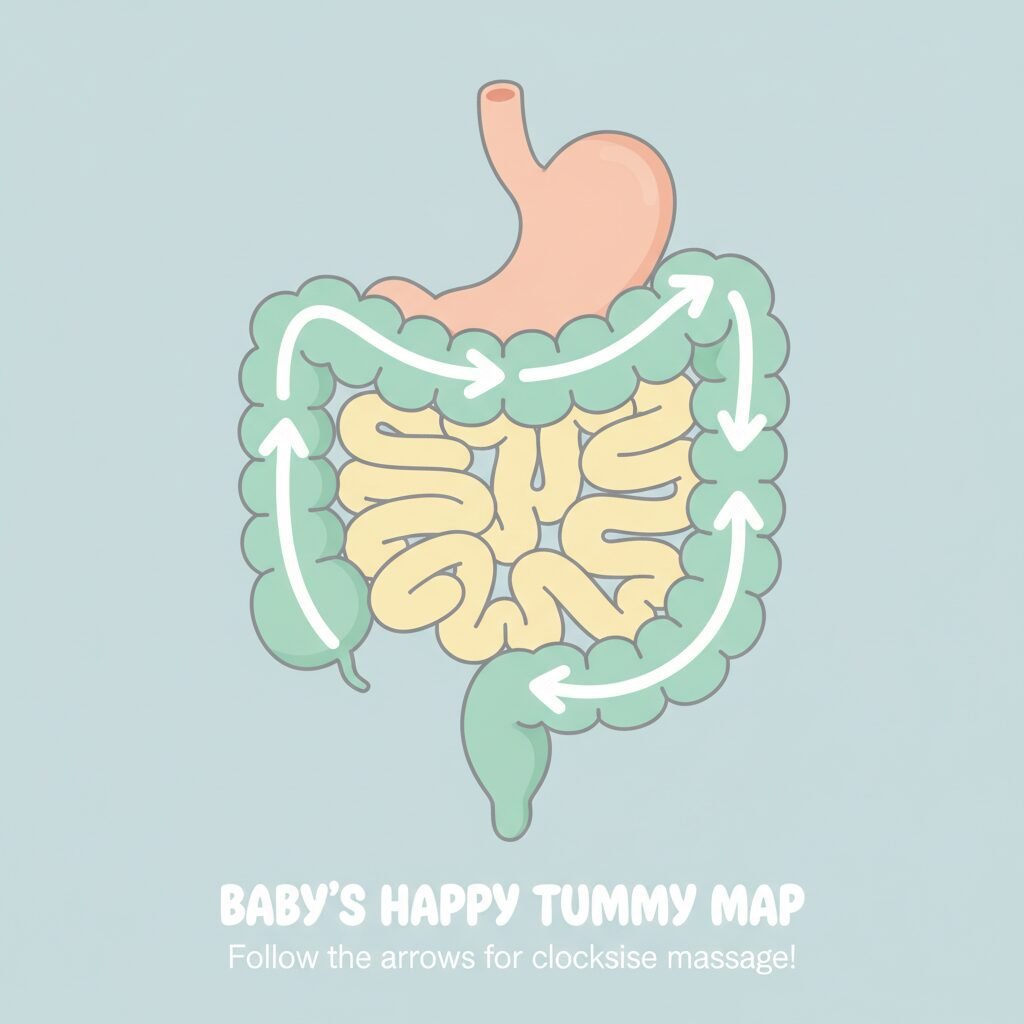
First things first, let’s talk about what’s going on in that tiny digestive system. A baby’s gut is a brand-new machine, and it’s still learning how to process milk, coordinate muscle contractions, and pass stool effectively. This learning curve is why gas, grunting, and irregular pooping schedules are so common. But how do you know if it’s just normal ‘new-engine’ noises or actual constipation?
What’s Normal for Baby Poop?
It’s important to know that a breastfed baby’s “normal” is very different from a formula-fed baby’s.
- Breastfed Babies: In the first month, they might poop after every feeding. But after 6 weeks, it’s not uncommon for them to go several days—even a week—without a bowel movement! This is because breast milk is so efficiently absorbed that there’s very little waste left over. As long as the poop is soft and mustard-like when it finally arrives, there’s usually no cause for concern.
- Formula-Fed Babies: These little ones typically poop more frequently, at least once a day. Their stool is usually a bit firmer than a breastfed baby’s, often with a consistency like peanut butter.
Signs of True Constipation
Regardless of feeding type, true constipation is less about frequency and more about consistency and comfort. Keep an eye out for these signs:
- Hard, Pebble-Like Stools: This is the number one sign. If your baby’s poop is hard and comes out in small, dry pellets, their system is struggling.
- Visible Straining with Crying: All babies grunt and turn red when they poop—this is normal and it’s called infant dyschezia. They’re learning to relax their pelvic floor while pushing with their abdomen. However, if this straining is accompanied by hard stools and inconsolable crying, it points toward constipation.
- A Firm Belly: Gently press on your baby’s tummy. If it feels hard and bloated, it could be a sign of backed-up gas and stool.
- Refusing to Eat or Spitting Up More: When a baby is backed up, there’s less room for new food, which can decrease their appetite or increase spit-up.
Seeing these signs can be stressful, but the “I Love You” massage is a fantastic first line of defense to gently encourage the digestive system to do its job.
The ‘I Love You’ Massage: Your Step-by-Step Guide
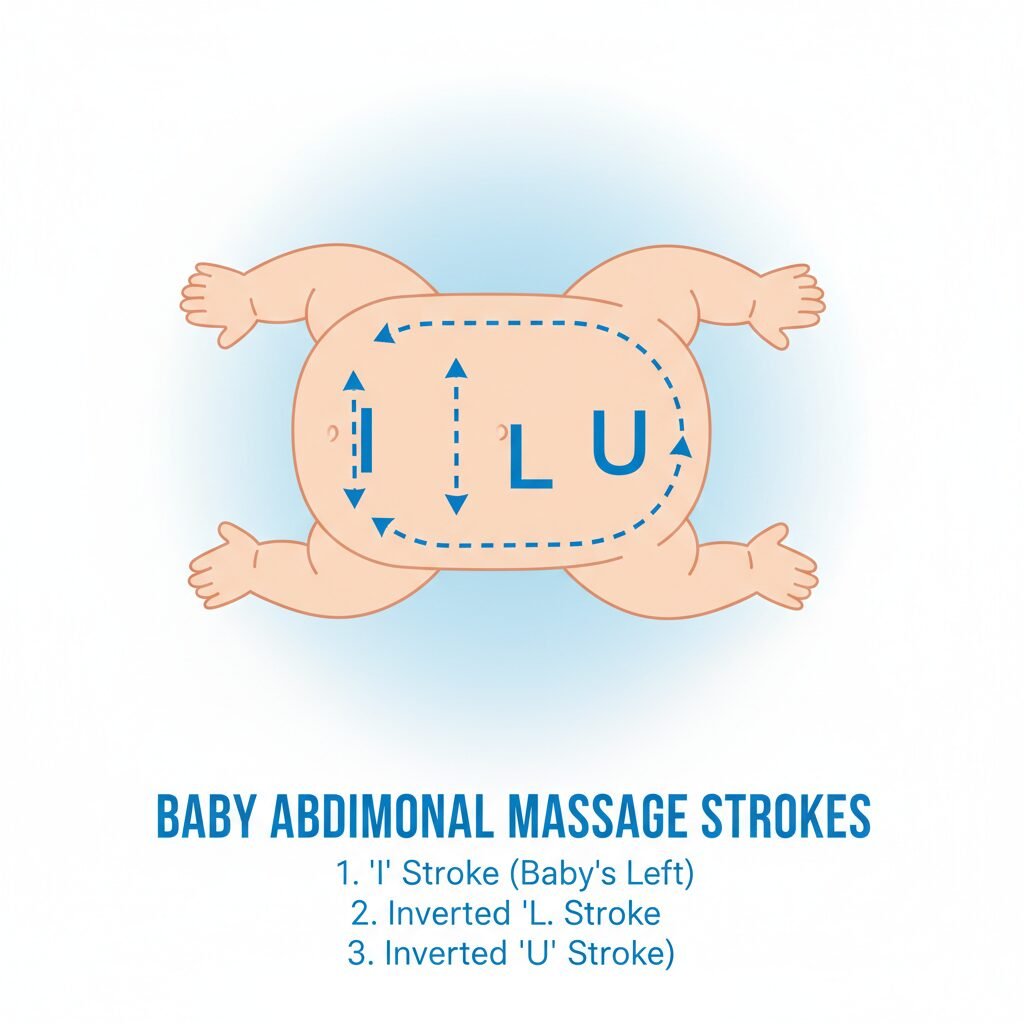
Ready to become a baby-poop-whisperer? This technique is easy to learn and so soothing for your little one. The name comes from the strokes, which trace the letters I, L, and U on your baby’s belly, following the natural path of their colon to help move things along.
Setting the Scene for Success
Before you begin, create a calm and cozy environment.
- Find a warm, draft-free room.
- Lay your baby on a soft, comfortable surface like a blanket on the floor or their changing mat.
- Make sure your baby is in a ‘quiet alert’ state—not actively crying or asleep. The best time is often between feedings, not right after one.
- Warm a small amount of baby-safe, edible oil (like coconut or olive oil) in your hands. This reduces friction and makes the massage more pleasant.
The Massage Steps
Always perform the strokes in a clockwise direction on your baby’s tummy. You are tracing the path food takes through the large intestine. Remember to be gentle; the pressure should be firm enough to engage the muscles but not so firm that it causes discomfort.
- The ‘I’: Start on your baby’s left side (your right as you face them). Stroke your fingers straight down from below their rib cage to the top of their diaper line. This is the descending colon. Repeat this stroke several times while softly saying, “I… I… I…”
- The ‘L’: Now, trace an inverted ‘L’. Start on your baby’s right side, stroke across their belly just above the belly button, and then continue down the left side (the ‘I’ stroke you just did). This moves stool along the transverse and descending colon. Repeat a few times, saying, “Love… Love… Love…”
- The ‘U’: Finally, trace an inverted ‘U’. Start low on your baby’s right side, stroke up towards the rib cage, move across the tummy above the belly button, and then go all the way down the left side. This follows the entire path of the large intestine. Repeat this motion several times while saying, “You… You… You…”
You can then put it all together, performing the sequence of I, then L, then U a few times. Pay close attention to your baby’s cues. If they seem uncomfortable or start crying, take a break. This should be a pleasant, bonding experience for both of you.
More Gentle Ways to Get Things Moving

While the ‘I Love You’ massage is a superstar, it works even better when combined with other gentle techniques. Think of these as its trusty sidekicks in the battle against baby constipation.
- Bicycle Legs: With your baby lying on their back, gently hold their ankles and move their legs in a circular, bicycling motion. This movement helps to put gentle pressure on the intestines and can break up gas bubbles. Make it fun by singing a song!
- A Warm Bath: Never underestimate the power of warm water. A soothing bath can help your baby’s abdominal muscles relax, which can relieve the tension that’s holding things in. You can even gently massage their tummy while they are in the tub.
- Supervised Tummy Time: Tummy time isn’t just for strengthening neck muscles! The gentle pressure on the abdomen can also help stimulate a bowel movement. Just make sure it’s on a firm surface and you are watching them the entire time.
- Hydration Check: For formula-fed babies, ensure you are mixing the formula exactly according to the instructions. Too much powder can lead to dehydration and constipation. If your baby is over 6 months and eating solids, you can offer a small amount (a few ounces a day) of water or diluted prune juice, but check with your pediatrician first. For exclusively breastfed babies under 6 months, they do not need extra water; simply continue to nurse on demand.
When to Call Your Pediatrician: Red Flags to Watch For

As wonderful as home remedies are, it’s crucial to know when professional medical advice is needed. Your pediatrician is your partner in your baby’s health, so never hesitate to call them if you’re concerned. Trust your parental instincts—they are powerful!
Safety First: While infant constipation is usually benign and easily managed at home, certain symptoms can indicate a more serious issue and require immediate medical attention.
Please call your doctor right away if your baby experiences any of the following:
- No Stool for an Extended Period: If your formula-fed baby hasn’t pooped in more than 3-4 days, or your breastfed baby (over 6 weeks) hasn’t pooped in over a week and seems very uncomfortable.
- Blood in the Stool: This could look like red streaks in the poop or black, tarry stools.
- Vomiting: Especially if the vomit is green or yellow, or if it’s forceful (projectile vomiting).
- A Hard, Distended Abdomen: If their belly is consistently very hard and swollen and they seem to be in pain when you touch it.
- Extreme Irritability or Lethargy: If your baby is crying inconsolably and cannot be soothed, or if they seem unusually sleepy and unresponsive.
- Refusal to Feed: If your baby is consistently refusing to eat for several feedings in a row.
Remember, you know your baby best. Reaching out for help is a sign of great parenting, not a failure. Your doctor can rule out any underlying issues and provide safe, effective solutions to get your little one comfortable again.
Conclusion
Navigating the world of newborn care is full of questions and worries, but you are doing an amazing job. Dealing with something like constipation can feel overwhelming, but now you have a powerful tool right at your fingertips. The ‘I Love You’ massage is more than just a physical remedy; it’s a moment of connection, a non-verbal way of telling your baby, ‘I’m here, I understand you’re uncomfortable, and I will help you.’ By incorporating this gentle practice into your routine, you’re not only easing their tummy troubles but also building a foundation of trust and love. Keep listening to your baby and trusting your gut—you’ve got this.