

The Houdini Baby: How To Swaddle A Baby Who Hates Being Wrapped
Late night. You’re exhausted. You’ve just spent what feels like an eternity feeding, burping, and changing your precious newborn. You carefully lay them down and perform the final step of the bedtime ritual: the swaddle. You tuck and fold, creating what you hope is a cozy, womb-like burrito of comfort. You place your little one in the bassinet, tiptoe out of the room, and hold your breath. And then… a tiny hand pops out. Followed by another. Within minutes, your baby is flailing and fussing, completely free. If this sounds familiar, welcome to the club of parents with a ‘Houdini Baby.’
As a pediatric nurse and lactation consultant for over two decades, I’ve seen it all. Let me reassure you right now: this is incredibly common! Many babies seem to fight the very thing that’s meant to soothe them. But don’t throw in the towel (or the swaddle blanket) just yet. Understanding why your baby is resisting and learning a few key techniques can transform your swaddling struggles into a peaceful routine. In this guide, we’ll walk through everything from the psychology of a wiggly baby to the nuts and bolts of a truly escape-proof swaddle, and what to do when it’s time to try something new. Let’s get your little escape artist snoozing soundly.
Decoding the Wiggle: Why Some Babies Resist the Wrap

Before we can solve the problem, we need to understand it from your baby’s perspective. It’s easy to think, ‘they must hate it!’ but usually, their resistance is an instinctual reaction, not a preference. Here are the most common reasons your baby might be fighting the swaddle:
- The Startle (Moro) Reflex: This is the very reflex we’re trying to contain! It’s that jarring, arms-flailing motion babies do when they’re startled or feel like they’re falling. Ironically, the process of being swaddled—being moved and having their arms manipulated—can trigger this reflex, causing them to flail and fight against the wrap as you’re trying to apply it.
- A Desire to Self-Soothe: Many babies love to bring their hands to their mouths. It’s one of their earliest self-soothing mechanisms. A traditional swaddle that pins their arms straight down can be frustrating for a baby who just wants to suck on their fist. This isn’t a sign of ‘hating’ the swaddle, but a conflict between the need for security and the instinct to self-soothe.
- Incorrect Technique: A swaddle that’s too loose is basically an invitation for a jailbreak. Your baby can easily wiggle and squirm their way out. On the flip side, a swaddle that’s too tight can be uncomfortable and even unsafe, restricting their breathing or hip movement, which will naturally cause them to struggle.
- Timing and Temperament: Are you trying to swaddle a baby who is already screaming and overtired? That’s like trying to put a tiny, furious octopus into a straightjacket. It’s not going to go well. Swaddling is most effective when a baby is calm or drowsy, not at the peak of their fussiness.
- Physical Discomfort: Sometimes, the protest isn’t about the swaddle itself, but about an underlying issue. Trapped gas, reflux, or feeling too hot can make the pressure of a swaddle feel uncomfortable. If your baby seems to be in pain, it’s worth investigating other causes.
Understanding these triggers is the first step. You’re not doing anything wrong; you’re just dealing with a complex set of newborn instincts. Now, let’s work on a technique that respects those instincts while still giving you both the gift of sleep.
Mastering the Perfect Swaddle: My Nurse-Approved Technique
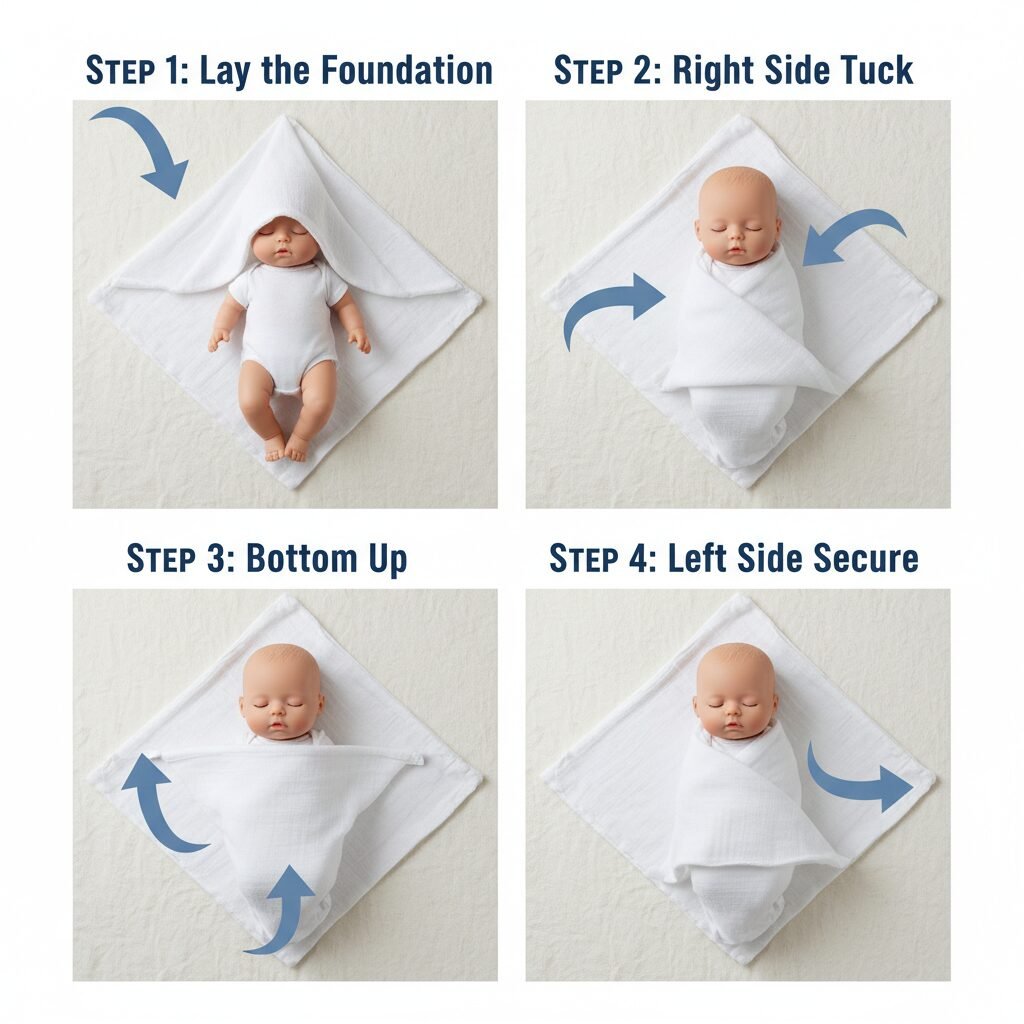
Okay, let’s get practical. For this, you’ll want a large, lightweight, and slightly stretchy swaddle blanket (around 47×47 inches is ideal). Forget the small, flannel receiving blankets for this job—they are the leading cause of Houdini escapes! Here is my go-to, escape-proof method:
The Diamond Swaddle Technique
- The Setup: Spread your blanket out on a flat, safe surface. Turn it so it looks like a diamond, with one corner pointing up. Fold that top corner down about 6-8 inches. This creates a straight edge for your baby’s shoulders. Lay your baby on their back in the center, with their shoulders resting right on that folded edge.
- The First Tuck (The Secure Side): Gently hold your baby’s right arm straight down alongside their body. Take the left corner of the blanket, pull it taut, and bring it all the way across your baby’s chest and arm. Tuck it firmly under their back on the opposite side. The key here is to get this first wrap super snug. This is the anchor of your whole swaddle!
- The Bottom Fold (The Hip-Safe Part): Now, take the bottom corner of the diamond. Bring it straight up and over your baby’s feet, resting it on their chest. Important: Do not pull this part tightly. You need to leave plenty of room for their little legs to bend up and out into a natural ‘frog’ position.
- The Final Wrap (The Lock-In): Gently hold your baby’s left arm straight down. Take the final, right corner of the blanket. Pull it taut and bring it across your baby’s chest, wrapping it all the way around their back. You can tuck the end into the front fold to secure it. The swaddle should be snug around their chest and arms, but loose around the hips and legs.
A Critical Safety Note on Hips: Always ensure there’s enough room at the bottom of the swaddle for your baby to bend their legs up and out at the hips. A too-tight swaddle that holds the legs straight can interfere with healthy hip development and increase the risk of hip dysplasia. Think ‘frog legs’!
Practice this a few times when your baby is calm. It might feel awkward at first, but soon it will become second nature, and you’ll be a swaddling pro in no time.
Beyond the Blanket: Exploring Modern Swaddle Alternatives
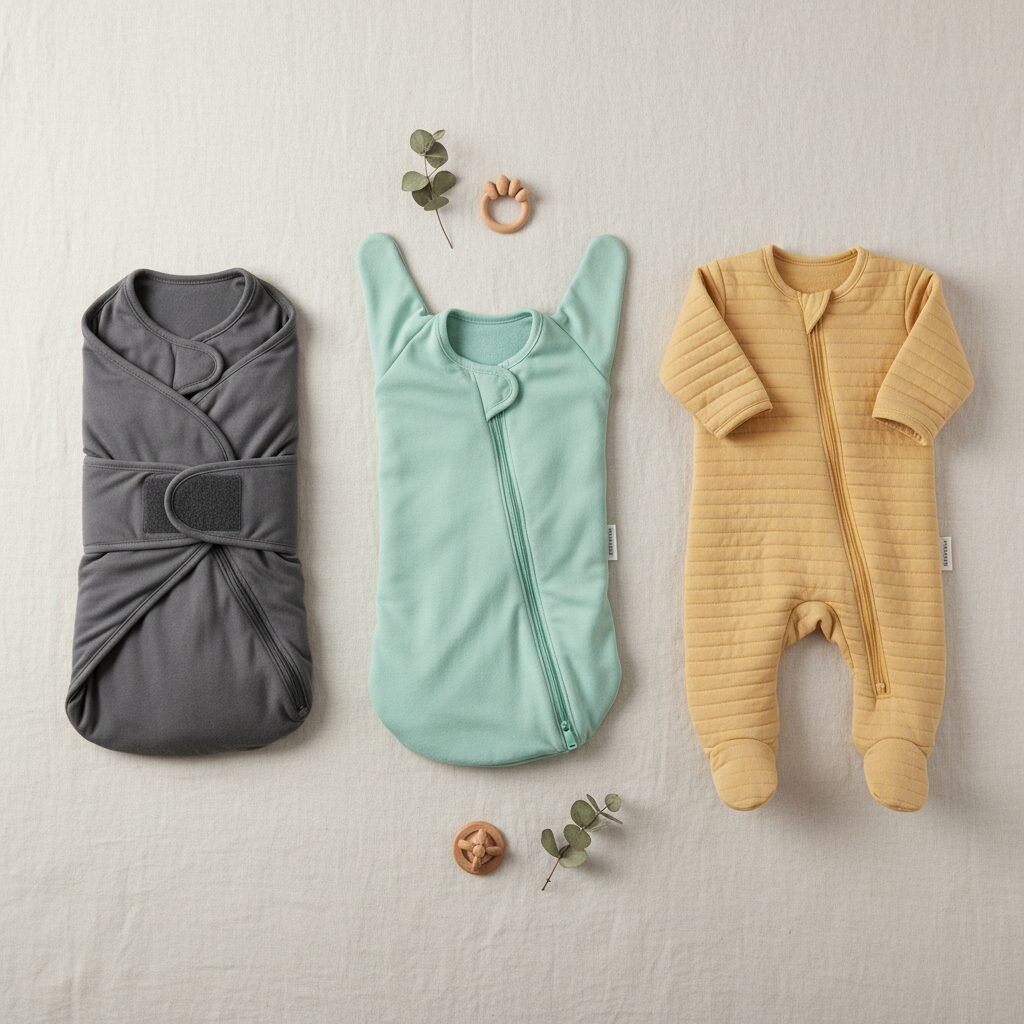
Sometimes, despite your best efforts, a traditional blanket just doesn’t work for your family or your baby. And that is 100% okay! The goal is safe sleep, not a perfect blanket wrap. Thankfully, the baby gear market has exploded with brilliant innovations designed specifically for Houdini babies. These can be lifesavers for tired parents.
Here’s a breakdown of some of the most popular options and who they’re best for:
| Type of Product | Best For | Key Features |
|---|---|---|
| Swaddle Sacks (with Velcro/Zippers) | Babies who consistently break free from blankets; parents who want simplicity and speed. |
|
| Arms-Up Swaddles | Babies who fight to get their hands to their face and love to self-soothe by sucking on their hands. |
|
| Transitional Swaddles / Sleepsuits | Babies who are starting to show signs of rolling or who are ready to transition out of a tight swaddle. |
|
| Wearable Blankets / Sleep Sacks | Babies who have outgrown the swaddle (are rolling over) or who truly hate having their arms restricted. |
|
A Note on Weighted Products: You may see weighted swaddles and sleep sacks on the market. The American Academy of Pediatrics (AAP) does not recommend these products due to a lack of evidence supporting their safety and efficacy. Please consult your pediatrician before using any weighted sleep products.
Don’t be afraid to experiment. What works for one baby might not work for another. It can be worth buying or borrowing one or two different types to see what your little one prefers.
The Final Act: When to Retire the Swaddle

As much as it can be a magical sleep tool, the swaddle has an expiration date. Knowing when to stop is one of the most important safety rules of newborn sleep. The primary reason we stop swaddling is to reduce the risk of Sudden Infant Death Syndrome (SIDS).
The Number One Sign: Rolling Over
The moment your baby shows any signs of attempting to roll over (from back to tummy or tummy to back), you must stop swaddling immediately. This is non-negotiable. A swaddled baby who rolls onto their stomach may not have their arms free to push up and reposition their head, which is a serious suffocation risk.
Signs of impending rolling can include:
- Pushing up on their arms during tummy time.
- Arching their back and ‘scooting’ in the crib.
- Rocking from side to side.
- Bringing their feet up to their hands and lifting their hips.
While this milestone typically happens between 2 and 4 months, some babies are early rollers! You must follow your baby’s developmental cues, not a specific age on the calendar.
How to Transition Out of the Swaddle
The transition can be a little bumpy for a few nights, but your baby will adjust. You don’t have to go cold turkey.
- One Arm Out: Start by swaddling them with one arm out for a few nights. This allows them to get used to having a bit more freedom while still feeling the security of the wrap on the rest of their body.
- Both Arms Out: After a few nights, transition to swaddling with both arms out. At this point, the swaddle is essentially functioning like a sleep sack around their torso.
- Graduate to a Sleep Sack: Once they are comfortable with both arms free, you can move them into a wearable blanket, or sleep sack. This will be their safe and cozy sleep attire for many months to come!
Remember, this transition is a sign of your baby’s amazing development. It’s a positive milestone, even if it means a few nights of readjustment for everyone.
Conclusion
Dealing with a ‘Houdini Baby’ can be a real test of a new parent’s patience. It can make you question if you’re doing something wrong or if your baby is the only one in the world who despises being wrapped up. I hope you can see now that you’re not alone, and your baby’s wiggles are a normal, instinctual part of their development.
The key is to approach swaddling with a little bit of detective work. Is it their startle reflex? Their desire to self-soothe? Or maybe the timing is just off? By mastering an escape-proof technique, exploring the amazing modern swaddle alternatives, and—most importantly—knowing the critical safety cues for when to stop, you can navigate this phase with confidence.
Be patient and give yourself grace. You and your baby are a team, learning and growing together every single day. Whether you end up with a perfectly wrapped baby burrito or a little one who prefers their arms free in a sleep sack, what matters most is that they are safe, loved, and comfortable. You’ve got this.