The 70-Degree Rule: Are You Preparing Powdered Formula Safely?
Welcome to parenthood! It’s a world filled with incredible joy, tiny socks, and… a mountain of information. If you’ve chosen to use powdered formula, you’re in good company. It’s a convenient and nutritious option for many families. But did you know there’s a specific, science-backed way to prepare it to ensure it’s as safe as possible for your little one? You might have heard whispers of the “70-degree rule,” but it can sound a bit technical and intimidating.
Don’t worry, we’re here to break it all down. As a pediatric nurse and lactation consultant, my goal is to replace your worries with confidence. This isn’t about adding another stressful task to your plate; it’s about empowering you with the knowledge to protect your baby’s delicate system. Let’s walk through what the 70-degree rule is, why it’s so important, and how to make it a simple part of your daily routine.
The ‘Why’ Behind the Heat: Understanding the 70-Degree Rule
First things first, let’s get to the heart of the matter. Why are health organizations like the World Health Organization (WHO) and the Centers for Disease Control and Prevention (CDC) so specific about the water temperature for mixing formula? It all comes down to one simple fact: powdered infant formula is not sterile.
During the manufacturing process, it’s possible for the powder to be contaminated with a couple of nasty bacteria, namely Cronobacter sakazakii and, more rarely, Salmonella enterica. While the risk of contamination is very low, the consequences can be very serious, especially for the most vulnerable infants.
What’s the Big Deal with These Bacteria?
For most healthy adults, these bacteria might not cause much trouble. But for a newborn with an immature immune system, they can lead to severe and life-threatening infections like sepsis (a blood infection) or meningitis (an inflammation of the membranes surrounding the brain and spinal cord). The risk is highest for:
- Babies under 2 months of age
- Premature infants
- Babies with a low birth weight
- Infants with weakened immune systems
A Note of Reassurance: This information is not meant to scare you! Cases of illness from these bacteria are rare. Think of the 70-degree rule as your seatbelt—you use it every time to protect against a rare but serious event. It’s a simple precaution that provides a powerful layer of safety.
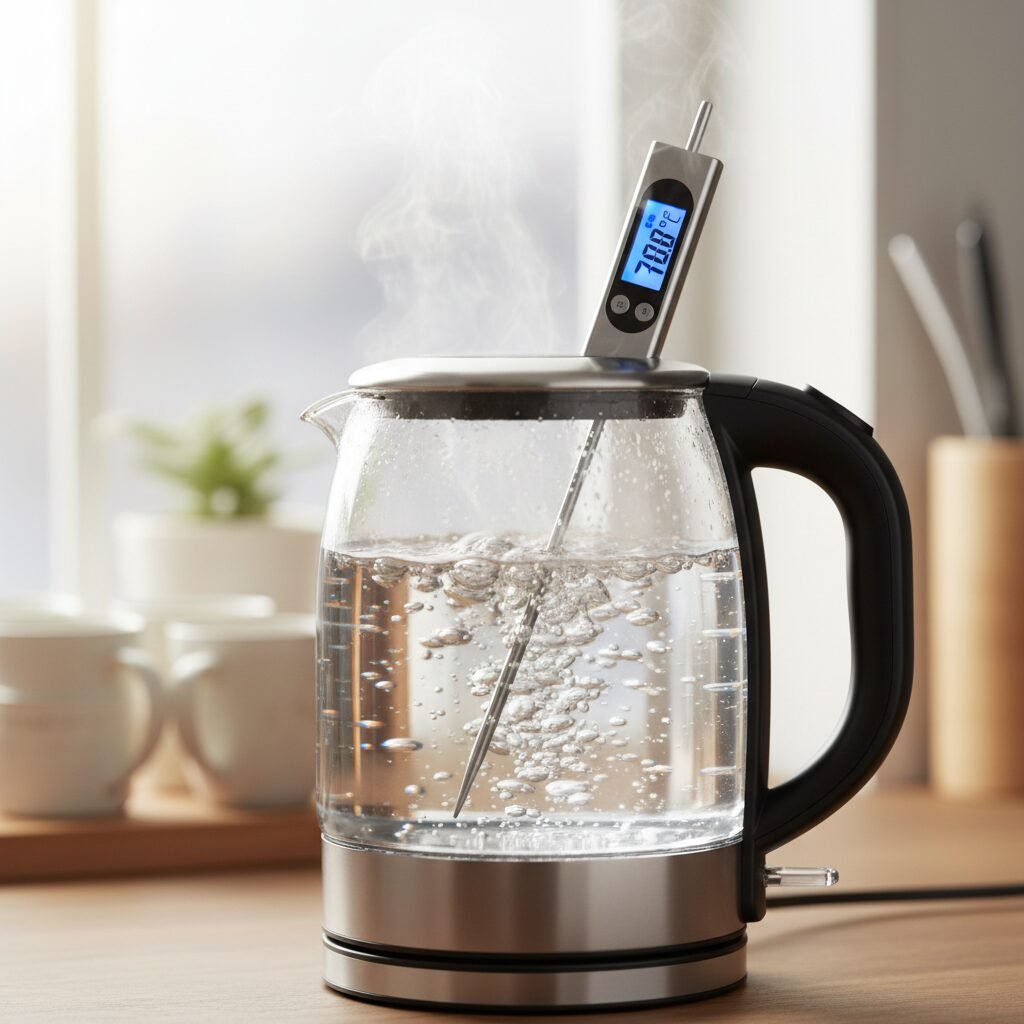
So, what exactly is the rule? The 70-degree rule states that you should prepare powdered formula with water that has been boiled and then cooled to a temperature of at least 70°C (or 158°F). This temperature is the sweet spot: it’s hot enough to kill any harmful bacteria that might be in the formula powder, but not so hot that it will significantly degrade the nutrients in the formula.
Your Step-by-Step Guide to Preparing Formula Safely
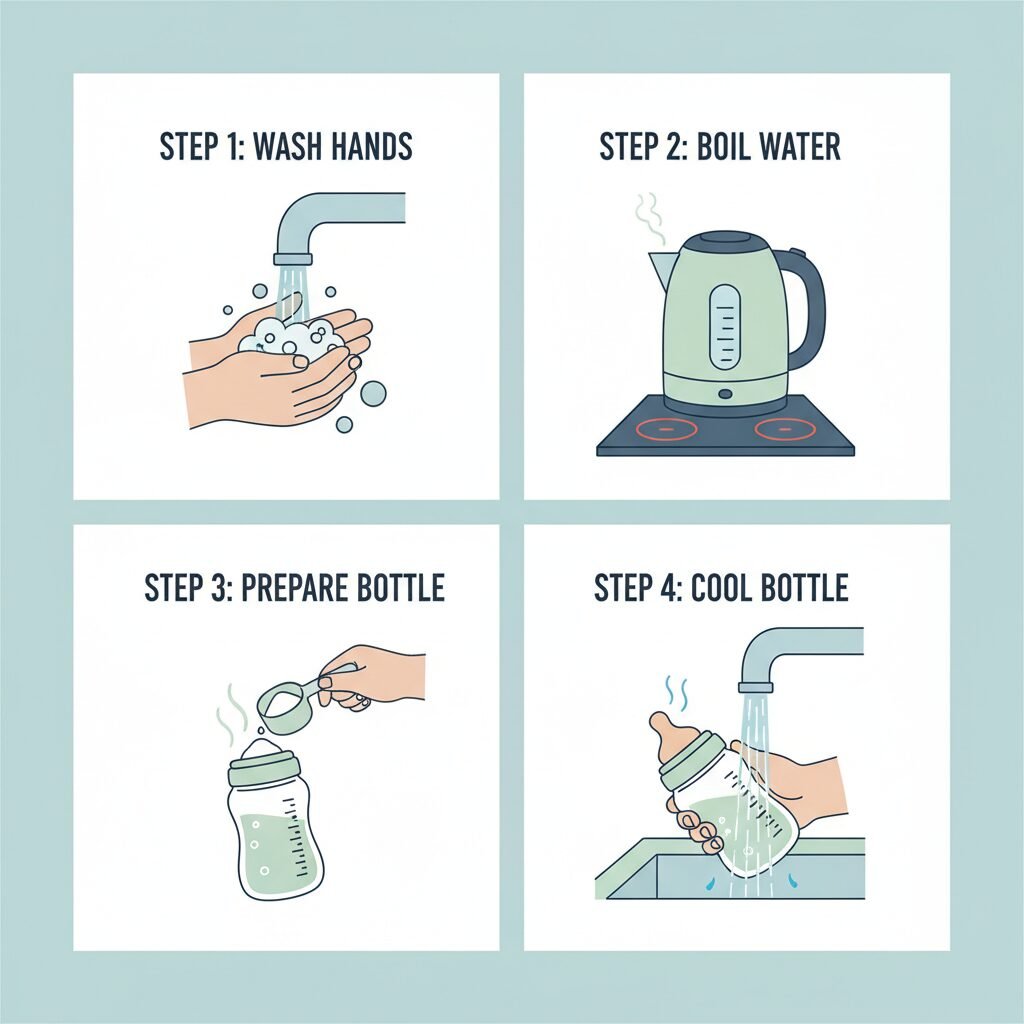
Ready to put this knowledge into practice? Following these steps will quickly become second nature. The key is to create a clean, organized space and a consistent routine.
Step 1: Get Squeaky Clean
Before you even touch the kettle, start with a clean slate. Bacteria can be anywhere. Thoroughly wash your hands with soap and water and dry them with a clean towel. Your preparation area, whether it’s a countertop or a table, should also be cleaned and disinfected.
Step 2: Sterilize Your Equipment
All your feeding equipment—bottles, nipples, caps, rings, and measuring scoops—must be sterilized before their first use and washed thoroughly thereafter. Many parents continue to sterilize equipment for the first few months. You can do this by boiling everything in water for 5 minutes, using a steam sterilizer, or following the instructions on a cold-water sterilizing solution.
Step 3: Boil the Water
Use fresh, safe water (tap or bottled) to fill your kettle. Don’t re-boil old water, as this can increase the concentration of minerals. Bring the water to a rolling boil for at least one full minute. This ensures any potential pathogens in the water itself are eliminated.
Step 4: The 30-Minute Cool Down
This is the most important part of the 70-degree rule. Once the water has boiled, turn off the kettle and let it cool down, but for no longer than 30 minutes. This allows the water to cool to a temperature that is still at or above 70°C (158°F), which is perfect for killing the bacteria in the formula powder. Using a food thermometer is the most accurate way to check, but the 30-minute guideline is a reliable method.
Safety Warning: Never mix powdered formula with cold or lukewarm water, as this will not kill the bacteria. Likewise, do not mix it with boiling water, as this can cause clumping and destroy some of the heat-sensitive vitamins and nutrients.
Step 5: Measure and Mix
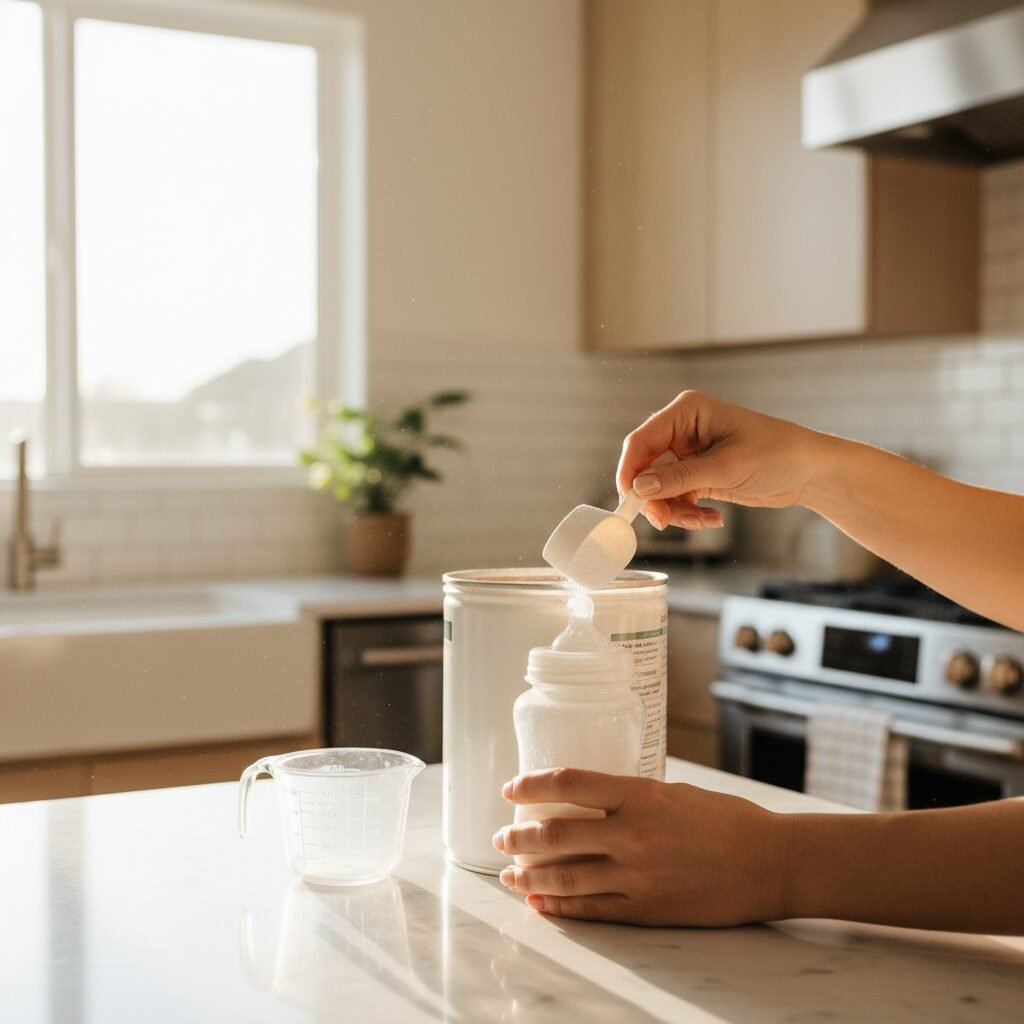
Carefully read the instructions on your formula container. They are there for a reason! Using the sterilized bottle, pour in the correct amount of hot water first. Then, use the scoop provided with your formula to add the exact number of level scoops of powder. Adding the water first helps ensure an accurate measurement.
Step 6: Shake It Up
Securely attach the nipple and cap to the bottle. Shake it well—not just a gentle swirl, but a vigorous shake—until all the powder has completely dissolved and there are no clumps left.
Step 7: Cool to Feeding Temperature
Obviously, the formula is now much too hot for your baby to drink. You need to cool it down quickly to body temperature. The safest way to do this is by holding the bottle under cold running tap water or placing it in a container of cold water or ice. Be careful not to let the cooling water touch the cap and nipple.
Step 8: The Wrist Test
Before every single feed, test the temperature. Unscrew the cap and shake a few drops of formula onto the inside of your wrist. It should feel lukewarm or body temperature, not hot. If it’s still too warm, continue cooling. Once it’s ready, you’re good to go!
Navigating the Nuances: Your Top Questions Answered

It’s natural to have questions as you get the hang of a new routine. Here are answers to some of the most common queries I hear from new parents about formula preparation.
Can I use a bottle warmer or microwave to heat the water?
No, this is a common misconception. Most bottle warmers are not designed to heat water to boiling or even to 70°C. They are meant for gently warming already-prepared, refrigerated formula. And you should never use a microwave to heat water or formula for your baby. Microwaves create dangerous “hot spots” that can easily scald your baby’s mouth.
This seems like a lot of work for a 3 AM feed! Can I make bottles in advance?
Yes, you can! Preparing a batch for the next 24 hours can be a lifesaver. Prepare the formula exactly as described above. Once mixed, you must cool the bottles down quickly. Place them in the back of the refrigerator (where it’s coldest) immediately. They can be stored safely for up to 24 hours. When it’s time for a feed, you can warm the bottle using a bottle warmer or by placing it in a jug of warm water.
What if we’re traveling or out for the day?
This is where planning helps. You have two great options:
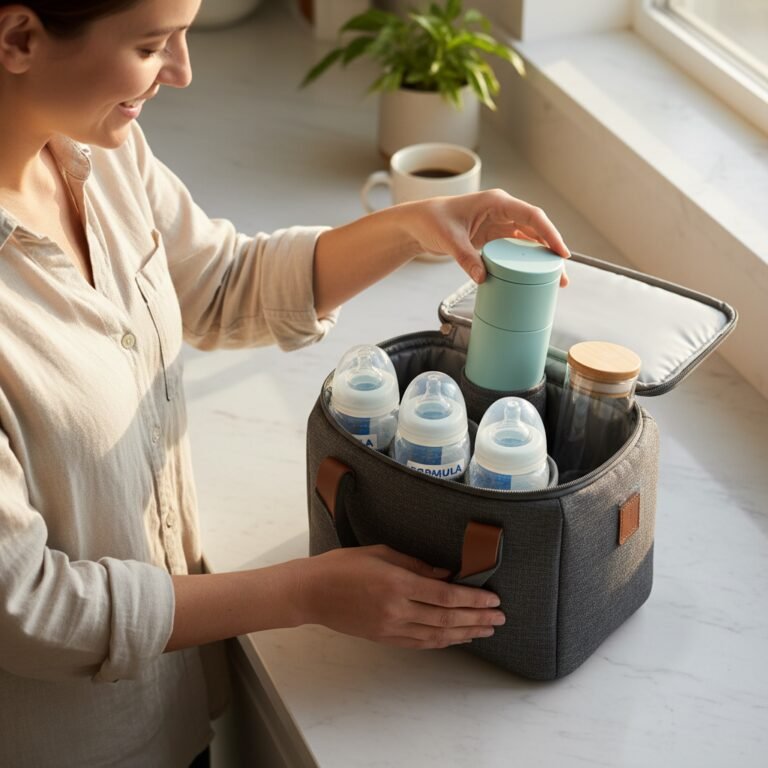
1. The Thermos Method: Boil water at home and pour it into a clean, insulated thermos. It should stay above 70°C for several hours. Pack your pre-measured powder in a separate, dry container. When your baby is hungry, you can mix a fresh, safe bottle on the spot.
2. Ready-to-Feed Formula: For ultimate convenience and peace of mind when you’re out, consider using single-serving, ready-to-feed liquid formula. It’s sterile and requires no mixing, making it a fantastic option for travel days or a diaper bag staple.
My baby actually prefers cold formula. Do I still need to use hot water?
Yes, absolutely. Remember, the initial hot water isn’t for your baby’s comfort—it’s for their safety. The heat is what kills the potential bacteria in the powder. You must follow all the steps, but after mixing, you can cool the formula to room temperature or even chill it in the fridge before feeding if that’s what your baby prefers.
What about using nursery water or purified water? Does that still need to be boiled?
Yes. Even if the water itself is sterile, the formula powder is not. The purpose of boiling the water and using it while hot is to sterilize the powder. So, no matter what type of safe water you start with, the boiling and mixing-while-hot steps are still essential.
Conclusion
We’ve covered a lot of ground, but it all boils down to one simple goal: keeping your precious baby safe and healthy. The 70-degree rule might seem like an extra chore at first, but once you understand the ‘why’ behind it, it becomes a powerful and reassuring step in your feeding routine. It’s a simple action that neutralizes a small but serious risk, giving you one less thing to worry about—and every new parent deserves that peace of mind.
Remember to be kind to yourself. You are learning and doing so much every single day. By taking the time to learn about safe formula preparation, you are already being an incredible, attentive, and loving parent. You’re doing a fantastic job. You’ve got this!