

Switching Formula Brands? The 5-Day Transition Schedule to Prevent Gas
Hey there, new parent. Take a deep breath. If you’re reading this, you’re probably considering switching your baby’s formula, and that can feel like a huge, stressful decision. Will they like it? Will it upset their tiny tummy? Will it make things better or worse? As a pediatric nurse and lactation consultant, I’ve sat with thousands of parents just like you, and I want to tell you: it’s okay. It’s okay to want something better for your baby, whether that means less gas, happier poops, or simply finding a brand that’s available and fits your budget.
A baby’s digestive system is still a work in progress, and sudden changes can be a shock to their system. That’s why switching formula ‘cold turkey’ can sometimes lead to a week of gassiness, constipation, and general misery for everyone involved. But there’s a much gentler way!
We’re going to walk through a simple, effective 5-day transition schedule. This step-by-step guide is all about gradually introducing the new formula, giving your baby’s tummy time to adapt. Think of it as slowly making a new friend instead of being thrown into a room full of strangers. Ready? Let’s do this together.
Why Switch Formula? Common Reasons Parents Make a Change

First things first, let’s validate your decision. There are many perfectly good reasons to switch formulas. You’re being an attentive parent by noticing your baby’s needs and trying to meet them. While it’s always best to chat with your pediatrician before making a change, here are some of the most common reasons parents explore a new formula:
- Digestive Discomfort: This is the big one. Excessive gas, painful bloating, constant fussiness after feedings, or significant spit-up can be signs that the current formula isn’t the best match for your baby’s system.
- Constipation or Diarrhea: A baby’s stool can tell you a lot. If you’re consistently seeing hard, pebble-like poops or, on the other end of the spectrum, very watery stools, a formula switch might help regulate their system.
- Suspected Milk Protein Allergy or Intolerance: Signs can range from a skin rash (like eczema) and hives to more severe digestive issues like vomiting or blood in the stool. For these symptoms, a conversation with your doctor is essential, as they may recommend a specialized hypoallergenic formula.
- Cost and Accessibility: Let’s be real—formula is expensive! There is absolutely no shame in switching to a more affordable brand, like a store’s generic version. Thanks to strict FDA regulations, all formulas sold in the U.S. must meet the same nutritional standards. Sometimes, your go-to brand is simply out of stock, and you need a reliable alternative.
- Switching From a Specialty Formula: If your baby was on a special formula (e.g., for prematurity) and has gotten the green light to move to a standard one, a gradual transition is also the best approach.
A Gentle Reminder: Always, always, always have a quick chat with your pediatrician or family doctor before switching formulas. They can help rule out any underlying medical issues and guide you toward the best type of formula for your baby’s specific needs.
Before You Begin: A Pre-Switch Checklist

A little prep work can make the transition process so much smoother. Before you mix that first bottle, run through this simple checklist. Think of it as your mission briefing for a happier tummy!
Your Preparation Steps:
- Consult Your Pediatrician: We’ve said it before, but it’s the most important step. Your doctor can offer personalized advice and confirm that switching is the right move. They might even have specific brand recommendations or free samples to try.
- Choose the Right Type of New Formula: Try to stick with the same type of base ingredient if you can. For example, if your baby is on a standard cow’s milk-based formula, your first switch should probably be to another standard cow’s milk-based formula. Switching from cow’s milk to soy or a hypoallergenic formula is a bigger jump and should definitely be done under a doctor’s guidance.
- Buy a Small Can First: Don’t rush out and buy a giant, Costco-sized container of the new formula just yet. Purchase the smallest can available. This way, if it turns out to be a poor fit for your baby, you haven’t wasted a lot of money.
- Pick a Calm Time: Avoid starting the transition if your baby is sick, actively teething, or going through a major routine change (like starting daycare or traveling). You want to be able to clearly tell if any fussiness is from the formula and not an outside factor.
- Keep a Simple Feeding Diary: You don’t need anything fancy. Just a small notebook to jot down notes for a few days. Track feedings, fussiness levels, spit-up, and the consistency of their diapers. This can help you spot patterns and see if the new formula is truly making a difference.
The Gentle 5-Day Formula Transition Schedule (Your Day-by-Day Guide)
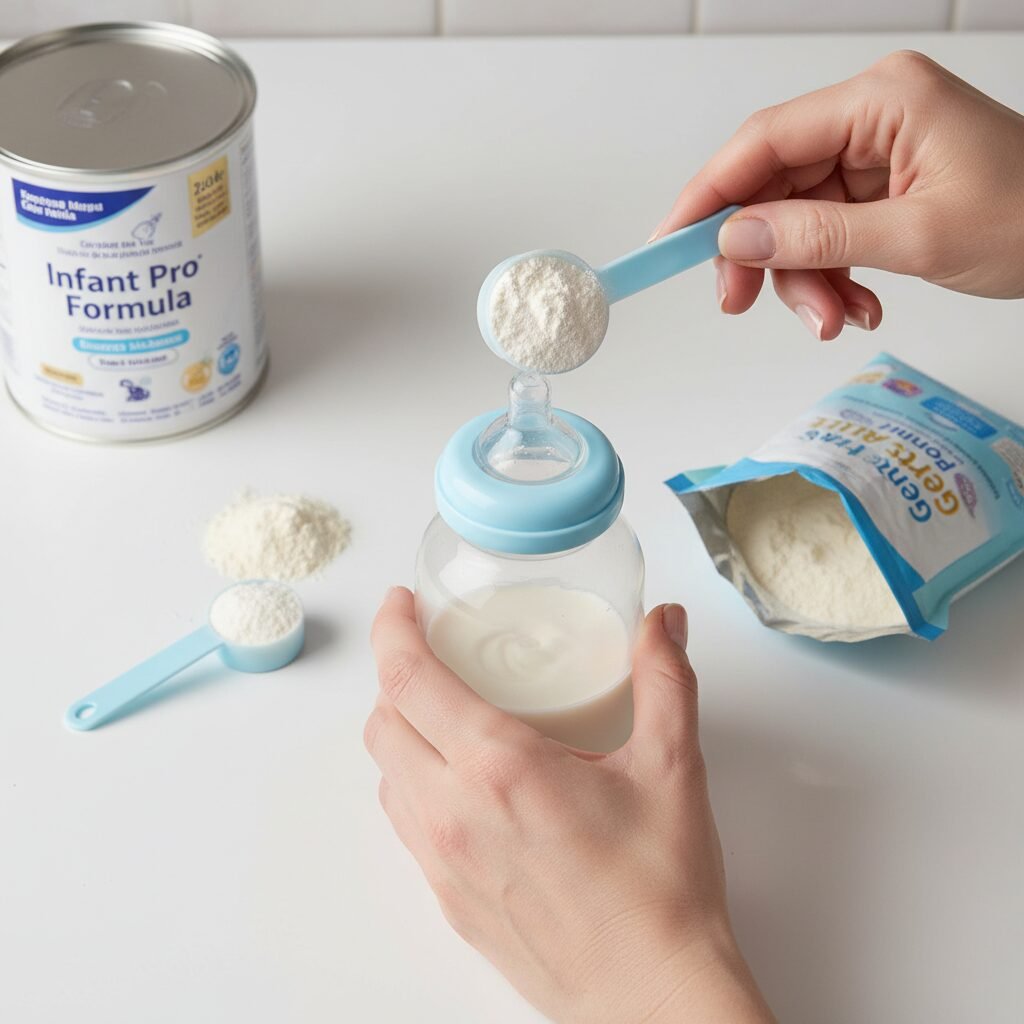
Alright, it’s go time! Here is the day-by-day plan. The key is to mix the old and new formulas in the same bottle. This slowly introduces the new proteins and carbohydrates to your baby’s system.
Important Mixing Tip: For the most accurate measurement, it’s best to prepare the old and new formulas in separate bottles first and then combine them into the final feeding bottle. For example, if you’re making a 4-ounce bottle for Day 1, you would prepare 3 ounces of the old formula in one bottle and 1 ounce of the new formula in another, and then pour them together.
Here’s how to portion it out over five days:
| Day of Transition | Old Formula Amount | New Formula Amount | What to Expect |
|---|---|---|---|
| Day 1 | 75% (e.g., 3 oz in a 4 oz bottle) | 25% (e.g., 1 oz in a 4 oz bottle) | Your baby likely won’t notice much of a change. Keep a close eye on their cues after feeding. |
| Day 2 | 75% (e.g., 3 oz in a 4 oz bottle) | 25% (e.g., 1 oz in a 4 oz bottle) | We hold steady for a second day to give their system extra time to adjust to the initial change. Consistency is key. |
| Day 3 | 50% (e.g., 2 oz in a 4 oz bottle) | 50% (e.g., 2 oz in a 4 oz bottle) | This is the half-and-half day! You’re now at a 50/50 mix. You might start to notice small changes in stool color or consistency, which is usually normal. |
| Day 4 | 25% (e.g., 1 oz in a 4 oz bottle) | 75% (e.g., 3 oz in a 4 oz bottle) | Now the new formula is the star of the show. Your baby’s tummy is getting well-acquainted with it. Continue to monitor for any signs of discomfort. |
| Day 5 | 0% | 100% | Congratulations! You’ve made it to a full bottle of the new formula. Continue to monitor your baby over the next week as their body fully adjusts. |
Remember, this is a guide, not a rigid rule. If your baby seems extra fussy on Day 3, it’s perfectly fine to stay at the 50/50 mix for an extra day or two before moving on. Listen to your baby and trust your gut.
Signs of a Successful (or Bumpy) Transition: What to Watch For

As you move through the 5-day schedule, you’ll become a bit of a detective, watching for clues that tell you how your baby is handling the change. Here’s a breakdown of the green flags that say ‘keep going!’ and the red flags that mean it’s time to pause and call the doctor.
Green Flags: Signs the New Formula is a Good Fit
- A Happier Baby: The most obvious sign! If you see a noticeable decrease in fussiness, crying, and painful gas, you’re on the right track.
- Improved Digestion: This could mean less spit-up, more regular bowel movements, and softer (but not watery) stools.
- Good Appetite: Your baby continues to drink their bottles well without new resistance or refusal.
- Normal Naps and Sleep: A comfortable tummy often leads to better sleep for everyone. If your baby is sleeping more soundly, it’s a great sign.
Red Flags: When to Slow Down or Call the Doctor
- Increased Irritability: If your baby becomes significantly more fussy, inconsolable, or seems to be in pain during or after feedings.
- Worsening Digestive Issues: Watch for an increase in spit-up, projectile vomiting, severe constipation (hard, pebble-like stools that cause straining), or explosive, watery diarrhea.
- Skin Reactions: A new rash, hives, or worsening eczema can be a sign of an allergic reaction or sensitivity.
- Refusal to Eat: If your baby consistently pushes the bottle away or drinks much less than usual.
When to Call the Doctor Immediately: Don’t wait if you see any signs of a serious allergic reaction, such as swelling of the lips or face, difficulty breathing, or if you ever see blood in your baby’s stool. These are rare but require immediate medical attention.
Frequently Asked Questions from Worried Parents (You’re Not Alone!)

It’s natural to have questions swirling in your head during this process. Here are answers to some of the most common ones I hear from parents in your shoes.
Can’t I just switch cold turkey?
You can, and some babies handle it just fine. However, many don’t. A baby’s gut microbiome is delicate. A sudden switch is like a shock to that little ecosystem, which can disrupt the balance and lead to the very symptoms you’re trying to solve—gas, constipation, and fussiness. The gradual method gives the gut bacteria time to adapt, making it a much gentler and more comfortable experience.
How long will it really take to know if the new formula is working?
While you might see improvements within the 5-day transition, it can often take one to two full weeks on the new formula for your baby’s system to fully regulate and for you to see the true benefits. Be patient and give it a little time before deciding whether to switch again.
What if my baby seems to hate the taste of the new formula?
Formulas can have slightly different tastes and smells. The gradual mixing schedule helps with this! By mixing the familiar taste with the new one, you help your baby adjust to the new flavor profile over time. If they still seem hesitant, double-check that the bottle’s temperature is just how they like it, as this can affect flavor, too.
Is it okay to switch between a brand name and its generic store-brand version?
Absolutely! This is one of the easiest switches you can make. The FDA’s Infant Formula Act holds all manufacturers to the same key nutritional and safety standards. A store-brand ‘Advantage’ formula is designed to be nutritionally equivalent to Similac Pro-Advance, and a store-brand ‘Infant’ is similar to Enfamil Infant. Because they are so similar, many babies can transition between them even faster, but using the 5-day schedule is still the safest, gentlest bet.
Conclusion
You did it! You’ve guided your baby through a thoughtful, gentle transition to a new formula. By taking it slow, you gave their delicate system the best possible chance to adapt happily. Remember to be patient for the next week or two as their body fully adjusts.
Parenting is a journey of learning and responding to your child’s needs, and making a decision like this is a perfect example of you doing an amazing job. You noticed something wasn’t quite right, you did your research, and you created a loving plan to help them feel better. That’s what being a great parent is all about.
So, trust your instincts, give yourself credit for being so caring, and never hesitate to reach out to your pediatrician. They are your best partner on this incredible adventure. You’ve got this.