

Surviving The 6 Week Growth Spurt: Timeline And Signs
Just when you thought you were getting the hang of things—maybe even predicting a nap or two—it happens. Your sweet, relatively predictable newborn seems to have been replaced by a fussy, insatiably hungry little being who wants to do nothing but eat and be held. If this sounds familiar, take a deep breath, mama or papa. You are not alone, and you haven’t done anything wrong. Welcome to the 6-week growth spurt.
It’s one of the first major developmental hurdles you’ll face as a new parent, and it can feel overwhelming. But I’m here to tell you, as a pediatric nurse and lactation consultant who has held the hands of countless exhausted parents, this phase is not only normal—it’s a fantastic sign that your baby is growing and thriving. This article is your friendly, reassuring guide. We’ll walk through what’s happening to your baby, how to spot the signs, how long you can expect it to last, and most importantly, how you can survive (and maybe even embrace) this temporary whirlwind.
What Exactly *Is* the 6-Week Growth Spurt (And Why Is It Happening)?

Before we dive into the ‘how-to-cope,’ let’s talk about the ‘what’ and ‘why.’ A growth spurt is exactly what it sounds like: a short, intense period where your baby’s body and brain go into overdrive. They are packing on weight, growing in length, and their head circumference is expanding to accommodate their rapidly developing brain. Think of it as a software and hardware upgrade happening all at once!
While it feels like it comes out of nowhere, this is a biologically programmed event. At around six weeks, your baby is transitioning from a sleepy newborn into a more alert and interactive infant. This leap requires a massive amount of energy, which explains the sudden, seemingly endless hunger. For breastfed babies, this intense feeding has a dual purpose: it not only fuels their growth but also sends a powerful signal to mom’s body to increase milk production to meet their new, higher demands. It’s an incredibly clever system of supply and demand.
It’s helpful to remember that this isn’t just about physical size. Huge cognitive leaps are happening, too. Your baby might start tracking objects with their eyes more consistently, maybe even flash their first real, heart-melting social smile. All this new wiring and development is hard work, and it can make them feel a bit out of sorts, which often translates to fussiness. So, when you’re on your tenth feeding of the night, try to picture all the amazing construction happening inside that tiny body. It’s a sign of incredible progress.
Is This It? The Top Signs Your Baby Has Hit the 6-Week Mark

Every baby is unique, but the signs of the 6-week growth spurt are remarkably consistent. If you’re nodding along to two or more of these, you’re probably in the thick of it.
1. The Non-Stop Eater (Cluster Feeding)
This is often the most noticeable sign. Your baby, who might have been eating every 2-3 hours, suddenly wants to nurse or take a bottle constantly, sometimes with only a few minutes in between. This is called cluster feeding. It can feel like all you’re doing is feeding the baby. For breastfeeding moms, this is your baby expertly placing their order for a bigger milk supply. For formula-feeding families, you might notice your baby still seems hungry after finishing their usual bottle.
2. The Sleep Thief
Ah, sleep. Just when you thought you saw a pattern emerging, the growth spurt throws it all out the window. Common changes include:
- Waking up more frequently at night, often out of hunger.
- Taking shorter ‘catnaps’ during the day.
- Fighting sleep, even when they seem exhausted.
This is frustrating, but it’s directly linked to the other signs. They’re waking up because they’re hungry, and they’re overtired from all the growing and disrupted sleep, which ironically makes it harder for them to settle down.
3. The Fussiness Factor
Is your baby suddenly crankier, crying more, and harder to soothe? This is a hallmark of a growth spurt. They can’t tell you, “Hey, my bones are literally elongating and my brain is forming a million new connections a second, and it feels weird!” Instead, they fuss. It’s their primary mode of communication for discomfort, hunger, and fatigue.
Remember, this fussiness is your baby’s only way of communicating their big needs during a period of massive change. You are their safe space, and your comfort is what they need most.
4. The Clingy Koala
Suddenly, the bassinet is lava. The only place your baby seems content is in your arms. This increased need for closeness is completely normal. During this confusing time of rapid change, they crave the security, warmth, and comfort that only you can provide. So, lean into the cuddles—they are just as important as the milk.
The Big Question: How Long Does This Last?
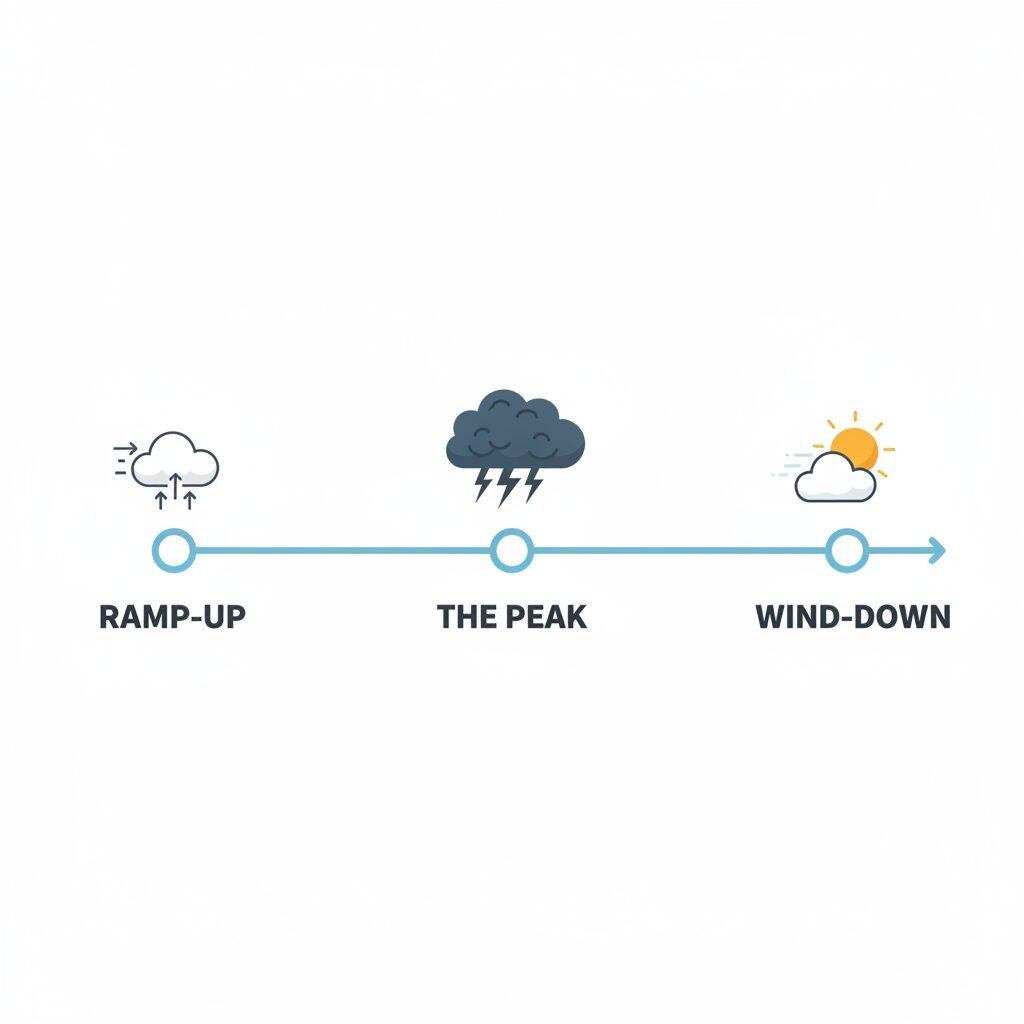
When you’re in the trenches of sleep deprivation and constant feeding, this is the number one question on your mind. The good news? It’s temporary. While every baby’s timeline is slightly different, most growth spurts, including the 6-week one, follow a predictable pattern. The most intense phase is usually quite short.
Here’s a general timeline of what you might expect. Remember, this is a guide, not a rulebook!
| Phase | Typical Duration | What to Expect |
|---|---|---|
| Ramp-Up | Day 1 | You might notice a slight increase in appetite and a bit more fussiness than usual. You may wonder if something is starting. |
| The Peak | Days 2-4 | This is the most intense period. Expect significant cluster feeding, major sleep disruptions, and the highest levels of fussiness. This is the hardest part. |
| Wind-Down | Days 5-7 | You’ll start to see the light at the end of the tunnel. Feedings begin to space out again, you might get a longer stretch of sleep, and your baby seems more content and settled. |
So, in total, you’re typically looking at anywhere from 3 to 7 days. After it’s over, many parents report that their baby seems like a whole new person—more alert, calmer, and often sleeping in longer stretches than before the spurt began. That’s your reward for getting through it!
A Gentle Warning: While fussiness is normal during a growth spurt, always trust your parental instincts. If your baby has a fever (100.4°F or higher), is refusing to eat, seems unusually lethargic, or is truly inconsolable for hours on end, don’t hesitate to call your pediatrician. It’s always better to be safe.
Your Survival Guide: Practical Tips to Get Through It

Knowing what’s happening is one thing; getting through it is another. This is about survival, not perfection. Lower your expectations for everything else and focus on meeting your baby’s needs and your own. Here are some practical, tried-and-true strategies.
For the Feeding Frenzies
- Feed on Demand: Forget the clock. Watch your baby’s hunger cues (rooting, smacking lips, putting hands to mouth) and feed them whenever they ask. This is crucial for their growth and, for breastfeeding moms, for your milk supply.
- Create a ‘Nest’: Set up a comfortable spot on the couch or in a chair with everything you need within arm’s reach: a big bottle of water, healthy snacks, your phone and charger, the TV remote, and a good book or tablet. Settle in for the long haul.
- Stay Hydrated & Nourished: Making milk and caring for a baby burns a lot of calories. Drink plenty of water and eat frequent, healthy snacks and meals. You can’t pour from an empty cup.
For Soothing the Fussies
- Go Back to Basics: The ‘5 S’s’ developed by Dr. Harvey Karp can be magical: Swaddle (tightly), holding on their Side/Stomach, Shushing (loudly, like the womb), Swinging (rhythmically), and offering something to Suck (like a pacifier or your finger).
- Wear Your Baby: A soft wrap or carrier can be a lifesaver. Your baby gets the closeness they crave, and you get your hands back to make a sandwich or just feel a bit more mobile.
- Change the Scenery: Sometimes a simple change of environment is all it takes to break a crying spell. Step outside for a few minutes of fresh air, walk into a different room, or turn on some music.
- The Magic of Water: A warm bath can be incredibly calming for a fussy baby (and a relaxing activity for you, too).
For Tackling Sleep Deprivation
- Take Shifts: This is the time to work as a team. If you have a partner, split the night into shifts. One person can be ‘on duty’ with the baby for 4-5 hours while the other gets a solid, uninterrupted block of sleep elsewhere (even on the couch with earplugs). This is a game-changer.
- Accept ALL the Help: If a friend or family member offers to help, say YES. Let them hold the baby while you nap, shower, or just sit quietly for 20 minutes. Let them bring you a meal or run an errand. Now is not the time to be a superhero.
- Lower Your Standards: The laundry can wait. The dust bunnies can stay. Your only job right now is to care for your baby and yourself. A perfect house is not the priority.
Conclusion
The 6-week growth spurt can feel like a marathon you didn’t sign up for. It’s exhausting, it’s demanding, and it will test your patience. But it is also a powerful, tangible sign that you are doing everything right. You are nourishing your baby, you are comforting them, and you are providing the security they need to make this incredible leap in their development.
When you’re in the thick of it, whisper this mantra to yourself: ‘This is a phase, not a forever.’ It will end. And on the other side, you’ll be met with a more alert, more interactive, and often more settled baby. You will have a boosted milk supply, a deeper confidence in your parenting abilities, and a whole new appreciation for a three-hour stretch of sleep. You are doing an amazing job. Be kind to yourself, cuddle your baby, and know that calmer, sunnier days are just around the corner. You’ve got this.