
Sunscreen Is Unsafe? How To Protect Newborn Skin In Summer Heat
Welcome to your first summer with your new little one! It’s a time filled with dreams of sunny strolls and warm-weather adventures. But along with that excitement comes a wave of questions, and a big one often is: How do I protect my baby’s brand-new, delicate skin from the sun? You might have heard conflicting advice, especially about sunscreen. Is it safe? Is it necessary? It’s enough to make any new parent feel a little overwhelmed.
Take a deep breath. As a pediatric nurse and lactation consultant, I’ve held the hands of countless parents navigating these exact worries. The good news is that keeping your baby safe in the sun is simpler than you think. It’s less about slathering on creams and more about smart, simple strategies. In this guide, we’ll walk through exactly why your baby’s skin is so special, what the experts officially recommend, and build your ultimate sun-safe toolkit so you can step out into the sunshine with confidence and peace of mind.
That ‘New Baby Smell’ Comes with Super-Sensitive Skin

That ‘New Baby Smell’ Comes with Super-Sensitive Skin
Before we dive into the ‘how-tos,’ let’s talk about the ‘why.’ Understanding just how unique your newborn’s skin is will make all the safety recommendations click into place. It’s not just you—their skin really is as soft and perfect as it seems, but that perfection comes with vulnerability.
A Work in Progress
Think of your baby’s skin as a brand-new shield that’s still under construction. Here’s what’s happening:
- It’s Thinner: A newborn’s epidermis (the outermost layer of skin) is significantly thinner than an adult’s. This means it provides less protection against environmental factors, including the sun’s powerful ultraviolet (UV) rays. A burn can happen much faster and be more severe.
- Less Melanin: Melanin is the pigment that gives skin its color and provides some natural protection against the sun. Your baby’s skin hasn’t had time to develop much melanin yet, regardless of their skin tone. This leaves them much more susceptible to sunburn.
- Higher Surface Area to Body Weight Ratio: This sounds complicated, but it’s a simple concept. Babies have a lot of skin relative to their small body size. If you were to apply something all over their skin (like sunscreen), they would absorb a proportionally larger amount of it into their system than an adult would. This is the primary reason for caution with topical products.
Because of this incredible sensitivity, a newborn’s skin can react more easily to chemicals, fragrances, and even the sun itself. This is why our approach to sun safety for the youngest infants is all about creating physical barriers, not chemical ones.
A Gentle Reminder: Your baby’s immature skin also means their ability to regulate body temperature isn’t fully developed. They can overheat much more quickly than adults, a risk that goes hand-in-hand with sun exposure.
The Great Sunscreen Debate: What the Experts Recommend

The Great Sunscreen Debate: What the Experts Recommend
Now for the million-dollar question: What’s the deal with sunscreen for babies? If you’ve felt confused, you’re in good company. Let’s clear it up by going straight to the source: the leading pediatric and health organizations.
The official guidance from both the American Academy of Pediatrics (AAP) and the U.S. Food and Drug Administration (FDA) is clear and consistent. They form the foundation of our sun safety plan.
The Golden Rule: For babies younger than 6 months, sunscreen should be avoided. The preferred methods of sun protection are keeping your infant in the shade and dressing them in protective clothing.
Why this firm stance? It goes back to what we just learned about their delicate skin. The concern is twofold:
- Potential for Reactions: A newborn’s sensitive skin is more likely to develop a rash or irritation from the ingredients in sunscreens.
- Risk of Absorption: Because their skin is so thin and they have that high surface-area-to-body-weight ratio, there’s a greater potential for them to absorb chemicals into their tiny bodies. Since we don’t have safety data on this for infants, the recommendation is to err on the side of caution.
The All-Important Exception
Now, we live in the real world. What if you’re caught in a situation where you absolutely cannot find shade? What if you’re at an outdoor family event and the umbrella breaks? The AAP understands this. Their guidance includes a crucial exception:
If adequate shade and clothing are not available, parents and caregivers can apply a minimal amount of baby-safe sunscreen with at least SPF 30 to small areas of the infant’s skin that are not covered by clothing, such as the face and the back of the hands.
Think of this as your plan B. Sunburn is a more significant and immediate risk than the potential risk from a small amount of sunscreen. So, the hierarchy of protection is always: Shade & Clothing First. Minimal sunscreen is the last resort. We’ll cover exactly what kind to choose in the next section.
Your Ultimate Sun-Safe Toolkit: Shade, Shirts, and Scheduling

Your Ultimate Sun-Safe Toolkit: Shade, Shirts, and Scheduling
This is where we get practical! Forget the worry and focus on building your simple, effective sun-safety toolkit. Your goal is to create a personal bubble of protection for your baby wherever you go. Think of it as the three S’s of newborn sun care.
1. Seek Shade: Your Best Friend
Shade is, without a doubt, the number one way to protect your baby. It’s a physical barrier that costs nothing and is completely free of chemicals. Make it your mission to become a shade-seeker!
- Stroller Power: Invest in a stroller with a large, extendable UPF (Ultraviolet Protection Factor) canopy. Some even have mesh panels for airflow. A light, breathable muslin blanket clipped to the canopy can provide extra coverage, but always ensure there is plenty of ventilation to prevent overheating.
- Portable Paradise: A pop-up beach tent or a large umbrella can create instant shade at the park, beach, or even in your own backyard.
- Natural Cover: Become an expert at spotting the perfect shady tree or covered patio. Planning your outings around available shade makes a huge difference.
2. Smart Clothing: The Wearable Shield
The right clothing is like wearable shade. It’s your baby’s first line of defense against direct UV rays.
- Cover Up: Dress your baby in lightweight, loose-fitting clothing that covers their arms and legs. Look for natural, breathable fabrics like cotton or bamboo to keep them cool.
- Look for UPF: Many baby clothing brands now offer items with a UPF rating. A UPF 50 rating means it blocks 98% of the sun’s rays. This is especially great for swimwear and hats.
- Hats are Non-Negotiable: A wide-brimmed hat is an absolute must-have. Look for one that shades the face, neck, and ears. A chin strap can help keep it in place on a breezy day.
- Tiny Sunglasses: While they might seem like a fashion accessory, baby sunglasses protect their sensitive eyes. Look for a pair that blocks 100% of UVA and UVB rays and has a soft, comfortable strap.
3. Strategic Scheduling: Beat the Clock
The sun’s rays are strongest in the middle of the day. By planning your outdoor time strategically, you can avoid the most intense exposure.
- The Peak Sun Window: Try to stay indoors or in deep shade between 10 a.m. and 4 p.m. This is when UV radiation is at its peak.
- Embrace Mornings and Evenings: Early morning walks or late afternoon picnics are perfect for enjoying the outdoors without the harsh midday sun. The light is softer, the temperatures are cooler, and it’s a more comfortable experience for everyone.
When Sunscreen is Unavoidable: A Parent’s Guide
When Sunscreen is Unavoidable: A Parent’s Guide
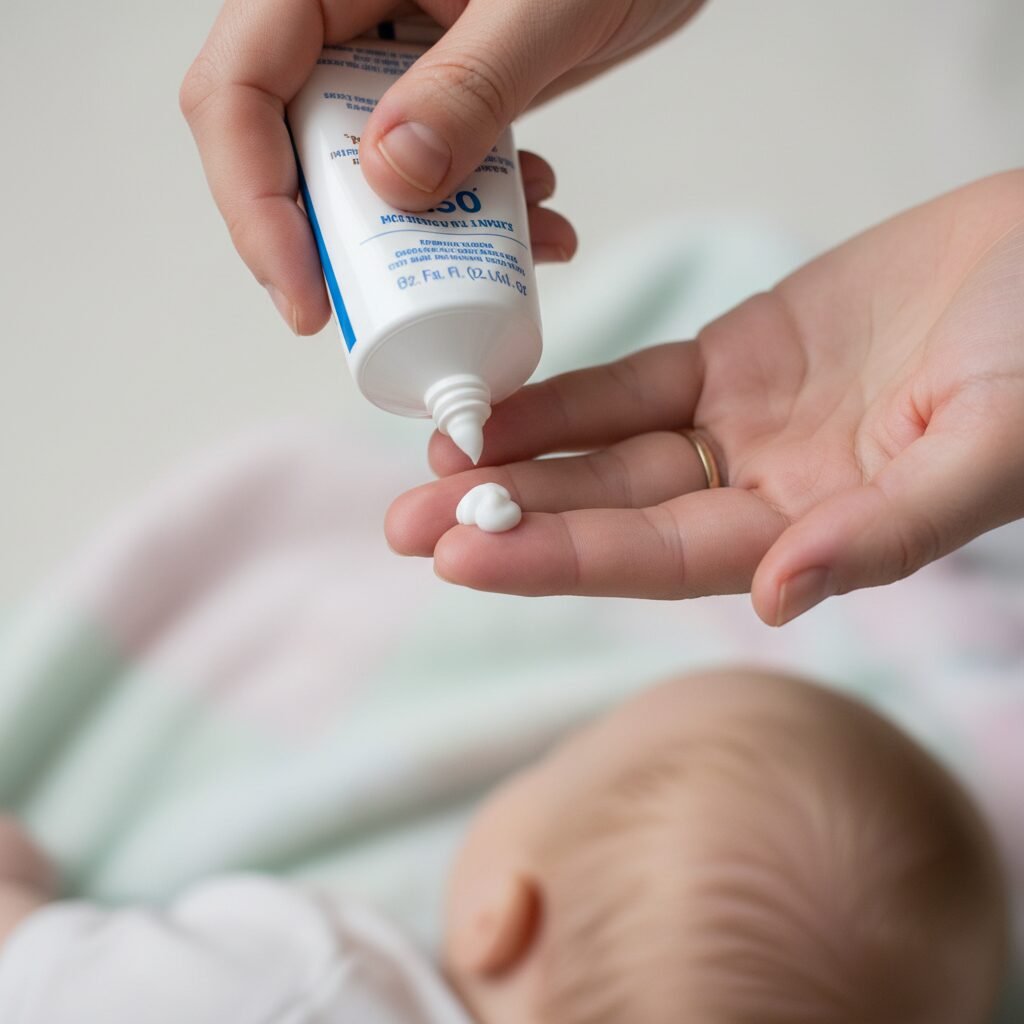
You’ve done your best. You’ve sought shade, dressed your baby in protective gear, and timed your outing perfectly. But sometimes, sun exposure is simply unavoidable. In these ‘last resort’ moments, choosing and using sunscreen correctly is key. Here’s how to navigate the sunscreen aisle with confidence.
Mineral vs. Chemical: Know the Difference
Not all sunscreens are created equal, especially when it comes to babies. The most important distinction is between mineral (or physical) sunscreens and chemical sunscreens. For babies, mineral is always the way to go.
Here’s a simple breakdown:
| Sunscreen Type | How It Works | Why It’s Recommended for Babies |
|---|---|---|
| Mineral (Physical) | Contains active ingredients like Zinc Oxide and Titanium Dioxide. These minerals sit on top of the skin and create a physical barrier that reflects UV rays away. Think of it like a tiny shield. | It’s not absorbed into the skin, making it much less likely to cause irritation or have systemic effects. It starts working immediately upon application. This is the only type recommended for babies. |
| Chemical | Contains ingredients like oxybenzone, avobenzone, and octinoxate. These chemicals are absorbed into the skin. They work by converting UV radiation into heat and releasing it from the body. | It needs to be absorbed to work (takes ~20 mins) and has a higher chance of causing skin reactions. Due to the absorption factor, it’s not recommended for infants under 6 months. |
Your Baby-Safe Sunscreen Checklist
When you’re choosing a sunscreen for your ‘just in case’ bag, look for these key features:
- ✅ Active Ingredients: Zinc Oxide and/or Titanium Dioxide only.
- ✅ Broad-Spectrum: Protects against both UVA and UVB rays.
- ✅ SPF 30 to 50: This range offers excellent protection. Higher SPFs don’t necessarily provide significantly more protection and can sometimes tempt people to stay in the sun too long.
- ✅ Fragrance-Free & Hypoallergenic: Labeled for sensitive skin to minimize the risk of irritation.
- ✅ Water-Resistant: Helpful, but remember to reapply as directed.
How to Apply It: Less is More
Remember, we’re using a minimal amount. This isn’t a full-body slathering.
- Do a Patch Test: Before you need it, test a tiny amount of the sunscreen on a small patch of your baby’s skin (like the inside of their wrist or ankle). Wait 24-48 hours to ensure there’s no reaction.
- Apply Sparingly: If you must use it, apply a thin layer only to the small areas that can’t be covered by clothes—think the back of the hands, the tops of the feet, and a tiny bit on the face, being very careful to avoid the eyes and mouth.
- Timing is Everything: Apply about 15-30 minutes before you anticipate being in the sun, even though mineral sunscreens work immediately. This just helps it set.
More Than Just Sunburn: Beating the Summer Heat
More Than Just Sunburn: Beating the Summer Heat
Protecting your baby in the summer isn’t just about UV rays; it’s also about the heat itself. Newborns can’t regulate their body temperature efficiently, which makes them vulnerable to overheating and dehydration. Keeping them cool is just as important as keeping them covered.
Hydration is Key
A well-hydrated baby is a happy and healthy baby. In hot weather, their needs may increase.
- Breast Milk or Formula Only: For babies under 6 months, their sole source of hydration should be breast milk or formula. Do not give your baby water. It can interfere with their nutrient absorption and, in rare cases, be dangerous for their electrolyte balance.
- Offer Feeds Frequently: Don’t wait for your baby to seem thirsty. Offer the breast or bottle more often than you normally would on hot days. They may take shorter, more frequent feeds to stay hydrated.
- Watch for Dehydration: Know the signs. Call your pediatrician if you notice fewer than six wet diapers in 24 hours, a sunken fontanelle (the soft spot on their head), tearless crying, or unusual lethargy or fussiness.
Cooling Strategies for Hot Days
Think like a human air conditioner for your little one. Your goal is to keep their environment comfortable.
- Cool Baths: A lukewarm (not cold!) bath can be a wonderful way to cool your baby down and is a fun sensory experience.
- Airflow is Everything: Use fans to circulate air in the room, but don’t point them directly at the baby. A well-ventilated space is crucial.
- Dress Lightly Indoors: A simple diaper and a lightweight cotton onesie are often plenty for indoor summer days.
- Car Safety is Critical: A car’s interior can heat up to deadly temperatures in just minutes. Never, ever leave your baby alone in a car, not even for a second. Always check your backseat before you lock your doors. When you first get in, cool the car down before buckling your baby into their car seat, as the buckles and plastic can get very hot.
Safety Warning: Never cover your baby’s car seat or stroller with a heavy blanket. While it may seem like you’re creating shade, it can trap hot air and create a dangerous, oven-like environment, drastically increasing the risk of overheating.
When to Call the Doctor: Spotting Trouble in the Heat
When to Call the Doctor: Spotting Trouble in the Heat
Even with the best preparation, accidents can happen. Knowing the difference between a mild issue and a true emergency is crucial for your peace of mind. Your pediatrician is always your best resource, so never hesitate to call if you’re concerned. Here’s what to watch for.
Recognizing Sunburn
A sunburn on an infant is more serious than on an adult. Because their skin is so thin, even a mild-looking burn can be painful and cause significant fluid loss.
Signs of Sunburn:
- Red, warm, and tender skin.
- Excessive crying or fussiness when the skin is touched.
- In more severe cases, blistering or swelling.
- Fever or chills.
What to Do: For any sunburn on a baby under one year old, you should call your pediatrician. They can assess the severity and give you the best advice. For mild redness, they may suggest applying a cool, damp cloth to the area and ensuring the baby stays well-hydrated. They will advise against any lotions, creams, or ointments unless they specifically recommend one.
Recognizing Heat Exhaustion or Heatstroke
Overheating is a serious medical emergency for an infant. It’s vital to know the signs and act quickly.
Signs of Overheating:
- Extreme fussiness or, conversely, unusual drowsiness or lethargy.
- Skin that is hot to the touch, but may be dry instead of sweaty.
- Vomiting.
- Rapid, shallow breathing.
- A high temperature.
Call for Help Immediately: If you suspect your baby is suffering from heat exhaustion or heatstroke, this is an emergency. Move your baby to a cool place, remove their clothing, and try to cool them by sponging them with cool water while you call your pediatrician or 911 immediately.
Trust your instincts. You know your baby better than anyone. If something feels off, it’s always better to make the call and be reassured than to wait and worry. Your healthcare team is there to support you.
Conclusion
Navigating your first summer as a new parent can feel like a big responsibility, but you are more than equipped for the challenge. Remember, the core principle of newborn sun safety is beautifully simple: prevention is everything. By making friends with shade, embracing protective clothing, and being mindful of the time of day, you can create a safe and comfortable environment for your baby to experience the joys of the season.
Don’t let fear of the sun keep you cooped up inside. With your new toolkit of knowledge, you can confidently plan those park picnics and family strolls. You know what to look for, what to avoid, and when to reach out for help. You’ve got this. Now go enjoy this precious, fleeting time with your little one.