Stop Using Scratch Mittens? The Truth About Newborn Motor Development
Welcome to parenthood! You’ve probably spent months preparing, reading, and nesting. You have the crib, the car seat, and a mountain of diapers. And somewhere in that pile of brand-new baby gear is a tiny pair of cotton scratch mittens. They seem like a no-brainer, right? Your newborn’s nails are like tiny razors, and their movements are still jerky and uncoordinated. The last thing you want is for your little one to wake up with a scratch on their perfect face.
I see this concern every single day in my practice. Parents come to me, worried and holding up a pair of these mittens, asking, ‘Are these really necessary? Or am I doing something wrong by using them?’ It’s a completely valid question, and like so much in parenting, the answer isn’t a simple yes or no. While mittens offer a quick fix for preventing scratches, there’s a growing conversation among pediatric experts about their potential impact on your baby’s sensory and motor development. So, let’s take a deep breath, put the parenting guilt aside, and unpack the pros, the cons, and the practical solutions for navigating the world of newborn nails.
The Case for Mittens: Protecting That Perfect Newborn Skin
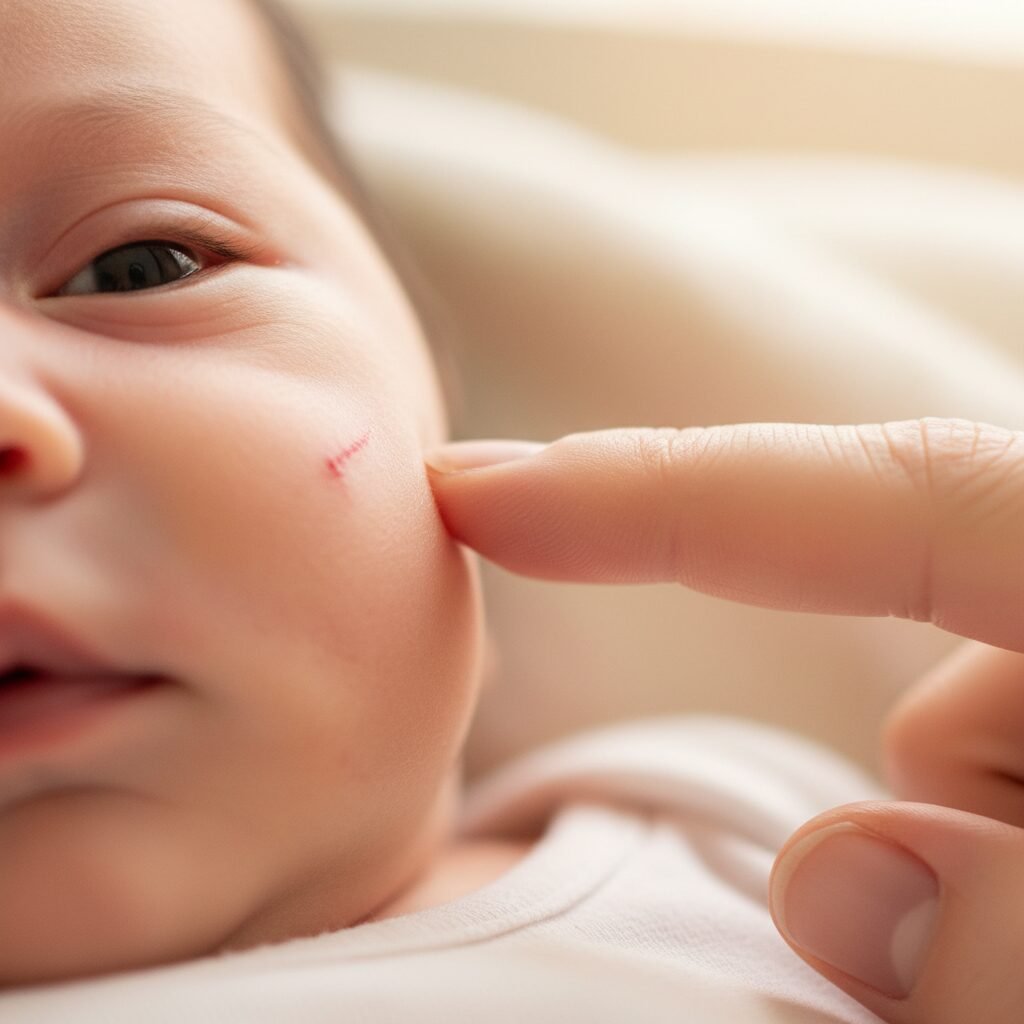
Let’s start by validating the very real reason these mittens exist and why nearly every new parent has a pair. Newborns, especially in the first few weeks, have very little control over their limbs. They are governed by reflexes, most notably the Moro reflex, or startle reflex. A sudden noise or movement can cause them to fling their arms out and then bring them back in, often with their hands ending up near their face. Combine this with surprisingly sharp, paper-thin nails, and scratches are almost inevitable.
Seeing a red mark on your baby’s cheek can feel heartbreaking. Your primary instinct is to protect them, and mittens are a soft, simple barrier. They are an immediate solution to a visible problem. For babies with skin conditions like eczema, which can make their skin itchy and more prone to breaking, mittens can be an especially useful tool to prevent them from causing further irritation or infection.
It’s completely normal to worry about your baby scratching themselves. Your desire to protect them is a beautiful sign of your love and care. There is no shame in using mittens while you figure out a nail care routine that works for you.
The bottom line is that mittens serve a clear purpose: they prevent self-inflicted scratches. In the whirlwind of the first few weeks, when you’re sleep-deprived and learning a thousand new things, sometimes the simplest solution is the most welcome one. But the question we need to ask is what might be happening underneath those little cotton coverings.
The Unseen Cost: How Mittens Can Hinder Crucial Development

While mittens solve the scratching problem, they can inadvertently create a barrier to some of your baby’s most important early developmental work. A newborn’s hands are not just for flailing; they are their very first tools for learning about the world and themselves. Covering them up 24/7 can interfere with this critical process in several ways.
The Power of Touch and Sensory Input
Your baby’s hands are packed with sensory receptors. From the moment they are born, they use their hands to gather information. They feel the texture of your skin, the softness of their blanket, and the shape of their own face. This constant stream of tactile information is fundamental to brain development. It helps them build a ‘map’ of their own body and the world around them. When hands are consistently covered, this rich sensory experience is muffled, like trying to read a book while wearing blurry glasses. They miss out on the distinct feelings of different surfaces, which is a key part of their early learning.
Finding Hands and the Art of Self-Soothing
Around 6 to 8 weeks, babies begin to discover their own hands. You’ll see them staring at their fists in amazement—this is a huge cognitive leap! This discovery is step one. Step two is learning to control them and bring them to their mouth. Sucking on their hands or fists is one of a baby’s first and most effective methods of self-soothing. It helps them calm down when they’re fussy, tired, or overwhelmed. Mittens can physically block this ability, making it harder for your baby to learn how to regulate their own emotions. They might become more reliant on you or a pacifier to calm down, delaying their ability to develop this important independent skill.
Grasping Reflex and Fine Motor Foundations
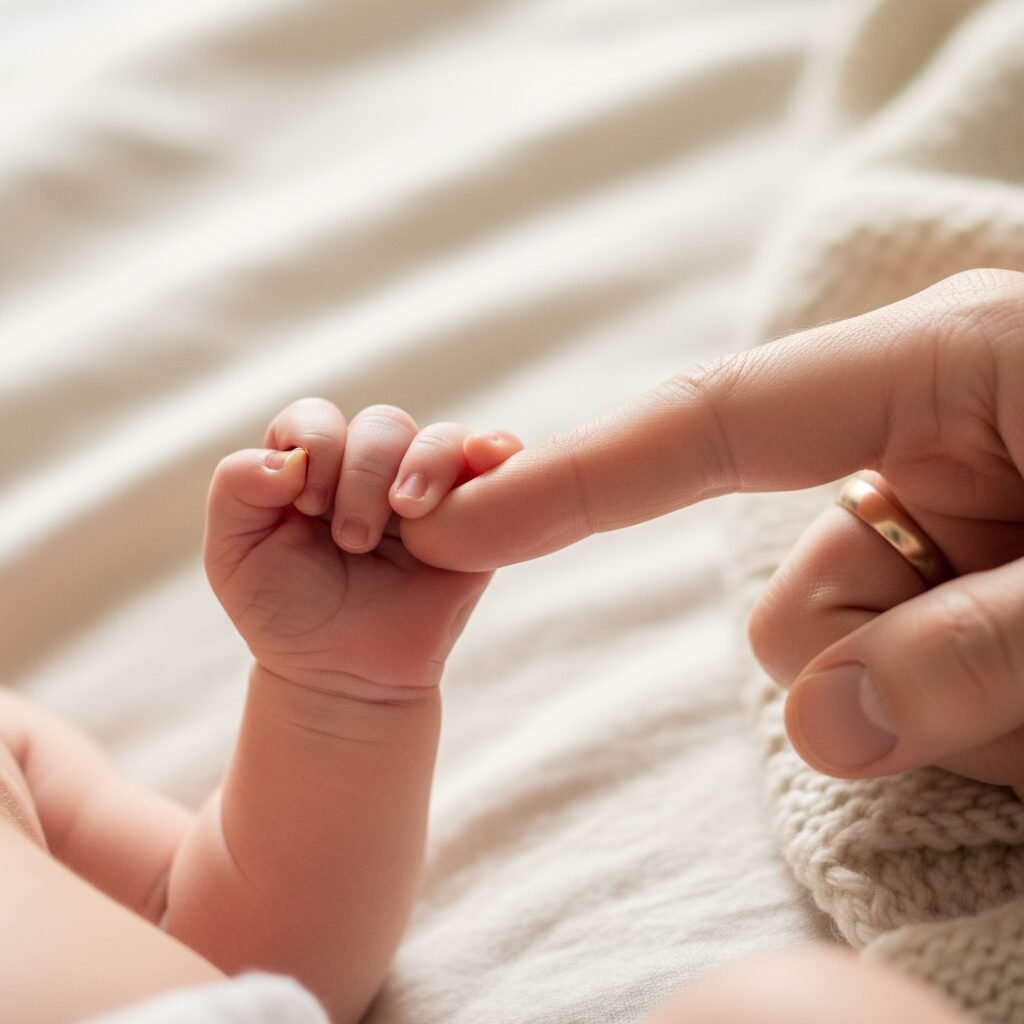
Your baby is born with a grasping reflex—place your finger in their palm, and they’ll instinctively curl their tiny fingers around it. This reflex is the foundation for all future fine motor skills. For this reflex to evolve into purposeful grasping, your baby needs to be able to open and close their hands freely, to feel things against their palm, and to practice bringing their fingers together. Mittens keep their hands in a passively closed position, limiting this essential practice. Mitten-free time allows them to strengthen the small muscles in their hands that they will one day use to hold a rattle, pick up food, and eventually, hold a crayon.
| Developmental Milestone | Experience with Free Hands | Potential Impact of Constant Mitten Use |
|---|---|---|
| Sensory Exploration | Baby feels different textures (skin, fabric, toys), sending rich signals to the brain. | Sensory input is dulled, slowing the process of learning about the environment through touch. |
| Self-Soothing | Baby can easily bring hands to mouth to suck on their fist or fingers, learning to calm themselves. | The physical barrier prevents access to the mouth, hindering the development of this key coping skill. |
| Body Awareness | Baby sees and feels their hands, learning they are a part of their own body. | ‘Out of sight, out of mind.’ It can delay the cognitive leap of ‘hand regard’ or discovering their hands. |
| Fine Motor Skills | Baby practices opening and closing their fists and the grasping reflex, building foundational muscle strength. | Hands remain passively closed, limiting the practice needed to transition from reflex to purposeful action. |
The Best of Both Worlds: Practical Alternatives to Mittens
Okay, so you’re convinced that mitten-free time is important, but you’re still looking at those sharp little nails with a healthy dose of fear. I get it! The goal isn’t to just let your baby scratch themselves. The goal is to manage the nails while still allowing for that crucial hand exploration. Thankfully, there are many wonderful, safe, and effective alternatives to keeping your baby’s hands under wraps all day.
Mastering the Mini-Mani Pedi
Keeping your baby’s nails short is the number one defense against scratches. This can feel intimidating, but with the right tools and timing, you can become a pro.
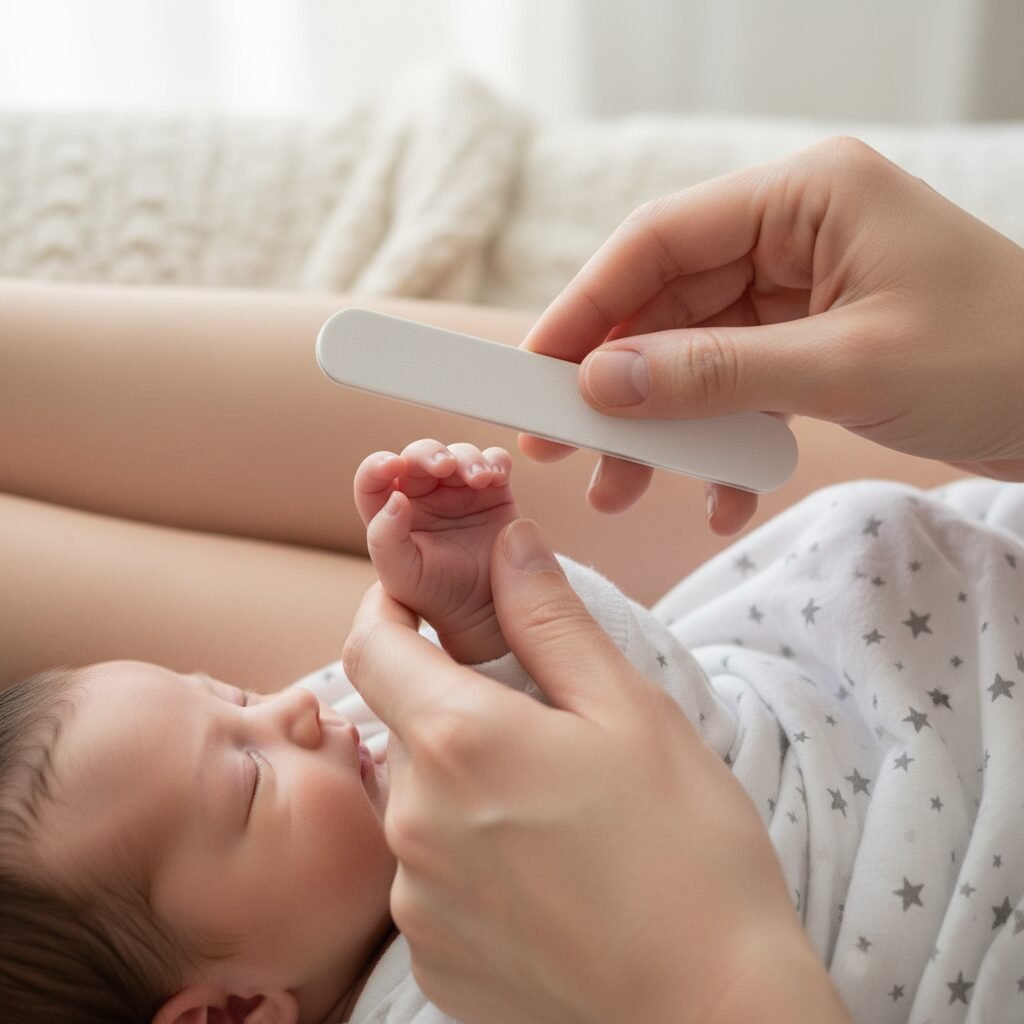
- Choose Your Tool: You have options! Some parents prefer baby nail clippers with a safety guard. Others swear by blunt-nosed baby scissors. My personal favorite for newborns is a soft emery board or an electric nail file. They are gentle and make it almost impossible to nick the skin.
- Pick Your Moment: The best time to trim nails is when your baby is calm, sleepy, or even fast asleep. Trimming after a bath is also great, as their nails will be softer.
- Work as a Team: If you’re nervous, ask your partner or a friend to help. One person can hold and soothe the baby while the other focuses on the nails.
- Be Gentle but Firm: Gently press the finger pad away from the nail to avoid clipping the skin. Trim following the natural curve of the nail. Don’t worry about getting them perfect; just smooth any sharp edges.
Dress for Success: The Magic of Fold-Over Cuffs
Many baby clothes manufacturers have already solved this problem for us! Look for sleep sacks, sleepers, and long-sleeved onesies that have built-in fold-over cuffs. These are the absolute best of both worlds. You can cover their hands while they are sleeping or if they are having a particularly fussy, flaily moment. But as soon as they are awake and ready to play, you can simply fold the cuffs back to free their hands for exploration. This gives you control and flexibility without needing a separate accessory.
Other Smart Strategies
Here are a few more simple tips to keep in your parenting toolkit:
- Swaddle Smart: When swaddling your baby for sleep, you can leave their hands free near their face (if they like that) or tuck their arms inside the swaddle to keep their hands contained.
- Supervised Playtime: Make sure that all awake time, especially tummy time, is mitten-free time. This is when they are doing their most important learning!
- Smooth the Edges: Even if you don’t need to cut the nails, a quick once-over with a soft file every couple of days can keep sharp edges from forming.
Finding Your Balance: A Realistic Approach

As with most parenting advice, this is not an all-or-nothing issue. The goal is not to declare that scratch mittens are ‘bad’ and should be banished forever. The goal is to use them thoughtfully and intentionally, with an understanding of the developmental priorities for your baby.
Think of it as a balance. Is your baby having a really tough day with eczema and scratching their skin raw? Using mittens for a short period while their skin calms down is a perfectly reasonable choice. Are they going down for a nap and you’re worried about them startling and scratching their eye? Popping on a pair of mittens or using the fold-over cuffs on their sleeper is absolutely fine.
The key is to avoid having them on all the time. The default should be hands-free. Mittens should be the exception, used for specific, short-term situations. Prioritize mitten-free time during all awake periods, feedings, and interactive play. This is when their brain is primed for learning, and their hands are their best tools.
A Quick Note on Scratches
Most newborn scratches are very superficial and heal incredibly quickly, often within a day or two. Simply keep the area clean with a little soap and water. You don’t need to apply any special creams or ointments. However, if you ever notice a scratch that looks deep, is bleeding more than a tiny bit, or shows signs of infection (like increasing redness, swelling, or pus), it’s always a good idea to give your pediatrician a call.
Ultimately, this isn’t about a strict rule you have to follow. It’s about being mindful. Every time you reach for the mittens, ask yourself: ‘Is this necessary right now, or can my baby have their hands free to explore?’ More often than not, you’ll find that freeing their hands is the best choice you can make for their amazing, developing brain.
Conclusion
Navigating the world of newborn care can feel like a minefield of conflicting advice. It seems like for every product designed to make your life easier, there’s an article explaining why you shouldn’t use it. It’s enough to make any new parent’s head spin!
When it comes to scratch mittens, the takeaway is simple: prioritize freedom. Your baby’s hands are their connection to the world. They are for soothing, for learning, and for connecting with you. While protecting their skin is important, fostering their development is paramount. By keeping their nails trimmed and using clever clothing options like fold-over cuffs, you can absolutely achieve both.
So, don’t throw those mittens away in a panic, but perhaps move them from the ‘everyday essential’ pile to the ‘use if needed’ drawer. Trust your instincts, observe your baby, and know that by simply being a thoughtful and engaged parent, you are giving your little one the very best start in life. You’ve got this.