
Stop the Startle: The Ultimate Guide to Swaddle Transitioning Without Tears
Hey there, amazing new parent. If you’re reading this, chances are the swaddle has been your secret weapon. That snug, burrito-like wrap that magically calms the flailing arms of the Moro (startle) reflex and coaxes your newborn into longer stretches of sleep. It feels like pure magic, doesn’t it? But now, you’re starting to see signs that the magic might be wearing off. Maybe your baby is breaking free, or you’ve seen them attempting to roll. A little knot of anxiety forms in your stomach. How can you possibly take away the one thing that guarantees sleep?
Take a deep breath. I’m here to tell you that it’s not only possible, but you and your baby are going to get through this. As a pediatric nurse, I’ve guided thousands of tired parents through this exact milestone. The swaddle transition isn’t about taking something away; it’s about giving your baby the freedom to move safely as they grow and develop. This guide is your roadmap. We’ll cover when to transition, what gear can help, and the step-by-step methods to make it as tear-free as possible. Let’s do this together.
When is it Time? The Telltale Signs to Ditch the Swaddle

When is it Time? The Telltale Signs to Ditch the Swaddle
Knowing when to start the transition is the most critical piece of the puzzle, and it’s all about safety. While every baby is different, there are universal signs that the swaddle’s time is up. This isn’t about a specific age on the calendar (though it often happens between 2 and 4 months), but about your baby’s developmental milestones.
Key Signs to Watch For:
- Signs of Rolling: This is the number one, non-negotiable sign. If your baby is attempting to roll from their back to their tummy, or even just getting up on their side, their arms must be free. If they were to roll onto their stomach while swaddled, they wouldn’t have their hands to push up and clear their airway, which is a serious suffocation risk.
- The Great Escape Artist: Is your baby consistently breaking an arm (or both!) free from the swaddle? This is a sign that they crave more movement and that the swaddle is becoming less effective and potentially unsafe, as loose blankets in the crib are a hazard.
- Diminishing Startle Reflex: The primary purpose of the swaddle is to contain the Moro reflex. As your baby’s nervous system matures, you’ll notice this reflex becomes less frequent and intense. They might still startle, but it won’t necessarily wake them from a deep sleep. This is a good indicator they’re ready to learn to sleep without that snug containment.
- Fighting the Swaddle: If your pre-sleep routine has turned into a wrestling match where your baby cries, arches their back, and fights being wrapped, they’re telling you something. They may no longer find it comforting and are ready for a change.
A Crucial Safety Note: The American Academy of Pediatrics (AAP) is clear: parents should stop swaddling as soon as their baby shows any signs of trying to roll over. It’s better to be a week too early than a day too late on this.
Don’t panic if you see these signs! This is a normal, healthy part of your baby’s development. It’s a signal that they are getting stronger and more coordinated. Now, let’s get you prepared with the right tools for the job.
Your Gentle Transition Toolkit: Gear Up for Success
Your Gentle Transition Toolkit: Gear Up for Success
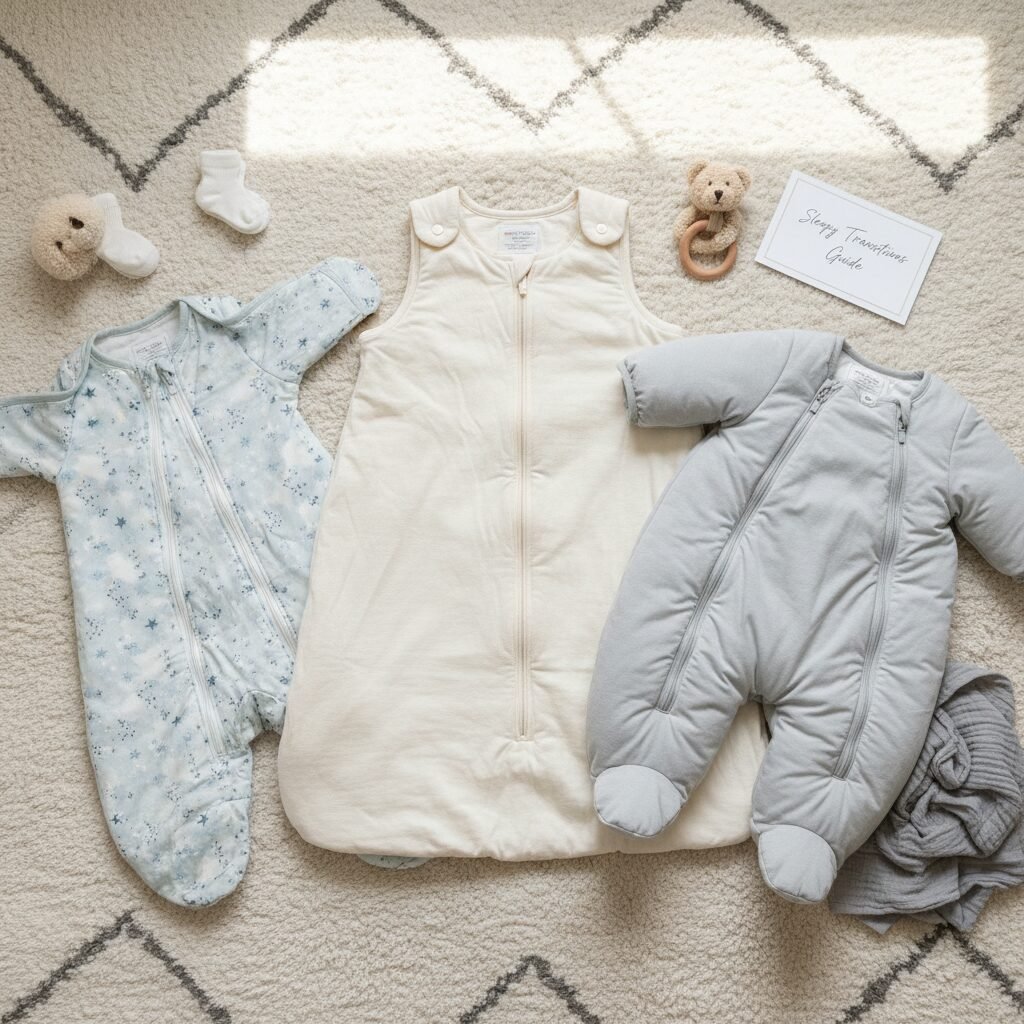
Saying goodbye to the swaddle doesn’t mean your baby has to go from a snug burrito to a wide-open crib overnight. Thankfully, there are amazing products designed specifically for this in-between phase. Think of these as your transition toolkit—they provide a sense of security while keeping your baby safe. Here’s a breakdown of the most popular options:
| Transition Product | How It Works | Best For Babies Who… |
|---|---|---|
| Wearable Blanket / Sleep Sack | A sleeveless, zippered blanket your baby wears. It keeps them warm without the risk of loose blankets and allows complete arm freedom. This is the ultimate long-term goal. | Are less dependent on the snug feeling, or for parents who want to go straight to the final step. |
| Transitional Swaddle Sack | These come in various designs. Some have arm wings that are slightly weighted or shaped to provide gentle resistance (like the Zippadee-Zip), while others have swaddle wings that can be opened one at a time. | Crave that cozy, enclosed feeling and need a more gradual step-down from the full swaddle. |
| Merlin’s Magic Sleepsuit | A padded, puffy suit that muffles the startle reflex while leaving arms and legs free. It provides a cozy, secure feeling. It’s important to note this is a temporary solution, as you’ll need to transition out of this as well once baby can roll in the suit. | Have a very strong startle reflex and are struggling with the transition to a regular sleep sack. |
Choosing the right product depends on your baby’s unique temperament. Some babies can go straight to a wearable blanket without missing a beat, while others benefit from a more gradual approach with a transitional product. There’s no right or wrong answer—only what’s right for your family. Don’t feel pressured to buy everything! Often, one good transitional sack is all you need to bridge the gap successfully.
The Step-by-Step Transition Plan: Choose Your Method

The Step-by-Step Transition Plan: Choose Your Method
Alright, you’ve spotted the signs, you’ve picked your gear, and now it’s go-time. The key here is consistency. Whichever method you choose, try to stick with it for at least 3-5 nights before deciding it’s not working. Sleep can get a little messy before it gets better, and that’s okay! Here are the three most common and effective methods.
Method 1: The One-Arm-Out Approach (Slow & Steady)
This is a fan favorite for a reason. It’s gradual, gentle, and allows your baby to adjust slowly. It’s perfect for babies who are a bit more sensitive to change.
- Night 1-3: Swaddle your baby as usual, but leave one arm out—typically the non-dominant arm. Their dominant hand is often the one they like to self-soothe with, so keeping that one swaddled can be helpful initially.
- Night 4-6: Once they’ve adjusted to one arm out, switch to swaddling with the other arm out. This helps them get used to the sensation on both sides.
- Night 7 and beyond: Time to free both arms! You can either swaddle them with both arms out (just a snug wrap around their chest) or move directly into your chosen wearable blanket or transition product.
Method 2: The Cold Turkey Approach (Quick & Decisive)
This method sounds scarier than it often is! For some easy-going babies, ripping off the band-aid is the most effective route. It can lead to a few rough nights, but the adjustment period is often shorter overall.
- Choose Your Night: Pick a night when you and your partner are well-rested and can support each other. The first night might be rocky.
- Ditch the Swaddle: For all naps and nighttime sleep, put your baby straight into a wearable blanket. No more swaddle, period.
- Offer Extra Support: Your baby will likely have a few more wake-ups as they get used to their arms. Be ready to offer extra comfort—a gentle hand on their chest, a soft shushing sound, or a quick cuddle—to help them settle back down.
Method 3: The Transitional Product Bridge (The Best of Both Worlds)
This method uses one of the toolkit products mentioned earlier to bridge the gap between a full swaddle and full freedom.
- Introduce the New Gear: Swap the swaddle for your chosen transitional product (like a Merlin’s Sleepsuit or a Zippadee-Zip) for all sleep.
- Let Them Adjust: These products provide that comforting, enclosed sensation that muffles the startle reflex, making the transition much smoother. Let your baby sleep in this product for a few weeks.
- The Final Step: Once your baby is sleeping well in the transitional product and is showing signs of rolling while wearing it, it’s time for the final step: moving to a regular, sleeveless wearable blanket. Because they are already used to having their arms and legs free inside the suit, this final transition is often incredibly easy.
Navigating the Bumps: Troubleshooting Common Challenges

Navigating the Bumps: Troubleshooting Common Challenges
It would be lovely if every transition was perfectly smooth, but let’s be real—this is parenthood! You might hit a few bumps. The most important thing to remember is that this is temporary. Here’s how to handle the most common challenges.
Help! My baby keeps hitting themselves in the face!
This is completely normal! Your baby has had their hands contained for months, and now they have to figure out what to do with these things attached to their body. It’s a weird sensation for them. You can help by keeping their nails trimmed short so they don’t scratch themselves. Over a few nights, their movements will become more purposeful and less jerky, and they’ll learn to either ignore their hands or use them to self-soothe.
The first night was a disaster. Should I give up?
Please don’t! The first one or two nights are almost always the hardest. Your baby is learning a new skill: how to fall asleep and connect sleep cycles without being pinned down. It’s a huge change! Commit to trying your chosen method for at least three full nights. Often, by the third or fourth night, you’ll see significant improvement. Consistency is your best friend here.
My baby is waking up every hour. What do I do?
First, take a deep breath and a sip of water. When your baby wakes, try to give them a minute before rushing in. Sometimes they are just stirring between sleep cycles and will fall back asleep on their own. If they are truly upset, go to them and offer comfort with minimal intervention. Try a firm hand on their chest, gentle shushing, or replacing their pacifier. Try to avoid immediately picking them up or feeding them unless it’s their scheduled feeding time, as this can create a new sleep association you’ll have to wean later.
Remember: You are your baby’s safe space. Your calm, confident presence is the most powerful sleep tool you have. You’re showing them that they are safe and secure, even without their swaddle.
Creating a Soothing Sleep Environment: Beyond the Swaddle

Creating a Soothing Sleep Environment: Beyond the Swaddle
As you remove the swaddle, the rest of your baby’s sleep environment becomes even more important. The goal is to create a space that is so calming and predictable that it cues their brain for sleep, making the absence of the swaddle less noticeable. This is about setting your baby up for long-term sleep success.
Your Sleep-Inducing Checklist:
- Pitch Black Darkness: I’m not talking about dim light; I’m talking cave-like darkness. Use blackout curtains to block all outside light. This helps boost the production of melatonin, the sleepy hormone, and prevents early morning wake-ups from the sunrise.
- Continuous White Noise: A white noise machine creates a constant, soothing sound that mimics the womb. It’s incredibly effective at blocking out disruptive household noises (like a dog barking or a sibling playing) that might otherwise startle your newly unswaddled baby awake. Keep it running for the entire duration of their sleep.
- Consistent Room Temperature: A baby’s room should be kept between 68-72°F (20-22°C). A room that is too hot or too cold can disrupt sleep. A wearable blanket is great for this, as you can choose the TOG (a warmth rating) based on the season and your room’s temperature.
- A Predictable Bedtime Routine: Babies thrive on routine. A simple 15-20 minute routine before bed can work wonders. It could be as simple as a bath, putting on pajamas and a sleep sack, reading a short book, a quick feed, and then a cuddle and song before being placed in the crib awake but drowsy. This sequence of events tells your baby’s brain that sleep is coming.
By optimizing these external factors, you’re building a powerful foundation for healthy sleep habits that will last long after the swaddle transition is a distant memory. You’re teaching your baby that their crib is a safe, peaceful place for sleep, with or without a swaddle.
Conclusion
You did it. You’ve read the guide, and you’re armed with the knowledge and confidence to tackle the swaddle transition. Remember to be patient—with your baby, and just as importantly, with yourself. There will be good nights and not-so-good nights, and that is a normal part of the process. Celebrate the small victories, like the first time they connect a sleep cycle with an arm free, or the morning they wake up babbling happily after a full night in their sleep sack.
This is just one of many transitions you’ll navigate as a parent. Each one is a sign that your baby is growing, thriving, and becoming the amazing little person they are meant to be. Trust your instincts, lean on your support system, and know that you are giving your baby the incredible gift of safe and independent sleep. You’ve got this.