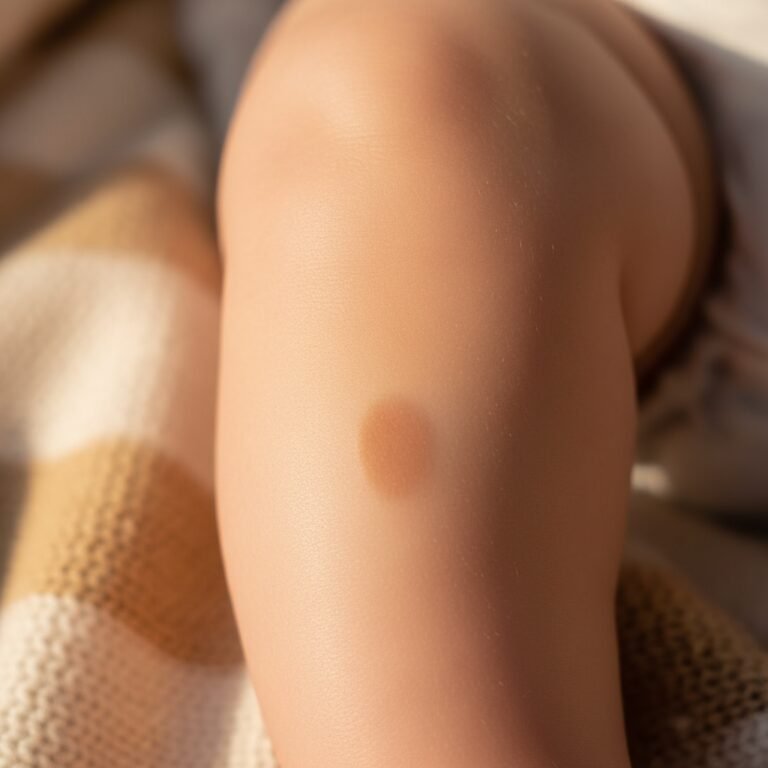

Purple Mottled Skin? When Cutis Marmorata Is A Warning Sign
You’re gazing at your perfect little baby, counting their tiny toes and marveling at their rosebud lips, when you spot it: a strange, lacy, reddish-purple pattern spreading across their skin. Your heart does a little flip-flop. What is that? Is it a rash? Are they okay?
Take a deep, calming breath, new parent. You’re likely looking at something called cutis marmorata, and in the vast majority of cases, it’s a completely normal and harmless part of being a brand-new human. It’s one of those quirky newborn things that can look a little scary but is usually just your baby’s body adjusting to the world outside the womb.
As a pediatric nurse, I’ve reassured countless parents about this exact thing. My goal here is to be that calm, experienced voice for you. We’ll walk through what this mottled skin is, the simple reason it usually appears, and—most importantly—the clear, no-nonsense signs that tell you when it’s time to stop Googling and start dialing your pediatrician. You’ve got this, and we’re going to figure it out together.
What Exactly Is Cutis Marmorata?
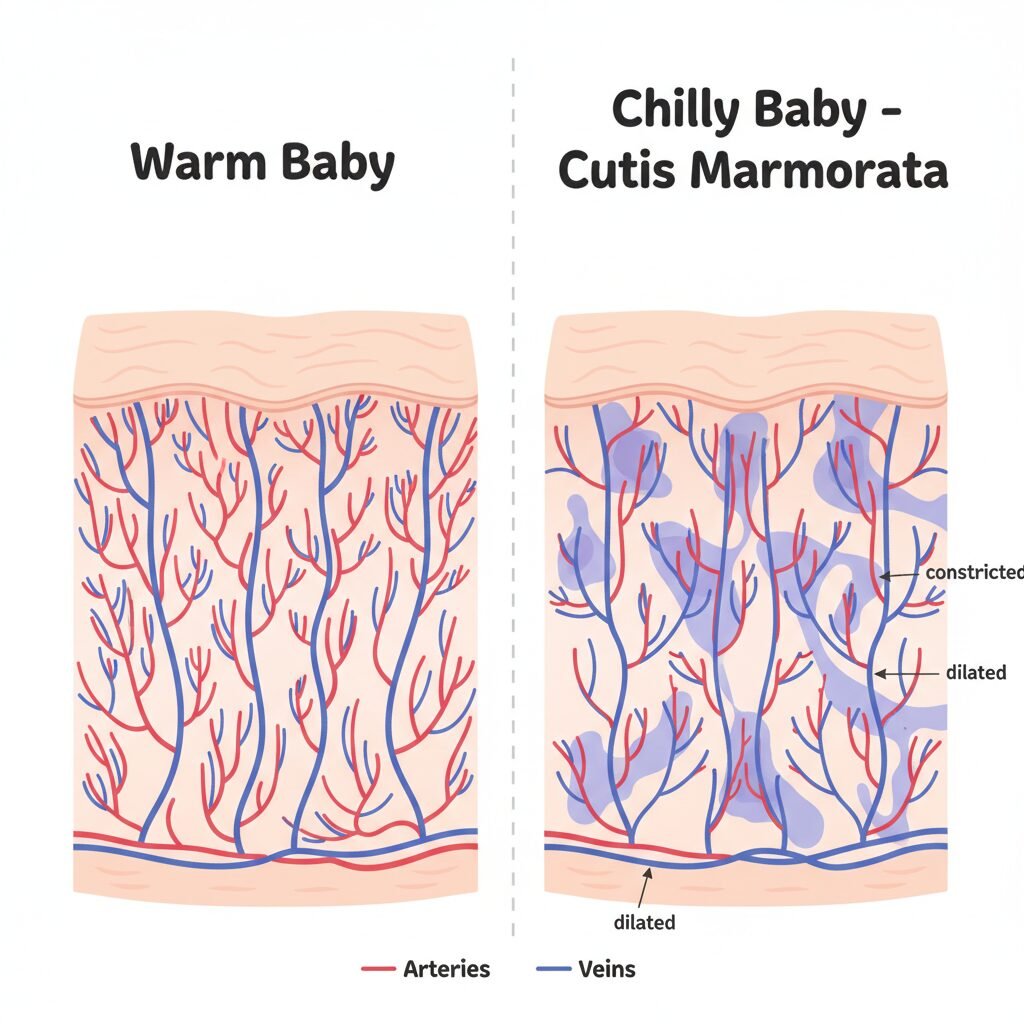
Let’s start by demystifying the medical jargon. ‘Cutis’ means skin, and ‘marmorata’ means marbled. So, cutis marmorata is simply a fancy term for skin that has a marbled or web-like appearance. It’s not a rash—it isn’t raised, bumpy, or itchy. It’s purely a vascular pattern showing through your baby’s thin, delicate skin.
Imagine a tiny, intricate net made of reddish-blue or purple thread laid over their skin. That’s a pretty good description of what you’re seeing. It can appear on their trunk, arms, and legs, and it often looks most prominent when their skin is exposed to cooler air, like during a diaper change or after a bath.
The reason this happens is fascinating! Newborns have an immature circulatory system. Their tiny blood vessels are still learning how to respond to temperature changes. When a baby gets a little chilly, the small blood vessels closest to the skin’s surface constrict (get narrow) to conserve heat. At the same time, other nearby vessels might dilate (widen). This uneven response creates that classic mottled pattern. It’s a visible sign of their body working to regulate its temperature.
A Quick Reassurance: Think of it like this: your baby’s internal thermostat is still in its ‘beta testing’ phase. Cutis marmorata is just a harmless glitch as it learns to work perfectly.
The #1 Benign Cause: A Little Bit of a Chill

The most common trigger for cutis marmorata is a change in temperature. Your baby has spent nine months in a perfectly climate-controlled environment (your womb!), and now they’re dealing with drafts, air conditioning, and the shock of a cool wipe on their bottom during a 3 a.m. diaper change.
When their body senses a drop in temperature, it kicks that immature circulatory system into gear. The result is the marbled pattern we’ve been talking about. The good news? This type of mottling is transient, meaning it comes and goes.
How to Tell if It’s Just a Chill: The Warm-Up Test
Here’s a simple and effective way to check if the mottling is just a response to cold. If you see the pattern appear, try one of these simple warming techniques:
- Add a Layer: Put on a pair of socks, a onesie, or a light sweater. The ‘one more layer than you’ rule is a great guideline for dressing a baby.
- Skin-to-Skin: Snuggle them against your bare chest. Your body heat is the perfect baby-warmer.
- Swaddle Them: Wrap them snugly in a warm blanket.
Now, watch their skin. If the mottling fades away and their skin returns to its normal, uniform color within a few minutes of being warmed, you can breathe a huge sigh of relief. This is the hallmark of benign, physiological cutis marmorata. It’s simply their body’s way of saying, “Brrr, it’s a little drafty in here!” and it’s not a cause for concern.
When Mottled Skin Is a Red Flag: Signs It’s Time to Call the Doctor

Okay, this is the part you’ve been waiting for. While most mottling is harmless, your parental instincts are important. There are times when mottled skin can be a sign that something more serious is going on. The key difference is that the mottling will be persistent (it doesn’t go away with warming) and will usually be accompanied by other symptoms.
Important Safety Note: Trust your gut. You know your baby better than anyone. If you feel that something is wrong, it is never a mistake to call your pediatrician or seek medical advice. It’s always better to be safe and reassured.
Call Your Doctor Immediately If You See Mottling PLUS Any of These Signs:
- It Doesn’t Go Away: You’ve warmed your baby up with an extra layer or cuddles, but the mottled pattern remains prominent and doesn’t fade. This is the biggest red flag.
- Lethargy or Extreme Drowsiness: Your baby is unusually sleepy, difficult to wake for feedings, or seems floppy and listless. This is very different from normal newborn sleepiness.
- Trouble Breathing: Look for fast breathing, flaring nostrils, grunting with each breath, or retractions (when the skin between the ribs or at the neck sucks in with each breath).
- Fever: For a newborn (under 3 months), a rectal temperature of 100.4°F (38°C) or higher is considered a medical emergency.
- Feeling Cold: The baby’s skin (especially their trunk) feels cold to the touch, even though they are in a warm room and dressed appropriately.
- Poor Feeding: Your baby is refusing to eat, is feeding very poorly, or shows little interest in the breast or bottle.
- A Blueish Tinge (Cyanosis): Look closely at their lips, tongue, and the central part of their body. If they have a blue or dusky color, this is a sign of poor oxygenation and requires immediate medical attention.
Persistent mottling accompanied by any of these symptoms could indicate an underlying issue, such as an infection (like sepsis), a heart condition, or a circulatory problem that needs to be evaluated by a medical professional right away.
A Quick Word on a Rare Cousin: CMTC

While we’re on the topic, I want to briefly mention a rare, related condition you might stumble upon in your research. It’s called Cutis Marmorata Telangiectatica Congenita (CMTC). This is a very different beast from the common mottling we’ve been discussing.
CMTC is a congenital condition, meaning it’s present at birth and is persistent—it doesn’t fade when the baby is warmed. The marbled pattern is often more pronounced, sometimes looks purplish-blue, and can occasionally be associated with skin thinning or ulcerations in the affected area. It also might affect just one side of the body or a specific limb.
If your baby has a fixed, dark, mottled pattern that was there from day one and never goes away, your pediatrician will want to take a closer look. While it sounds scary, CMTC is usually a benign cosmetic issue, but it can sometimes be associated with other developmental abnormalities, so it warrants a proper diagnosis and follow-up with a specialist like a pediatric dermatologist.
What to Expect at the Pediatrician’s Office

Let’s say you’ve noticed some red flags and have made the right call to see your pediatrician. What happens next? Knowing what to expect can help ease your anxiety.
Your doctor will be your partner in figuring this out. They will likely:
- Perform a Thorough Physical Exam: They will undress your baby completely to look at the mottling. They’ll check its location, how widespread it is, and whether it changes with temperature. They will also listen to your baby’s heart and lungs, check their pulse, and assess their overall muscle tone and alertness.
- Ask a Lot of Questions: Be prepared to answer questions about your baby’s recent behavior. This is where you can be a huge help! They’ll want to know:
- When did you first notice the mottling?
- Does it come and go, or is it always there?
- How has your baby been feeding?
- How are their energy levels? More sleepy than usual?
- Have you noticed any other symptoms, like fever, cough, or difficulty breathing?
- How many wet and dirty diapers are they having?
- Check Vital Signs: A nurse will check your baby’s temperature, heart rate, and respiratory rate. They might also check their oxygen saturation with a simple, painless pulse oximeter that clips onto their foot or hand.
Based on this evaluation, your doctor will determine the next steps. If the exam is completely normal and the mottling is clearly related to temperature, they will provide reassurance and guidance. If there are any concerns about infection or other issues, they may recommend further tests, such as blood work, to get to the bottom of it. The goal is always the same: to ensure your baby is healthy and to give you peace of mind.
Conclusion
Navigating the world of newborn quirks and concerns can feel like a rollercoaster. Seeing something like mottled skin on your baby is just one of the many moments that will have you holding your breath. But now, you’re armed with knowledge and confidence.
Remember the key takeaway: most of the time, cutis marmorata is just your baby’s developing circulatory system doing its thing in response to a little chill. A simple warm-up is often all it takes to see that lacy pattern vanish. However, you also now know exactly which warning signs—like mottling that won’t go away or is paired with lethargy or fever—are your cue to seek medical care.
More than any article or book, your greatest tool is your intuition. You are the expert on your child. If something feels off, trust that feeling. Calling your pediatrician for reassurance is part of the job of being a great parent. You’re doing an amazing job. Be patient with your baby, and be kind to yourself.