

Prevent Flat Head Syndrome: 5 Simple Positions That Save Your Baby’s Shape
Hello, new parent! Take a deep breath. You’re navigating one of the most incredible, and let’s be honest, sometimes overwhelming, journeys of your life. Amidst the whirlwind of feedings, diaper changes, and sleepless nights, you might have noticed a little flat spot on the back or side of your baby’s head and felt a jolt of worry. Is it normal? Did I do something wrong? First, let me wrap you in a big, virtual nurse’s hug and say: you are doing an amazing job.
This condition, known as positional plagiocephaly, or more commonly, flat head syndrome, is incredibly common. In fact, its prevalence has risen significantly since the wonderful ‘Back to Sleep’ campaign began in the 1990s to reduce the risk of SIDS. While placing babies on their backs to sleep is the absolute safest thing to do, it does mean they spend a lot of time in one position. Since a newborn’s skull is wonderfully soft and pliable, this constant pressure can lead to some flattening.
But here’s the fantastic news: in most cases, it’s a cosmetic issue that is both preventable and correctable with simple, gentle changes to your baby’s daily routine. You don’t need fancy, expensive gadgets. You just need a little know-how. In this guide, we’ll walk you through everything you need to know, from understanding why it happens to five simple, loving positions that will protect your baby’s head shape while promoting their development. Let’s get started!
What Exactly Is Flat Head Syndrome (And Why You Shouldn’t Panic)
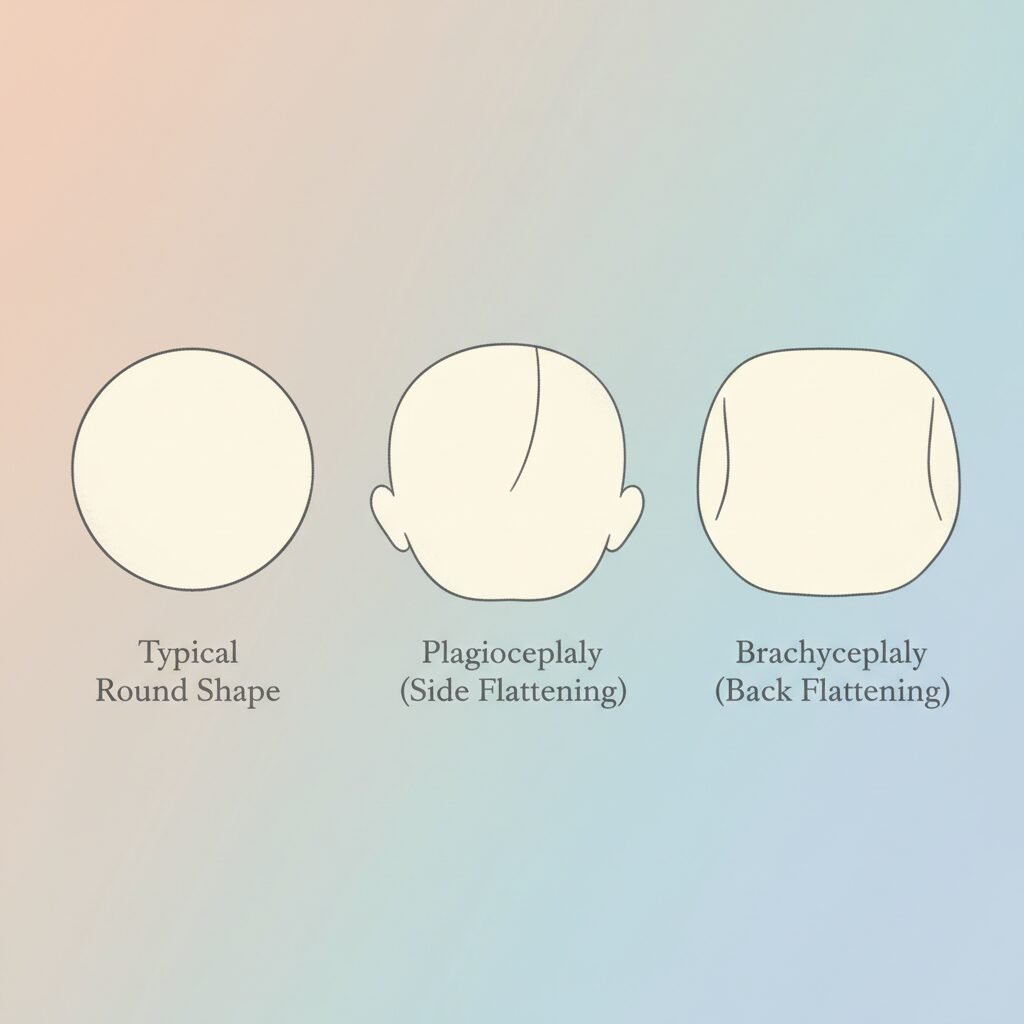
Before we dive into the solutions, let’s demystify the problem. Understanding what’s going on will empower you and ease your worries. Think of your baby’s skull not as a solid helmet, but as a collection of soft, bony plates connected by flexible tissues called sutures. This design is brilliant! It allows their head to pass through the birth canal and accommodates their brain’s rapid growth during the first year of life.
The downside to this softness is that consistent, gentle pressure on one spot can mold the skull’s shape. There are a couple of common patterns:
- Plagiocephaly: This is the most common type, where the head is flattened on one side, sometimes making it look asymmetrical, like a parallelogram from above. You might notice one ear is pushed forward slightly compared to the other.
- Brachycephaly: This happens when the back of the head becomes uniformly flat, causing the head to appear wider than usual.
It’s crucial to understand that this is almost always caused by positioning, not a problem with your baby’s bones or brain. It doesn’t cause brain damage or affect your child’s development. It’s a direct result of them spending lots of time on their backs—in the crib, in a car seat, in a swing, or in a bouncer. Again, this is not your fault! You are following safe sleep guidelines and using modern baby gear designed to keep them safe. We just need to consciously build some variety into their day when they’re awake.
A Gentle Reminder: Always, always, always place your baby on their back for sleep (naps and nighttime). The tips in this article are for when your baby is awake and supervised.
Your 5-Position Toolkit to Protect Your Baby’s Head Shape
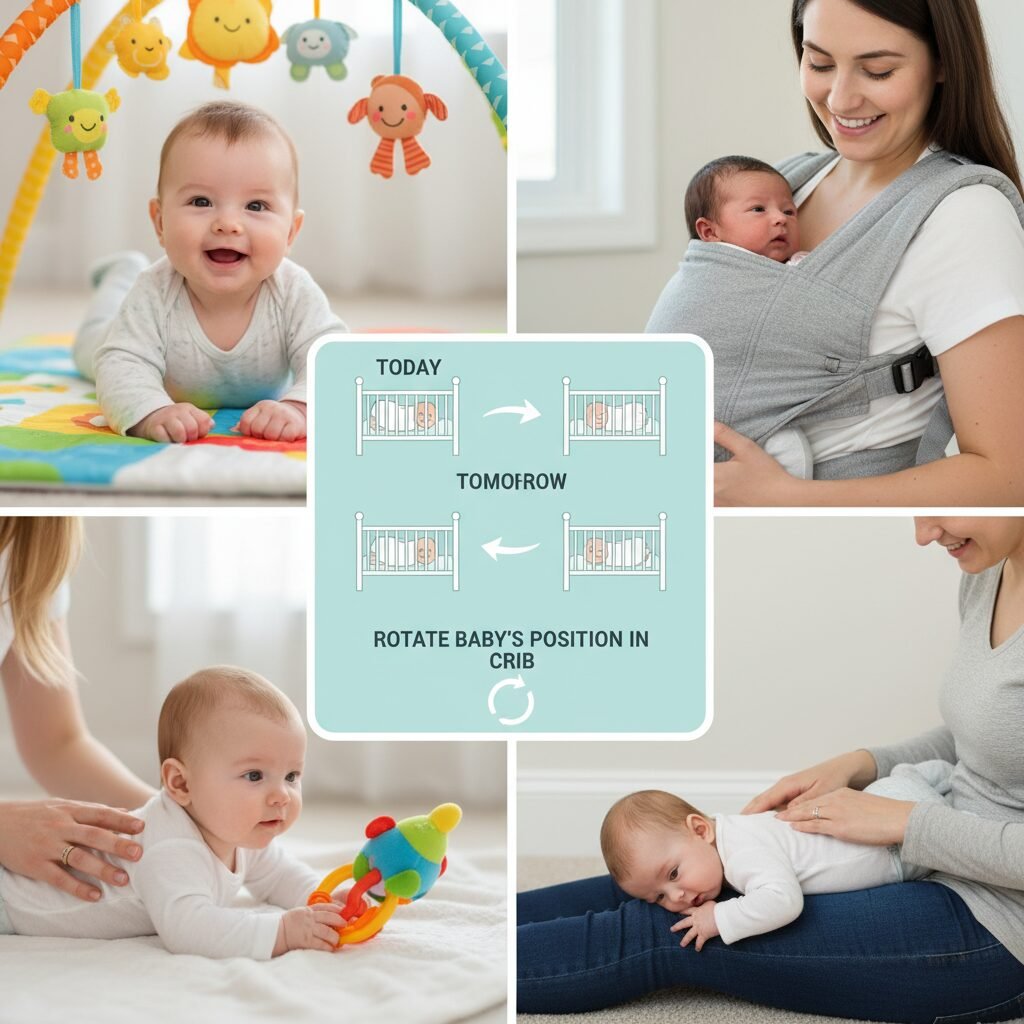
Alright, let’s get to the heart of the matter! Think of this as your recipe for a well-rounded head. The key ingredient is variety. By rotating through these simple positions during your baby’s awake hours, you’ll naturally relieve pressure points and encourage healthy development. Aim to incorporate these throughout the day, every day.
1. Tummy Time, Tummy Time, Tummy Time!
This is the gold standard for a reason. Tummy time is a powerhouse activity that not only takes all pressure off the back of your baby’s head but also works wonders for their development. It strengthens their neck, shoulder, and back muscles, which are the building blocks for rolling, sitting, and crawling.
How to do it:
- Start early! You can begin the day you come home from the hospital.
- Begin with very short sessions—just one or two minutes at a time, several times a day. You can lay your baby on your chest while you’re reclined on the couch; that counts!
- Place a colorful mat or blanket on a firm, flat surface (the floor is perfect).
- Get down on their level! Make eye contact, sing songs, or place an unbreakable mirror or high-contrast toy in front of them to make it fun.
- Gradually increase the duration as your baby gets stronger. The goal is to work up to a total of about 60-90 minutes of tummy time spread throughout the day by the time they are 3-4 months old.
2. The ‘Side-Lying Snuggle’ (Supervised, Of Course!)
This is a wonderful, often-overlooked position for awake playtime. It gives your baby a different view of the world and shifts pressure from the back to the sides of their head. Remember, this is for supervised awake time only, never for sleep.
How to do it:
- Lay your baby on a play mat on their side. You can roll up a small receiving blanket and tuck it snugly behind their back to help them feel secure and stay in position.
- Ensure both of their arms are in front of them.
- Engage with them! Place a favorite toy in their line of sight or sit in front of them and chat.
- Be sure to alternate which side they lie on during different play sessions throughout the day.
3. Master the ‘Carried and Cuddled’ Position
Your arms are one of the best tools you have! Holding your baby upright is a fantastic way to keep them off their back. This is where babywearing comes in. Using a well-fitted, ergonomic soft-structured carrier, sling, or wrap is a game-changer.
How to do it:
- Choose a carrier that supports your baby in a healthy ‘M’ position (knees higher than their bottom) to promote good hip development.
- Babywearing not only prevents head flattening but also can soothe a fussy baby and lets you be hands-free. It’s a win-win!
- Even without a carrier, simply holding your baby upright over your shoulder (like when burping) or in a tummy-down ‘football hold’ along your forearm provides excellent pressure relief.
4. The ‘Alternate the View’ Trick in the Crib
This is the simplest trick in the book, and it’s surprisingly effective. Babies are naturally drawn to light and activity. You can use this to your advantage to encourage them to turn their head in different directions.
How to do it:
- When you place your baby down to sleep (on their back!), alternate the direction their head is at in the crib. One night, place their head at the top of the crib; the next night, place it at the foot.
- They will likely turn their head toward the door or the most interesting part of the room. This simple change encourages them to rest on different parts of their head from night to night.
- During awake time in a playpen or on a mat, place engaging mobiles or toys slightly to the side to encourage them to look both ways, not just straight up.
5. The ‘Lap Lay’ for Play and Burps
This is another easy way to sneak in more tummy time and pressure-off-the-head moments. It feels cozy and secure for your baby and is perfect for bonding.
How to do it:
- Sit comfortably in a chair and lay your baby tummy-down across your lap.
- You can gently pat or rub their back to soothe or burp them.
- This position allows you to interact with them easily, talk to them, and play. It’s a great alternative if your baby isn’t a fan of tummy time on the floor just yet.
Creating a Head-Shape-Friendly Environment
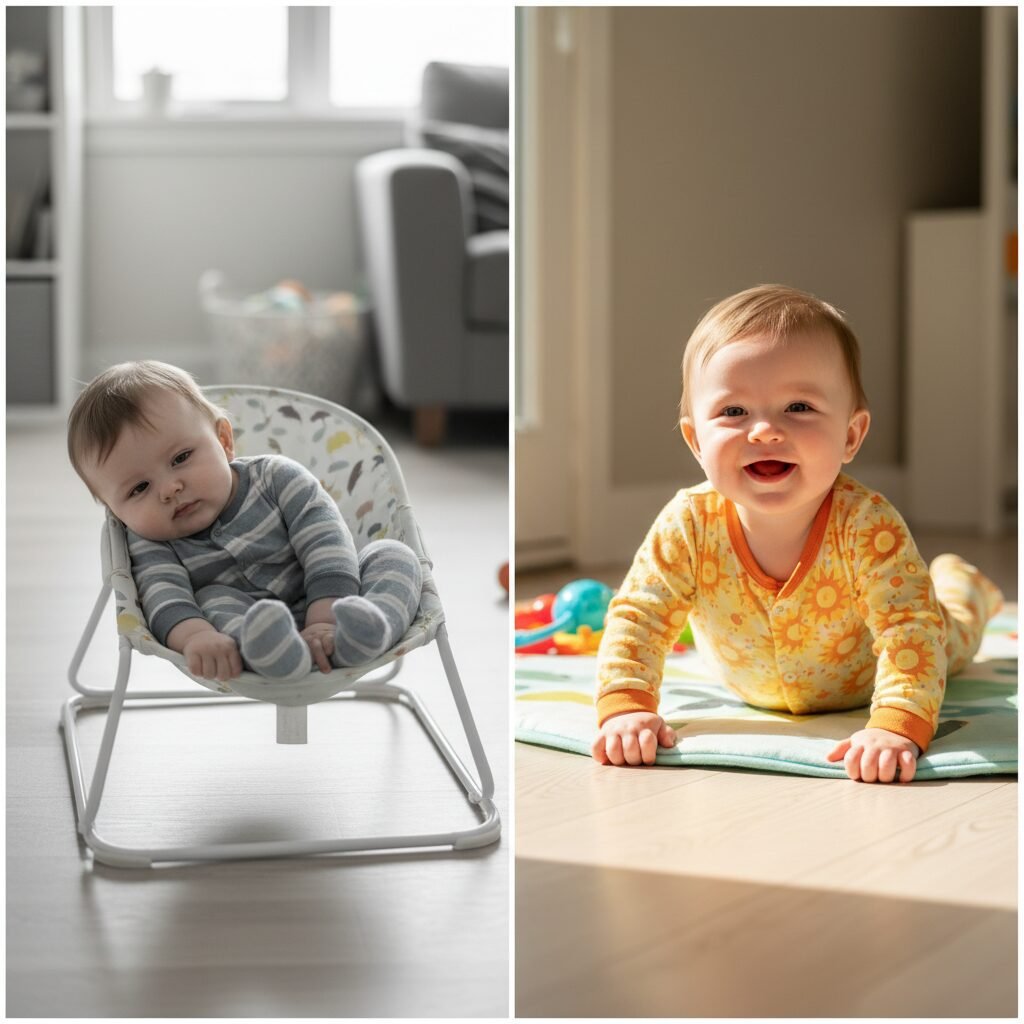
Modern baby gear is fantastic for safety and convenience, but it’s important to be mindful of how much time your little one spends in it. Devices that keep a baby on their back are often called ‘containers.’ This includes infant car seats, swings, bouncers, and rockers. While they are essential tools, their use should be limited when your baby is awake and could be playing freely.
Think of it as a ‘container budget.’ The majority of your baby’s awake time should be spent ‘free-range’—on a mat on the floor, in your arms, or in a carrier. Time in bouncers and swings should be short and supervised.
Here’s a simple comparison to help you balance your baby’s day:
| Activity Type | Goal | Why It Helps |
|---|---|---|
| Floor Play (Tummy & Back) | The majority of awake time | Builds strength, encourages movement, and allows free head turning. |
| Being Carried/Worn | Frequently throughout the day | Completely removes pressure from the head and promotes bonding. |
| Time in ‘Containers’ | Use for short periods (15-20 min) | Convenient, but limits movement and puts pressure on the back of the head. |
CRITICAL SAFETY WARNING: Never use pillows, positioners, or any soft bedding in your baby’s crib or bassinet to try and ‘fix’ a flat spot. These items are a serious suffocation hazard and go against all safe sleep recommendations. A firm, flat mattress with a fitted sheet is all your baby needs.
Your goal isn’t to eliminate these helpful tools, but to use them purposefully and ensure they don’t become the default spot for your baby to hang out. The floor is your friend!
When to Be Concerned and Chat with Your Pediatrician

While these positioning tips are effective for most babies, it’s also important to know when to bring up your concerns with your pediatrician. You are the expert on your baby, and your intuition matters!
Schedule a visit if you notice any of the following:
- A very significant flat spot: If the flattening seems severe or isn’t improving after a few weeks of trying these new positions.
- Facial asymmetry: If you notice that your baby’s ears are out of alignment, one eye looks smaller than the other, or one side of their forehead seems to be bulging.
- A strong head-turning preference: This is a key one. If your baby almost always turns their head to one side and resists or fusses when you try to gently turn it the other way, it could be a sign of congenital muscular torticollis. This is a condition where a tight neck muscle makes it difficult for them to turn their head. It’s very treatable with simple stretching exercises and physical therapy, but it’s a major contributor to flat head syndrome, so it needs to be addressed.
- You’re just worried: Honestly, that’s reason enough. Your pediatrician is your partner in this. They can assess your baby’s head shape, measure it if necessary, check their neck’s range of motion, and provide personalized advice and reassurance.
In some moderate to severe cases, especially those involving torticollis, your doctor might refer you to a pediatric physical therapist or, less commonly, suggest a custom-molded helmet (cranial orthosis). These helmets work by applying gentle, persistent pressure to guide the skull’s growth into a more rounded shape. While the idea can sound scary, they are very effective and painless for the baby. But for the vast majority of little ones, the simple positioning strategies we’ve discussed are all that’s needed.
Conclusion
There you have it—your complete guide to protecting that precious, perfectly shaped head. Remember, the key to preventing and correcting flat head syndrome is simple: variety. Mix up your baby’s positions throughout their awake hours, embrace tummy time as a fun part of your routine, and snuggle them close as much as you can.
Please, release any guilt you might be feeling. A flat spot is a sign that you are diligently following safe sleep rules—and that makes you a wonderful, safety-conscious parent. By being proactive and using these five simple positions, you are not only helping to round out their head but also giving them a fantastic foundation for their physical development. You’ve got this!