
Plastic Bottle Danger: How to Avoid Microplastics in Formula
Hello, wonderful new parent. Take a deep breath. You’re navigating a world of new responsibilities, sleepless nights, and an endless stream of advice and warnings. It’s a lot. And then, you see a headline about ‘microplastics’ in baby bottles, and a fresh wave of worry washes over you. I see you, and I’m here to help quiet that noise.
As a pediatric nurse and lactation consultant, my goal isn’t to add to your anxiety. It’s to empower you with clear, calm, and practical information. The topic of microplastics can feel big and scary, but the steps to protect your little one are surprisingly simple and manageable. This isn’t about perfection or panic; it’s about making small, informed choices that have a big impact.
In this guide, we’ll walk through it together. We’ll gently unpack the science, and then I’ll give you a step-by-step plan for preparing formula and choosing bottles in a way that significantly reduces microplastic exposure. You’ve got this.
What’s the Deal with Microplastics and Baby Bottles?
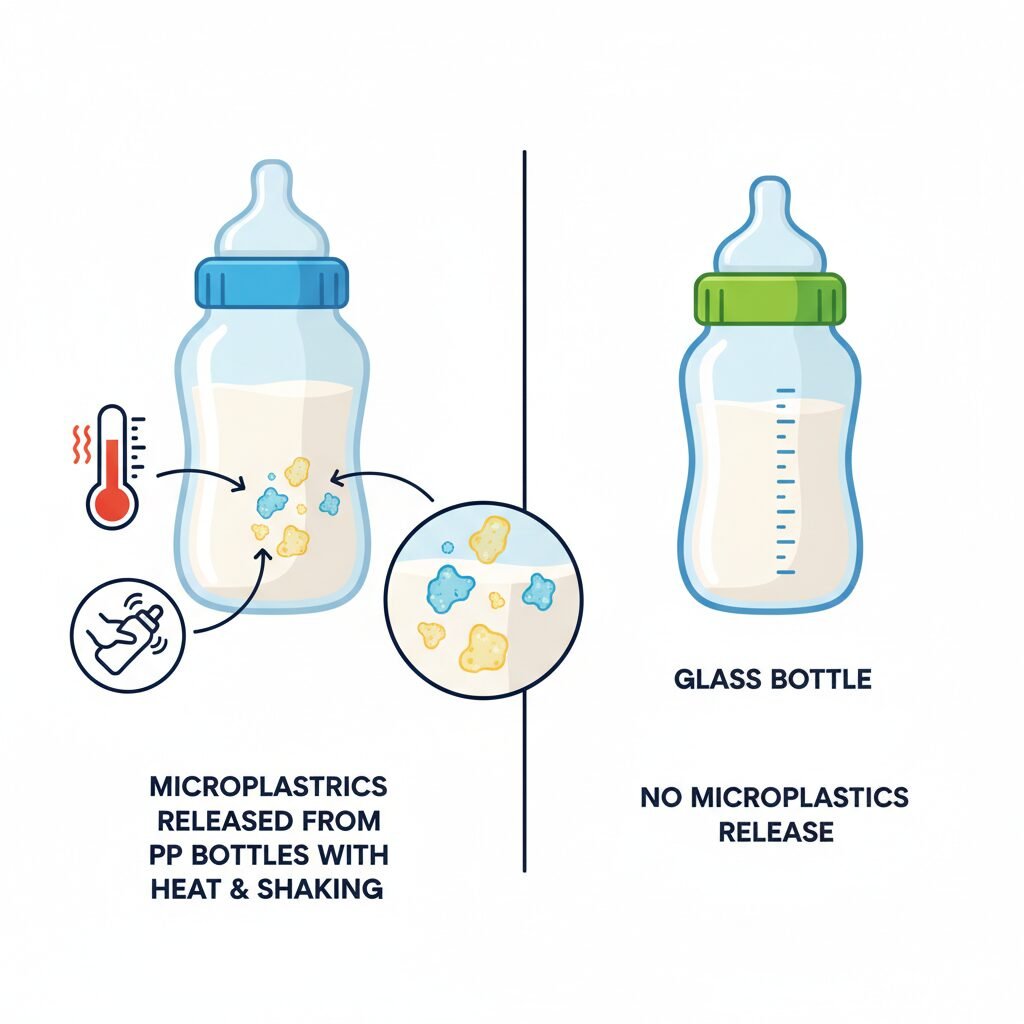
Let’s start by demystifying the term ‘microplastics.’ Simply put, they are tiny plastic particles, smaller than a sesame seed. They’re everywhere in our environment, but recent research has shone a spotlight on a specific source: polypropylene baby bottles.
Polypropylene (the plastic marked with a #5 recycling symbol) is the most common type of plastic used for baby bottles because it’s durable, lightweight, and BPA-free. However, a groundbreaking 2020 study published in the journal Nature Food discovered something important. Researchers found that these bottles can release millions of microplastic particles per liter when used for formula preparation as per standard international guidelines.
So, why does this happen?
It comes down to a combination of three key factors:
- Heat: The World Health Organization (WHO) recommends using water heated to at least 70°C (158°F) to sterilize formula powder, which can contain harmful bacteria. This heat, however, causes the plastic bottle’s surface to degrade slightly.
- Shaking: The vigorous shaking required to mix the formula creates friction, which further encourages these tiny particles to break off from the bottle’s inner surface.
- Sterilization: The process of sterilizing the bottle itself, often involving high heat, can also contribute to the release of particles over time.
A key takeaway: It’s not that the bottles are ‘bad’ or ‘defective.’ It’s the combination of heat and friction on a specific type of plastic that creates the issue. Understanding this is the first step to finding a simple solution.
Are Microplastics Harmful to My Baby? A Gentle Look at the Science

This is the question that keeps parents up at night, and I want to address it with honesty and care. The most truthful answer is: the research on the direct health effects of ingested microplastics on human infants is still in its early stages. We don’t have definitive long-term studies yet.
However, scientists and pediatric experts recommend a ‘precautionary principle’ approach. This means that while we wait for more conclusive data, it’s wise to reduce exposure where we can, especially for our vulnerable little ones whose bodies are developing so rapidly.
The potential concerns that scientists are investigating include:
- Inflammation: The body may react to these foreign particles, potentially causing inflammation.
- Chemical Leaching: Plastic isn’t just plastic; it contains various additives. There’s concern that these chemicals could leach from the particles into the body.
- Gut Health: The gut microbiome is a delicate ecosystem, and researchers are exploring how these particles might affect it.
Please, don’t let this list frighten you. Think of it like putting up a baby gate. You don’t know for sure if your baby will tumble down the stairs, but you take a simple, effective precaution to prevent the possibility. Reducing microplastic exposure is the same kind of loving, proactive step. You’re not reacting to a known danger; you’re simply creating the safest possible environment for your child to thrive.
Your Step-by-Step Guide to Safer Formula Preparation

Okay, let’s get to the practical, empowering part! Here are modified World Health Organization guidelines that dramatically reduce microplastic release, even if you continue to use your plastic bottles. The key is to avoid mixing the hot water and formula inside the plastic bottle.
- Sterilize Your Gear: First, sterilize your feeding bottles (plastic or otherwise), silicone nipples, caps, and rings. You can do this by boiling them in a large pot of water for 5 minutes or using an electric sterilizer. Let them air dry completely on a clean dish towel.
- Prepare Formula in a Non-Plastic Container: This is the most important step! Use a sterilized glass or stainless steel pitcher, measuring cup, or pot. Boil fresh water in a kettle (preferably not a plastic one). Let the water cool slightly for no more than 30 minutes, so it remains at a temperature of at least 70°C (158°F).
- Mix and Cool: Pour the required amount of hot water into your glass or steel container. Add the exact amount of formula powder as directed on the can. Mix thoroughly with a sterilized utensil. Now, let this mixture cool to body temperature (you can place the container in a bowl of cold water to speed this up).
- Transfer to the Bottle: Once the formula is at a safe feeding temperature (lukewarm), carefully pour it into your clean, sterilized baby bottle. You are now ready to feed your baby!
Safety Warning: Never, ever use a microwave to heat or reheat formula. It creates dangerous hot spots that can burn your baby’s mouth and can also accelerate the degradation of plastic bottles, increasing particle release.
By following these four simple steps, you have bypassed the main cause of microplastic release—the interaction of high heat and shaking inside the plastic bottle. You’re still getting the benefits of a sterile formula preparation process without the unwanted exposure.
Choosing Your Gear: A Comparison of Safer Bottle Alternatives

If you’re in the market for new bottles or simply want to explore other options, you’re in luck! The market has expanded far beyond plastic. Switching materials is another fantastic way to ensure peace of mind. Here’s a quick rundown of the most popular alternatives:
Remember, ‘BPA-free’ was a great first step, but it doesn’t address the issue of microplastics released from the plastic polymer itself. Choosing a different material altogether is the most direct solution.
| Bottle Material | Pros | Cons |
|---|---|---|
| Glass | – Completely inert; no risk of leaching plastics or chemicals. – Easy to clean and sterilize. – Doesn’t retain odors or stains. |
– Heavier for baby to hold. – Can break if dropped (though many have protective silicone sleeves). |
| Stainless Steel | – Lightweight and completely unbreakable. – Often insulated, keeping milk warm or cool. – Long-lasting and durable. |
– Opaque, so you can’t see how much liquid is left. – Can sometimes be more expensive. |
| Food-Grade Silicone | – Soft, squeezable, and unbreakable. – Lightweight and easy for baby to grip. – Free from BPA, PVC, and phthalates. |
– Can sometimes absorb odors or get a soapy residue if not rinsed well. – Can be pricier than plastic. |
There is no single ‘best’ bottle—it’s about what works for your family’s budget and lifestyle. Many families even use a combination, perhaps using glass at home and stainless steel for daycare or travel.
Conclusion
Being a new parent is a journey of learning and love. You’re faced with countless decisions every single day, and it’s natural to want to make the best ones for your precious child. When it comes to microplastics, please let go of any guilt or fear. This is new information for everyone, and now that you have it, you are fully equipped to act.
Remember the key takeaways: prepare formula in a separate, non-plastic container before transferring it to a bottle, and consider using glass, stainless steel, or silicone bottles when you can. These are not drastic, life-altering changes. They are small, mindful adjustments in your daily routine that provide a powerful layer of protection and peace.
You are doing an incredible job. Trust your instincts, be kind to yourself, and know that every loving choice you make is more than enough.