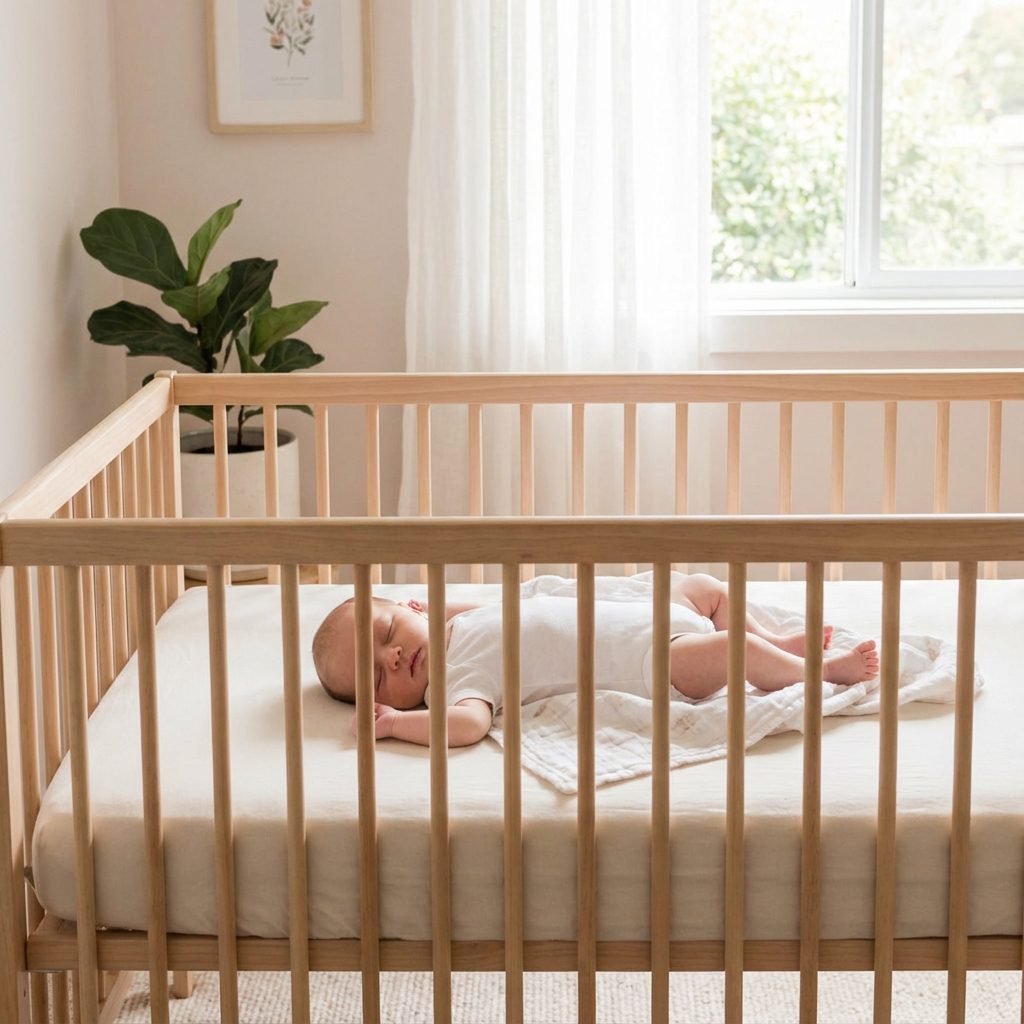
Overheating Danger: Exactly How To Dress Your Newborn For Summer Sleep
Hey there, new parents. Take a deep breath. You’re doing an amazing job. I know that bringing a newborn home comes with a tidal wave of love, joy, and… a whole lot of questions. One of the biggest sources of anxiety, especially for first-timers, is sleep. Are they safe? Are they comfortable? Are they breathing okay? Now, add the sweltering heat of summer to the mix, and the worry can feel overwhelming.
As a pediatric nurse who has spent decades helping families navigate these early days, I want to reassure you: you can absolutely keep your baby safe and comfortable on even the warmest nights. The key is understanding the real risks of overheating and knowing the simple, practical steps to prevent it. This isn’t about adding another complicated ‘rule’ to your plate. It’s about empowering you with the knowledge to make confident decisions for your precious little one. So, let’s walk through this together, step-by-step, and turn that nighttime worry into peaceful confidence.
The ‘Why’ Behind the Worry: Understanding Overheating and SIDS Risk
Before we jump into the ‘how-to’ of dressing your baby, let’s talk about the ‘why.’ Why is everyone so concerned about a baby being a little too warm? It’s because a newborn’s internal thermostat is still under construction. Unlike adults, they can’t regulate their own body temperature efficiently. They can’t sweat effectively to cool down, nor can they simply kick off a blanket if they get too hot.
This is where the conversation gets serious, but please know this information is meant to protect, not to frighten. A significant body of research has linked overheating to an increased risk of Sudden Infant Death Syndrome (SIDS). While the exact mechanisms are still being studied, the leading theory is that being too warm can cause a baby to fall into such a deep sleep that their natural arousal reflexes (the ones that make them stir or cry if their breathing is compromised) are suppressed. A baby who is comfortably cool is more likely to arouse themselves if they get into an unsafe situation.
So, when we talk about preventing overheating, we’re not just talking about comfort—we’re talking about a critical component of safe sleep. Every step you take to manage their temperature is a powerful step in reducing SIDS risk.
A Note on Fevers: It’s important to distinguish between environmental overheating and a fever. Overheating is caused by external factors (too many layers, hot room), while a fever is the body’s response to an illness. If you cool an overheated baby down, their temperature should return to normal. A fever will persist. A temperature of 100.4°F (38°C) or higher in a newborn is a medical emergency, and you should call your pediatrician immediately.
Your Baby’s Secret Signals: How to Know if They’re Too Warm
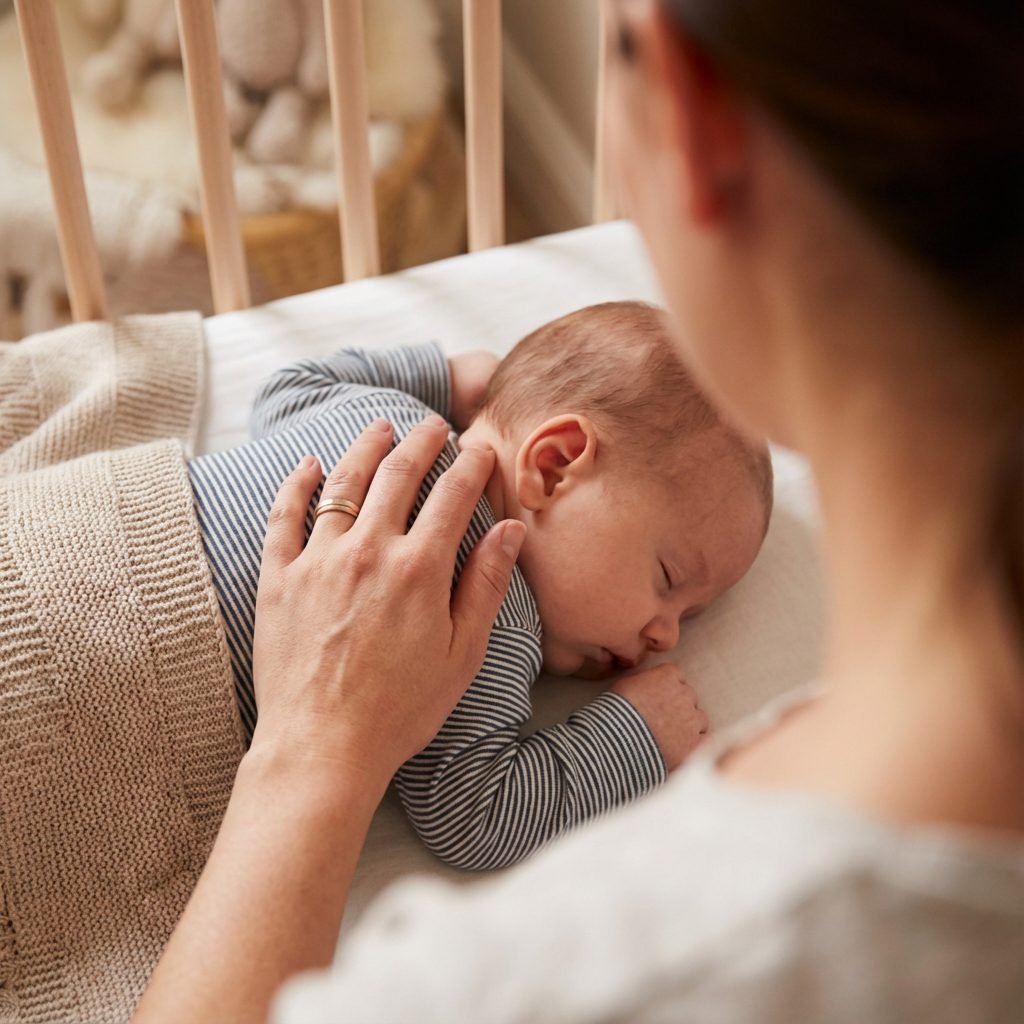
Your baby can’t tell you, “Hey, I’m roasting in this fleece sleeper!” but they will give you clues. Your job is to become a bit of a detective and learn to read their signals. The most common mistake parents make is judging temperature by feeling their baby’s hands or feet. These little extremities are often cool to the touch simply because your baby’s circulatory system is still maturing. They are not a reliable indicator of core body temperature.
The best way to check if your baby is too hot, too cold, or just right is to place two fingers on the back of their neck or on their tummy, under their clothes. Their skin should feel warm and dry, not sweaty or hot and clammy.
Here are the key signs of overheating to watch for:
- Sweating: While newborns don’t sweat much, any dampness around the hairline, on the neck, or on the chest is a red flag.
- Flushed or Red Skin: Their cheeks might look rosy and their skin might appear blotchy.
- Rapid Breathing: You may notice their breathing seems faster or more shallow than usual.
- Restlessness: An overheated baby is often an uncomfortable, fussy baby who has trouble settling down to sleep.
- Lethargy: On the other extreme, a very overheated baby may be unusually sleepy or difficult to wake up.
- Heat Rash: You might see a cluster of tiny red pimples or blisters, especially in the folds of their skin like the neck, armpits, or diaper area.
If you notice any of these signs, don’t panic. Gently remove a layer of clothing and see if you can cool the room down. Offer extra breast milk or formula to help with hydration. The symptoms should resolve quickly once they cool down.
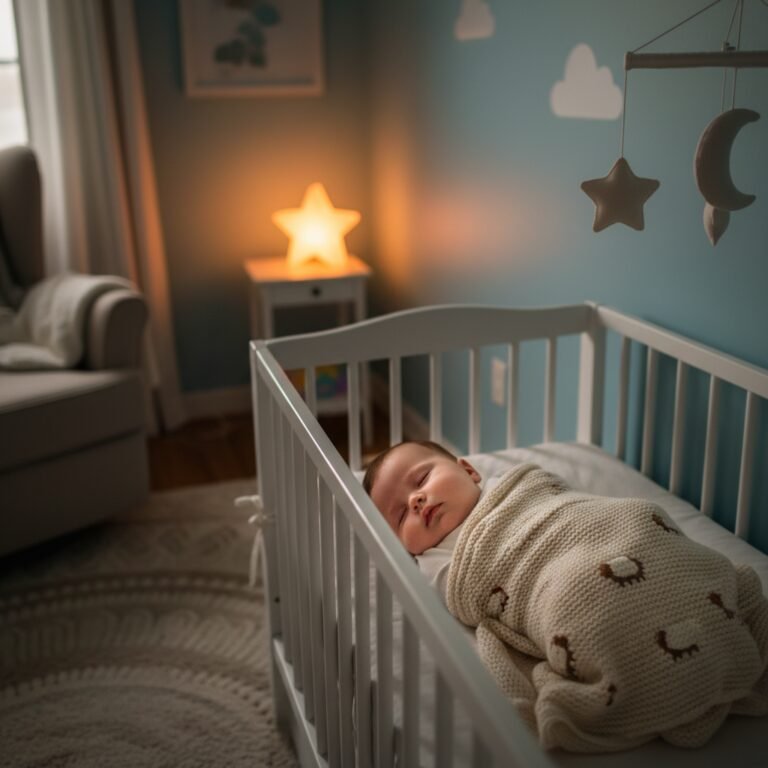
Creating a Cool & Comfy Sleep Haven: The ‘Just Right’ Nursery
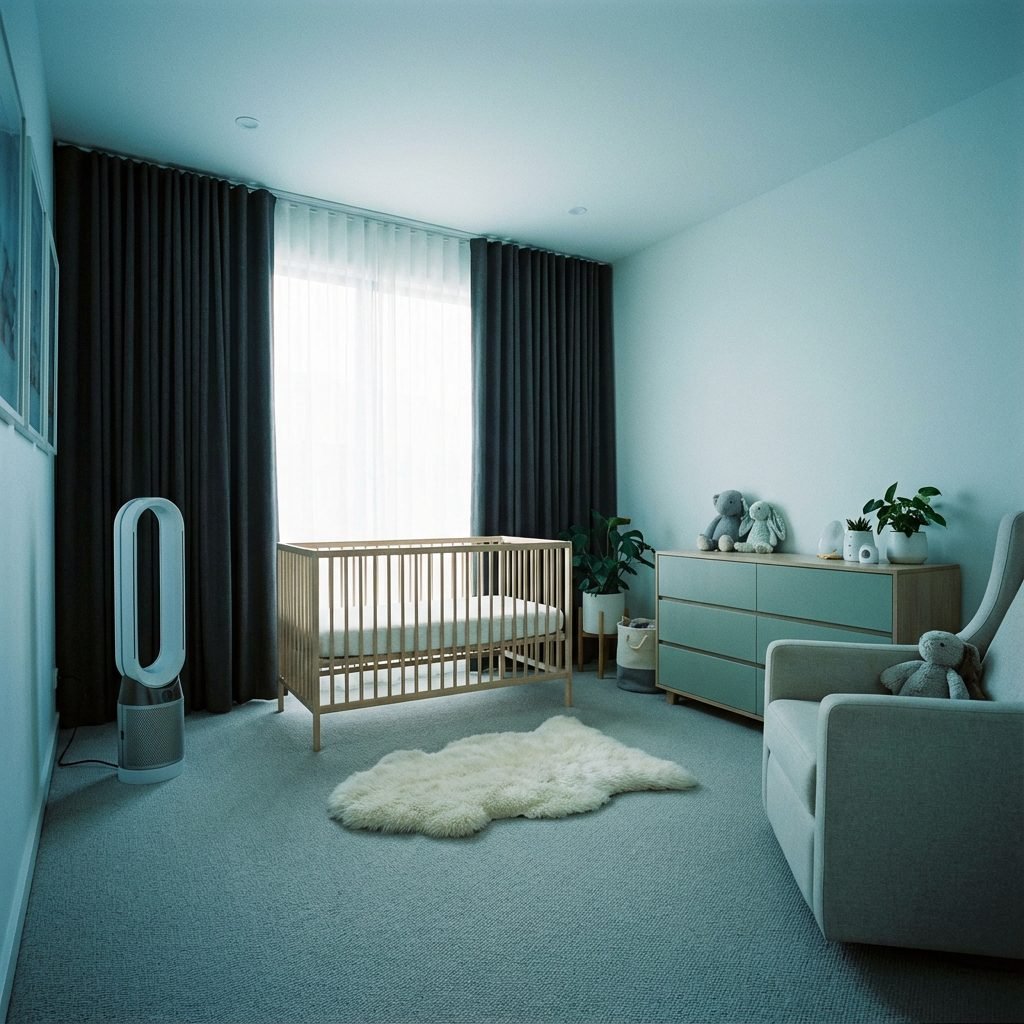
Dressing your baby appropriately is only half the battle; their environment plays an equally important role. The goal is to create a sleep space that is consistently cool and safe. The American Academy of Pediatrics (AAP) recommends a room temperature that feels comfortable for a lightly clothed adult.
The Ideal Room Temperature
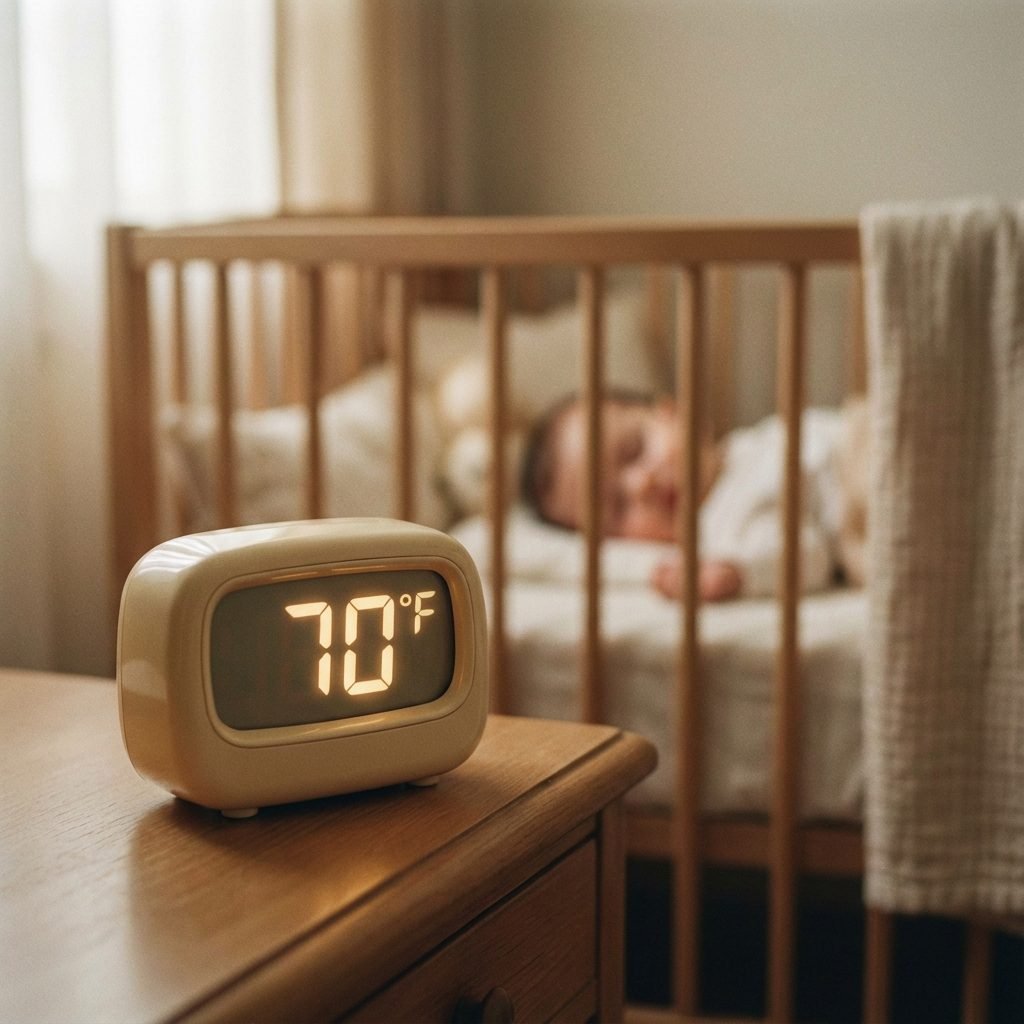
Aim to keep the nursery between 68°F and 72°F (20°C to 22°C) year-round. This might feel a little cool to you, but it’s perfect for a baby. A simple indoor thermometer can be a new parent’s best friend. Don’t guess—know for sure.
Tips for a Summer-Ready Nursery:
- Use Air Conditioning: If you have it, use it. Don’t worry that it will make your baby sick; that’s an old wives’ tale. Just ensure the cool air isn’t blowing directly onto the crib.
- Harness the Power of Fans: A fan is a fantastic tool for circulating air. Studies have shown that air circulation in the room can also help reduce the risk of SIDS. Again, make sure the fan is oscillating or pointed away from the baby, not directly at them.
- Block Out the Sun: Use blackout curtains or blinds to keep the nursery dark and cool, especially during the hottest parts of the day. This prevents the room from heating up like a greenhouse.
- Give a Cool Bath: A lukewarm bath before bedtime can be a wonderful part of the routine. It’s calming and helps to lower their body temperature before they’re dressed for sleep.
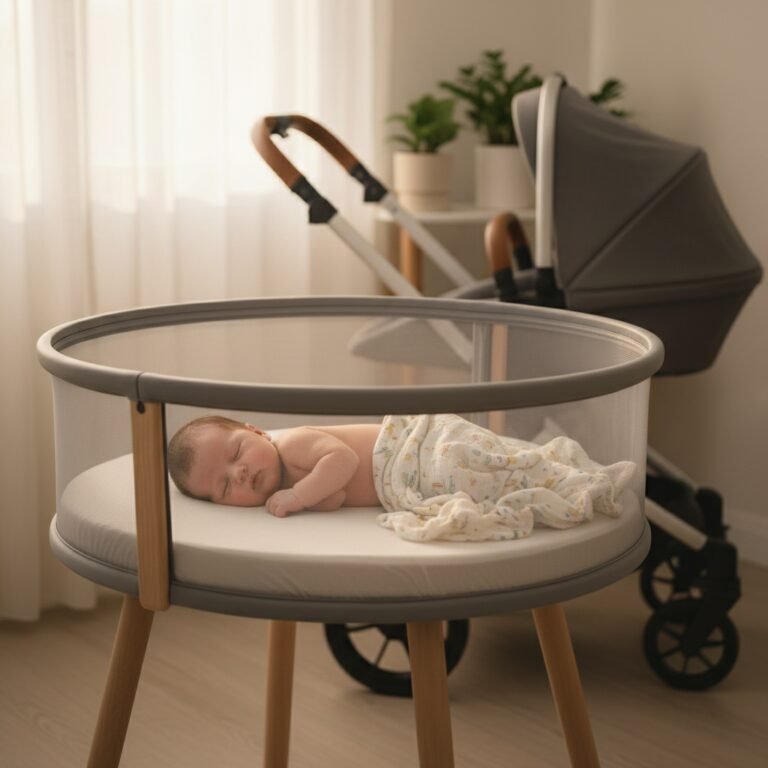
- Think About Crib Safety: Remember, a safe sleep space is a bare sleep space. Use a firm mattress with only a fitted sheet. No blankets, no pillows, no bumpers, no stuffed animals. These items not only pose a suffocation risk but can also trap heat around your baby.
The Ultimate Summer Sleepwear Guide: From Onesies to Swaddles
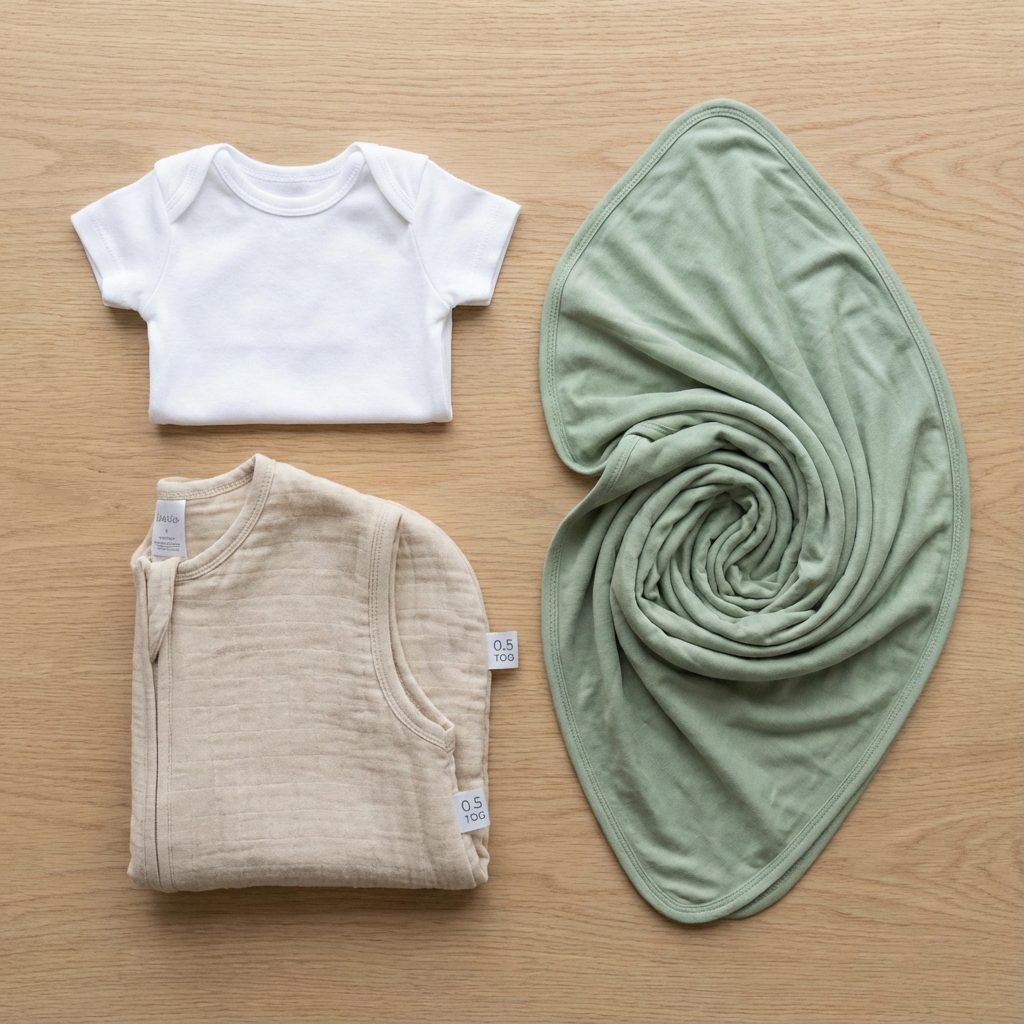
Okay, this is the million-dollar question: what should my baby actually wear to bed? The golden rule is to dress your baby in one more light layer than you would comfortably wear in the same room. But in the summer, sometimes that rule means the baby wears less than you! It’s all about the fabric and the layers.
Fabric First: Choose Breathable Materials
Stick to natural, lightweight, breathable fabrics. These are your best friends in the summer:
- Cotton: Soft, breathable, and absorbent. A classic for a reason.
- Muslin: Known for its open weave, which allows for fantastic airflow. Perfect for swaddles and sleep sacks.
- Bamboo: Incredibly soft, moisture-wicking, and has thermal-regulating properties.
Avoid synthetic fabrics like polyester or fleece for summer sleepwear, as they can trap heat and moisture against your baby’s skin.
A Simple Dressing Guide by Room Temperature
Here’s a handy chart to take the guesswork out of it. Remember, every baby is different, so always use this as a starting point and then check your baby’s neck or tummy to be sure.
| Room Temperature | Recommended Sleepwear |
|---|---|
| Above 75°F (24°C) | Just a diaper and maybe a very lightweight muslin swaddle or sleep sack (0.2 TOG). Some babies may be comfortable in just a diaper. |
| 72-75°F (22-24°C) | A short-sleeved cotton onesie or a lightweight sleep sack over a diaper. |
| 68-72°F (20-22°C) | A long-sleeved cotton onesie or a full-body footed sleeper in a light cotton fabric. A 1.0 TOG sleep sack could be used over a onesie. |
Understanding TOG Ratings
You might see a ‘TOG’ rating on sleep sacks and swaddles. TOG stands for Thermal Overall Grade, and it’s a measure of how much heat a fabric retains. It’s a simple way to standardize things:
- 0.2 – 0.5 TOG: Ideal for hot weather (75°F+). These are usually very thin, like a single layer of muslin.
- 1.0 TOG: Perfect for standard room temperatures (68-72°F). Typically made of a single layer of cotton.
- 2.5 TOG and up: These are for winter and cold nights only. Put them away for the summer!
A Critical Safety Reminder: No hats indoors for sleep! Babies release a lot of heat through their heads to regulate their temperature. Covering their head with a hat indoors can quickly lead to dangerous overheating.
Conclusion
Navigating the first few months with a newborn is a journey of learning and love. Worrying about their safety during sleep, especially in the summer, is completely normal—it comes from a place of deep care. But I hope this guide has helped replace some of that anxiety with confidence.
Let’s boil it all down: keep their room cool and well-ventilated, choose simple, breathable fabrics, and dress them in one light layer. Most importantly, trust your instincts. You are the expert on your baby. A quick check of their neck or tummy will tell you everything you need to know. You’ll quickly get a feel for what makes your little one comfortable.
You’ve got this. By being mindful of these simple practices, you’re creating the safest, most comfortable environment for your baby to get the restorative sleep they need to grow and thrive. And hopefully, that means you can get a little more peace and rest, too.