
No Kissing Allowed: How to Protect Your Newborn During Holiday Parties
Welcome to one of the most magical times: your baby’s very first holiday season! You’ve probably been dreaming of dressing them in adorable festive outfits and showing them off to a sea of smiling, adoring family and friends. It’s a beautiful picture, but for many new parents, it’s also tinged with a healthy dose of anxiety. The thought of all those loving arms reaching for your tiny, precious bundle can be overwhelming, especially when those cuddles come with kisses.
As a pediatric nurse and lactation consultant, I’ve sat with countless parents who feel torn. You want to share the joy, but your number one instinct is to protect your baby. Let me reassure you: that instinct is spot on. You are your baby’s advocate, and your primary job is to keep them safe. This guide is here to empower you. We’ll explore why a simple ‘no kissing’ rule is so critical, and I’ll give you practical, gentle, and effective scripts and strategies to navigate holiday gatherings with confidence. You can absolutely create beautiful memories and keep your little one healthy. Let’s dive in.
Why ‘Just a Little Cold’ is a Big Deal for Your Newborn

It can be hard for friends and family to understand why you’re being so cautious. You might hear things like, “Oh, it’s just a little sniffle,” or “A few germs are good for building immunity!” While these statements come from a place of love, they don’t apply to a brand-new baby. A newborn’s immune system is incredibly immature and fragile. Think of it like a brand-new security system that hasn’t had any software updates yet—it doesn’t recognize the bad guys and doesn’t know how to fight them off.
Viruses that cause mild illness in adults and older children can be extremely dangerous for an infant. Here’s a look at the main culprits:
- Respiratory Syncytial Virus (RSV): This is the big one we worry about. In adults, it usually just feels like a bad cold. In a baby under six months, it can lead to bronchiolitis or pneumonia, often requiring hospitalization for oxygen support.
- Influenza (The Flu): The flu can be very serious for infants, who are at a higher risk for severe complications.
- Herpes Simplex Virus (HSV-1): This is the virus that causes common cold sores. If an adult with an active cold sore (or even one that’s just starting) kisses a newborn, it can transmit the virus. In a baby, this can lead to a devastating and potentially fatal infection called neonatal herpes.
- Pertussis (Whooping Cough): While most people are vaccinated, outbreaks still occur. It’s a violent, scary cough for adults, but for a baby, it can be life-threatening as they can stop breathing.
Your baby isn’t a tiny adult. Their airways are minuscule, and their ability to fight infection is still developing. What seems like a harmless peck on the cheek can unintentionally transfer viruses that their little bodies are simply not equipped to handle.
So when you set a ‘no kissing’ boundary, you aren’t being rude or overprotective. You are making a crucial, evidence-based health decision for the most vulnerable member of your family.
Your Gentle ‘No Kissing’ Toolkit: Scripts and Strategies

Okay, so you understand the ‘why.’ Now for the ‘how.’ How do you actually enforce this rule without offending your mother-in-law or causing a family feud? It’s all about clear, kind, and consistent communication. Here is your toolkit for success.
1. The Preemptive Strike
The best time to set expectations is before you even walk through the door. A simple message to the family group chat or a quick email can work wonders. This prevents you from having to be the ‘bad guy’ in the moment.
Sample Script: “We are so incredibly excited to see everyone at the party on Saturday and for you all to meet baby Leo! Since he’s so little and it’s peak cold/flu season, our pediatrician has us on high alert. To keep him safe and healthy, we’re asking for no kisses and for everyone to please wash their hands before holding him. We appreciate your love and understanding so much and can’t wait to celebrate with you!”
2. In-the-Moment Phrases (Your Pocket Scripts)
Even with a warning, some people will forget in their excitement. Have a few gentle, go-to phrases ready. A warm smile makes all the difference.
- When someone leans in for a kiss: “Oh, thank you for the love! We’re just doing ‘no kisses’ on him for now to keep him safe, but you can absolutely kiss his little feet!” (This gives them an alternative and feels less like a rejection).
- If someone pushes back: “I know it feels overly cautious, but his immune system is so new. We’re just following our doctor’s orders to the letter. Thank you for helping us protect him.”
- A simple, direct approach: “Please don’t kiss the baby. He’s so cute, we know it’s hard to resist!”
3. Wear Your Baby
Babywearing is your secret weapon! When your newborn is snuggled safely in a wrap, sling, or carrier, it creates a natural physical barrier. People are far less likely to reach in and grab at a baby that is strapped to your chest. It keeps your baby feeling secure and makes it much easier to control their environment and politely turn away if someone gets too close to their face.
4. The ‘Blame the Doctor’ Technique
This is a classic for a reason! It’s not about you being a helicopter parent; it’s about you being a responsible parent following medical advice. Saying, “Our pediatrician was very firm with us about the no-kissing rule, especially with RSV going around,” shifts the focus and makes it less personal.
Beyond the Kiss: Creating a Safe Bubble for Your Baby
Protecting your newborn at a party goes beyond just preventing kisses. A bustling holiday event is a minefield of germs, overstimulation, and other potential hazards. Here’s how to create a safe little bubble for your baby amidst the chaos.
Set Up a Hygiene Hub
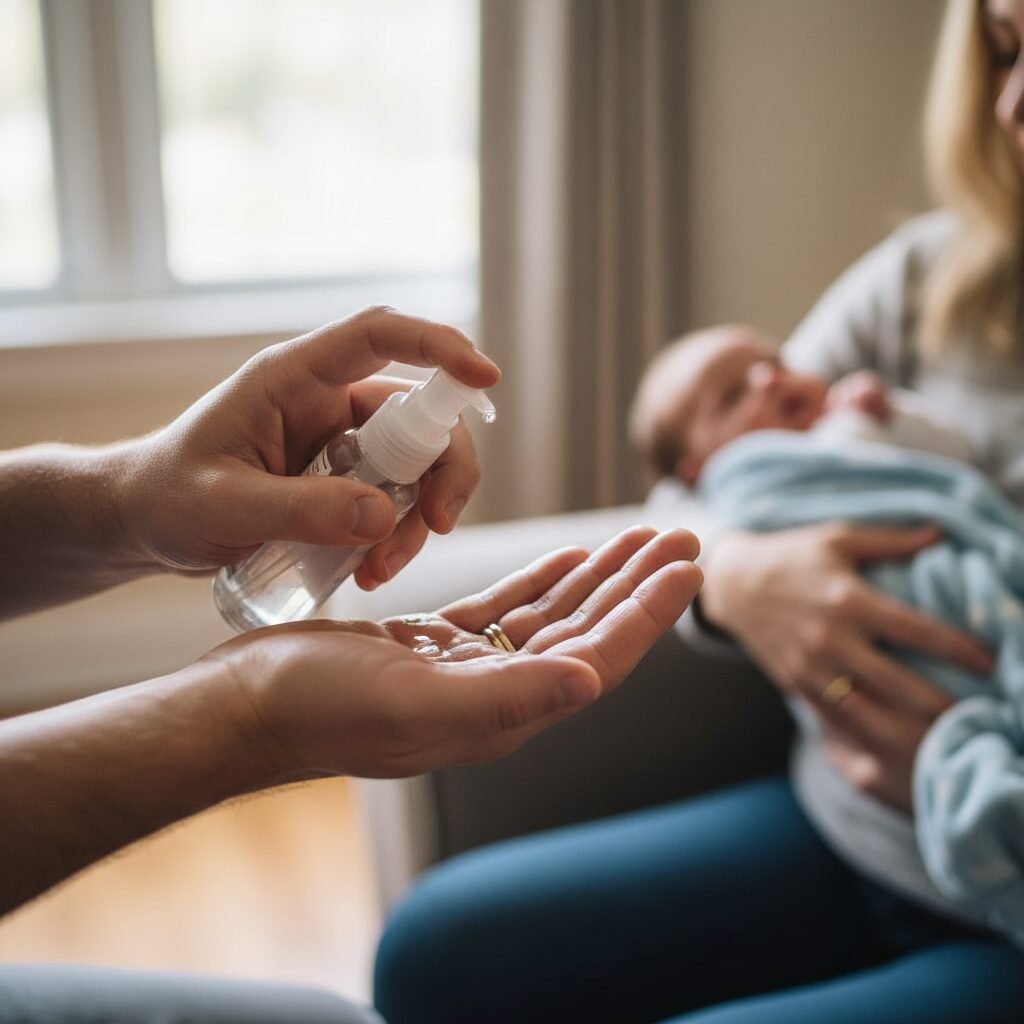
Don’t be shy about making hand hygiene easy and obvious. If you’re hosting, place bottles of hand sanitizer in prominent locations. If you’re a guest, bring your own travel-sized bottle and make a point of using it yourself and offering it to anyone who wants to hold the baby. You can say, “Here, would you mind using a little sanitizer first? Thanks so much!”
Manage the ‘Pass the Baby’ Game
Everyone will want a turn to hold the baby, but you are in complete control. You can absolutely limit who holds them. It’s perfectly fine to say, “He’s just getting settled with me for now,” or “I think he’s about to need a feeding, so I’m going to keep him close.” You are also the final word on taking your baby back. If someone is coughing, or you just feel uncomfortable, it’s okay to walk over and say, “Okay, I think mama needs him back now!”
Watch for Signs of Overstimulation
Holiday parties are a sensory overload for a newborn—loud music, bright lights, lots of faces. Watch your baby for signs they’ve had enough:
- Turning their head away from people or lights
- Yawning and getting fussy
- Clenching their fists or getting tense
- Frantic, jerky movements
When you see these signs, it’s time for a break. Find a quiet, dim bedroom or a peaceful corner where you and your baby can decompress for 10-15 minutes. This little reset can make a huge difference.
The Smoke-Free Zone
Be mindful of thirdhand smoke. The residue from cigarettes clings to clothing, hair, and skin long after the cigarette is out. If a relative is a smoker, it is 100% appropriate to ask them to wash their hands and put on a clean “baby-holding shirt” before they cuddle your little one.
When to Stay Home: It’s Okay to Gracefully Decline

Let’s be very clear about this: you do not have to attend every single event you’re invited to. Your baby’s health and your own postpartum recovery and peace of mind are the top priorities. It is perfectly acceptable to say ‘no.’
Trust your parental intuition. If the thought of a particular party fills you with dread—maybe it’s a massive gathering, or you know several people have been sick—give yourself permission to opt out. You are not letting anyone down. You are making a responsible choice for your family.
Here are some polite ways to decline:
- “Thank you so much for the invitation! We are so sad to miss it, but the baby is still so little and we’re trying to limit his exposure until he’s a bit older. We’d love to have you over for a quiet visit after the holidays!”
- “We’re still getting the hang of this new parent thing and are sticking close to home for now. We’ll be there in spirit! Please send us lots of pictures!”
You can also decide to make a brief appearance. Go early before it gets too crowded, let a few key people see the baby (with all your safety rules in place), and then make a graceful exit. An hour is plenty of time to show your face and share some holiday cheer before retreating to your peaceful home. Your real friends and family will understand.
After the Party: Signs to Watch For and When to Call the Doctor
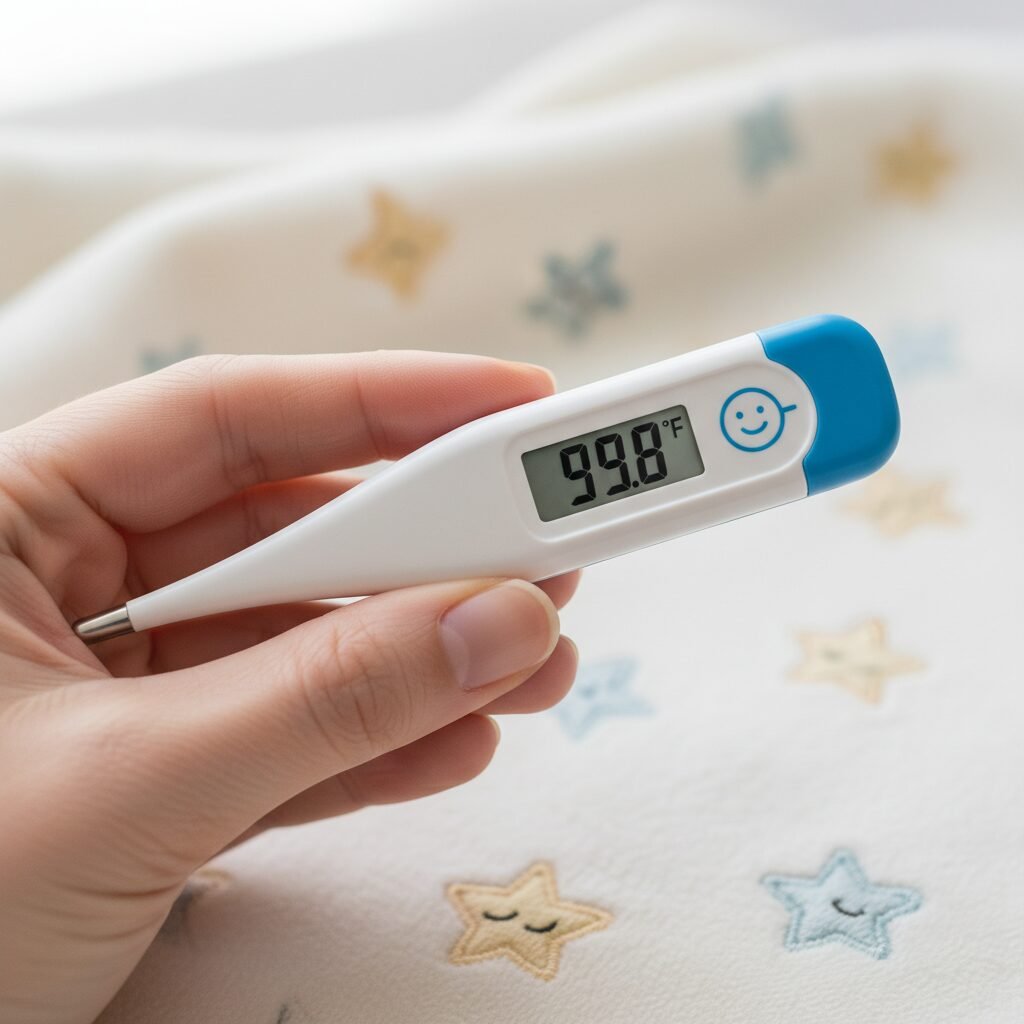
Even with the best precautions, babies can still get sick. The key is to know what to look for and to act quickly. After a social event, be extra vigilant for the next few days. Trust your gut—if something feels off, it probably is.
Here are the critical signs that warrant an immediate call to your pediatrician’s office or a trip to the emergency room for a newborn (under 3 months old):
| Symptom Category | What to Look For |
|---|---|
| Fever | A rectal temperature of 100.4°F (38°C) or higher. This is considered a medical emergency in a newborn. |
| Breathing Issues | Fast breathing (more than 60 breaths per minute), nasal flaring, grunting with each breath, or retractions (when the skin sucks in between the ribs or at the neck). |
| Feeding Changes | Refusing to eat, feeding poorly, or showing signs of dehydration (fewer than 4-5 wet diapers in 24 hours). |
| Changes in Behavior | Extreme lethargy (very sleepy and hard to wake), inconsolable crying or irritability, or a significant change from their normal behavior. |
| Skin Color Changes | Any bluish tint around the lips, on the tongue, or on the nail beds (cyanosis). |
Important Safety Note: Never give a baby any medication without consulting your doctor first. When in doubt, always, always make the call. Your pediatrician would much rather you call about something that turns out to be nothing than have you wait at home worrying.
Conclusion
Navigating your baby’s first holiday season is a beautiful, messy, and emotional journey. Remember, setting boundaries around your newborn is not about rejecting love; it’s about accepting it in the safest way possible for your baby. You are their voice and their protector. By communicating clearly, using strategies like babywearing, and trusting your instincts, you can enjoy the festivities while keeping your little one safe and sound.
Embrace the joy, cherish the moments, and don’t be afraid to put your family’s needs first. This is your time to bond and create your own traditions. Wishing you and your new little one a happy, healthy, and peaceful holiday season. You’ve got this, parents!