Newborn Size Vs 0-3 Months: A Visual Guide To Baby Clothes Fit
You’re standing in the baby section of a store, a tiny, impossibly cute onesie in your hand. Then you look at the rack and see another one, nearly identical, but with a different tag. One says ‘Newborn,’ the other says ‘0-3 Months.’ Panic starts to set in. Do you need both? Will your baby even fit in the Newborn size? How long will they wear it? Welcome to one of the first great mysteries of parenthood: baby clothes sizing!
Take a deep breath. As a pediatric nurse and lactation consultant, I’ve walked countless new parents through this exact confusion. It’s completely normal to feel a little lost. The truth is, baby clothes sizing can feel like a secret code, but I promise, it’s one we can crack together. This guide is designed to be your friendly, visual roadmap. We’ll demystify the labels, show you what a good fit actually looks like, and help you build a practical wardrobe for your new arrival without buying a single thing you don’t need. Let’s get your little one dressed for success (and endless cuddles)!
The Great Debate: Unpacking Newborn vs. 0-3 Month Sizing
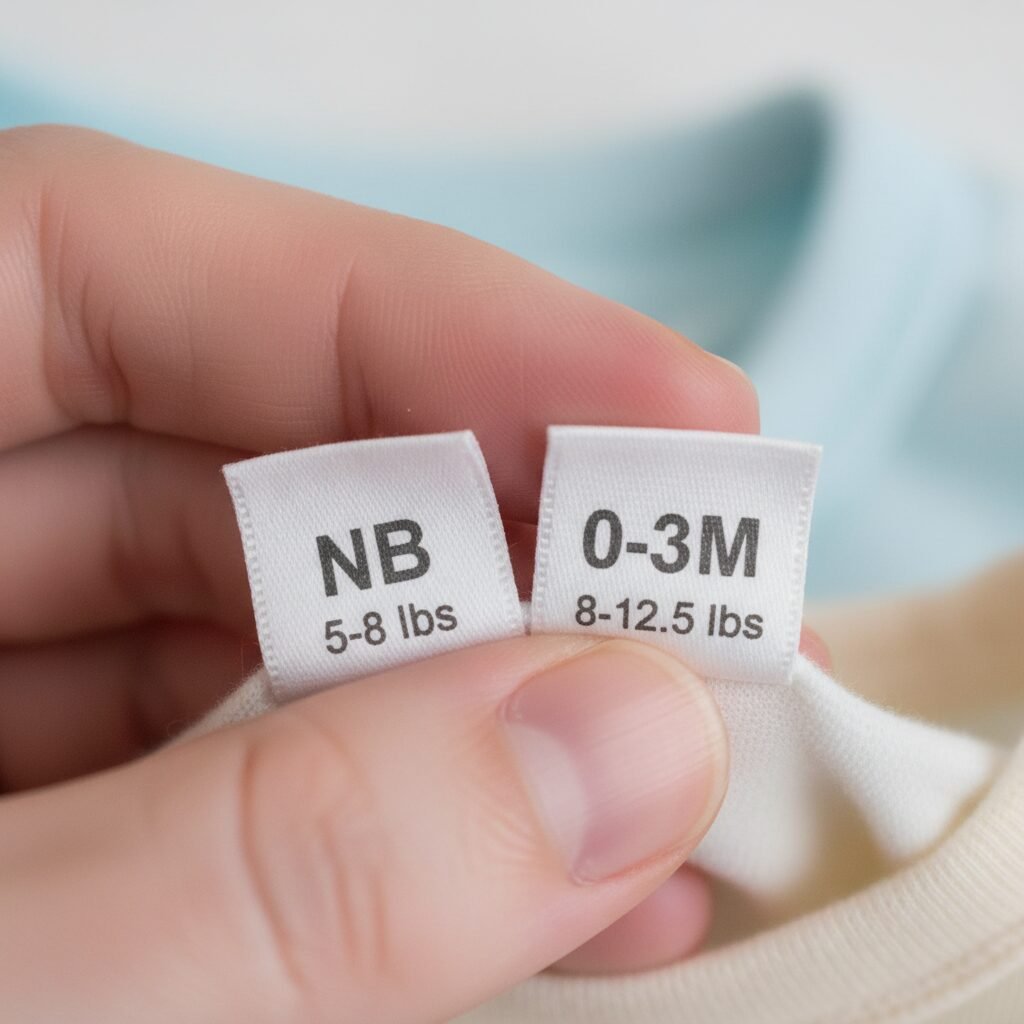
At first glance, the two sizes look almost identical. But that tiny bit of extra fabric in the 0-3 month size can make all the difference for a growing baby. The most important thing to remember is this: baby clothing sizes are based on average weight and height, not age. This is why your friend’s two-week-old might already be in 0-3 month clothes while another’s two-month-old still fits in Newborn. Every baby is unique!
Let’s break down the numbers you’ll typically see on the tags. While there can be slight variations between brands (we’ll get to that later!), these are the general industry standards.
| Size | Average Weight Range | Average Height/Length Range | Best For… |
|---|---|---|---|
| Newborn (NB) | 5 – 8 lbs (2.2 – 3.6 kg) | Up to 21.5 inches (55 cm) | Most full-term babies right at birth and for the first few weeks. |
| 0-3 Months | 8 – 12.5 lbs (3.6 – 5.7 kg) | 21.5 – 24 inches (55 – 61 cm) | Larger newborns (over 8 lbs) or for most babies from around 2-4 weeks onward. |
What About Preemie Sizes?
It’s also helpful to know about Preemie (P) sizes. These are specially designed for babies born before 37 weeks gestation, typically weighing under 5 pounds. If you know you’re at risk for a premature birth, it can be a good idea to have a few preemie outfits on hand, but for most parents expecting a full-term baby, you can skip this size initially.
A Nurse’s Tip: If you’re unsure, it’s almost always better to size up. A slightly-too-big outfit is wearable (just roll up the sleeves!), but a too-small outfit is uncomfortable and unusable. When in doubt, grab the 0-3 month size.
A Visual Fit Guide: How Should Baby Clothes *Actually* Look?
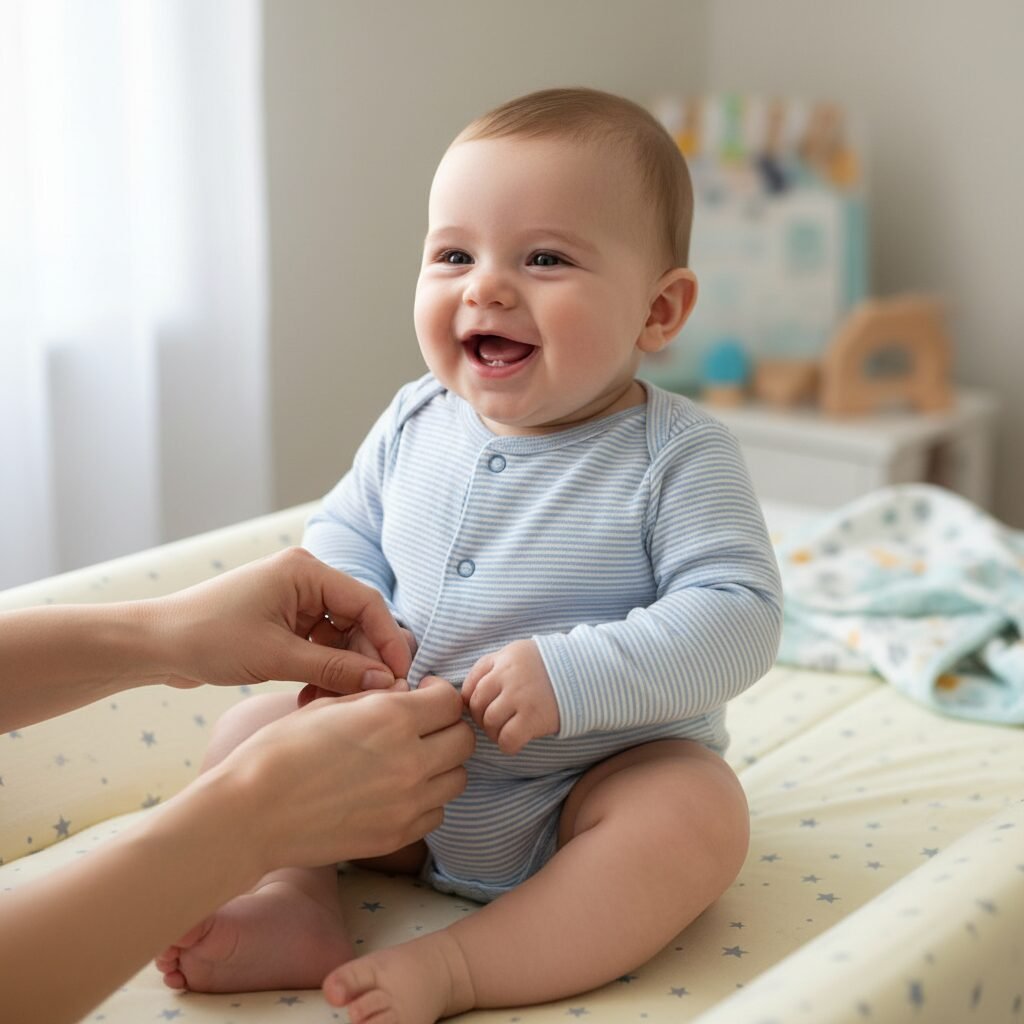
The numbers on the tag are a great starting point, but the real test is how the clothes fit your actual baby. Comfort and safety are key! A well-fitting outfit allows your baby to move freely without being constricted or getting tangled in excess fabric.
Signs of a Perfect Fit:
- Neckline: It should be comfortable and not gape open, but also not be tight against their neck. You should be able to easily slip a finger between the fabric and your baby’s skin.
- Torso: For onesies and bodysuits, the fabric should be smooth across their chest and tummy. It should be snug, but not so tight that it strains at the snaps between the legs.
- Sleeves & Leggings: Cuffs should end at the wrist and ankle. A little extra length is okay and can be rolled up, but they shouldn’t be swimming in them.
- Diaper Room: There should be enough space to accommodate a diaper (even a full one!) without pulling the fabric taut.
Red Flags of a Poor Fit:
- Visible red marks or indentations on their skin after you remove the clothing.
- Snaps that pop open on their own when the baby moves or stretches.
- Fabric that is visibly stretched and tight across their body.
- Difficulty getting their arms and legs into the openings.
Important Safety Note: This is especially crucial for sleepwear. Pajamas and sleep sacks should always be snug-fitting. Loose clothing or blankets in the crib can be a suffocation hazard. Always follow safe sleep guidelines.
When it comes to sleepers, many parents have a strong preference. Zip-up sleepers are often a lifesaver during 3 AM diaper changes, while sleepers with snaps can be a bit fiddly in the dark. Footless sleepers can sometimes last a bit longer, as you don’t have to worry about your baby’s feet getting too big before the rest of the outfit is outgrown.
Smart Shopping Strategies: How Many of Each Size Do You *Really* Need?
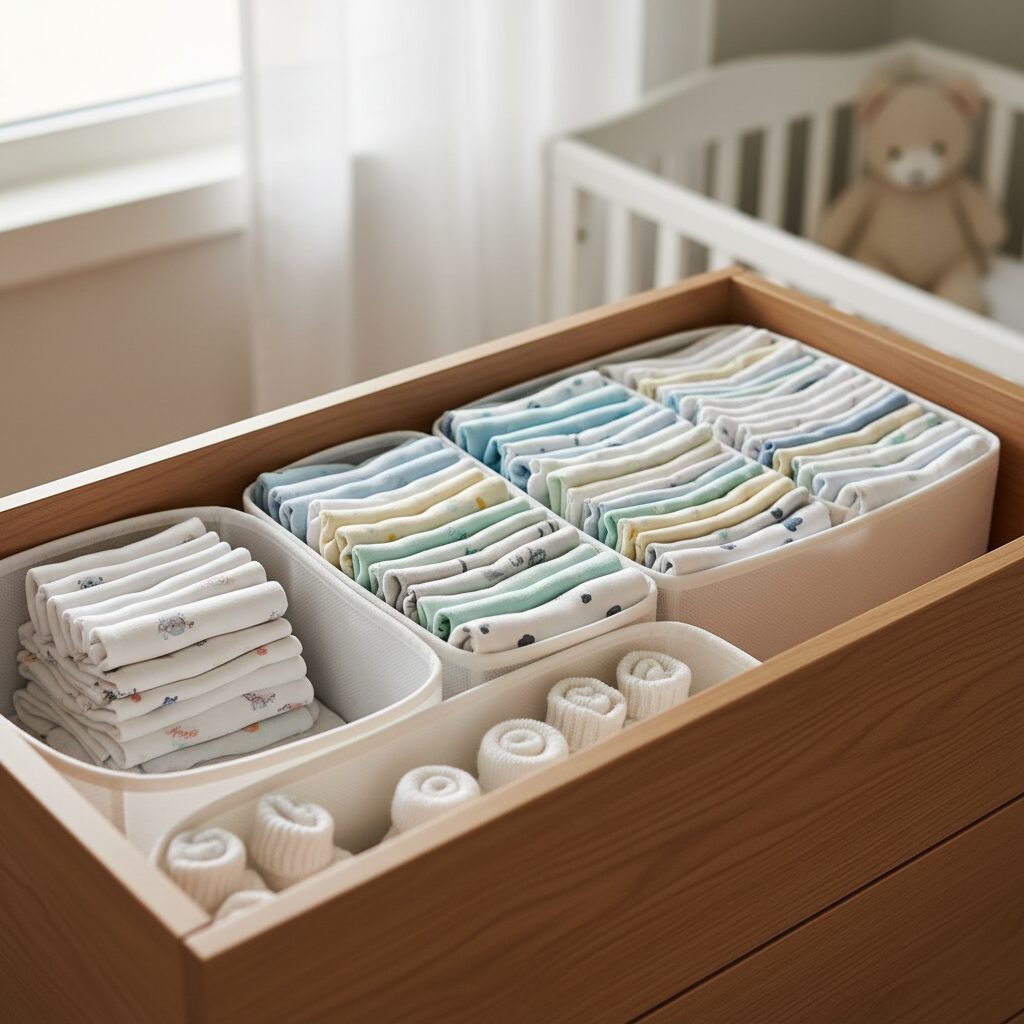
Here’s the secret every seasoned parent knows: babies grow astonishingly fast. That adorable Newborn-sized outfit might only be worn once or twice. It’s easy to get carried away buying tiny clothes, but a strategic approach will save you money and closet space. The goal is to have enough to get you through laundry days without running out, but not so much that you have a drawer full of clothes with the tags still on when your baby has already sized up.
Remember, you’ll likely receive many gifts, and people love to buy the tiniest outfits. It’s wise to plan your own purchases around the 0-3 month size and beyond. Here’s a sample ‘starter wardrobe’ to consider:
| Clothing Item | Newborn Quantity | 0-3 Months Quantity | Pro-Tip |
|---|---|---|---|
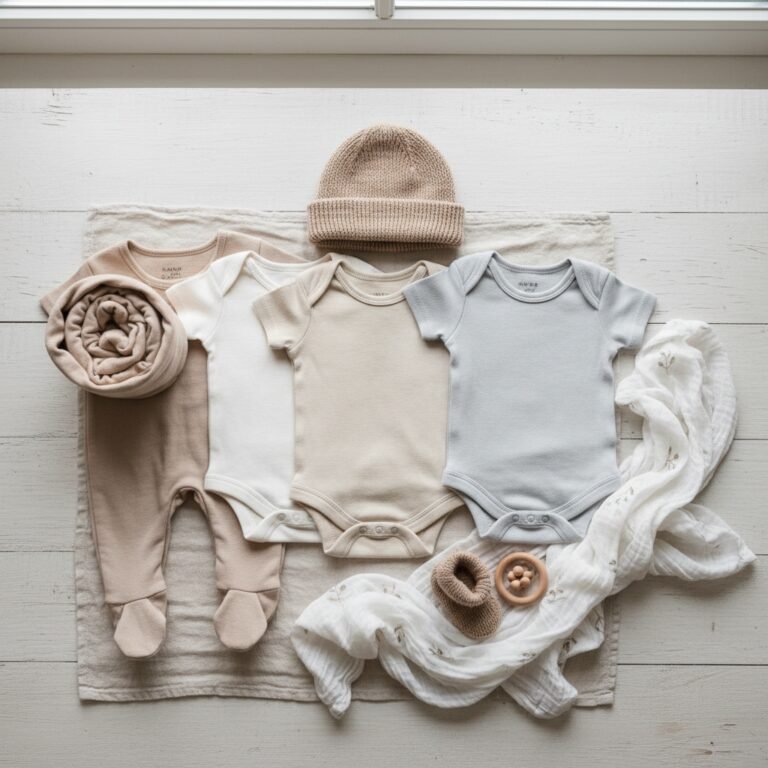
| Bodysuits (Onesies) | 5-7 | 7-10 | Choose side-snap or kimono-style onesies for the early days to avoid pulling anything over your newborn’s delicate head. |
| Sleepers (Pajamas) | 4-6 | 6-8 | Zippers are your best friend for middle-of-the-night changes! Look for the inverted zippers that open from the bottom. |
| Pants/Leggings | 3-4 | 5-6 | Great for mixing and matching with bodysuits. Look for soft, stretchy waistbands. |
| Socks or Booties | 4-6 pairs | 6-8 pairs | Babies are masters at losing socks. You can never have too many. |
| Hats (Soft Caps) | 2-3 | 2-3 | Essential for newborns to regulate their temperature, especially the one provided by the hospital. |
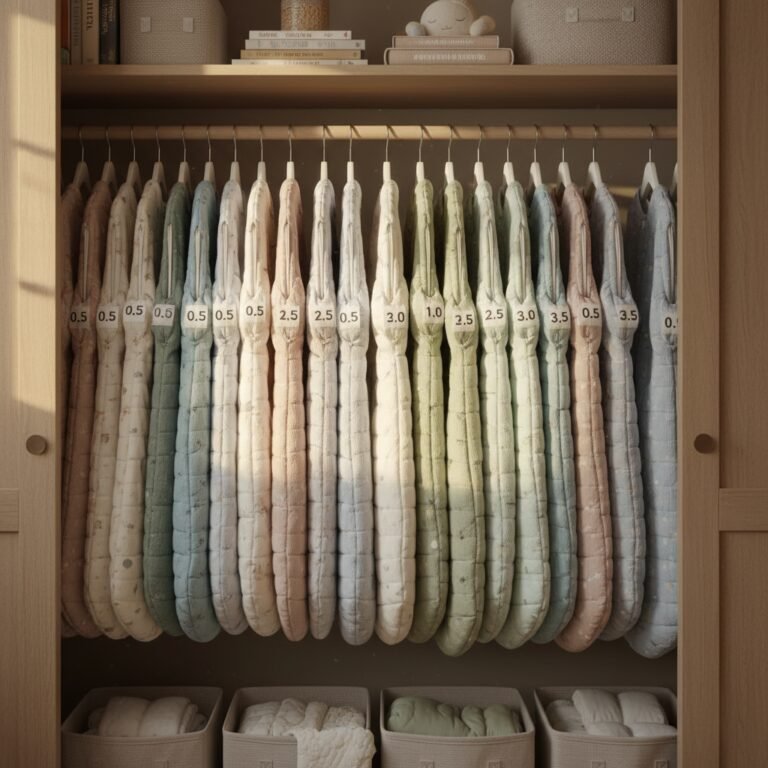
| Swaddles/Sleep Sacks | 2-4 | 3-5 | You’ll want extras for when spit-up inevitably happens. Many parents prefer swaddles for the NB stage and transition to sleep sacks in the 0-3 month stage. |
This list covers the basics. You don’t need a lot of ‘fancy’ outfits in the newborn stage. Comfort, ease of access for diaper changes, and soft materials are what matter most. Save the adorable jeans and elaborate dresses for when they’re a little older.
Beyond the Label: Factors That Influence Fit
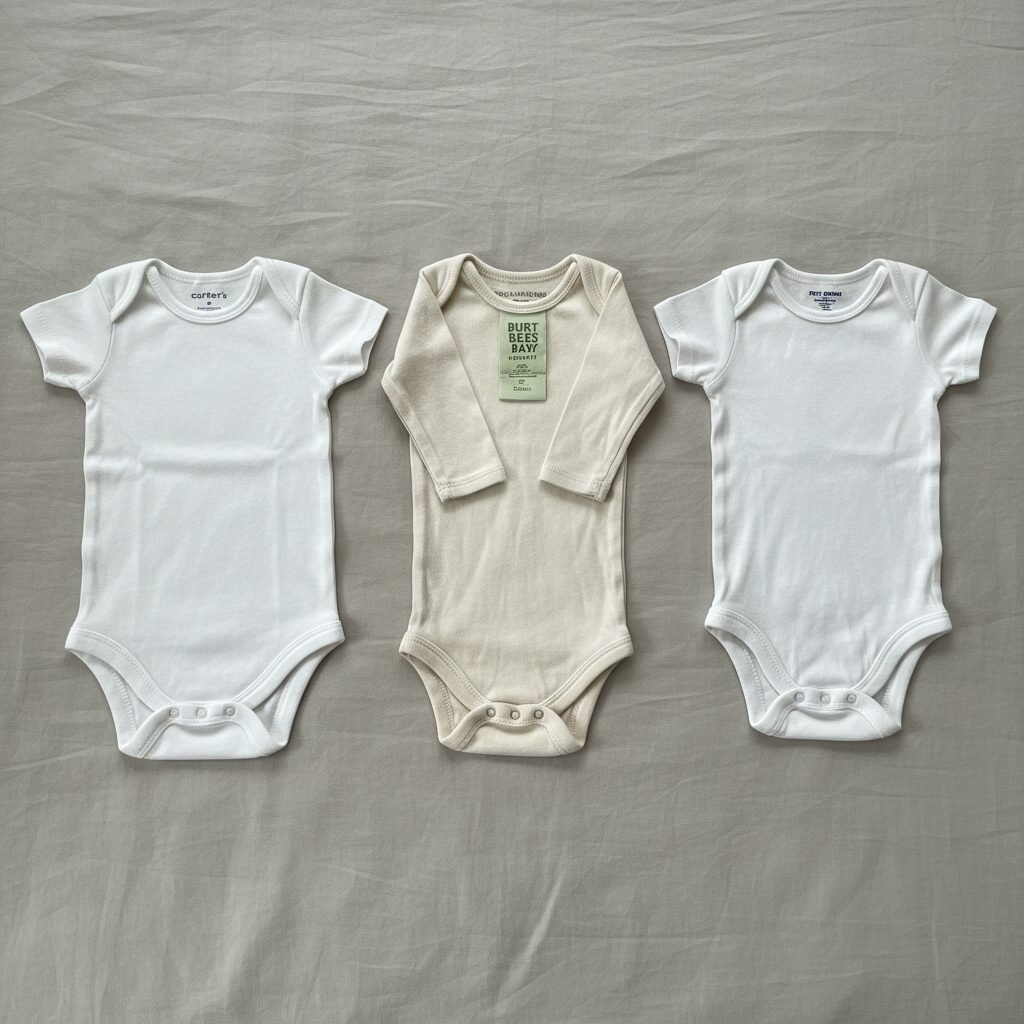
If you’ve ever held up two ‘0-3 month’ onesies from different stores and noticed they aren’t the same size, you’re not imagining things. The label is only part of the story. Several other factors play a huge role in how an outfit will actually fit your baby.
Brand-to-Brand Variation
This is the biggest variable. Some brands are known for running long and lean, while others are better suited for chunkier babies. For example, brands like Carter’s are often considered a baseline ‘true-to-size,’ while brands like Burt’s Bees Baby can run a bit slimmer and longer. European brands often have a narrower fit. You’ll quickly learn which brands work best for your baby’s unique shape. Don’t be afraid to shop around!
The Fabric Factor
The material of the clothing makes a big difference. A 100% cotton outfit will have less ‘give’ than a cotton-spandex blend. Stretchy fabrics can often be worn for a longer period as they grow with your baby. Also, remember to account for shrinkage! Always wash baby clothes before the first wear, and be prepared for cotton items to shrink slightly in the dryer.
Disposable vs. Cloth Diapers
Are you planning on using cloth diapers? They are wonderful, but they are also bulkier than their disposable counterparts. This extra fluff in the trunk means you might need to size up in pants and onesies sooner to accommodate the diaper comfortably without straining the snaps.
Your Baby’s Unique Build
Ultimately, the best guide is your own baby. Some babies are born long and slender, while others are wonderfully round and cuddly. Some have chunky thighs, and others have long torsos. You’ll become an expert at eyeballing an outfit and knowing if it will work for your little one. Never feel bad if your one-month-old needs a 3-month-size outfit. It’s not a race! The goal is their comfort, not fitting into a certain size by a certain age.
Conclusion
Navigating the world of baby clothes doesn’t have to be stressful. By focusing on the weight and height guidelines on the tag, paying attention to how clothes actually fit your baby’s unique body, and starting with a modest wardrobe, you can dress your little one with confidence. Remember the key takeaways: don’t overbuy the Newborn size, embrace the practicality of 0-3 month clothing, and always prioritize a safe, comfortable fit over the number on the label.
Dressing your baby is one of the first of many loving acts of care you’ll perform day in and day out. It’s a cycle of adorable outfits, inevitable spit-up, and quick changes. Try to enjoy the process and all the snuggles that come with it. You’re learning and growing right alongside your little one. You’ve got this!