
Mini Crib vs. Pack ‘n Play: Which Is Best For Your Small Apartment?
Welcome, new parents! Stepping into the world of baby gear can feel like learning a whole new language, can’t it? When you’re also working with the cozy confines of an apartment, every single choice feels extra important. One of the biggest questions I hear from parents is about the baby’s first bed: “Should we get a mini crib or a pack ‘n play?”
It’s a fantastic question, and the answer isn’t one-size-fits-all. Both are popular, safe options, but they serve slightly different purposes and fit different lifestyles. As a pediatric nurse and lactation consultant, my goal is to help you cut through the noise. We’re going to break it all down—the good, the challenging, and the must-know safety facts—so you can feel confident and happy with your decision. Let’s find the perfect little sleep spot for your new arrival!
Getting to Know Your Sleep Space Options
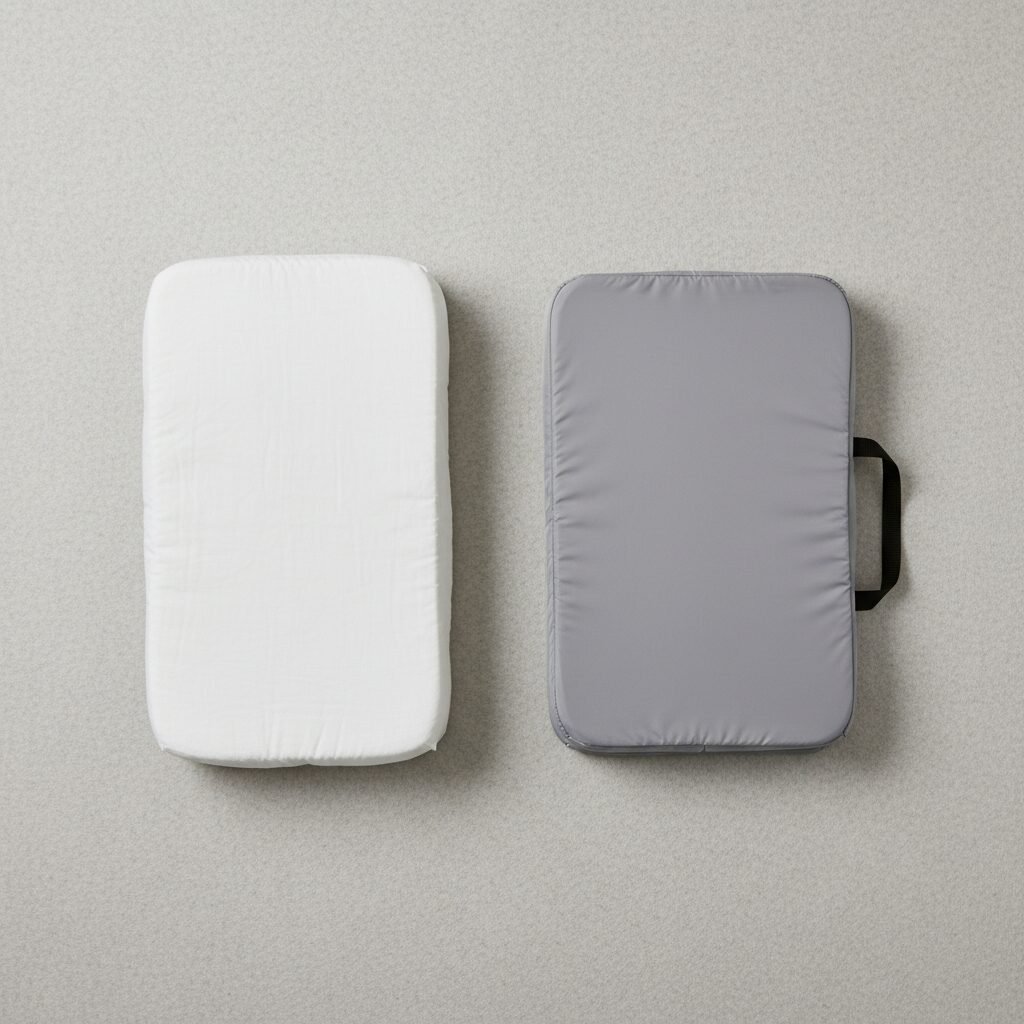
First, what exactly are we comparing? Let’s get formally introduced.
The Mini Crib: A Tiny Bed with Big Dreams
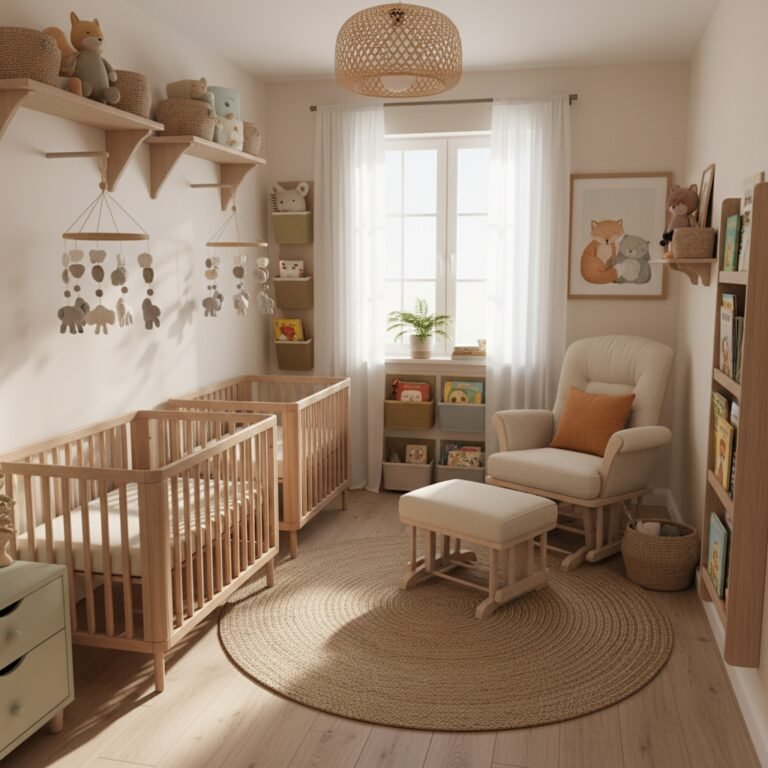
Think of a mini crib as the little sibling to a standard-sized crib. It’s a dedicated sleep space, almost always made from wood or metal, with a sturdy frame and slats. The key difference is its smaller footprint, designed specifically for tight spaces. They use a smaller mattress than a standard crib but one that is significantly thicker and firmer than what you’ll find in a typical playard.
- Primary Use: Sleeping
- Key Features: Sturdy construction, thicker mattress, often has multiple mattress height settings, and some models can even convert into a small toddler bed or twin bed with a conversion kit.
The Pack ‘n Play: The Multi-Tasking Marvel
The term “Pack ‘n Play” is actually a brand name from Graco, but it has become the common term for what are officially called playards. These are portable, collapsible structures with mesh sides, a metal or plastic frame, and a thin, firm, padded mattress that sits on the floor of the unit. Their claim to fame is versatility.
- Primary Use: A safe space for sleep and play.
- Key Features: Highly portable and foldable, many models come with attachments like a newborn bassinet insert, a changing station, and storage pockets. The mesh sides offer great ventilation and visibility.
The Great Debate: A Side-by-Side Showdown
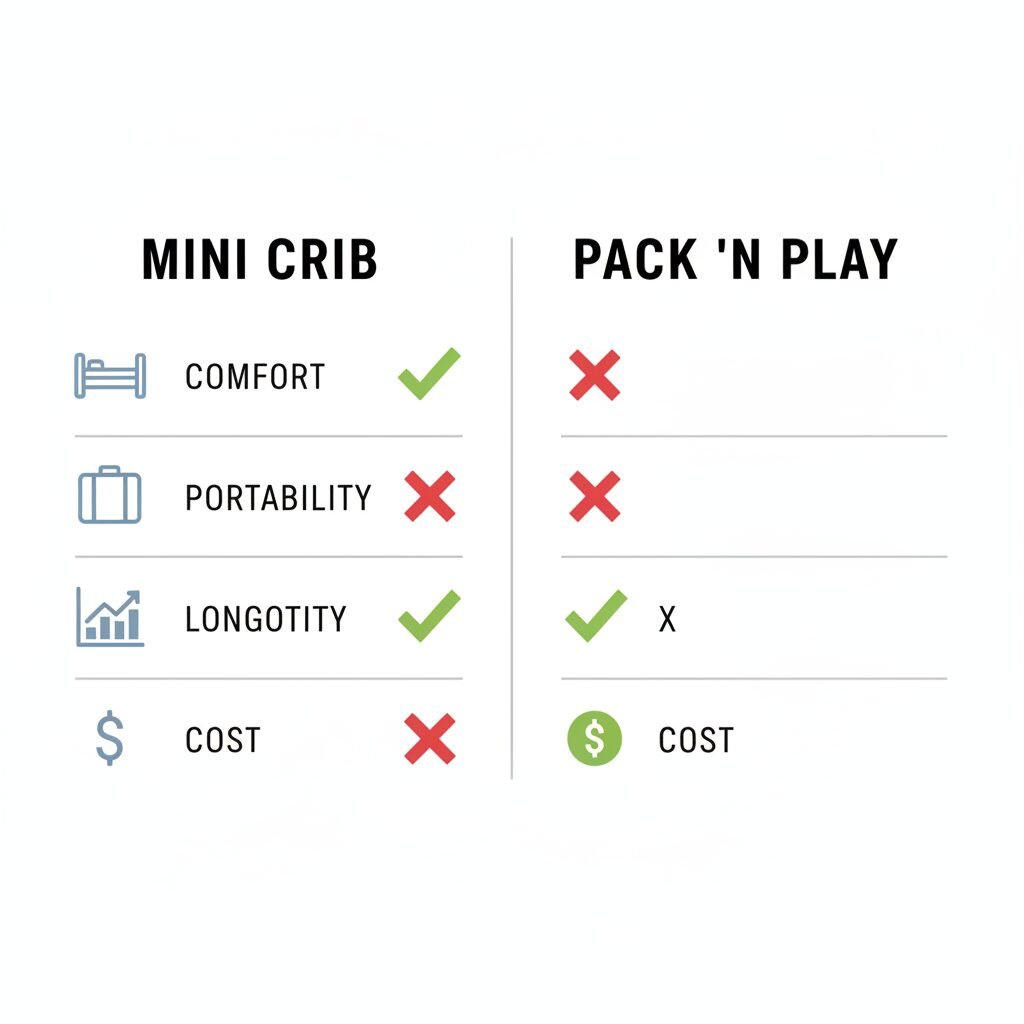
Now for the fun part! Let’s put these two contenders in the ring and compare them across the features that matter most to new parents in a small space. This at-a-glance table should help make things crystal clear.
| Feature | Mini Crib | Pack ‘n Play (Playard) |
|---|---|---|
| Sleep Comfort | Generally higher. Features a thicker, more supportive mattress, similar to a standard crib. | Lower. The mattress is a thin, firm pad designed for safety and portability. Not ideal as a permanent primary mattress for some. |
| Footprint & Size | Slightly smaller than a standard crib, but fixed in size. Can feel more substantial in a room. | Similar footprint, but the visual weight is less due to mesh sides. Can be folded and stored away completely. |
| Portability & Travel | Low. While smaller, it’s still a piece of furniture that needs to be disassembled to move. | Excellent. Designed to be folded into a compact bag for travel or moving between rooms. |
| Longevity & Usefulness | Baby will outgrow it by height or weight, typically between 18-24 months. Some convert to toddler/twin beds. Single-purpose (sleep). | Can be used from newborn (with bassinet) up to toddlerhood (as a play space). Multi-purpose (sleep, play, changing). |
| Safety Standards | Must meet CPSC and ASTM standards for cribs. Look for JPMA certification. Sturdy and secure. | Must meet CPSC and ASTM standards for playards. Look for JPMA certification. Safe sleep rules are critical here. |
| Ease of Cleaning | Simple to wipe down the frame. Bedding is easily removed and washed. | Spot-clean only for most models. The fabric and mesh can be difficult to deep clean. |
| Aesthetics & Style | Often more stylish. Comes in various designs and finishes (wood, metal) to match nursery decor. | Functional and utilitarian in appearance. Style options are generally limited to fabric colors and patterns. |
| Average Cost | $150 – $400+ | $80 – $300+ (depending on attachments) |
A Critical Safety Note from Your Nurse: No matter which you choose, please follow the ABCs of safe sleep: Alone on their Back in a Crib (or other safe sleep space). This means no blankets, no pillows, no bumpers, and no stuffed animals. A firm surface is the safest surface.
Deep Dive: Is a Mini Crib Your Perfect Fit?

A mini crib can feel like a wonderful, cozy compromise. It offers the sturdiness and comfort of a traditional crib without demanding quite as much precious floor space. Let’s look at who this option is really for.
Why You Might LOVE a Mini Crib
- It Feels Like a ‘Real’ Bed: The number one advantage is the mattress. It provides superior comfort and support for nightly sleep, which can give parents peace of mind.
- Aesthetic Appeal: Let’s be honest, style matters! Mini cribs come in beautiful designs that can elevate your small nursery space and make it feel more permanent and intentional.
- Durability: These are built to last. The solid wood or metal construction feels secure and can often handle more wear and tear than a portable playard.
- Adjustable Heights: Most mini cribs have at least two or three mattress height settings. You can have it higher for the newborn stage (saving your back!) and lower it as your baby learns to sit and stand.
Potential Downsides to Consider
- Limited Portability: It’s not going anywhere without a toolbox. If you plan to visit grandma’s house often or want to move the baby’s sleep space from the bedroom to the living room, this is not the option for you.
- Shorter Lifespan: Because it’s smaller, your baby will likely outgrow it sooner than a full-sized crib, usually when they are around 35 inches tall. Check the specific model’s limits.
- Single-Purpose: It’s a bed. That’s it. It doesn’t double as a changing table or a contained play area.
Exploring the Pack ‘n Play: The Ultimate All-in-One?
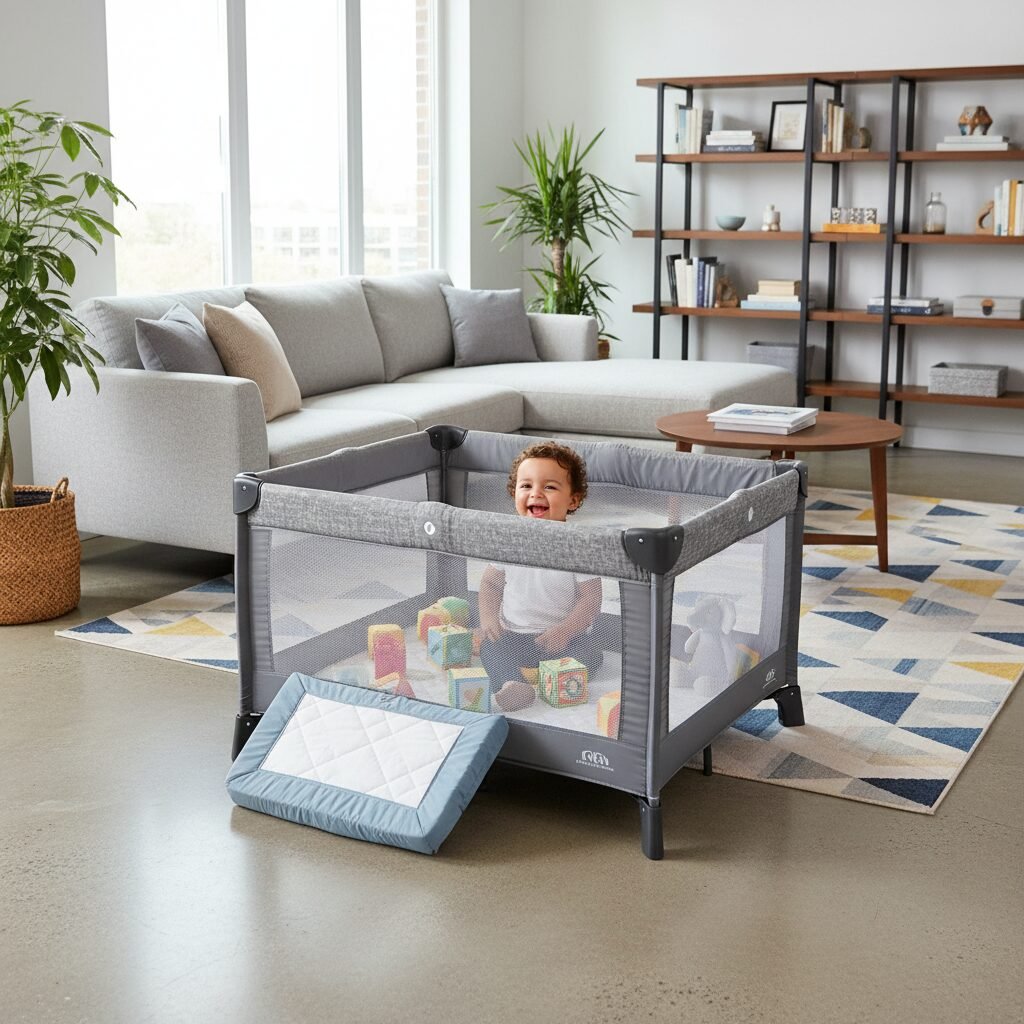
The pack ‘n play is the Swiss Army knife of baby gear. For families that prioritize flexibility, portability, and multi-functionality, it can be an absolute lifesaver in a small apartment.
The All-in-One Advantage
- Unbeatable Versatility: This is its superpower. It can be a newborn bassinet, a changing station, and a safe play space all in one. In an apartment where you can’t have a dedicated room for everything, this consolidation is a game-changer.
- Travel-Ready: Heading out for the weekend? Just fold it up, pop it in the travel bag, and you have a familiar, safe sleep environment for your baby wherever you go. This is also great for just moving it to the living room for daytime naps.
- Budget-Friendly: You often get three pieces of gear for the price of one, which can be a huge help for the family budget.
- Easy Storage: When you’re done with it or just need to reclaim your living room, you can fold it up and slide it into a closet. You can’t do that with a crib!
What to Be Aware Of
- The Mattress Question: The included ‘mattress’ is really just a thin, firm pad. While it is 100% safe for sleep (and designed that way to prevent suffocation), some parents worry about long-term comfort for nightly sleep.
- Deep Cleaning is a Chore: Babies are messy! Spit-up and diaper leaks can be tough to clean on a spot-clean-only surface.
- Low Weight Limits on Attachments: The bassinet and changing table attachments have low weight limits and are typically outgrown within the first few months.
Crucial Safety Warning: Please, please, please never add an extra mattress, pillow, or any soft bedding to a pack ‘n play. The gap this can create between the mattress and the mesh sides is a serious suffocation and entrapment hazard. Only use the original firm pad provided by the manufacturer.
The Verdict: How to Choose for Your Family
Okay, you’ve seen the specs and the pros and cons. It’s decision time! There is no wrong answer here, only the answer that’s right for your family’s unique situation. Here’s a little cheat sheet to help you decide.
Choose a Mini Crib if…
- You want a dedicated, permanent sleep space in your bedroom or nursery nook.
- The comfort of a thicker, more traditional mattress is a top priority for you.
- You value home decor and want the baby’s bed to be a beautiful piece of furniture.
- You do not travel frequently or have a separate travel sleep solution.
- Your baby will have another designated safe space for playtime.
Choose a Pack ‘n Play if…
- You are a family on the go! You travel, visit relatives, or want to easily move the baby’s sleep space around the apartment.
- You are tight on space and need one piece of gear to serve multiple purposes (sleep, play, changing).
- You are on a stricter budget and appreciate the value of an all-in-one product.
- You plan to use it for the first few months and then possibly transition to a larger crib later on.
The Best of Both Worlds?
For some families, the answer is both! They use a mini crib as the primary bed in the bedroom for its comfort and sturdiness, and a pack ‘n play that lives in the living room for a safe play zone and convenient daytime naps. This isn’t necessary, but if your budget and space allow, it can be a wonderfully flexible solution.
Conclusion
Choosing between a mini crib and a pack ‘n play is one of your first big decisions as a parent, but I hope this guide has made it feel much less daunting. Remember, the ‘best’ option is simply the one that fits your apartment, your lifestyle, and your family’s needs.
Focus on safety above all else. Whichever you pick, make sure it’s certified by the JPMA, assemble it exactly according to the instructions, and always follow safe sleep guidelines. You’ve got this! You’re already making thoughtful, loving choices for your baby, and that’s what truly matters. Welcome to parenthood—it’s an amazing journey.