
Milk Residue vs. Thrush: How to Properly Clean Your Newborn’s White Tongue
You’re gazing down at your beautiful newborn, memorizing every tiny feature, when you spot it: a white coating on their tongue. Your heart does a little flip-flop, and a dozen questions race through your mind. Is it normal? Is something wrong? Should I be worried? First, let me say this from one caregiver to another: take a deep, calming breath. You are not alone, and this is one of the most common things new parents notice and ask about.
As a pediatric nurse and lactation consultant, I’ve reassured countless parents about this exact thing. That little white tongue is almost always one of two things: either harmless, leftover milk from a recent feeding, or a common and very treatable infection called thrush. The great news is that it’s usually easy to tell the difference. This guide is your friendly companion to help you play detective, understand what you’re seeing, and know exactly what steps to take to care for your baby’s oral health. Let’s walk through it together, step-by-step.
Is It Just Milk? The Simple ‘Wipe Test’ to Tell the Difference
Before you jump to any conclusions, let’s start with a simple, gentle test you can do right at home. This little trick is often all you need to figure out what’s going on in your baby’s mouth. We call it the ‘wipe test,’ and it’s your first and best clue.
How to Perform the Wipe Test Safely
- Wash Your Hands: Start by thoroughly washing your hands with soap and water. Hygiene is always step number one when it comes to your baby.
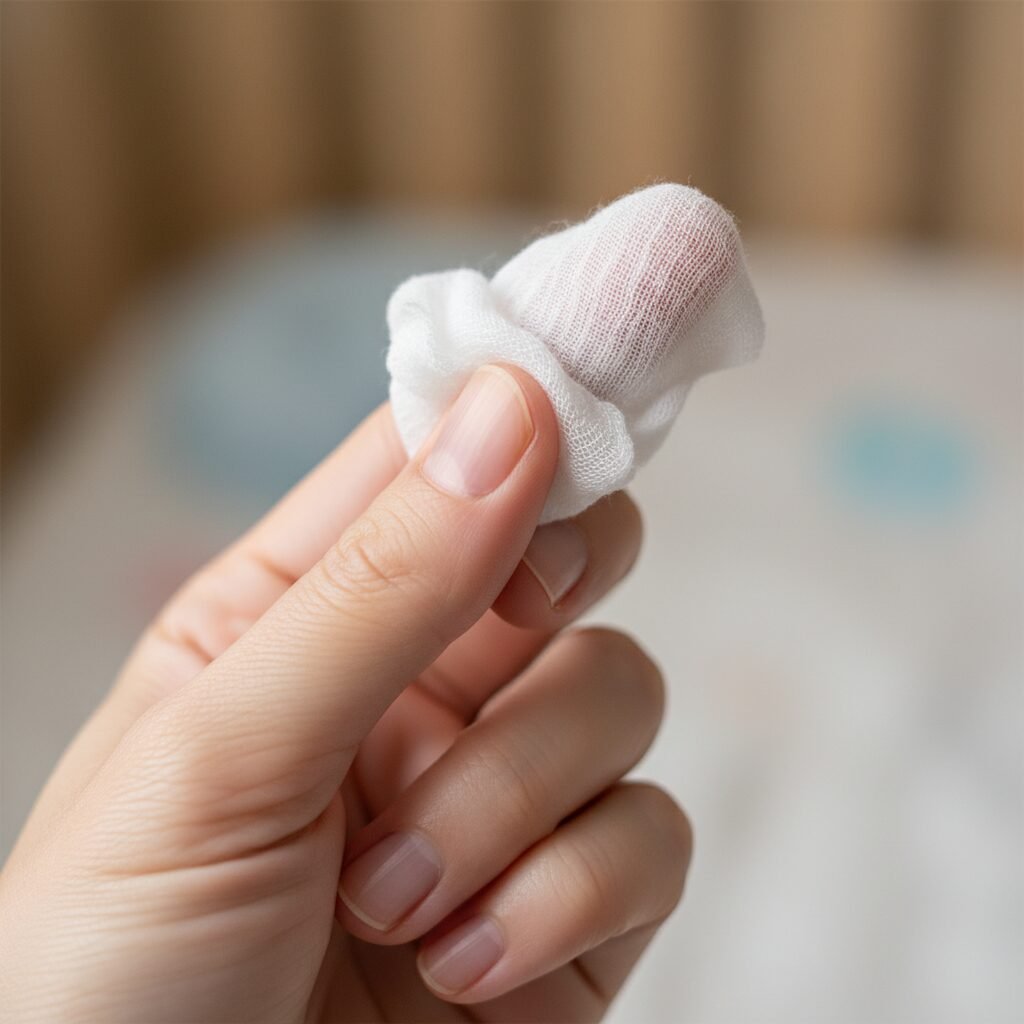
- Prepare Your ‘Wiper’: Take a piece of clean, sterile gauze or a very soft, clean washcloth. Dampen it with a little bit of warm water. You don’t want it dripping, just moist.
- Wrap Your Finger: Gently wrap the damp gauze or cloth around your index finger.
- The Gentle Wipe: With your baby calm and comfortable, gently open their mouth and swipe your covered finger across a patch of the white coating on their tongue. Use a soft, sweeping motion.
Interpreting the Results
What happens next will tell you almost everything you need to know:
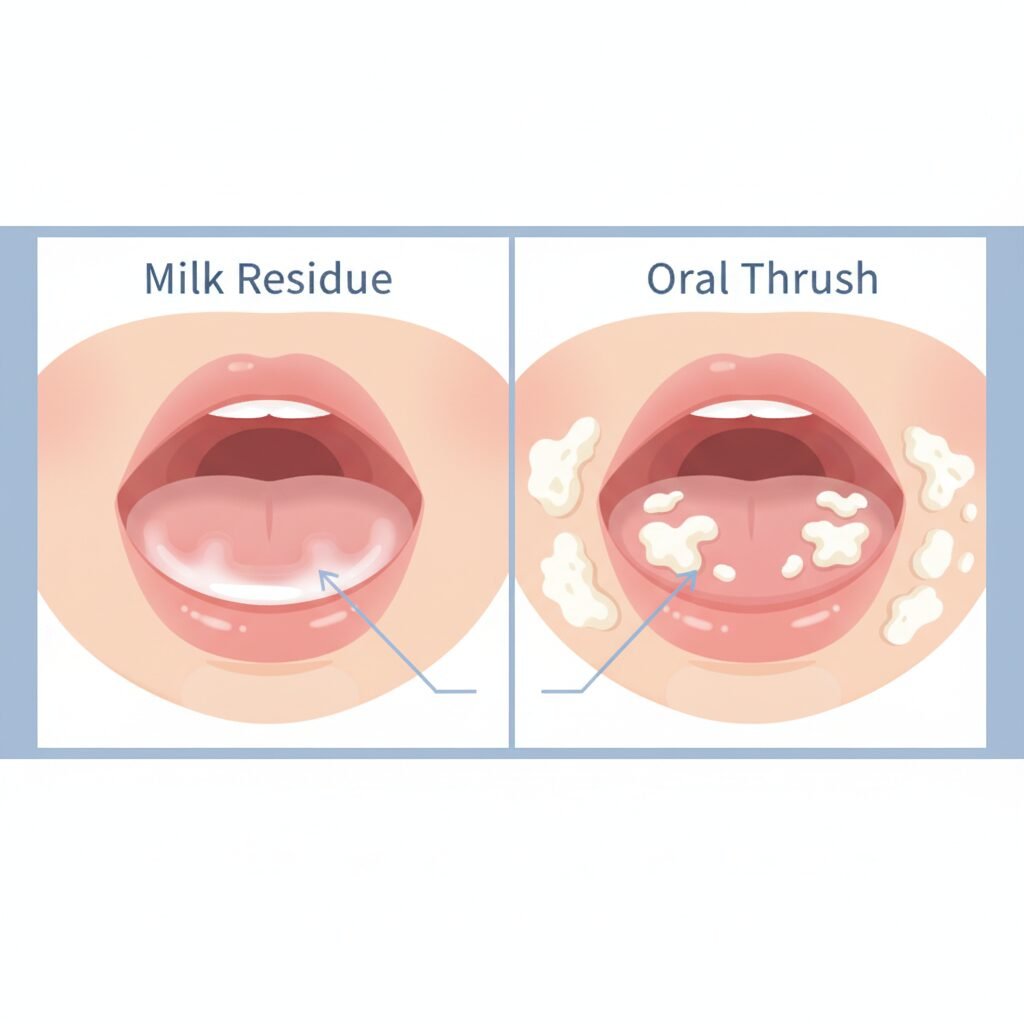
- If it’s Milk Residue: The white coating will wipe away easily, revealing a healthy, pink, and normal-looking tongue underneath. You’ll likely notice the white film is most prominent right after a feeding and less noticeable an hour or two later. This is completely normal and nothing to worry about.
- If it might be Thrush: The white patches will be stubborn. They won’t wipe away easily, or if they do, you might see red, raw, or even slightly bleeding spots underneath. Unlike a simple milk film, these white patches might look more like cottage cheese and can also appear on the inside of your baby’s cheeks, on their gums, or on the roof of their mouth.
To make it even clearer, here’s a simple side-by-side comparison:
| Characteristic | Milk Residue (Normal) | Oral Thrush (Needs a Doctor’s Visit) |
|---|---|---|
| Appearance | A thin, milky film that evenly coats the tongue. | Thick, white, velvety patches, sometimes described as looking like cottage cheese. Can be on the tongue, cheeks, gums, and roof of the mouth. |
| Wipe Test | Wipes off easily with a damp cloth. | Difficult to wipe off. May leave red, sore spots or bleed slightly when scraped. |
| Baby’s Behavior | Baby is happy and feeds normally. Not bothered by it. | Baby may be fussy, irritable, or pull away from the breast or bottle due to mouth soreness. |
| Location | Almost always confined to the tongue. | Can be found anywhere inside the mouth. |
What is Milk Residue and Why Does It Happen?

So, the wipe test was a success, and the white stuff came right off. Phew! You’re dealing with simple milk residue, also lovingly known as ‘milk tongue.’ Let’s talk about why this happens, because understanding the ‘why’ can be just as reassuring.
A newborn’s world revolves around milk, whether it’s breast milk or formula. Their diet is 100% liquid, and they don’t produce a lot of saliva yet. Think about it: adults are constantly producing saliva, which helps wash away food particles from our mouths. Newborns, on the other hand, have a much lower saliva flow. This combination of a liquid-only diet and less saliva means a thin film of milk can easily linger on the tongue after a feeding. It’s completely harmless and doesn’t cause your baby any discomfort.
Should You Clean a Milk Tongue?
While milk residue itself is not a problem, it’s a wonderful opportunity to start a gentle oral hygiene routine. Getting your baby used to having their mouth cleaned from day one can make toothbrushing a much smoother process down the road. You don’t need to do it after every single feeding, but making it a part of your daily routine once or twice a day is a great habit.
How to Gently Clean Your Baby’s Gums and Tongue
- Using the same method as the ‘wipe test,’ wrap a clean, damp, soft cloth or gauze around your finger.
- Gently open your baby’s mouth and softly rub the surface of their tongue in a circular motion.
- Don’t forget the gums! Gently massage their upper and lower gums as well. This can feel soothing, especially when they start teething later on.
- Make it a positive experience. Smile, sing a little song, and be gentle. The goal is to create a positive association with oral care.
A Note of Reassurance: Please don’t ever feel the need to scrub or be aggressive. A soft, gentle wipe is all that’s needed. This is about habit-building, not deep cleaning.
Decoding Oral Thrush: Causes, Symptoms, and Why It Matters
If the white patches in your baby’s mouth didn’t wipe away, it’s time to talk about oral thrush. First and foremost, please don’t panic. Thrush is a very common fungal infection in infants, and it is highly treatable. It’s caused by an overgrowth of a yeast called Candida albicans. We all have Candida in and on our bodies, but sometimes, especially in little ones with developing immune systems, it can grow out of balance.
What Causes Thrush in Newborns?
- Developing Immune System: A baby’s immune system is still learning to keep things like yeast in check, making an overgrowth more likely.
- Antibiotics: If you took antibiotics late in your pregnancy or during labor, or if your baby has been on antibiotics, this can be a trigger. Antibiotics kill off the ‘good’ bacteria that normally keep yeast from overgrowing.
- Passing It Back and Forth: If a breastfeeding mother has a yeast infection on her nipples (often caused by antibiotics or nipple trauma), she can pass it to the baby’s mouth. The baby can then pass it back to the mother’s nipples, creating a frustrating cycle if not treated simultaneously.
Signs and Symptoms to Watch For
Thrush is more than just white patches. Keep an eye out for these other signs in your baby:
- Appearance: As mentioned, look for those stubborn, cottage-cheese-like patches on the tongue, inner cheeks, gums, or roof of the mouth.
- Feeding Discomfort: This is a big one. Because the patches can be sore, your baby might seem unusually fussy during feedings. They may latch on and then pull off crying, or refuse to feed altogether. You might hear a characteristic ‘clicking’ sound when they nurse.
- Diaper Rash: Sometimes, the yeast can travel through the digestive system and cause a persistent, angry red diaper rash with small bumps around the edges.
Important Note for Breastfeeding Moms
If you are breastfeeding, you need to check yourself for symptoms, too. It’s crucial to treat both of you at the same time to break the cycle. Signs of yeast on your nipples include:
- Nipples that are bright pink, red, shiny, or flaky.
- Cracked nipples that don’t seem to be healing.
- Itching, burning, or a ‘stabbing’ pain in the nipple or deep within the breast, often during or after feedings.
Your Action Plan: Treating Thrush in Baby (and Mom!)
Seeing signs of thrush means it’s time to call your pediatrician. They are your partner in this, and getting a proper diagnosis is the most important step. Self-treating isn’t recommended, as you need the right medication to effectively clear the infection.
Safety First: Always consult your pediatrician or family doctor before starting any treatment. They will confirm the diagnosis and prescribe the safest, most effective medication for you and your baby.
Treatment for Your Baby
Your pediatrician will likely prescribe a liquid antifungal medication, such as Nystatin. You’ll use a dropper or applicator to paint the medicine directly onto the white patches inside your baby’s mouth and on their tongue. It’s important to follow the dosage instructions exactly and to complete the full course of treatment, even if the symptoms seem to disappear after a few days. This ensures the infection is completely gone.
Treatment for Breastfeeding Moms
If you have symptoms, your doctor will likely prescribe an antifungal cream to apply to your nipples after each feeding. It’s essential to treat yourself for the same duration as your baby to prevent reinfection.
Preventing Recurrence: The Hygiene Game Plan
Once you start treatment, you’ll want to be extra diligent about hygiene to prevent the yeast from spreading or coming back. This is your game plan:
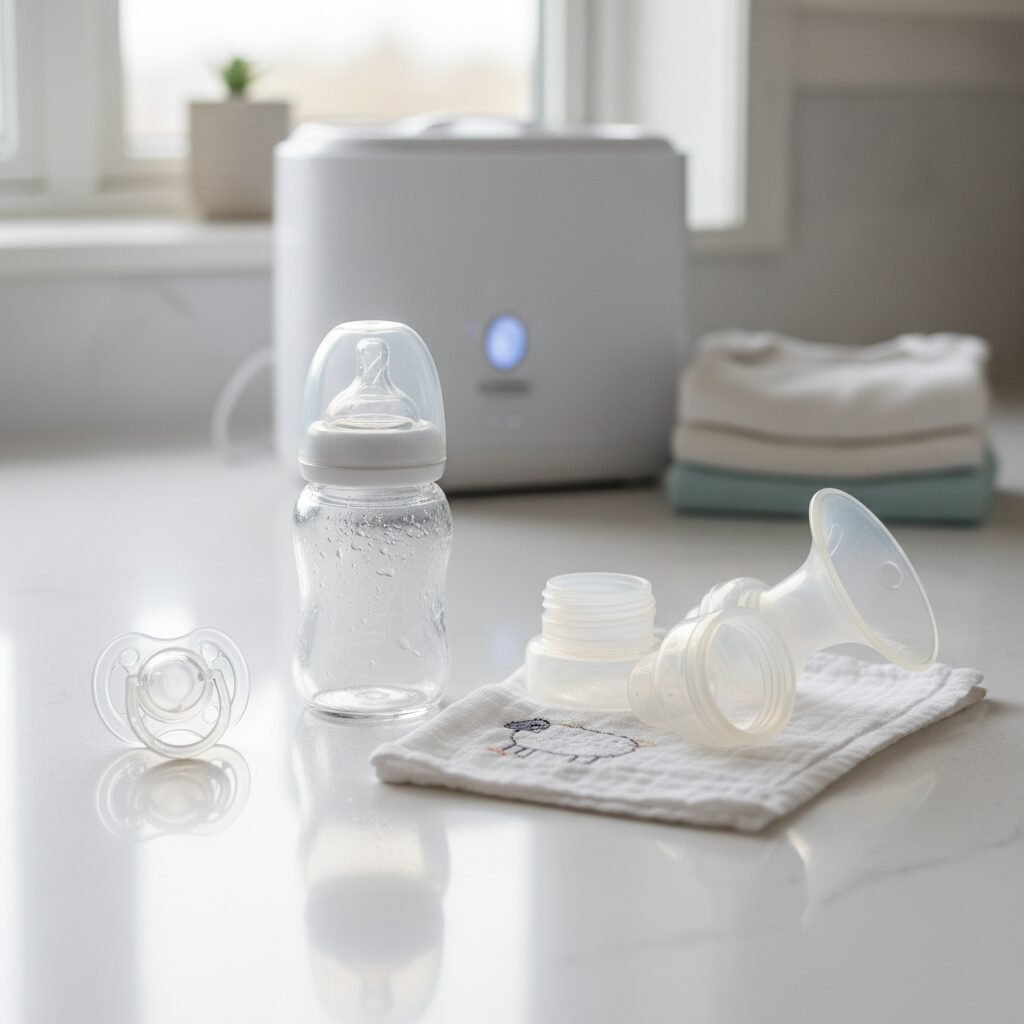
- Sterilize Everything: Anything that goes into your baby’s mouth needs to be sterilized daily. This includes bottle nipples, pacifiers, teething toys, and any parts of your breast pump that touch milk. Boiling for 5-10 minutes is an effective method.
- Wash Hands Frequently: Wash your hands thoroughly after diaper changes and before and after feedings or applying medication.
- For Breastfeeding Moms: Change your breast pads frequently, as yeast thrives in warm, moist environments. Allow your nipples to air-dry as much as possible after feedings. Washing your nursing bras in hot water can also help kill any lingering yeast.
- Store Milk Carefully: If you pump and store milk during a thrush outbreak, it’s best to feed it to your baby while you are both being treated. Freezing does not kill yeast, so using this milk later could potentially cause a reinfection. Label it clearly.
Dealing with thrush can feel like a bit of a battle, but with the right treatment and a good hygiene routine, you and your baby will be back to comfortable, happy feedings in no time.
Conclusion
Navigating the world of newborn care is full of little mysteries, and a white tongue is one of the first many parents encounter. Remember the key takeaway: it’s almost always either harmless milk residue or common, treatable thrush. Your first step is the simple and gentle ‘wipe test’—it’s a powerful tool that can provide immediate peace of mind. If it’s milk, you can relax and simply continue your gentle oral care routine. If it looks more like thrush, you know exactly what to do: call your pediatrician.
You are your baby’s expert and advocate. Being observant, asking questions, and trusting your instincts are some of the most powerful skills you have as a new parent. You’re doing an incredible job, and by reading this, you’ve already taken a proactive step to care for your little one’s health. Keep trusting yourself, and never, ever hesitate to reach out to your healthcare team for support. They are there to help you on this amazing journey.