

Milk Residue or Thrush? How to Spot the Difference Instantly
Hey there, new parent. Take a deep breath. You’re staring into your sweet baby’s mouth, you see some white stuff on their tongue, and your mind starts racing. Is it just from their last feeding, or is it that thing you read about… thrush? It’s a question that crosses almost every new parent’s mind, so know that you are absolutely not alone in this. Your baby’s mouth is a new frontier, and you’re doing an amazing job by being so observant.
The great news is that telling the difference between harmless milk residue and oral thrush is usually straightforward once you know what to look for. One is a normal part of being a milk-drinking baby, and the other is a common, easily treatable infection. In this guide, we’ll walk through it together, step-by-step, so you can feel confident and know exactly what to do. Let’s solve this little mystery.
First, Let’s Talk About Harmless Milk Residue

Before we jump to any conclusions, let’s start with the most likely and completely harmless culprit: milk residue. Think of it as the baby equivalent of having a little bit of spinach in your teeth after a salad—it’s just leftovers!
What Exactly Is It?
Milk residue is simply a thin coating of milk (breast milk or formula) that lingers on your baby’s tongue after they eat. Their saliva production is still ramping up, so they don’t wash it all away as effectively as we adults do. It’s most noticeable right after a feeding and is a totally normal, expected part of life for a newborn.
What Does It Look Like?
The key here is in the appearance. Milk residue typically looks like a thin, white, or translucent film. It primarily coats the surface of the tongue and doesn’t usually spread to other parts of the mouth like the cheeks or gums. If you could describe it, you’d say it looks like a faint milky coating. Your baby will also be completely unbothered by it. They’ll feed happily, and it won’t cause any pain or discomfort.
A Reassuring Thought: If your baby is happy, feeding well, and the white stuff seems to come and go between feedings, you’re almost certainly looking at simple milk residue. It’s a sign of a well-fed, happy baby!
Getting to Know Oral Thrush (Candidiasis)

Okay, now let’s talk about the other possibility: oral thrush. While the name sounds a little scary, please know that it’s a very common and treatable fungal infection in infants. It’s caused by an overgrowth of a yeast called Candida albicans, a microorganism that normally lives in our mouths and digestive systems without causing any trouble.
How Do Babies Get Thrush?
Sometimes, the balance of good bacteria and yeast gets thrown off, allowing the Candida to multiply. This can happen for a few reasons:
- During Birth: Babies can pick up the yeast from their mother’s birth canal during delivery.
- Antibiotics: If you or your baby have recently been on antibiotics, these medications can wipe out the helpful bacteria that keep yeast in check.
- A Developing Immune System: Babies have brand-new immune systems that are still learning to balance the body’s natural microorganisms.
What Does Thrush Look Like?
This is where the differences become clear. Unlike the thin film of milk residue, thrush presents as creamy white or yellowish patches. Many parents describe it as looking like drops of cottage cheese or dried milk curds stuck inside the mouth. A key difference is the location. Thrush isn’t just on the tongue; you may also see these patches on the inner cheeks, the roof of the mouth, the gums, or even the lips. Crucially, your baby might seem uncomfortable. They may be fussy, irritable during feedings, or pull away from the breast or bottle because their mouth is sore.
For breastfeeding mothers, it’s also important to know that thrush can be passed back and forth. If you’re experiencing sudden nipple pain, shooting pains in your breast during or after feedings, or have red, shiny, or flaky skin on your nipples, it’s possible the infection has spread to you.
The Instant Spot-Check: Your At-Home ‘Wipe Test’
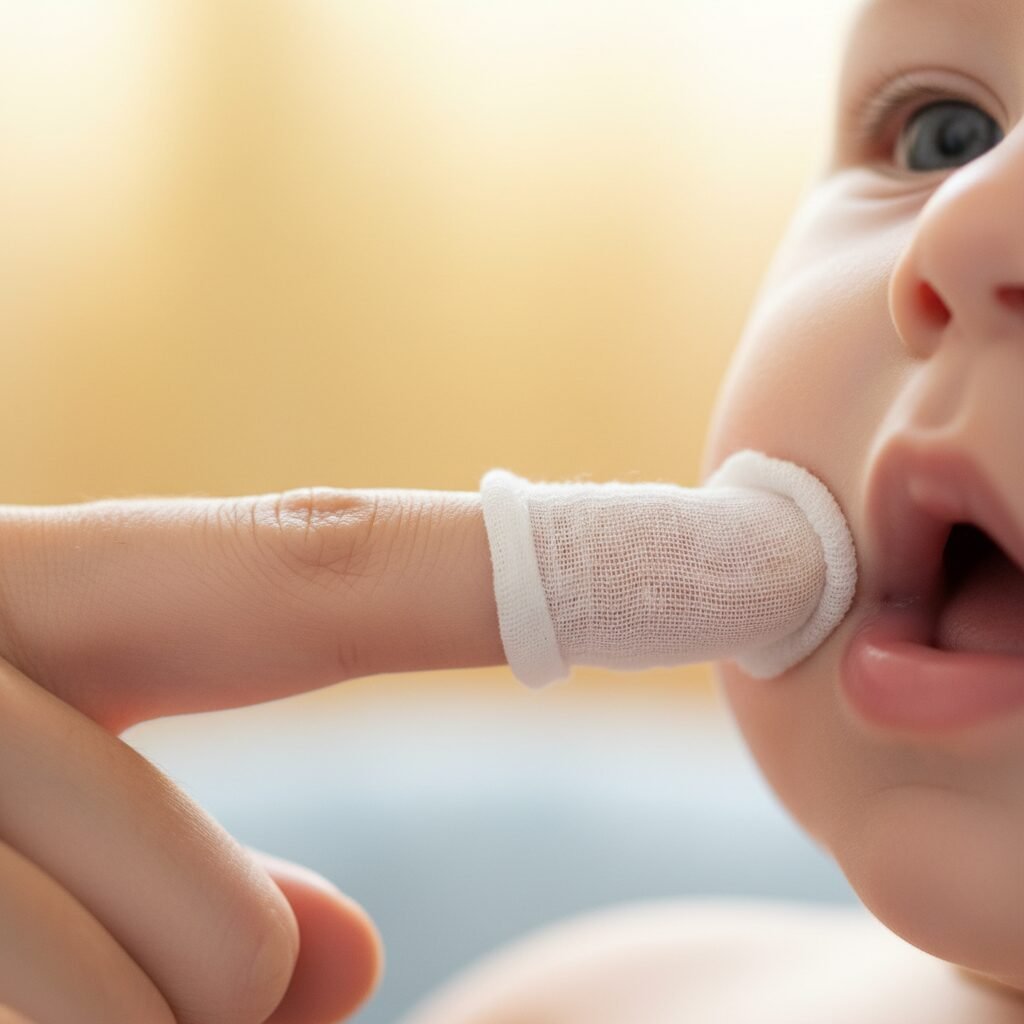
Ready for the single most effective way to tell the difference? It’s time for the ‘Wipe Test.’ This simple, gentle check can give you a very strong indication of what you’re dealing with in less than a minute.
How to Perform the Test Safely:
- Wash Your Hands: Start by thoroughly washing your hands with soap and water.
- Prepare Your ‘Wiper’: Take a piece of clean, soft, damp cloth or sterile gauze and wrap it around your index finger.
- Be Gentle: Gently open your baby’s mouth and softly try to wipe away one of the white patches on their tongue.
The result of this little test is your biggest clue. Here’s how to interpret what you see:
| Characteristic | It’s Likely Milk Residue If… | It’s Likely Thrush If… |
|---|---|---|
| The Wipe Test Result | The white coating wipes away easily, revealing a healthy, pink tongue underneath. | The white patches do not wipe away. If you try to scrape them, they might be stubborn and leave behind a raw, red area that could even bleed slightly. |
| Appearance | A thin, milky film. | Thick, creamy, cottage-cheese-like spots or patches. |
| Location | Mostly on the tongue. | Can be on the tongue, inner cheeks, gums, and roof of the mouth. |
| Baby’s Behavior | Your baby is happy and feeding normally. | Your baby is fussy, irritable, or seems to be in pain, especially when eating. |
Okay, I Think I Know What It Is. Now What?

You’ve done the detective work and performed the wipe test. Now you have a better idea of what’s going on in your baby’s mouth. The next steps are very different depending on the outcome.
If It Looks Like Milk Residue…
You can exhale and relax! No treatment is needed. Milk residue is harmless and will resolve on its own as your baby’s mouth matures and produces more saliva. You don’t need to do anything to clean it out. Some parents like to get into the habit of gently wiping their baby’s gums with a clean, damp cloth after feedings as a first step toward good oral hygiene, but it is not necessary for managing milk residue.
If You Suspect Thrush…
If the patches didn’t wipe away and you suspect thrush, it’s time to call your pediatrician or family doctor. Thrush requires a medical diagnosis and treatment with an antifungal medication. It will not go away on its own and can make feeding very uncomfortable for your little one.
Important Safety Note: Please do not try any home remedies or over-the-counter treatments without consulting your doctor first. Your baby needs a specific, prescription antifungal medication that is safe for infants.
Your doctor will likely prescribe a liquid antifungal medicine that you’ll apply directly to the white patches in your baby’s mouth with a dropper or applicator. It’s usually a simple, painless process. If you are breastfeeding and have symptoms, it’s critical that you mention this, as you will likely need treatment as well to keep from passing the infection back and forth. Treatment for you might involve an antifungal cream for your nipples or, in some cases, an oral pill.
Hygiene and Prevention: Keeping Thrush at Bay

Once you’re treating a case of thrush, or if you simply want to be proactive, good hygiene is your best friend. Since yeast thrives in warm, moist, sugary environments (like a milky mouth!), keeping things clean can make a big difference.
Key Hygiene Tips During and After Treatment:
- Sterilize Everything: Anything that goes in your baby’s mouth needs to be meticulously cleaned and sterilized after every use. This includes bottle nipples, pacifiers, teething toys, and any parts from your breast pump that touch milk. Boil these items for at least five minutes or use a sterilizer according to the manufacturer’s directions. Continue this for the duration of treatment and for a week after symptoms disappear.
- Wash Hands Frequently: Always wash your hands thoroughly before and after feedings, after diaper changes, and after applying medication.
- Proper Milk Storage: If you pump breast milk, be diligent about storage. Don’t mix milk from different pumping sessions. If your baby has thrush, some experts recommend discarding any milk pumped during the infection, as freezing doesn’t reliably kill yeast. Check with your lactation consultant or doctor for the latest guidance on this.
- Care for Breastfeeding Moms: If you’re breastfeeding, keep your nipples as clean and dry as possible. Change nursing pads frequently if they become damp, and allow your nipples to air-dry after feedings when you can. Wash your nursing bras in hot water to kill any yeast.
By following these steps, you create an environment where yeast is less likely to overgrow, helping to clear up an infection faster and prevent it from coming back.
Conclusion
Navigating the little worries of parenthood is a journey, and figuring out what’s happening in your baby’s mouth is a perfect example. Remember the key takeaway: if it’s thin and wipes away, it’s likely milk residue. If it’s thick, patchy like cottage cheese, and stays put, it’s time to call the doctor about thrush. You now have the knowledge to tell the difference, but never, ever hesitate to trust your parental gut. If you are worried or unsure, a quick call to your pediatrician’s office is always the right choice. They are there to support you and your baby.
You’re doing an incredible job paying such close attention to your baby’s health. Keep trusting yourself, asking questions, and know that you have a whole community of support behind you. You’ve got this.