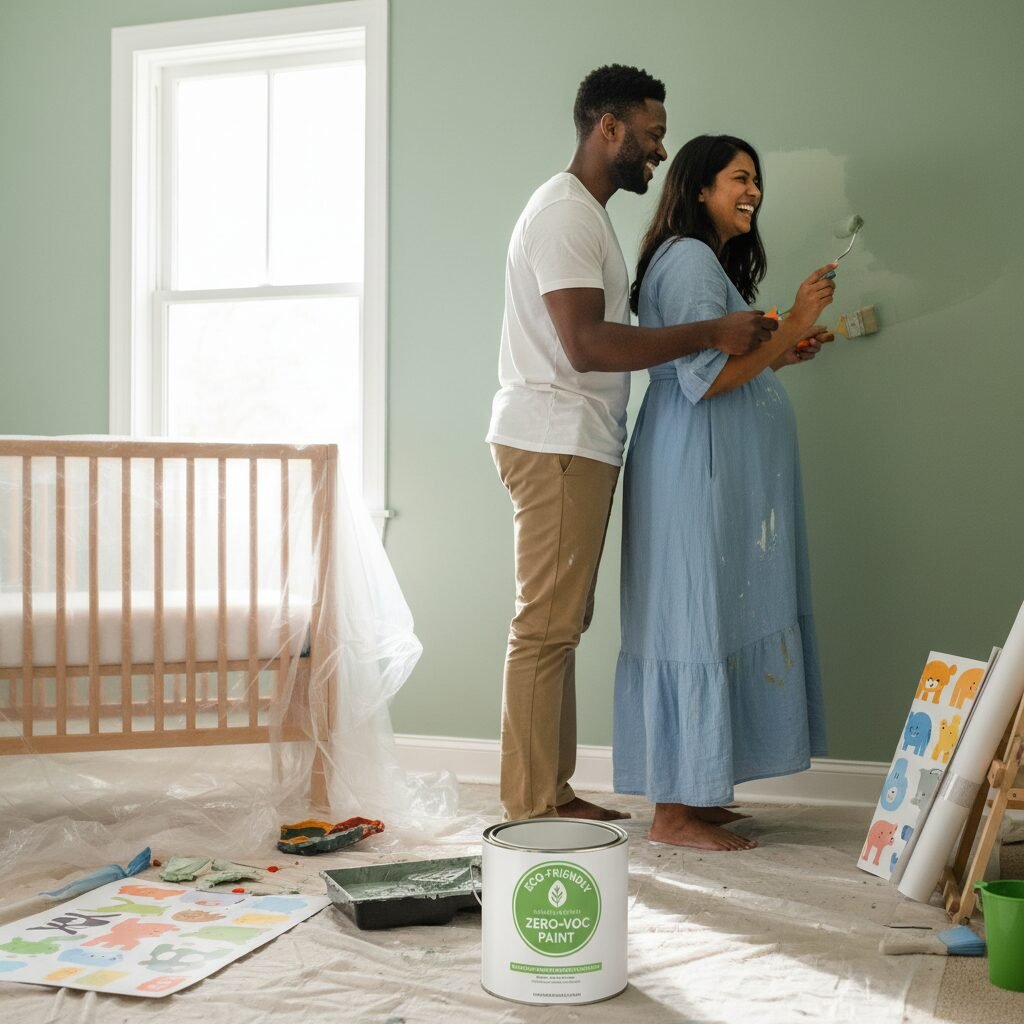
Is Your Paint Toxic? The Safest Low-VOC Brands for the Nursery
Welcome, soon-to-be parents! I can almost feel the excitement and anticipation buzzing through your home. Setting up the nursery is one of the most magical parts of preparing for your little one—a true act of love. You’re picking out the perfect crib, the softest blankets, and the cutest little outfits. But amidst all this joy, there’s a question I hear a lot from new parents: What about the paint?
It’s a fantastic question. That ‘new paint smell’ we often associate with a fresh start is actually caused by chemicals called Volatile Organic Compounds (VOCs) being released into the air. For our fully-developed bodies, it’s a temporary nuisance. But for a tiny, developing baby, indoor air quality is incredibly important. As a pediatric nurse, I’ve seen how sensitive little lungs can be.
Please don’t let this add to your stress! The good news is that choosing a safe, non-toxic paint for your nursery has never been easier. You don’t need a degree in chemistry to get it right. In this guide, we’ll walk through it together, step-by-step. We’ll decode the labels, explore the safest brands, and give you practical tips to ensure your baby’s first room is a healthy, happy, and beautiful haven.
What Are VOCs and Why Do They Matter for Your Baby?
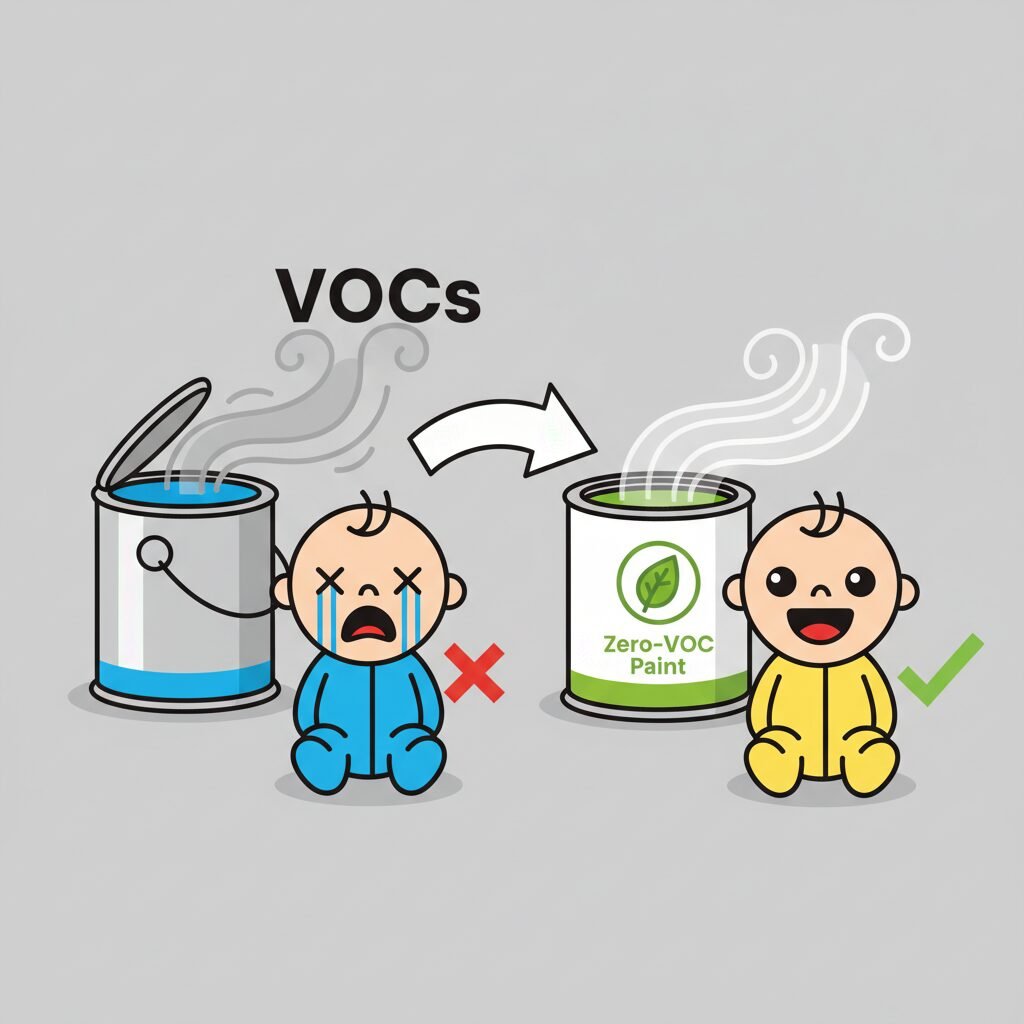
What Are VOCs and Why Do They Matter for Your Baby?
Let’s start with the basics, in plain English. Volatile Organic Compounds (VOCs) are chemicals found in many household products, including traditional paints. The ‘volatile’ part means they easily turn into a gas at room temperature, releasing fumes into the air. This process, called ‘off-gassing,’ is what causes that strong paint smell, and it can continue for weeks, months, or even years after the paint has dried.
Common VOCs in paint include formaldehyde, benzene, and toluene—not exactly things you want floating around your precious newborn. So, why are they a bigger deal for babies?
- Developing Systems: A baby’s respiratory, immune, and nervous systems are still under construction. They are far more vulnerable to the effects of airborne chemicals than adults are.
- Faster Breathing: Babies breathe more rapidly than adults, meaning they take in more air (and any pollutants in it) relative to their small body weight.
- Sensitive Skin and Lungs: Exposure to VOCs has been linked to short-term issues like headaches, dizziness, and irritation of the eyes, nose, and throat. More concerning for our little ones are the long-term risks, which can include aggravating asthma, triggering allergies, and other respiratory problems.
A Nurse’s Note: Think of it this way: creating a healthy nursery is like building a protective bubble for your baby. Ensuring clean air is one of the most important layers of that bubble.
Low-VOC vs. Zero-VOC vs. Natural Paint: What’s the Difference?
When you head to the hardware store, you’ll see a few key terms. Here’s a quick breakdown:
- Low-VOC Paint: This means the paint has fewer VOCs than traditional paints, according to federal EPA standards. It’s a step in the right direction, but ‘low’ can still mean something.
- Zero-VOC Paint: This is the gold standard for a nursery. These paints have minimal to no VOCs in the base paint itself (less than 5 grams per liter). However, be aware: adding color tint at the store can sometimes add small amounts of VOCs. Always ask for zero-VOC colorants if available!
- Natural Paints: These are made from natural raw materials like water, plant oils, clay, and milk protein. They are biodegradable and free from petrochemicals. While they are a wonderfully safe option, they can be more expensive and may offer a more limited color palette and durability.
For most parents, a certified Zero-VOC paint is the perfect balance of safety, performance, and accessibility.
Decoding the Labels: Your Guide to Paint Safety Certifications
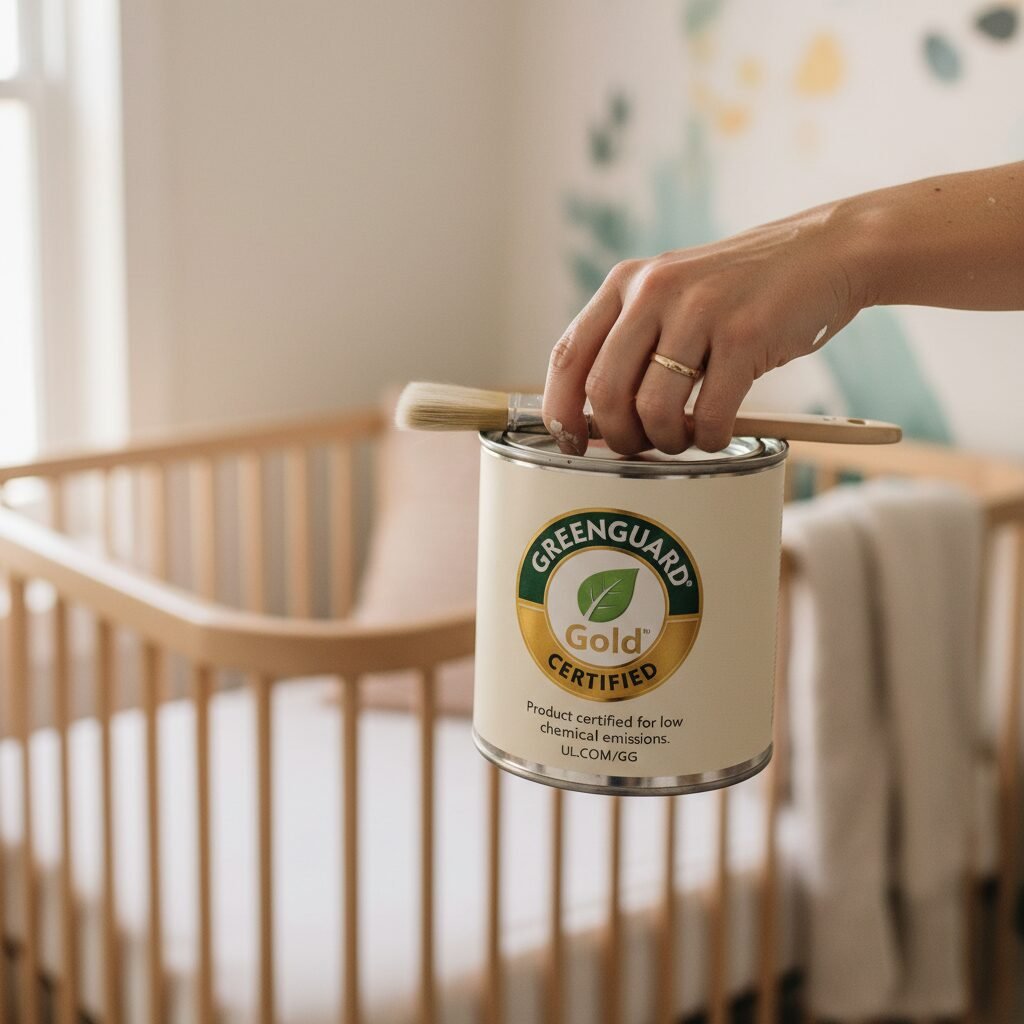
Decoding the Labels: Your Guide to Paint Safety Certifications
Okay, so you’re looking for ‘Zero-VOC’ on the can. Great start! But to be extra sure you’re getting the safest product, you can look for third-party certifications. These independent organizations test products to ensure they meet strict standards for low chemical emissions and indoor air quality. Think of them as a trustworthy seal of approval.
Here are the most important certifications to look for when choosing nursery paint:
| Certification Logo | What It Means for Your Nursery |
|---|---|
| GREENGUARD Gold | This is one of the best certifications to find. It means the paint has been tested for over 10,000 chemicals and has met the strictest standards for low emissions. It’s specifically designed to be safe for sensitive individuals like children and the elderly, making it ideal for nurseries and schools. |
| Green Seal | This certification looks at the product’s entire life cycle, from manufacturing to performance and disposal. A Green Seal mark (specifically GS-11 for paints) means the paint has limited VOCs and is free from a long list of harmful chemicals like carcinogens and heavy metals. |
| Asthma & Allergy Friendly® | Certified by the Asthma and Allergy Foundation of America, this mark indicates the paint is less likely to trigger asthma and allergy symptoms. The paint must pass rigorous tests for its chemical content and performance, ensuring it doesn’t contribute to poor indoor air quality. |
| SCS Indoor Advantage Gold | Similar to GREENGUARD Gold, this certification ensures that a paint meets very low VOC emission criteria. It’s another excellent indicator that the product is safe for indoor environments, especially for a sensitive baby. |
You don’t need a paint with every single one of these, but finding even one, especially GREENGUARD Gold, gives you fantastic peace of mind that you’re making a healthy choice for your family.
Our Top Picks: The Best Zero-VOC Paint Brands for Nurseries
Our Top Picks: The Best Zero-VOC Paint Brands for Nurseries
Now for the fun part! Choosing a color is exciting, and it’s even better when you know you’re choosing from the safest brands. I’ve recommended these paints to countless families over the years. They are widely available, perform beautifully, and most importantly, they will help keep your nursery’s air clean.
Here’s a comparison of some of the best and most popular zero-VOC paint brands perfect for your project:
| Brand | Key Features | Certifications | Price Point |
|---|---|---|---|
| ECOS Paints | Specifically designed for people with chemical sensitivities. Water-based, no-odor, and they offer zero-VOC colorants. Huge color selection. | Declare Label, Living Product Challenge | $$$ (Premium) |
| Clare Paint | Designer-curated colors delivered to your door. Zero-VOC paint and colorants. Self-priming and great coverage. Very user-friendly for DIY parents. | GREENGUARD Gold | $$$ (Premium) |
| Benjamin Moore Eco Spec® | A trusted brand with a zero-VOC formula that remains zero-VOC even after tinting with their Gennex® colorants. Durable and washable, which is a huge plus for a kid’s room! | Asthma & Allergy Friendly®, Green Seal | $$ (Mid-to-High) |
| Sherwin-Williams Harmony® | This line is not only zero-VOC but also has odor-eliminating technology to help reduce common household odors. It’s durable and contains anti-microbial agents to resist mold and mildew. | GREENGUARD Gold | $$ (Mid-to-High) |
| Behr Premium Plus® | An excellent, budget-friendly option available at The Home Depot. This popular line is a low-odor, zero-VOC paint and primer in one. A very accessible and reliable choice. | GREENGUARD Gold | $ (Affordable) |
Safety Warning: Always double-check the specific product line! Most major brands have multiple paint lines, and only some of them are zero-VOC. Read the can carefully and choose the right one, like ‘Harmony’ from Sherwin-Williams or ‘Eco Spec’ from Benjamin Moore.
Beyond the Can: Essential Painting Safety Tips for Expecting Parents
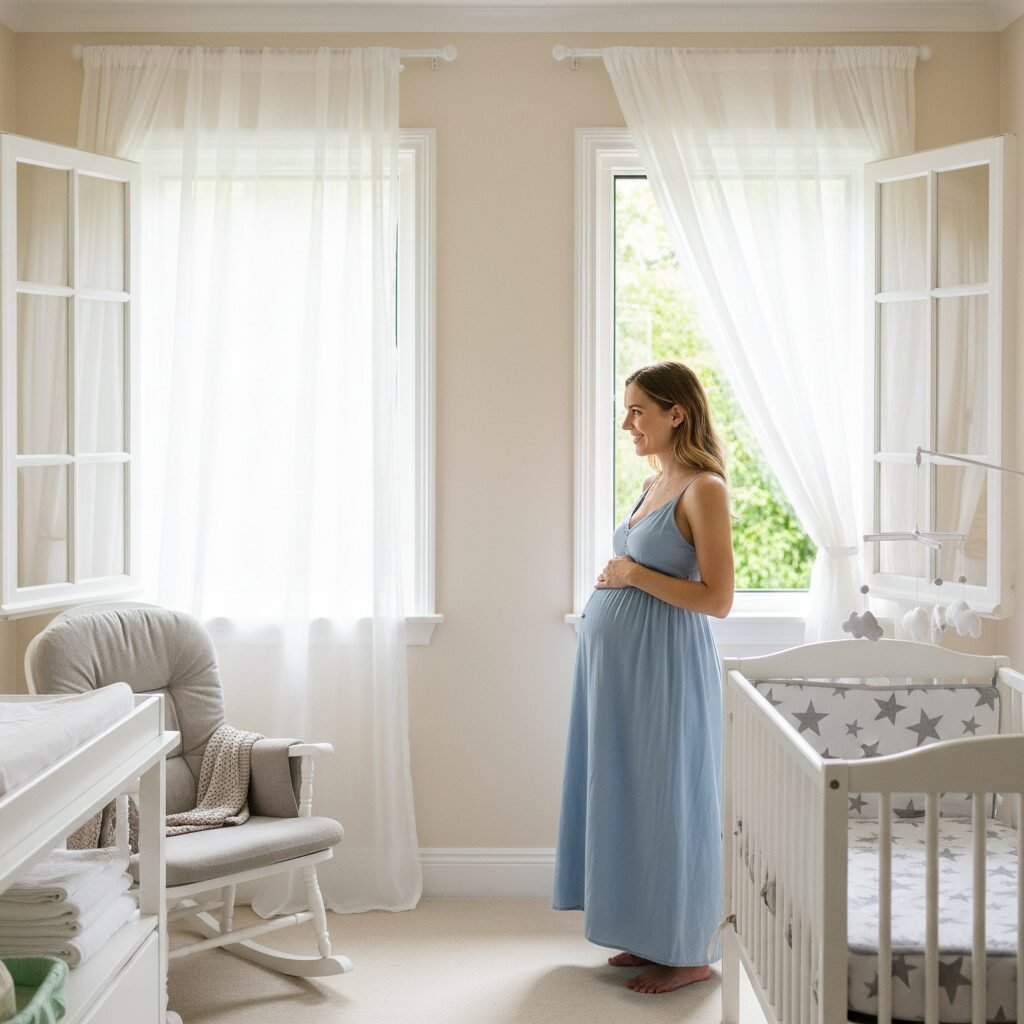
Beyond the Can: Essential Painting Safety Tips for Expecting Parents
Choosing the right paint is the biggest step, but how you paint also matters. Following a few simple safety rules will ensure the process is as healthy as the result.
Timing is Everything
Don’t leave painting until the last minute! The best practice is to paint the nursery at least four weeks before your baby is due to arrive. Even though zero-VOC paints don’t have that strong chemical smell, this gives the paint plenty of time to fully cure and allows for maximum ventilation to clear out any lingering odors or particulates.
Ventilation, Ventilation, Ventilation!
This is non-negotiable. Even with the safest paint, you need to keep the air moving.
- Open all the windows in the room while you are painting.
- Use a box fan in the window, pointing outward, to pull air out of the room.
- Keep the room well-ventilated for at least 24-48 hours after you’ve finished painting.
A Special Note for Moms-to-Be
Your body is already working so hard growing a beautiful baby. The general medical advice is for pregnant women to limit their exposure to paint fumes of any kind. If possible, let your partner, a family member, or a friend handle the actual painting. If you absolutely must participate:
- Ensure the ventilation is excellent.
- Wear a high-quality respirator mask rated for paint fumes (like an N95).
- Take frequent breaks in the fresh air.
- Spend the minimum amount of time necessary in the room while the paint is wet.
Your health and your baby’s health come first. This is a perfect time to put your feet up and take on the role of ‘Project Supervisor’!
Conclusion
There you have it! Creating a safe and healthy space for your baby doesn’t have to be complicated. By choosing a zero-VOC paint with a trusted third-party certification, you are taking a powerful and proactive step in protecting your little one’s health right from the start. You’re giving them the beautiful gift of clean air in their very first room.
Remember to read the labels, prioritize ventilation, and give the room plenty of time to air out. Now you can focus on the pure joy of this special time—the nesting, the dreaming, and the incredible anticipation of meeting the newest member of your family. You’ve got this!