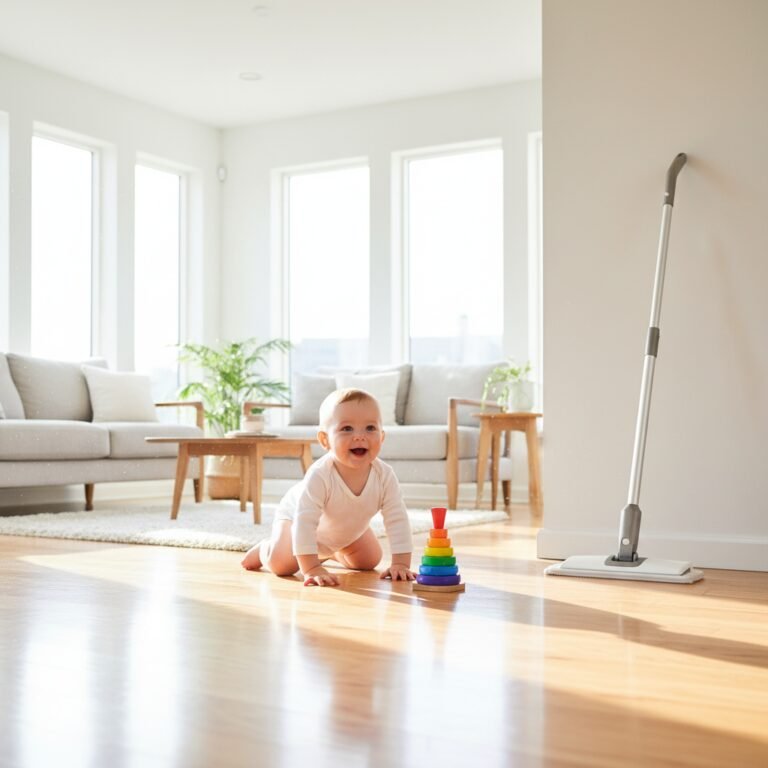

Is Your Nursery Safe? Hidden Electrical Hazards Parents Miss
Hello, wonderful new parents! Welcome to one of the most exciting (and sometimes overwhelming) parts of your journey: creating the perfect nursery. You’ve spent hours choosing the right color palette, assembling the crib, and folding tiny clothes with so much love. It’s your baby’s first little world, and you want it to be absolutely perfect and, above all, safe. While you’ve likely thought about big-ticket safety items, my years as a pediatric nurse have shown me that it’s often the little things—the hidden electrical hazards—that get missed. Don’t worry, this isn’t about causing alarm. It’s about empowerment. Together, we’re going to walk through your nursery, room by room in our minds, and gently shine a light on these sneaky spots. Think of me as your friendly guide, here to help you turn that beautiful room into the safest possible haven for your little one. You’ve got this!
The Usual Suspects: Mastering the Outlet and Cord Basics
The Usual Suspects: Mastering the Outlet and Cord Basics
Let’s start with the basics you might already have on your radar. Getting these right builds a fantastic foundation for a truly safe space. It’s like learning the alphabet before you write a story—essential and reassuring!
Tackling Open Outlets
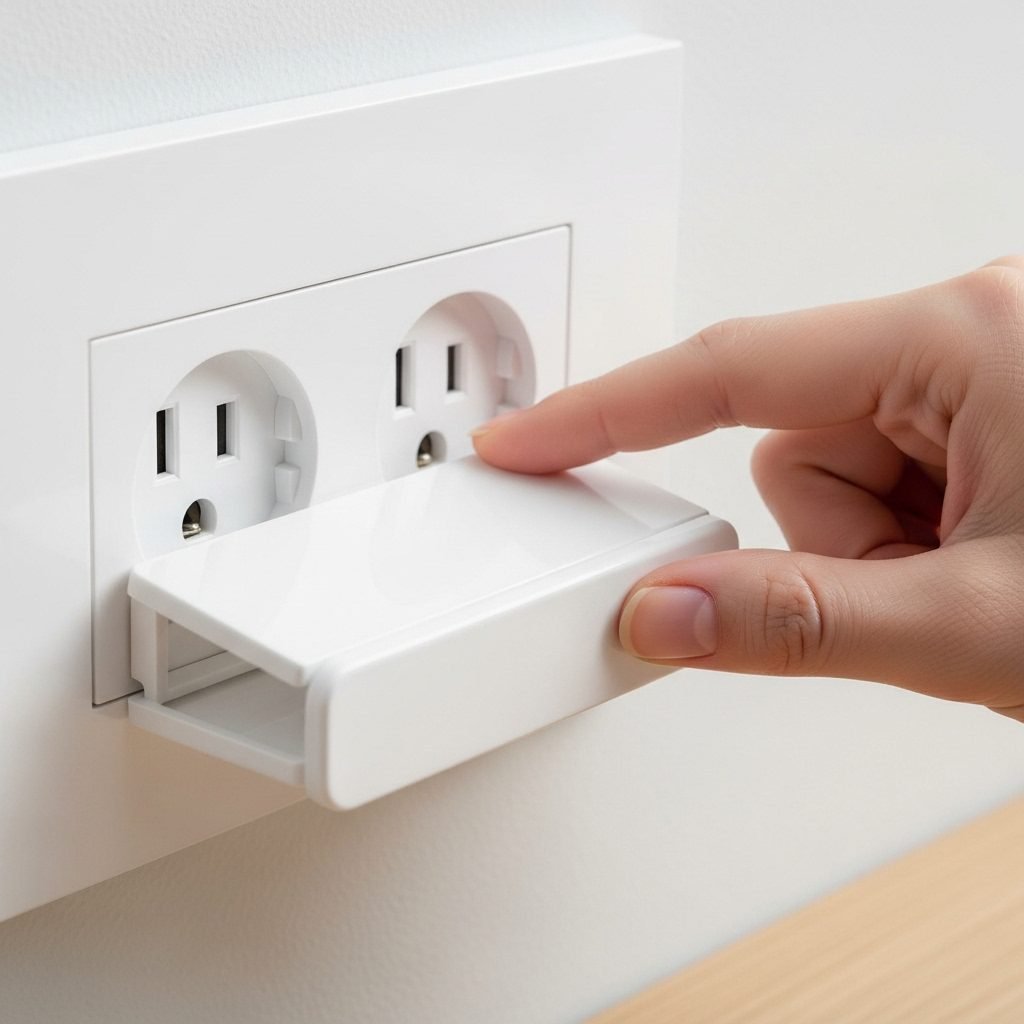
Those little holes in the wall are endlessly fascinating to curious crawlers. A baby’s tiny fingers are unfortunately the perfect size to explore them. While the classic plastic plug-in covers are popular, they can become a choking hazard themselves if a clever toddler figures out how to remove them. Here are some better options:
- Sliding Outlet Covers: These are fantastic! You replace the entire outlet plate with one that has a spring-loaded shutter. To plug something in, you have to slide the cover and push the prongs in simultaneously. When you unplug, it automatically snaps back into a safe, closed position. No small parts to lose or choke on!
- Box Outlet Covers: These are ideal for outlets that you use frequently, like for a sound machine or night light. It’s a small plastic box that fits over the entire outlet, even with something plugged in, preventing your little one from pulling the plug out.
A Quick Safety Note: Whichever cover you choose, get down on your hands and knees to see the world from your baby’s perspective. Can you wiggle it loose? Does it seem tempting to play with? This simple trick helps you spot vulnerabilities you might otherwise miss.
The Deal with Extension Cords and Power Strips
In a perfect world, every lamp and monitor would be right next to an outlet. In reality, we often rely on extension cords and power strips. While useful, they introduce new risks in a nursery.
An extension cord running across the floor is a major trip hazard, not just for a wobbly new walker but for tired parents stumbling in for a 3 a.m. feeding! If you absolutely must use one, make sure it is a heavy-duty, three-pronged cord and secure it firmly against the baseboard with cord concealers. Never, ever run a cord under a rug. This is a significant fire hazard as the cord can overheat without you knowing.
Power strips can also be problematic. They can be easily overloaded, creating a fire risk. Furthermore, the on/off switch and the lure of multiple plugs can be very attractive to a curious child. If you need to use a power strip, choose one with a built-in circuit breaker and a safety cover that conceals the entire strip and its plugs.
The Tangled Web: Managing Cords from Monitors and Gadgets
The Tangled Web: Managing Cords from Monitors and Gadgets
Okay, let’s talk about the modern nursery’s MVP: technology. Baby monitors, sound machines, humidifiers, and night lights are lifesavers for new parents. But every single one comes with a cord, and these cords are one of the most underestimated hazards in the room.
The 3-Foot Rule: A Non-Negotiable for Crib Safety
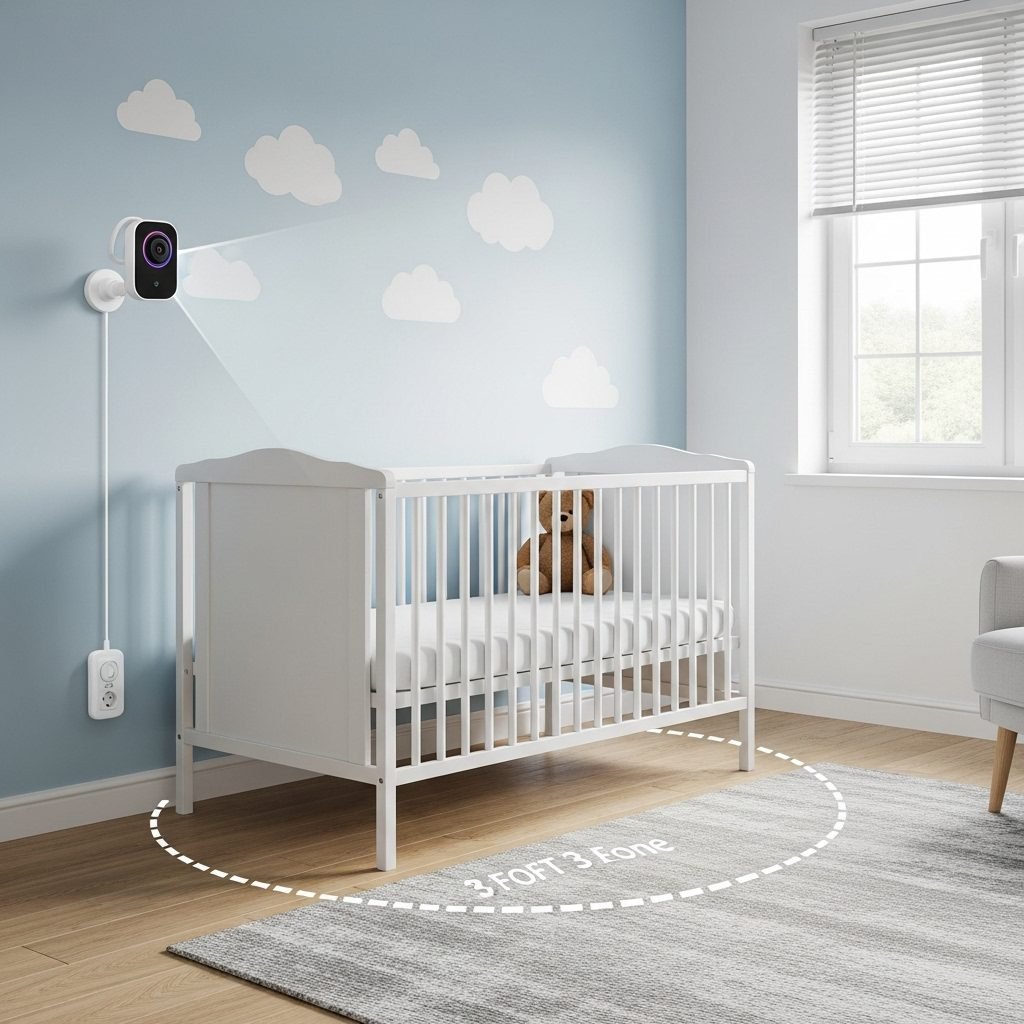
The American Academy of Pediatrics (AAP) is crystal clear on this: any device with a cord must be kept at least 3 feet away from any part of the crib, changing table, or playpen. This isn’t just a suggestion; it’s a critical safety rule to prevent strangulation. Babies can be surprisingly strong and resourceful. They can pull cords through crib slats, get tangled, and be in serious danger in moments.
So, how do you manage this?
- Measure It Out: Grab a tape measure. Seriously. Don’t just eyeball it. Measure 3 feet from every edge of the crib and make sure no cord can be reached from inside.
- Mount High, Secure Tight: For baby monitors, mount the camera high on the wall or on a sturdy shelf well out of reach. Use wall-mounted cord concealers (they look like a thin plastic channel) to run the cord down the wall and secure it tightly. Loose, dangling cords are an invitation for trouble.
- Rethink Furniture Placement: Position the crib, and then arrange the other furniture. The crib’s location should dictate where everything else goes, not the other way around. Make sure no dressers or chairs are close enough for a climbing toddler to use to reach a cord or a monitor.
Safety Warning: Never place a baby monitor on the edge of the crib rail, even for a minute. It’s a habit that can easily be forgotten, and the risk is just too high.
Creative Cord-Hiding Solutions
Hiding cords isn’t just about aesthetics; it’s about safety. Here are some parent-tested, nurse-approved ideas:
- Cord Concealer Kits: These are your best friend. They come in various colors (or can be painted to match your wall) and stick directly to the wall, hiding the cord inside.
- Furniture with a Purpose: Use the back of a solid-backed bookshelf or a heavy dresser to hide cords. Secure the cords to the back of the furniture with cord clips so they can’t slip out.
- Go Wireless (When Possible): While baby monitors with cameras often need to be plugged in, consider battery-operated options for things like sound machines or night lights to eliminate a cord entirely. Just be diligent about checking and changing the batteries!
Beyond the Obvious: Unseen Electrical Dangers to Consider
Beyond the Obvious: Unseen Electrical Dangers to Consider
You’ve covered the outlets and wrangled the cords—fantastic! Now let’s dig a little deeper into some of the less obvious electrical hazards that can be easy to miss when you’re focused on diapers and feeding schedules.
The Age of Your Home: Old Wiring Concerns
If you live in an older home, your wiring might not be up to modern safety standards. A key thing to look for is whether your outlets are two-pronged or three-pronged. Three-pronged outlets are grounded, which is a crucial safety feature that protects against electric shock. If your nursery has only two-pronged outlets, it’s worth consulting a licensed electrician. They might recommend upgrading the outlets to GFCI (Ground Fault Circuit Interrupter) outlets, which can provide shock protection even without a ground wire.
Expert Tip: Don’t use those little three-to-two-prong adapters (cheater plugs). They eliminate the grounding safety feature, which defeats the whole purpose and can be dangerous with certain electronics.
Water and Electricity: The Humidifier Hazard
Humidifiers and vaporizers are nursery staples, especially during dry winter months or when your little one has a cold. But we all know that water and electricity are a dangerous combination. Where you place your humidifier matters immensely.
- Keep it Stable and Distant: Place the unit on a flat, stable surface where it can’t be easily knocked over. Ensure it’s far from any outlets, power strips, or other electronics.
- Manage the Cord: The cord should not be in a place where you might trip over it in the dark, potentially spilling the water and creating a serious electrical hazard. Secure it against a wall, away from walkways.
- Watch for Condensation: Be mindful of where the mist is directed. Constant condensation on a wall could eventually damage the drywall and seep down towards an electrical outlet.
The Dangers of Second-Hand Electronics
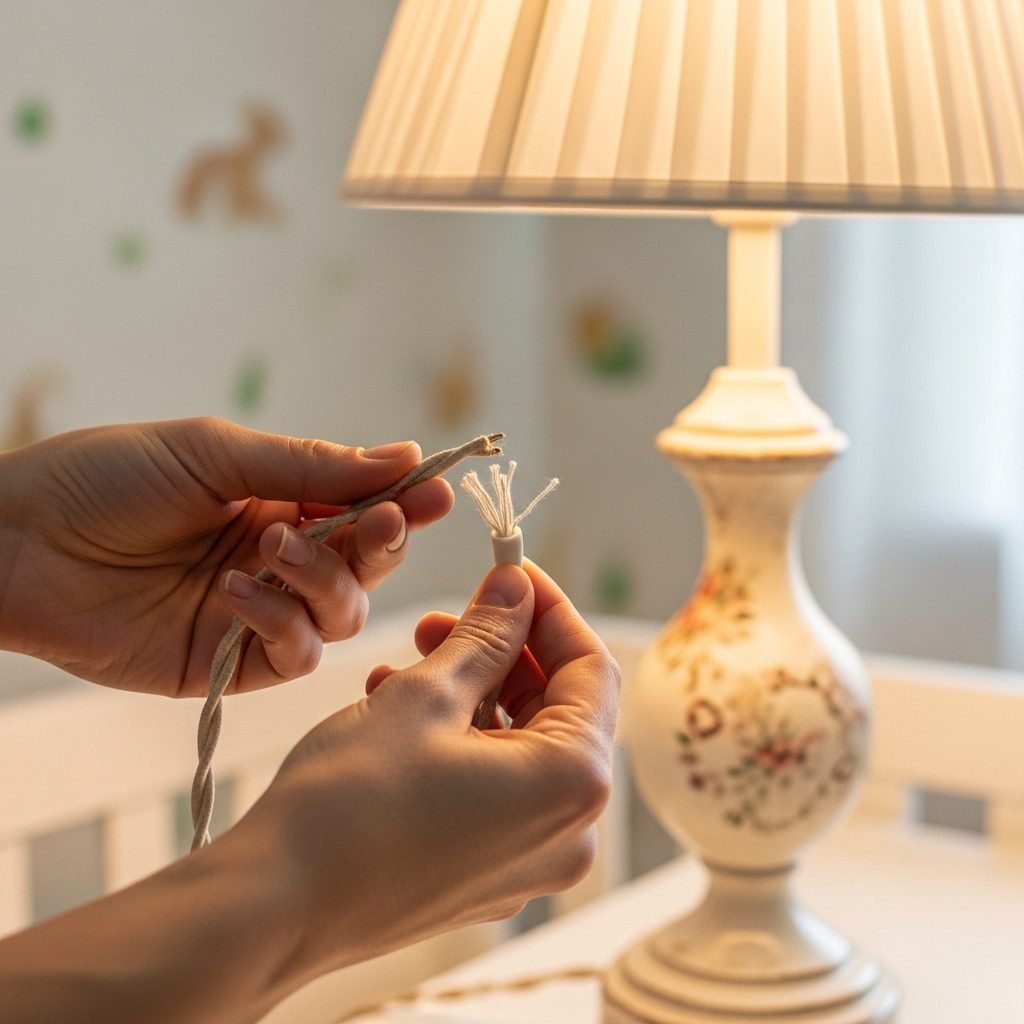
Finding a cute, vintage lamp at a thrift store or being gifted a used baby gadget can be a great way to save money. However, you need to be extra cautious with second-hand electronics. Safety standards change over time, and older items may have frayed cords, damaged plugs, or internal wiring issues that make them a fire risk. Before plugging anything in, give it a thorough inspection. Look for any signs of wear and tear on the cord, check if the plug is loose, and if you have any doubts at all, it’s safer to pass on it.
Your Nursery Electrical Safety Checklist
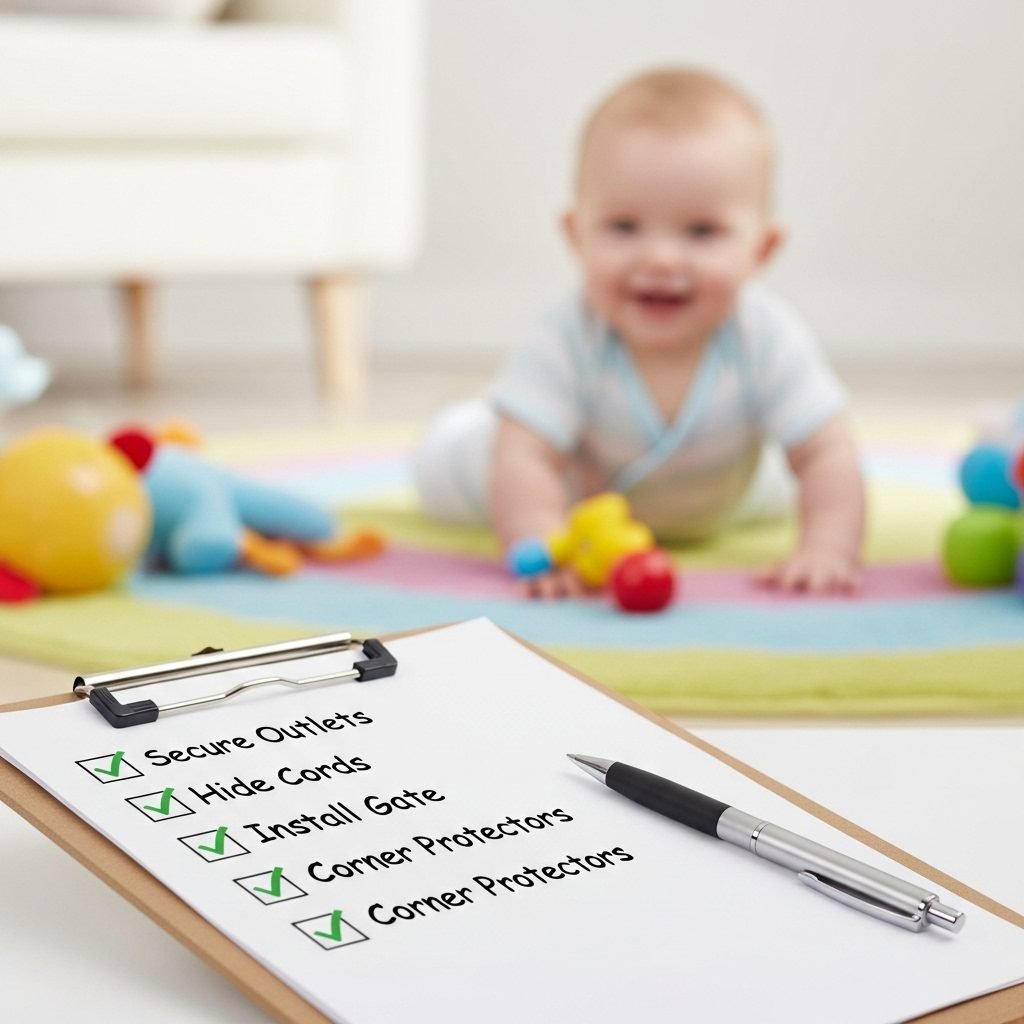
Your Nursery Electrical Safety Checklist
Feeling a bit overwhelmed? That’s completely normal! Let’s break it all down into a simple, scannable checklist. You can use this to do a final safety sweep of your nursery and gain that priceless peace of mind. Go through each item, and once you can check them all off, you can breathe easy knowing you’ve created an electrically-safe space for your baby.
| Safety Check Area | Action Item | Status (✅/❌) |
|---|---|---|
| Outlets | All unused outlets are secured with sliding covers or safety boxes (not easy-to-remove plugs). | |
| Outlets | Outlets near water sources (humidifier) are GFCI protected. | |
| Cords & Cables | All cords from monitors, lamps, and sound machines are at least 3 feet away from the crib. | |
| Cords & Cables | Cords are secured tightly to walls or furniture using concealers or clips. No dangling loops. | |
| Cords & Cables | No cords are running under rugs or heavy furniture. | |
| Power Strips | Power strips are used sparingly, have safety covers, and are not overloaded. | |
| Lighting | Lamps are on stable surfaces and cannot be pulled down by a curious toddler. Bulbs are the correct wattage for the fixture. | |
| Electronics | All electronics (especially second-hand) have been inspected for frayed wires or damaged plugs. | |
| Humidifiers | Humidifier is on a stable surface, far from outlets, and its cord is safely managed. | |
| General Safety | A working smoke detector is installed in or near the nursery. |
Conclusion
There you have it. You’ve looked beyond the paint colors and the cute decor to the very bones of the room, ensuring it’s a space where your little one can sleep, play, and grow in complete safety. Please don’t ever feel silly for being extra cautious—when it comes to your baby, there is no such thing. By taking these simple, proactive steps, you’ve given yourself and your baby an incredible gift: peace of mind. Now you can focus on what truly matters—soaking in all those newborn snuggles and cherishing every precious moment. You’re doing an amazing job!