Is Your Foam Play Mat Toxic? Safe Alternatives For Tummy Time
Welcome, new parents! If you’re reading this, you’re probably standing in your nursery, looking at that colorful puzzle play mat, and a little voice in your head is asking, ‘Is this actually safe?’ I want you to know that you are not alone. In my decades as a pediatric nurse and lactation consultant, this is one of the most common questions I hear. We fill our homes with things meant to enrich our babies’ lives, and it’s completely natural to want to ensure they are as safe as they are fun.
Those interlocking foam squares are everywhere, a seemingly perfect cushioned space for tummy time and future tumbles. But concerns about the chemicals they’re made from, like formamide, are valid. The world of baby products can be so overwhelming, filled with confusing labels and scary-sounding ingredients. My goal here is not to add to your anxiety, but to empower you. We’re going to calmly break down what the concerns are, what to look for in a truly safe mat, and explore some absolutely wonderful, worry-free alternatives. Let’s make tummy time a safe, happy, and healthy experience for your little one.
The Lowdown on Foam: What Are We Actually Talking About?

The Lowdown on Foam: What Are We Actually Talking About?
Let’s start by demystifying the material itself. Most of those ubiquitous, colorful puzzle mats are made from something called EVA (ethylene-vinyl acetate) foam. It’s lightweight, soft, and provides great cushioning, which is why it became so popular for kids’ flooring. However, the process to make it so soft and pliable often involves a chemical called formamide.
What is Formamide and Why Is It a Concern?
Formamide is an industrial chemical used as a solvent and a softening agent in the production of EVA foam. The problem is that it doesn’t always stay locked inside the foam. It can be released into the air—a process called ‘off-gassing’—or be absorbed through a baby’s skin during contact. The reason this raises red flags for pediatric health experts is that multiple international health organizations classify formamide as a ‘substance of very high concern’ due to its links to reproductive and developmental issues in animal studies. For a tiny, developing baby who spends a lot of time on the floor, breathing in whatever is in the air and putting everything in their mouth, minimizing this kind of chemical exposure is crucial.
A simple rule of thumb I share with parents: If you unwrap a new baby product and it has a very strong ‘chemical’ or ‘new plastic’ smell, that’s your cue. That smell is often the off-gassing of volatile organic compounds (VOCs). While airing it out can help, it’s even better to choose materials that don’t have that issue to begin with.
Other Potential Culprits to Watch For
While formamide is the primary concern with EVA foam, it’s not the only uninvited guest that can show up in low-quality play mats. Keep an eye out for these as well:
- Phthalates: These are plasticizers used to make plastics more flexible and durable. They are known endocrine disruptors, which means they can interfere with the body’s natural hormone systems.
- BPA (Bisphenol A): Another endocrine disruptor commonly found in plastics. While it has been removed from most baby bottles and sippy cups, it can still be present in other plastic toys and products.
- Heavy Metals (Lead, Cadmium): These can be found in the colorful dyes used on some mats and are potent neurotoxins.
- VOCs (Volatile Organic Compounds): This is a broad category of chemicals that easily evaporate into the air at room temperature. They contribute to poor indoor air quality and can cause respiratory irritation and other health issues.
Seeing this list can feel intimidating, I know. But the point isn’t to scare you—it’s to show you what to avoid so you can confidently choose something better. And the good news is, there are clear, easy-to-spot signs of a truly safe product.
Your Safe Play Mat Shopping Guide: A Checklist for Peace of Mind
Your Safe Play Mat Shopping Guide: A Checklist for Peace of Mind
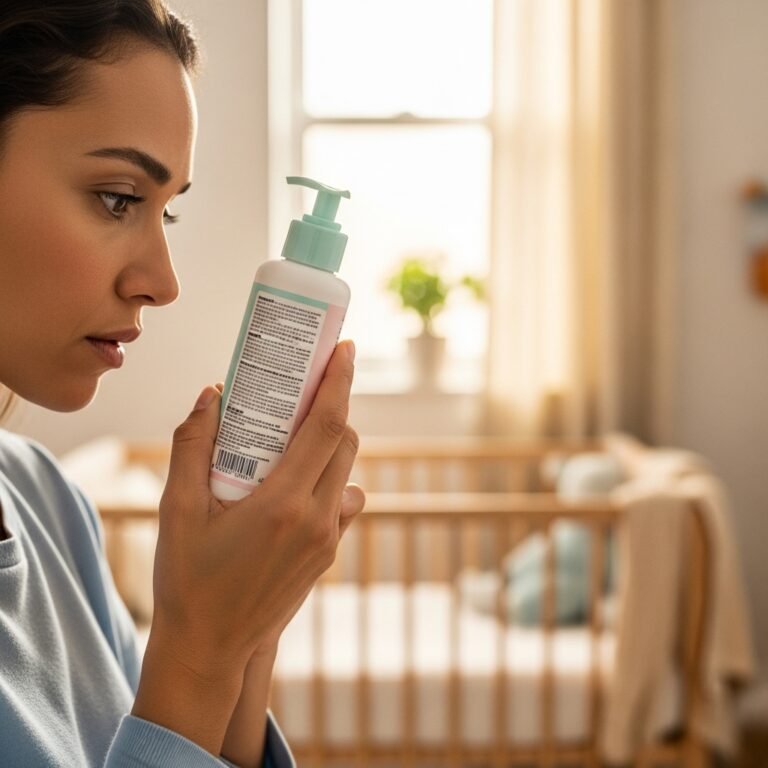
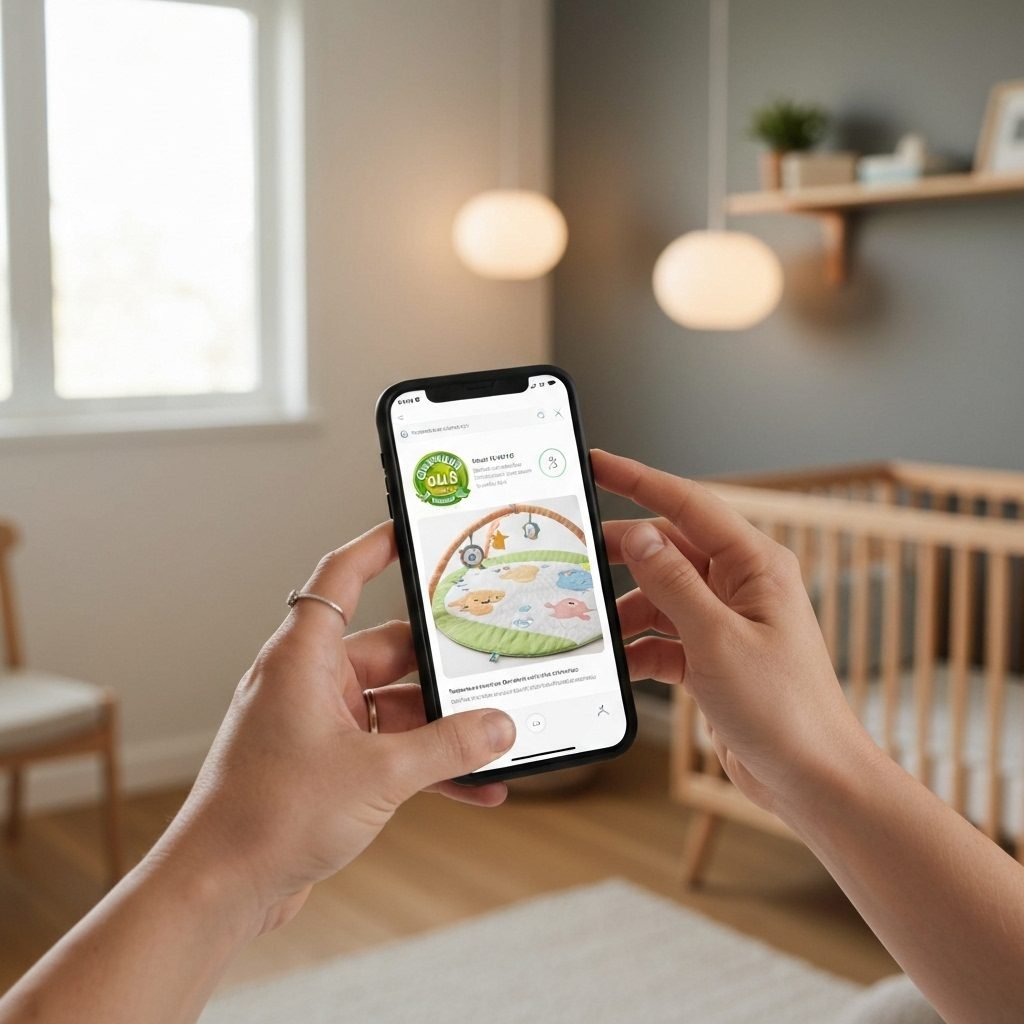
Navigating the baby product aisle can feel like a pop quiz you didn’t study for. But when it comes to play mats, you can become an expert label-reader. Here’s a simple checklist to keep in your back pocket (or on your phone) when you’re shopping. Your goal is to find brands that are transparent and proud of their safety standards.
Your Non-Toxic Checklist:
- Check the Material First: Look for mats made from materials like organic cotton, natural rubber, cork, or even a safer, certified type of foam called TPU (we’ll cover these in the next section!).
- Look for Explicit ‘Free-Of’ Claims: Reputable brands will proudly state that their products are ‘Formamide-Free,’ ‘BPA-Free,’ ‘Phthalate-Free,’ and ‘PVC-Free.’ If they don’t say it, you can’t assume it.
- Trust Your Nose: As we mentioned, a strong chemical smell is a major red flag. A safe, natural product should smell neutral or have a faint, earthy scent (like natural rubber or wool).
- Seek Out Third-Party Certifications: This is your best bet for peace of mind. Independent organizations test products to ensure they meet strict chemical emission and safety standards. They do the lab work so you don’t have to!
These certifications can look like a jumble of letters, but they are your best friends in finding safe products. Here’s a quick guide to the most important ones:
| Certification | What It Means for Your Baby’s Safety |
|---|---|
| Greenguard Gold | This is a fantastic one for any nursery item. It means the mat has been tested for over 10,000 chemicals and VOCs and meets the strictest standards for low emissions. It ensures the product won’t pollute your indoor air. |
| OEKO-TEX Standard 100 | Primarily for textiles, this certifies that every single component—from the thread to the fabric to any prints—has been tested for a long list of harmful substances and is safe for human health. It’s a great seal to find on cotton play mats. |
| GOTS (Global Organic Textile Standard) | This is the gold standard for organic textiles. It doesn’t just mean the cotton is organic; it means the entire production process, including dyes and processing aids, is free of harmful chemicals and is environmentally and socially responsible. |
By using this checklist, you shift from being a worried consumer to an empowered parent detective. You’ll quickly learn to spot the products that prioritize your baby’s health.
Wonderful & Worry-Free: Exploring Safe Play Mat Alternatives
Wonderful & Worry-Free: Exploring Safe Play Mat Alternatives
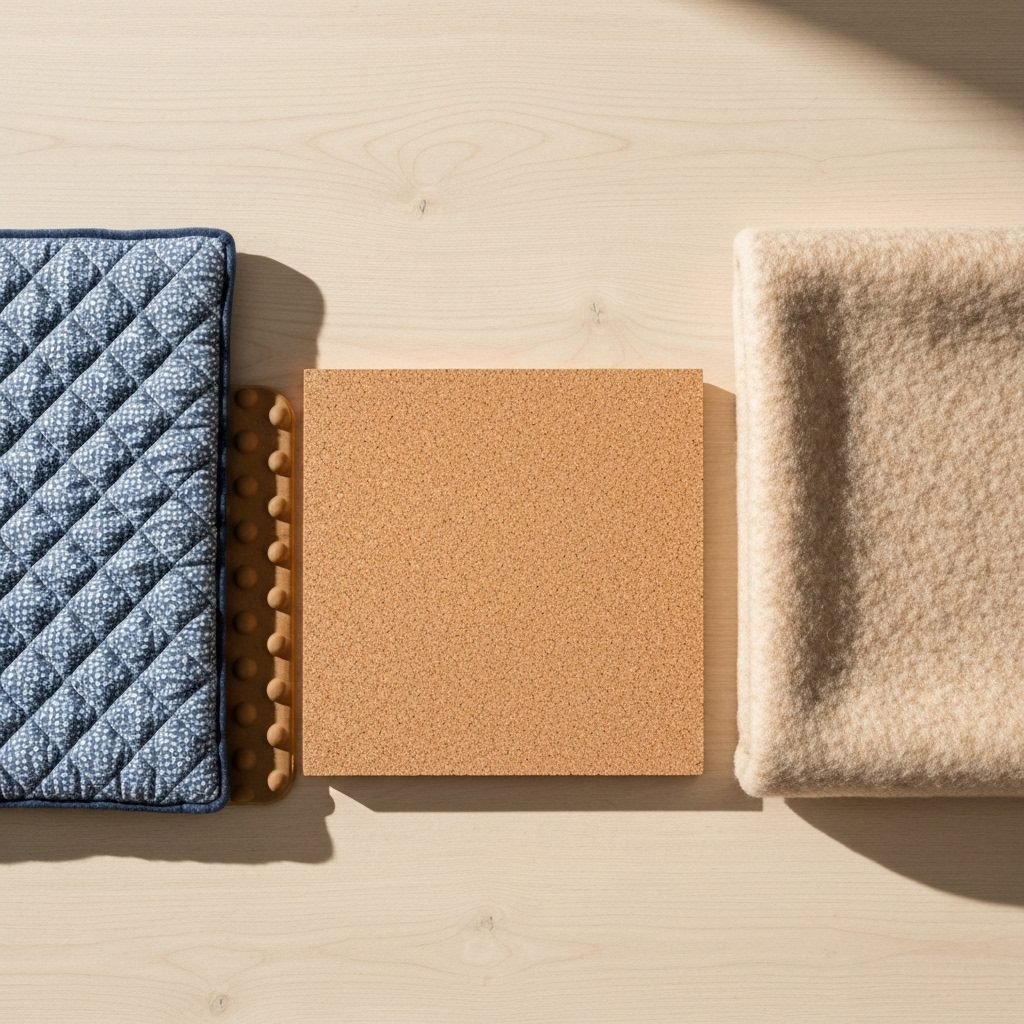
Now for the fun part! Let’s talk about all the amazing, safe, and beautiful alternatives to those questionable foam mats. There is a whole world of options out there that are not only non-toxic but also lovely additions to your home.
Organic Cotton Play Mats & Quilts
These are perhaps the most popular and accessible alternative. Think of a thick, soft quilt made just for floor time.
- Pros: Supremely soft and gentle on baby’s skin, breathable, and often machine washable (a huge win for parents!). When you choose one with a GOTS certification, you know it’s free from pesticides and harsh chemical dyes.
- Cons: They offer less padding than foam, so they’re best on carpeted floors. On hardwood or tile, look for one with a non-slip backing to prevent sliding.
Natural Rubber Play Mats
Made from the sap of rubber trees, this is a fantastic natural and renewable option. It’s similar to the material of a high-quality yoga mat.
- Pros: Provides excellent grip and good cushioning. It’s naturally non-slip, waterproof, and easy to wipe clean after spit-up or drool. Plus, it’s inherently resistant to mold and bacteria.
- Cons: Can have a distinct (but harmless) natural rubber smell when first opened, which fades over time. If there’s a history of latex allergies in your family, this might be one to skip, though reactions are rare.
Cork Play Mats
Cork is a surprising but brilliant material for a play space. It’s harvested from the bark of cork oak trees, making it a wonderfully sustainable choice.
- Pros: Cork is naturally antimicrobial and hypoallergenic. It’s lightweight yet provides a firm, supportive surface that’s great for helping babies push up during tummy time. It’s also easy to wipe clean.
- Cons: It provides firm support rather than plush cushioning, so it’s less ‘bouncy’ than foam. It can also come with a higher price tag.
Wool Rugs or Play Mats
A high-quality, natural wool rug can double as a perfect play area. Wool is a time-tested, incredible natural fiber.
- Pros: It’s naturally flame-resistant without any added chemicals. It’s also incredibly durable, soft, and helps regulate temperature, keeping your baby comfortable.
- Cons: Can be more difficult to clean than wipeable surfaces (spot cleaning is key). It’s also typically a higher-end investment.
A Safer Foam: TPU (Thermoplastic Polyurethane) Mats
If you love the cushion and easy-to-clean nature of foam, there is a safer alternative! Look for mats made from TPU foam. It’s a chemically stable, non-toxic foam that’s often used for medical equipment. It provides all the benefits of EVA foam without the formamide and other nasty chemicals.
- Pros: Offers excellent, thick cushioning. It’s durable, waterproof, and simple to clean. It’s the closest you’ll get to a traditional foam mat but without the health concerns.
- Cons: It is still a synthetic material, and these high-quality foam mats are significantly more expensive than their EVA counterparts.
Think Outside the Mat: Creative & Safe Tummy Time Ideas

Think Outside the Mat: Creative & Safe Tummy Time Ideas
I want to let you in on a little secret: you do not need to buy a special, dedicated play mat for tummy time. While they can be wonderful, the most important part of tummy time is a safe space and an engaged caregiver—you! Your baby just needs a clean, firm-but-soft surface to practice their new skills. Here are some simple, free, and effective ways to do tummy time anywhere.
The Best Tummy Time Spots Are Already in Your Home:
- On a Clean Blanket or Quilt: This is the classic. Grab a soft blanket (nothing too thick or puffy that they could bury their face in), spread it on the floor, and you’re ready to go. It’s simple, free, and easily washable.
- On Your Chest or Lap: Especially for newborns, this is the best place to start. Lie down on your back (propped up with pillows if you like) and place your baby on your chest. They will be motivated to lift their head to see your face! It’s a beautiful way to combine strengthening with bonding.
- Across a Nursing Pillow: A Boppy or other nursing pillow can provide a little boost. Place the pillow under your baby’s armpits and chest. This gentle incline can make tummy time a bit easier and more enjoyable for babies who are still building their strength.
- On a Soft, Clean Rug: If you already have a low-pile, natural fiber rug (like wool or cotton) in your living room or nursery, that’s a perfect tummy time surface! Just make sure it’s vacuumed regularly.
How to Create a Fun Tummy Time Zone:
No matter which surface you choose, you can make it an engaging experience with a few simple steps:
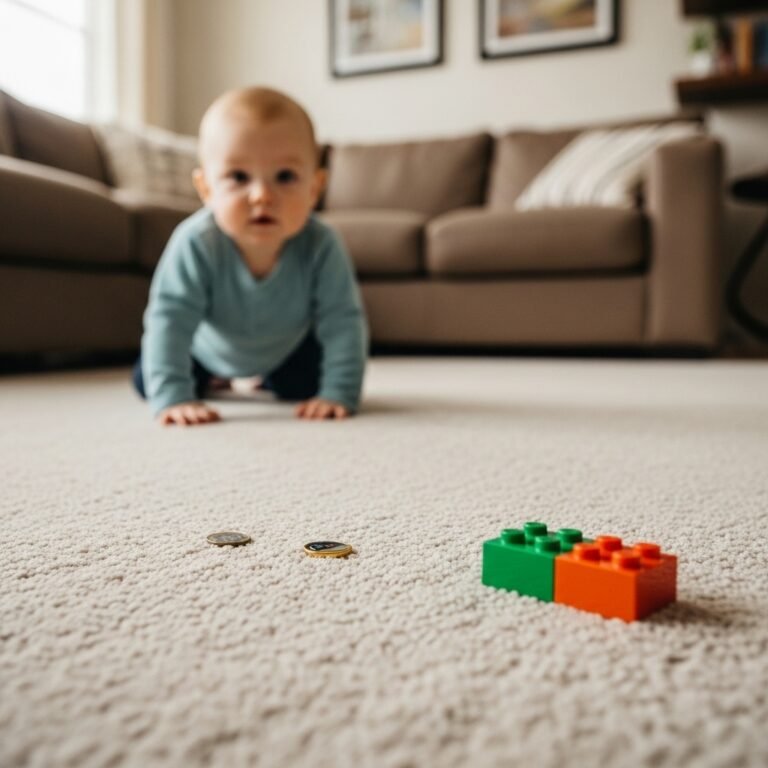
- Safety First: Clear the area of any small objects, loose cords, or other hazards. Always supervise your baby during tummy time.
- Lay Down Your Surface: Spread out your blanket or make sure your rug is clean.
- Get Down on Their Level: The biggest motivator for your baby is you! Lie on the floor with them so you can make eye contact. Talk to them, sing songs, and make silly faces.
- Provide Gentle Stimulation: Place an unbreakable mirror or some high-contrast black-and-white cards in front of them to capture their interest.
- Start Small: For a newborn, even 30 seconds to a minute at a time, several times a day, is a great start. You can gradually increase the duration as they get stronger and more comfortable, aiming for about 15-30 minutes total per day by the time they are a few months old.
Conclusion
Navigating the world of baby gear can feel like a minefield, but I hope you now feel confident and clear about creating a safe space for tummy time. We’ve seen that while common EVA foam mats can contain concerning chemicals like formamide, you are now equipped with the knowledge to spot them. By checking for certifications like Greenguard Gold, reading material lists, and choosing trusted alternatives like organic cotton, natural rubber, or TPU foam, you can easily bypass the questionable products.
Most importantly, remember that the goal of tummy time isn’t to have the most stylish or expensive mat. The goal is to help your baby build strength, develop motor skills, and connect with the world—and with you. A simple, clean blanket on the floor and your smiling face are the most powerful developmental tools there are.
You are doing an incredible job. Asking these questions and seeking out safe solutions shows how deeply you care. Trust that instinct, choose simple and natural when you can, and enjoy every precious moment of watching your little one grow and explore.