
Is Your Baby Monitor Hackable? Why Smart Moms Are Switching to Non-WiFi Models
Welcome, new parent! You’ve meticulously chosen the safest car seat, the coziest swaddles, and the perfect crib. Every decision is made with your little one’s well-being at the forefront. And right up there on the list of must-haves is a baby monitor, your electronic eyes and ears for those precious, and sometimes nerve-wracking, hours when you’re not in the room. In today’s high-tech world, it’s tempting to grab the ‘smartest’ monitor on the shelf—the one that streams HD video to your phone anywhere in the world. It sounds like a dream, right?
But as a pediatric nurse who has seen it all, I want to have a gentle, honest chat with you about a topic that isn’t on most baby registries: security. That amazing internet-connected camera, while convenient, can potentially open a door into your home that you never intended. The very device meant to give you peace of mind could become a source of anxiety. Don’t worry, this isn’t about fear-mongering. It’s about empowerment. We’re going to unpack the risks together and explore the simple, secure, and surprisingly effective alternative that savvy parents are turning to: the non-WiFi baby monitor. Let’s make sure your peace of mind is truly secure.
The ‘Smart’ Nursery: How WiFi Monitors Create a Hidden Backdoor
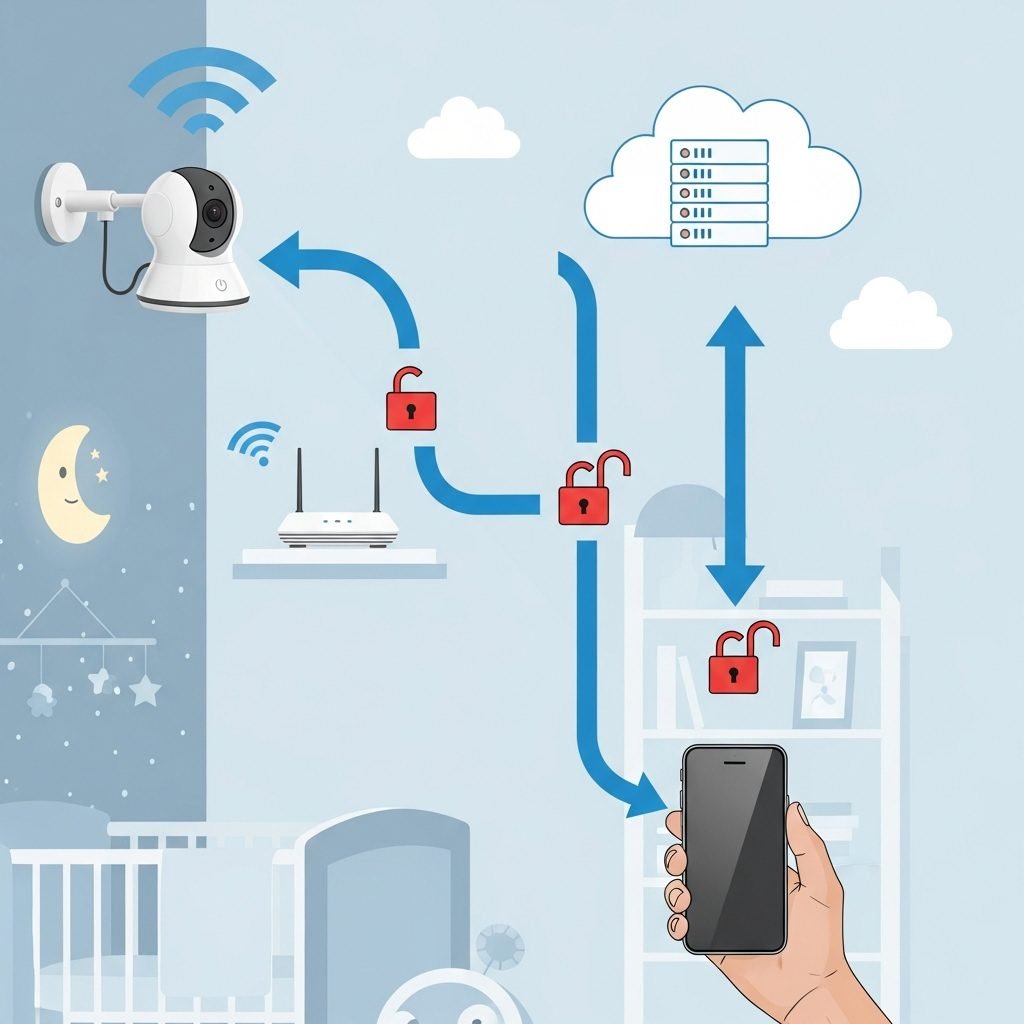
So, what makes a baby monitor ‘smart’? In short, it’s the Wi-Fi. Unlike older models, these devices connect to your home’s wireless network, just like your laptop or smart TV. This connection allows them to send the video and audio feed over the internet to a server, which then pushes it to an app on your smartphone. This is what lets you check in on your sleeping angel from the office or on date night. The convenience is undeniable!
However, every device connected to the internet is, by definition, a potential entry point for outsiders. The vulnerability isn’t usually with the monitor itself, but in the chain of connections it relies on:
- Weak Passwords: Many people use the default password that comes with the device or choose something simple and easy to guess (like ‘baby123’). This is the easiest door for a hacker to open.
- Your Home Router: If your home Wi-Fi network isn’t secure, anything connected to it is at risk. An unsecured router is like leaving the front door of your house unlocked.
- Cloud Servers: The video feed is often routed through the manufacturer’s servers (the ‘cloud’). If that company has a data breach, user accounts and even live video feeds could potentially be exposed.
- Unencrypted Data: Some less-reputable brands may not properly encrypt the video stream between the camera and your phone, meaning a technically skilled person on the same network (or who has broken into your network) could intercept it.
Think of it this way: you’re creating a digital pathway from your baby’s crib straight to the worldwide web. While many companies have good security, the risk is never zero. It only takes one weak link in that chain for your family’s privacy to be compromised.
More Than a Myth: Real-Life Privacy Scares

It’s easy to dismiss these warnings as something that only happens in movies. But unfortunately, stories of hacked baby monitors are all too real and deeply unsettling for the families involved. Across the country, parents have reported terrifying incidents. Imagine hearing a strange voice coming from the monitor’s speaker, talking to your child. Or realizing the camera has been remotely panned to look around the room. In some documented cases, hackers have used the two-way talk feature to shout obscenities or have simply watched and listened in on families’ most private moments.
A Gentle Warning: These events are incredibly traumatic. The goal isn’t to scare you, but to underscore that the threat is real. Your family’s privacy is sacred, and it’s worth protecting with the same diligence you use to protect their physical safety.
These hackers aren’t always sophisticated masterminds. Often, they are ‘trolls’ who find vulnerable devices using search engines designed to locate unsecured internet-connected cameras. They are looking for easy targets, and a camera with a default password is the lowest hanging fruit. The emotional toll of such a violation is immense and can shatter that sense of security you’ve worked so hard to build in your home. This is the primary reason why so many parents are taking a step back from internet-connectivity and re-evaluating what ‘peace of mind’ truly means.
The Un-Hackable Hero: How Non-WiFi Monitors Keep You Safe
So, what’s the alternative? It’s a technology that’s been around for years but is now seeing a major resurgence: the dedicated, non-WiFi baby monitor. These devices are also known as DECT or FHSS monitors.
Instead of using your home internet, these monitors operate on a closed, private frequency. Think of it like a pair of high-tech walkie-talkies. The camera unit (the transmitter) and the parent unit (the receiver) are paired together at the factory. They create their own secure, direct, and local connection. No internet, no apps, no cloud servers, no passwords to worry about.
How does it work?
Most modern non-WiFi monitors use something called Frequency-Hopping Spread Spectrum (FHSS). It sounds complicated, but the concept is brilliantly simple for security:
- The camera and parent unit are linked on a private channel.
- This channel is constantly and rapidly hopping between dozens of different frequencies, thousands of times per second.
- Because the signal is never in one place for more than a fraction of a second, it’s virtually impossible for someone to intercept or eavesdrop on the connection.
The bottom line is this: If it’s not connected to the internet, it cannot be hacked over the internet. It’s that simple. You trade the ability to check in from work for the absolute certainty that no one else is checking in with you. For many parents, that trade-off is more than worth it.
Head-to-Head: A Clear Comparison of WiFi vs. Non-WiFi Monitors
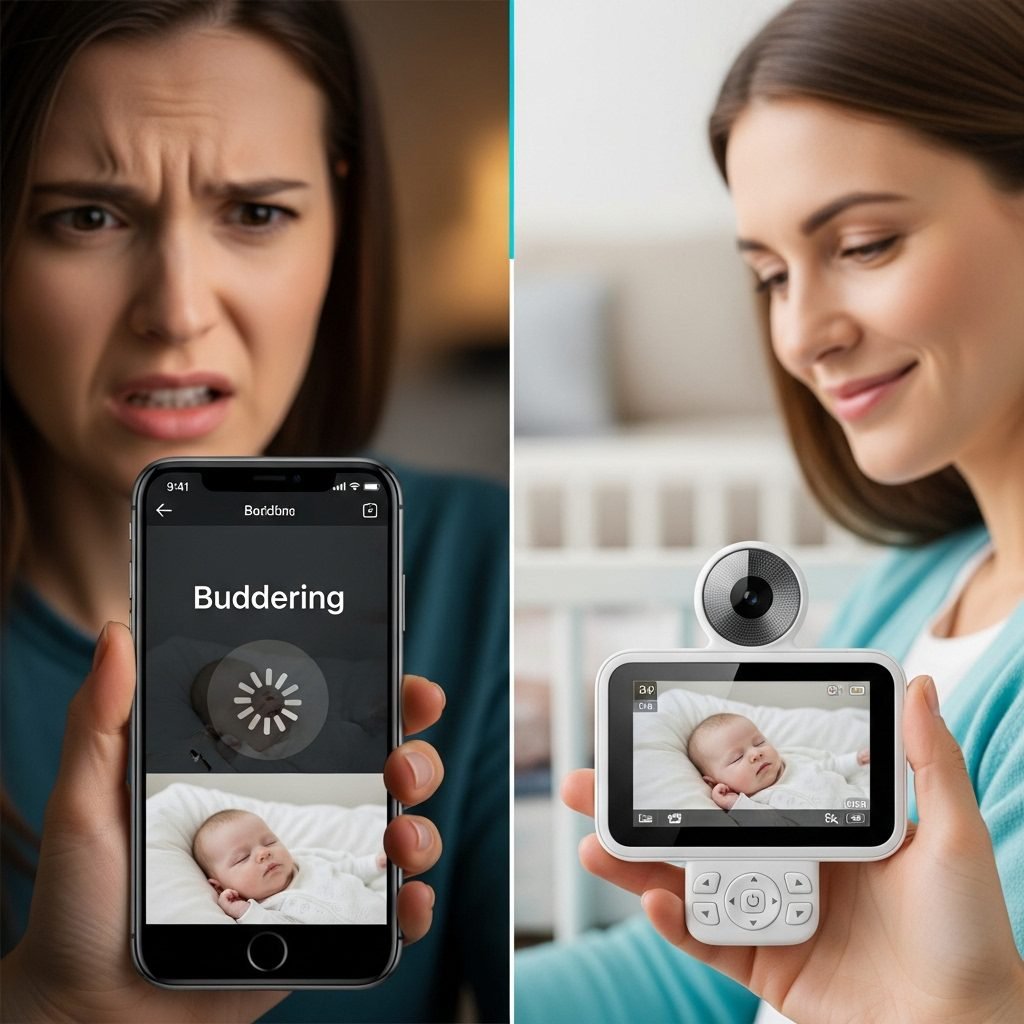
Choosing the right gear can feel overwhelming, so let’s break it down. There are pros and cons to each type of monitor, and the ‘best’ one really depends on your family’s specific needs and priorities. Here is a side-by-side look at the key features to help you decide.
| Feature | WiFi (Internet-Connected) Monitors | Non-WiFi (FHSS/DECT) Monitors |
|---|---|---|
| Security | Vulnerable to hacking through weak passwords, router insecurities, and cloud breaches. Requires user diligence to keep secure. | Extremely secure. Operates on a closed, private channel. Virtually impossible to hack remotely. |
| Remote Access | Major Pro: Can be viewed from anywhere in the world with an internet connection via a smartphone app. | Major Con: Can only be viewed within its specified range (typically 300-1000 feet) on the dedicated parent unit. |
| Reliability | Dependent on the strength and stability of your home Wi-Fi. Can lag, freeze, or disconnect if your internet goes down. | Very reliable. Not affected by internet outages. The dedicated connection is stable within its range. |
| Setup & Ease of Use | Can be more complex, requiring app downloads, account creation, and connecting to your Wi-Fi network. | Extremely simple. Typically plug-and-play. Just turn on the camera and the parent unit, and they connect automatically. |
| Features | Often includes more high-tech features like HD video, motion alerts to your phone, and cloud recording. | Features are catching up! Many now include high-quality video, two-way talk, temperature sensors, and pan/tilt/zoom functions. |
| Cost | Wide range of prices, but often includes models with subscription fees for cloud storage. | Generally a one-time purchase with no ongoing fees. Prices are very competitive with WiFi models. |
| Parent Unit | Your smartphone is the parent unit, which can drain its battery and means you might miss alerts if your phone is on silent. | Comes with a dedicated handheld parent unit, so it won’t drain your phone battery and always has alerts enabled. |
How to Choose the Right Monitor for Your Family
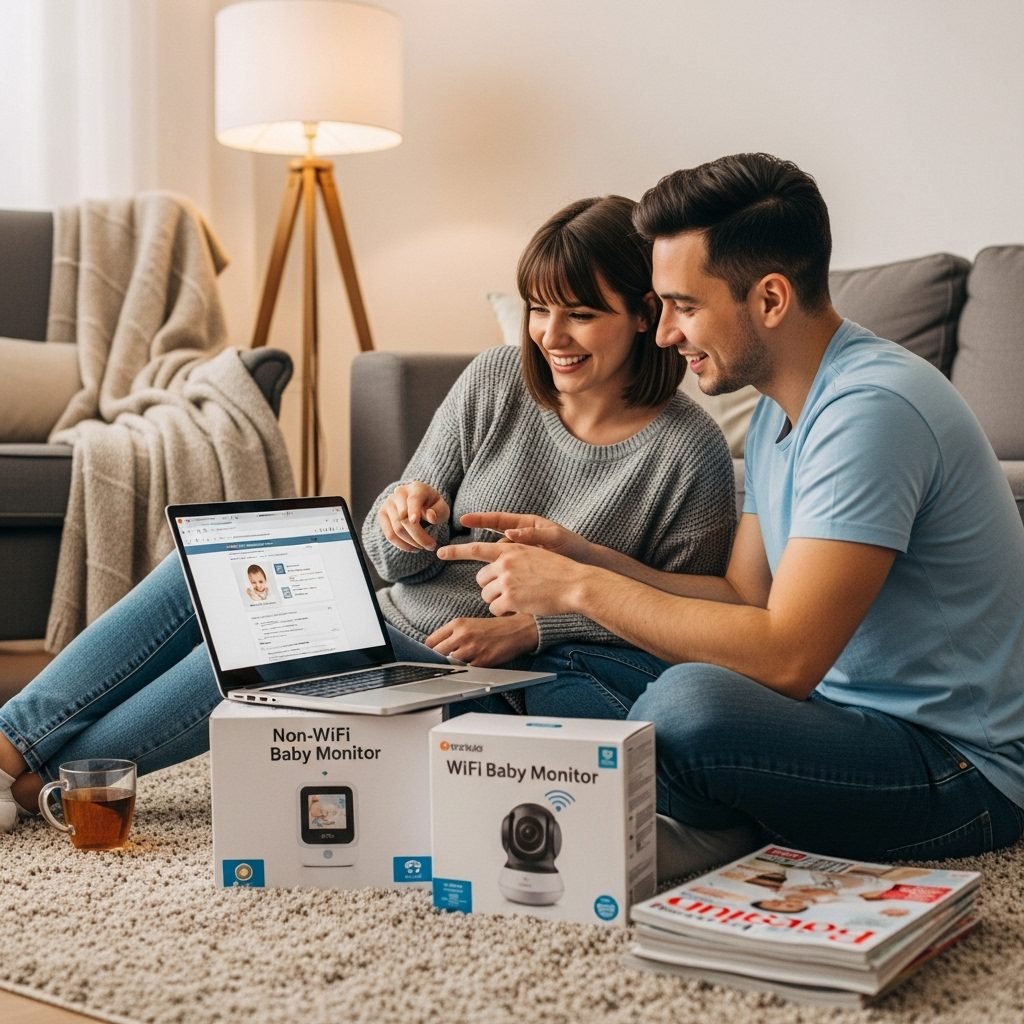
Okay, you’ve seen the facts. Now it’s time to make a decision that feels right for you. There’s no single ‘perfect’ monitor for everyone. To find your perfect fit, sit down with your partner and ask yourselves these key questions:
Questions to Guide Your Choice:
- What is our absolute top priority? Is it iron-clad security and privacy, or is it the flexibility to check in from anywhere? Be honest about what will truly help you sleep better at night.
- How much do we need remote access? Do you or your partner travel frequently for work? Do you have grandparents who live far away and want to peek in on the baby? If you absolutely need to view the feed from outside your home, a WiFi monitor might be necessary—but you’ll need to be extra diligent about securing it.
- How tech-savvy are we? Are you comfortable going into your router settings, creating 20-character passwords with symbols, and regularly checking for firmware updates? If that sounds like a headache, the plug-and-play simplicity of a non-WiFi model is a huge advantage.
- What’s our home like? Do you live in a small apartment or a large house with thick walls? Check the range on non-WiFi models to ensure it will cover your entire living space.
If You MUST Choose a WiFi Monitor…
If your lifestyle demands remote access, you can still take steps to make a WiFi monitor as safe as possible:
- Create a Strong, Unique Password: Use a password manager to generate a long, random password. Do NOT reuse passwords from other accounts.
- Enable Two-Factor Authentication (2FA): If the app offers it, turn it on! This means a hacker would need both your password and your phone to get in.
- Secure Your Home Router: Change the default administrator name and password on your router itself.
- Update Firmware: Regularly check for and install updates for both the camera and the app. These often contain critical security patches.
Ultimately, the choice is yours. The goal is to make it an informed one, where you’ve weighed the convenience against the potential risks and chosen the path that brings your family the most genuine peace of mind.
Conclusion
Navigating the world of baby gear can feel like a full-time job, but when it comes to your baby’s safety and your family’s privacy, you can’t be too careful. While the allure of checking on your little one from a restaurant across town is strong, it’s crucial to understand the security trade-offs that come with that convenience. A WiFi monitor connects your nursery to the internet, and with that comes an inherent risk, no matter how small.
For a growing number of parents, the ultimate peace of mind comes from a closed system. A non-WiFi monitor offers a secure, private, and reliable connection that simply cannot be hacked from the outside world. It’s a simple solution in a complicated digital age. By choosing a monitor based on security first, you are giving yourself the incredible gift of worry-free watching. You can rest easy knowing that the only one peeking at your sleeping baby is you. And as a new parent, that kind of deep, uncomplicated peace of mind is absolutely priceless.