

Is Your Baby Choking? 5 Signs You Have A Fast Letdown
That sudden sputtering, gagging, and coughing sound coming from your sweet, tiny baby while they’re latched to your breast is enough to make any new parent’s blood run cold. Your mind immediately jumps to the worst-case scenario: ‘Is my baby choking?!’ Please, take a deep breath with me. As a pediatric nurse and lactation consultant, I’ve sat with countless parents who have felt this exact same fear. The good news is that in most cases, this isn’t true choking. It’s often the sign of a very common, and very manageable, breastfeeding challenge: a forceful or fast letdown reflex.
A ‘letdown’ is when the hormone oxytocin signals your breasts to release milk for your baby. Sometimes, especially in the early weeks, this reflex can be a bit overzealous, sending milk out with the force of a firehose instead of a gentle stream. Your baby, trying their best to keep up, simply can’t swallow that fast. This article is your reassuring guide. We’ll walk through the five telltale signs of a fast letdown, understand why it happens, and most importantly, explore gentle, effective techniques to turn feeding time from frantic back to peaceful for both of you.
The 5 Telltale Signs of a Fast Letdown

It can be tricky to figure out what your baby is trying to tell you. When it comes to a fast letdown, they have some pretty clear signals. If you’re nodding along to several of these, you’re likely in the right place.
- Gagging, Sputtering, or Coughing at the Breast: This is the most dramatic and scary sign. Your baby latches on, starts to suckle, and then suddenly they’re overwhelmed. They’ll cough and sputter as they try to manage the rapid flow of milk. It looks like they’re choking, but they’re actually protecting their airway by coughing the excess milk forward.
- Pulling Off the Breast and Crying: Does your baby latch eagerly, only to pull away, arch their back, and cry a few minutes into the feed? This isn’t necessarily a sign of rejection. Often, they’re frustrated. They want the milk, but the flow is too intense. They pull off to catch their breath and might seem upset or agitated before trying to latch on again.
- Audible Clicking or Gulping Sounds: Listen closely while your baby nurses. A rhythmic suck-swallow pattern is normal. However, with a fast letdown, you might hear frantic, loud gulping as they struggle to keep up. You may also hear a ‘clicking’ sound. This happens when your baby breaks their suction momentarily to stop the flow, trying to gain control over the gush of milk.
- Excessive Gassiness, Spit-Up, and Green Stools: When a baby swallows milk too quickly, they also tend to swallow a lot of air. This can lead to significant discomfort, gassiness, and frequent, sometimes forceful, spit-up after feeds. You might also notice their stools are frothy or green. This can happen because they are getting a lot of the watery, sugary ‘foremilk’ that comes first and not enough of the richer, fattier ‘hindmilk’. This imbalance can irritate their delicate digestive system.
- Milk Spraying When Baby Detaches: If your baby unlatches mid-letdown, do you see milk spray, sometimes several feet? Or do you find yourself soaking through breast pads in record time? This is a very clear sign that your body is producing a large volume of milk that is being released with considerable force.
Recognizing these signs is the first step. It’s not about blame; it’s about understanding. Your body is doing an amazing job of making milk for your baby—sometimes, it’s just a little too good at it!
Why Is This Happening? Understanding Oversupply and Forceful Letdown

So, why does this happen? It’s rarely something you’ve done ‘wrong.’ It’s all about physiology and supply-and-demand. In the first 6-8 weeks postpartum, your body is in ‘establishment mode.’ It’s working hard to figure out exactly how much milk your baby needs. During this time, it’s common for your body to err on the side of abundance, leading to what we call oversupply.
More milk volume often means more pressure built up in the breasts. When your letdown reflex is triggered by your baby suckling (or even just by thinking about them!), that pressure is released. If you have an oversupply, the release can be incredibly forceful. Think of it like a dam: a little bit of water flows gently, but a massive amount of water behind the dam will rush out with great power when the gates open.
This is often a temporary phase. As your baby grows and your body gets more attuned to their specific needs, your supply will regulate. For some, however, oversupply and a fast letdown can persist. The key is to know that it’s a physiological response, not a personal failing. Your body is just trying to ensure your baby has more than enough to thrive.
Your Toolkit: 6 Gentle Techniques to Manage a Fast Letdown

Feeling empowered with knowledge is great, but you need practical tools. The goal here is not to diminish your milk supply drastically, but to manage the flow so your baby can eat comfortably. Here are some of the most effective techniques I recommend to parents every day.
- Catch the First Wave: Before latching your baby, try hand-expressing or pumping for just a minute or two. You don’t need to empty the breast; you just want to catch that initial, most forceful spray in a towel or bottle. Once the flow slows to a drip, latch your baby on for a much calmer start to their meal.
- Use Gravity to Your Advantage (Laid-Back Breastfeeding): This is a game-changer! Instead of sitting upright, lean back comfortably on a couch or bed with plenty of pillows for support. Place your baby on your chest, tummy-to-tummy, and let them find the breast. In this reclined position, your milk has to flow ‘uphill’ against gravity, which naturally slows it down. This also gives your baby more control over the latch and pace of the feed.
- Try a Side-Lying Position: Nursing while lying on your side is another great way to use gravity. In this position, any excess milk can simply dribble out of the side of your baby’s mouth, rather than forcing them to swallow it all. It’s also a wonderful way for you to get some much-needed rest during a feed!
- Take ‘Burp Breaks’: If you notice your baby starting to gulp frantically, don’t be afraid to gently unlatch them, sit them up, and give them a good burp. This little pause allows them to catch their breath, release any swallowed air, and gives your letdown a moment to calm down before you re-latch.
- Consider ‘Block Feeding’: If oversupply seems to be the root cause, block feeding can help regulate it. This involves feeding your baby from only one breast for a set ‘block’ of time (e.g., 3-4 hours), then switching to the other breast for the next block. This keeps one breast fuller for longer, which sends a signal to your body to slow down production on that side. Important: It’s best to try this technique under the guidance of a lactation consultant to ensure it doesn’t negatively impact your supply or your baby’s weight gain.
- The ‘Scissor’ or ‘Nipple Press’ Technique: As your baby is nursing, you can use your fingers to gently press on the areola above your baby’s top lip. Picture making a ‘V’ or ‘C’ shape with your fingers. This slight compression on the milk ducts can help manually slow the flow of milk during a strong letdown.
Fast Letdown vs. True Choking: Knowing the Critical Difference
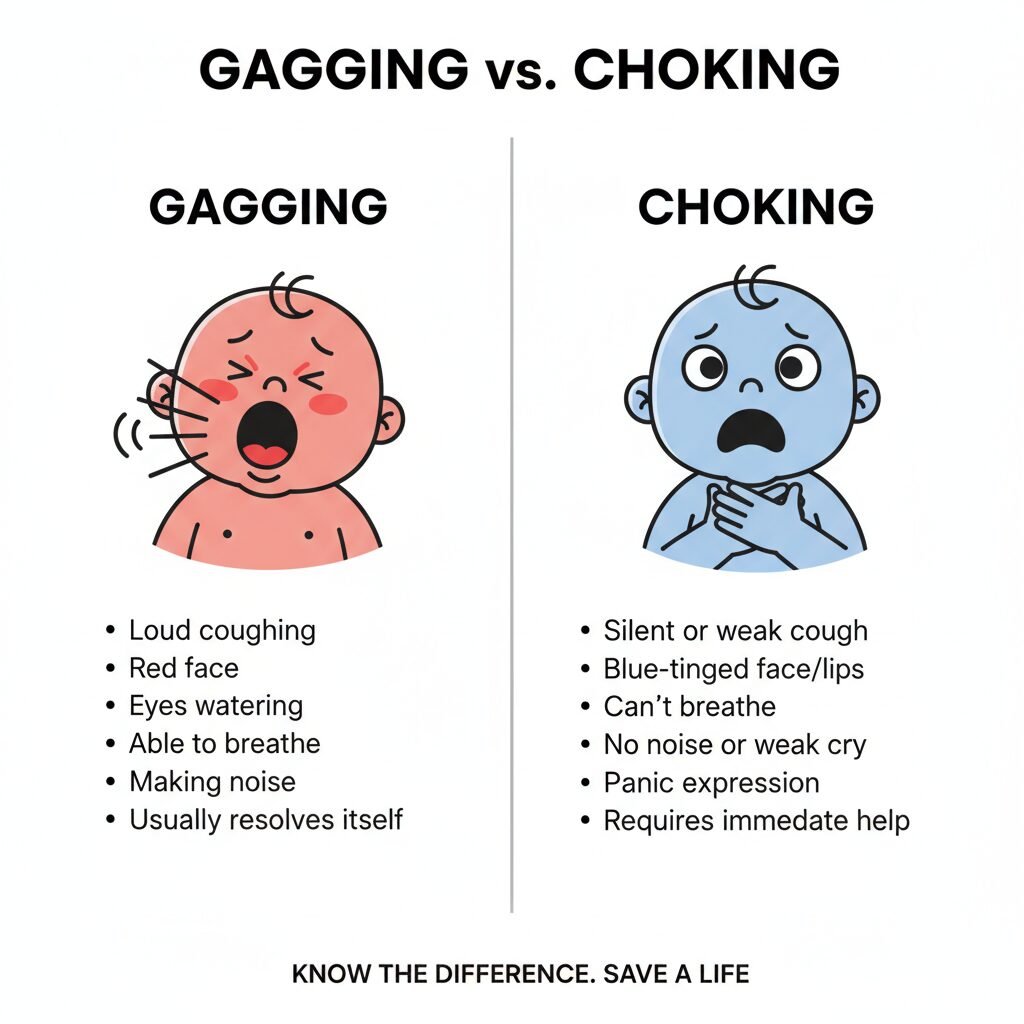
This is the most important takeaway for your peace of mind. The gagging and sputtering from a fast letdown looks and sounds alarming, but your baby is actively managing the situation. True choking is different, and it’s often silent.
A gagging baby is a loud baby. A choking baby is a silent baby. If your baby is coughing, sputtering, or making noise, they are breathing. Their gag reflex is working perfectly to protect their airway.
Here’s a clear breakdown of the differences:
| Sign | Gagging (Due to Fast Letdown) | True Choking (Airway is Blocked) |
|---|---|---|
| Sound | Loud coughing, sputtering, gagging noises. Baby may cry. | Silent. Inability to cry or make any sound. Maybe a faint wheeze. |
| Breathing | Air is still moving. Baby is taking gasps of air between coughs. | Cannot breathe. You may see their chest and stomach struggling to pull in air with no success. |
| Skin Color | Color remains normal, may get a little red in the face from coughing. | Skin may begin to turn blue, especially around the lips and face (cyanosis). |
| Action | Baby can actively pull off the breast, turn their head, and push away. | A look of panic or terror. Body may be limp or rigid. Unable to move air. |
Safety First: If you ever suspect your baby is truly choking (silent, unable to breathe, turning blue), this is a medical emergency. Shout for someone to call 911 immediately while you administer infant back blows and chest thrusts. It is highly recommended for all new parents to take an infant CPR and first aid class.
When to Call for Backup: Seeking Professional Support

While you can manage most cases of fast letdown at home, there are times when you need to call in a professional for support. You are not meant to do this alone! Please reach out to an International Board Certified Lactation Consultant (IBCLC) or your pediatrician if you experience any of the following:
- Poor Weight Gain: If your baby is struggling to eat effectively due to the fast flow, it may impact their weight gain. A professional can help ensure your baby is getting what they need.
- Consistent Breast Refusal: If your baby becomes so frustrated that they begin to refuse the breast altogether, it’s time to get help to avoid a ‘nursing strike.’
- Pain or Nipple Damage for You: Sometimes a baby will clamp down or bite on the nipple to try and slow the flow, which can cause significant pain and damage for you.
- Recurrent Clogged Ducts or Mastitis: A significant oversupply that isn’t managed well can put you at a higher risk for painful clogged ducts and breast infections like mastitis.
- You’re Feeling Overwhelmed: If breastfeeding is causing you significant stress, anxiety, or dread, that is reason enough to seek support. Your mental health is paramount.
An IBCLC is a feeding expert who can provide a personalized plan, assess your baby’s latch, and give you the hands-on support and confidence you need to navigate this challenge.
Conclusion
Navigating the challenges of breastfeeding can feel like a rollercoaster, and a fast letdown is one of the bigger bumps in the road. Remember, what you’re experiencing is common, and it’s a testament to your body’s incredible ability to produce nourishment for your baby. By recognizing the signs and implementing a few gentle techniques, you can work with your body to make feeding a more peaceful and enjoyable experience.
Most importantly, be kind to yourself. You and your baby are a team, learning a new dance together. There will be missteps and moments of frustration, but there will also be beautiful moments of connection. Trust your instincts, don’t hesitate to ask for help, and know that you are doing an amazing job. You’ve got this, mama.