
Is It Yeast or Just Diaper Rash? How to Tell the Difference and Treat It
Hey there, new parent. Take a deep breath. Seeing that angry red rash in your baby’s diaper area for the first time can be really startling. Your mind starts racing with questions: What is this? Did I do something wrong? Is my baby in pain? First things first, let me reassure you: you are doing a great job, and diaper rash is incredibly common. It’s practically a rite of passage for babies and their parents.
But sometimes, what looks like a standard diaper rash is actually its more stubborn cousin—a yeast rash. They look similar at first glance, but they have different causes and require slightly different treatments. As a pediatric nurse, I’ve seen thousands of little baby bottoms, and I’m here to be your calm, clear guide. We’ll walk through this together, step-by-step. In this article, we’ll break down exactly how to play detective, tell the difference between the two, and get your baby’s sensitive skin back to being soft, smooth, and happy.
The Usual Suspect: Understanding ‘Regular’ Diaper Rash
First, Let’s Talk About a ‘Regular’ Diaper Rash (Irritant Dermatitis)
This is the type of rash most people think of when they hear ‘diaper rash’. Its official name is irritant contact dermatitis, which sounds scary, but it just means the skin has become irritated from touching something. It’s the most frequent visitor in your baby’s diaper.
What Causes It?
Think of it as a perfect storm of factors happening inside that tiny diaper:
- Moisture: Prolonged wetness from urine breaks down the skin’s natural protective barrier, making it more vulnerable.
- Friction: The constant rubbing of a diaper, even the softest ones, against delicate baby skin can cause chafing and irritation.
- Irritants: The enzymes in stool and the ammonia in urine are powerful irritants. When they sit against the skin for too long, they can cause redness and inflammation.
- New Products: Sometimes a new brand of diapers, wipes, or even a laundry detergent used on cloth diapers can be the culprit.
What Does It Look Like?
A regular diaper rash typically has a few key characteristics:
- Appearance: It often looks like flat, pink or red patches of skin, almost like a mild sunburn. The skin might be slightly puffy or warm to the touch.
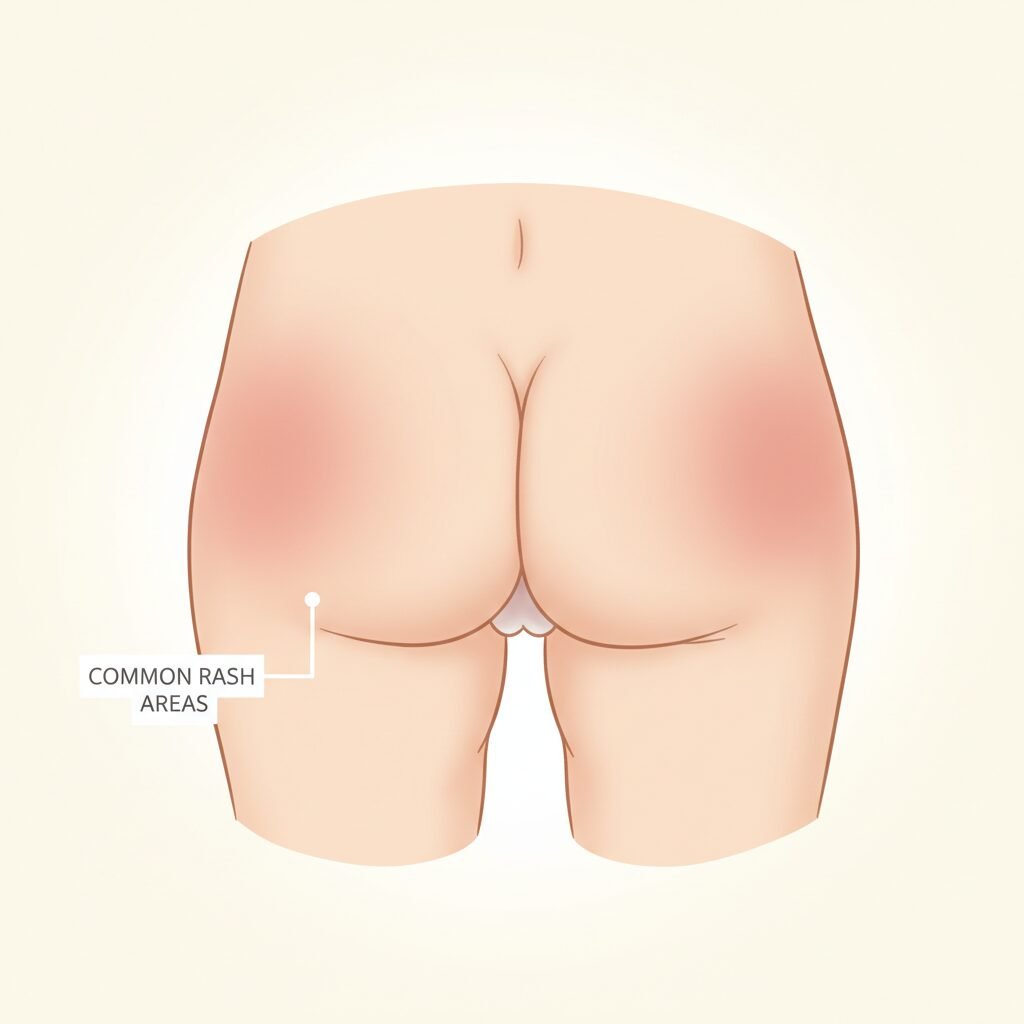
- Location: This is a big clue! It usually appears on the surfaces that are in most direct contact with the diaper—the roundest parts of the buttocks, the lower abdomen, the genitals, and the upper thighs.
- It Spares the Folds: Critically, a simple irritant rash usually doesn’t get into the deep creases and folds of the skin around the groin and legs. Those areas are less exposed to the diaper’s direct friction and pooling wetness.
In most cases, this type of rash is mild and will respond well to simple at-home care within a couple of days.
The Sneaky Imposter: Spotting a Diaper Yeast Rash
When It’s More Than Just Irritation: Spotting a Yeast Diaper Rash
If you’ve been diligently treating a diaper rash and it’s just not getting better—or it’s getting worse—you might be dealing with a yeast rash. This is an infection caused by a type of yeast (a fungus) called Candida albicans. Don’t be alarmed by the word ‘infection’; Candida naturally lives on our skin in small amounts. The problem starts when it gets the chance to overgrow.
What Causes It?
The warm, dark, and moist environment of a diaper is a five-star resort for yeast. It thrives there! A yeast rash often develops as a secondary infection, setting up shop in skin that’s already been damaged by a regular diaper rash. Other common triggers include:
- Antibiotic Use: If your baby (or a breastfeeding mother) is on antibiotics, the medicine can kill off the ‘good’ bacteria that normally keep yeast in check, allowing it to flourish.
- Thrush: If your baby has oral thrush (white patches inside the mouth), the yeast can pass through their digestive system and cause a rash on the other end.
What Does It Look Like?
A yeast rash has a few very distinct calling cards that set it apart from a regular rash:
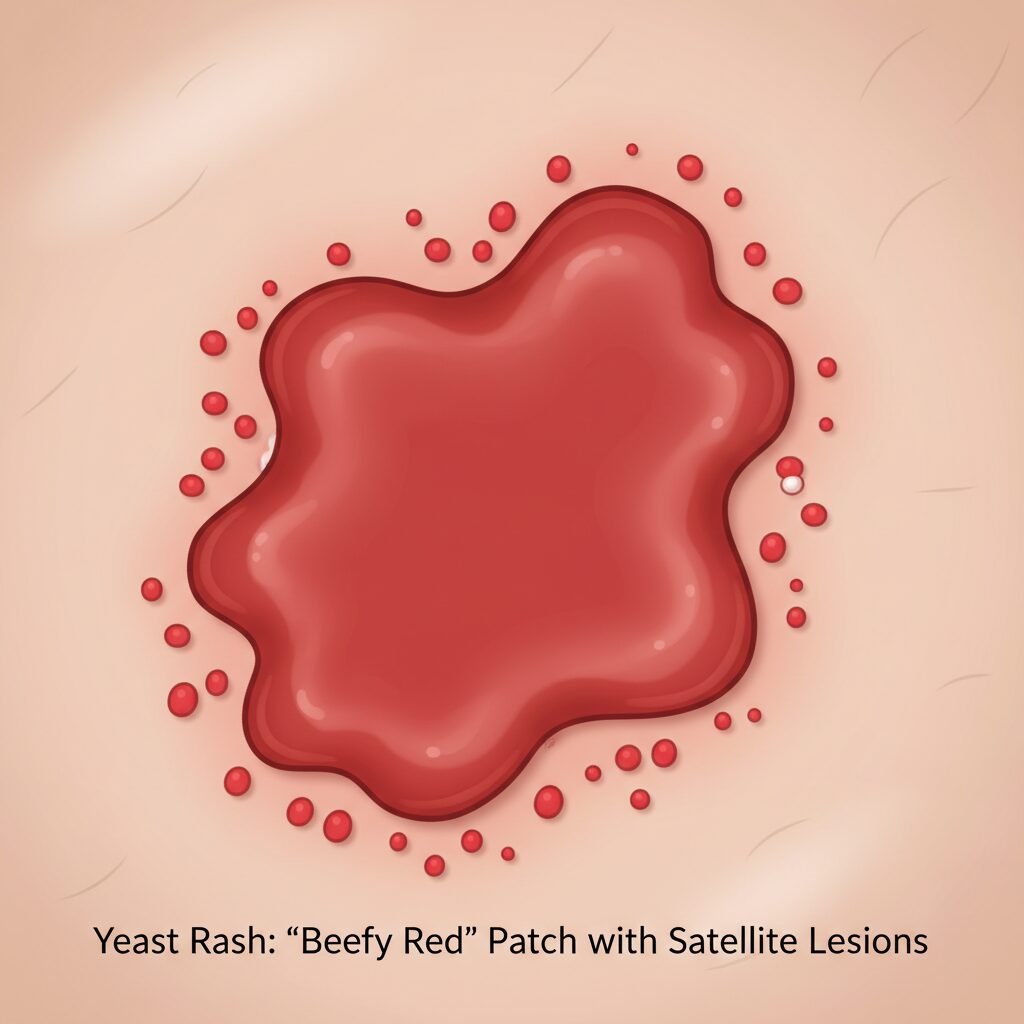
- Appearance: The main rash is typically a very intense, angry, ‘beefy’ red. It might have a slightly raised, scaly border.
- Location, Location, Location: Unlike an irritant rash, yeast loves skin folds. You’ll find it deep within the creases of the groin, around the genitals, and between the buttocks and thighs.
- The Telltale Satellites: This is the number one clue! A yeast rash is famous for its ‘satellite lesions’. These are small red bumps, pustules, or pimple-like spots that appear outside the main area of the rash, like little islands spreading outwards.
A Gentle Reminder: A yeast rash is not a sign of poor hygiene. It can happen to any baby, even with the most attentive care. It’s simply an opportunistic little fungus that took advantage of the perfect conditions.
Yeast vs. Regular Rash: Your At-a-Glance Cheat Sheet
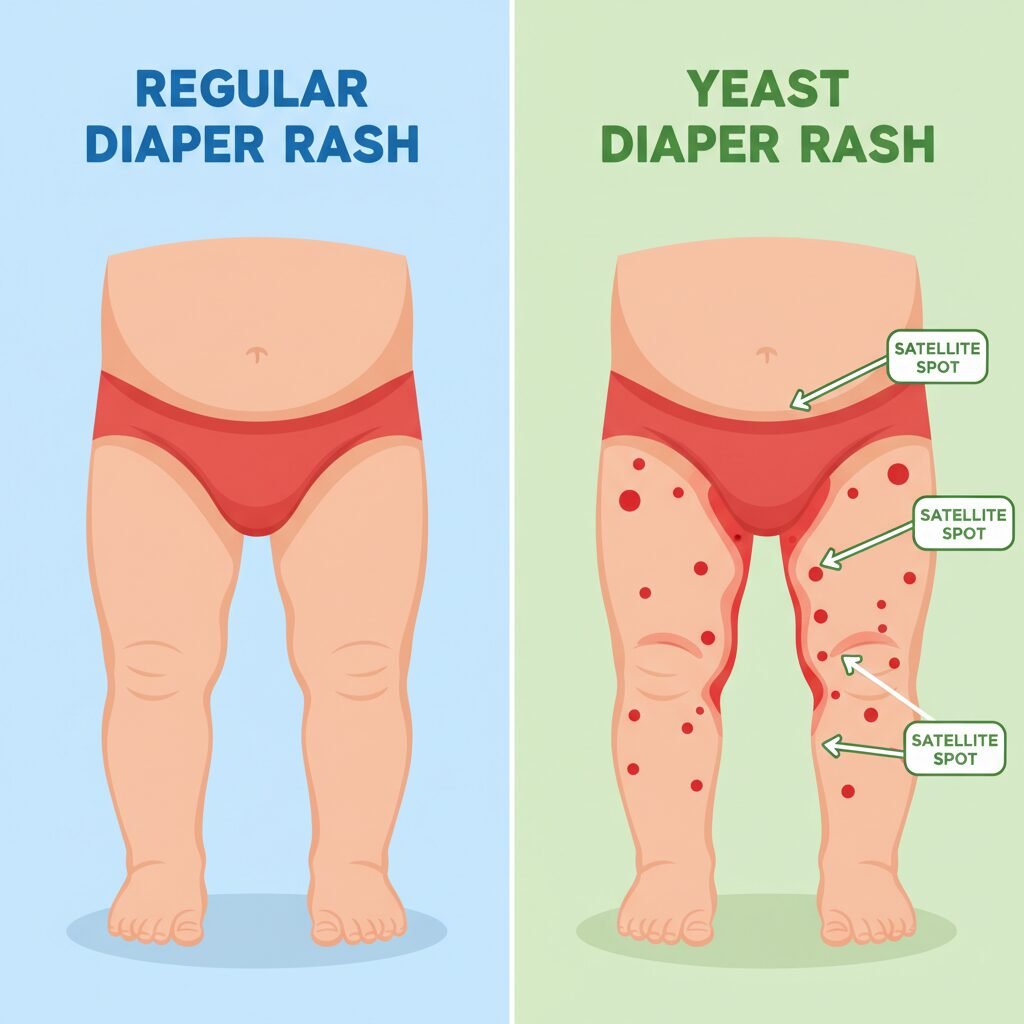
Yeast vs. Regular Rash: Your At-a-Glance Cheat Sheet
Okay, that was a lot of information! Let’s boil it all down into a simple, side-by-side comparison. When you’re in the middle of a 3 a.m. diaper change, this is the quick reference you need.
| Feature | Regular Diaper Rash (Irritant) | Yeast Diaper Rash (Candida) |
|---|---|---|
| Color & Intensity | Mild to moderate pink or red. Looks like a sunburn. | Intense, deep, ‘beefy’ red. Often looks very angry. |
| Texture | Flat patches of red skin. May be slightly puffy or warm. | Main rash may have a raised or scaly border. Look for small, pimple-like bumps. |
| Location | On surfaces touching the diaper: buttocks, lower tummy, thighs. It usually spares the skin folds. | Deep within the skin folds and creases of the groin and legs. |
| Satellite Spots? | No. The rash is typically one continuous patch. | Yes! This is the key sign. Look for small red spots or bumps spreading out from the main rash. |
| Response to Barrier Cream | Usually improves within 1-2 days with consistent use of zinc oxide cream. | Does not improve, or gets worse, with standard diaper cream alone. |
Using this table can help you feel more confident in your assessment. Remember, you know your baby best. If you’re ever unsure, a quick call to your pediatrician’s office is always a good idea.
Your Gentle Treatment Toolkit: Soothing That Sore Bottom
Your Gentle Treatment Toolkit: Soothing That Sore Bottom
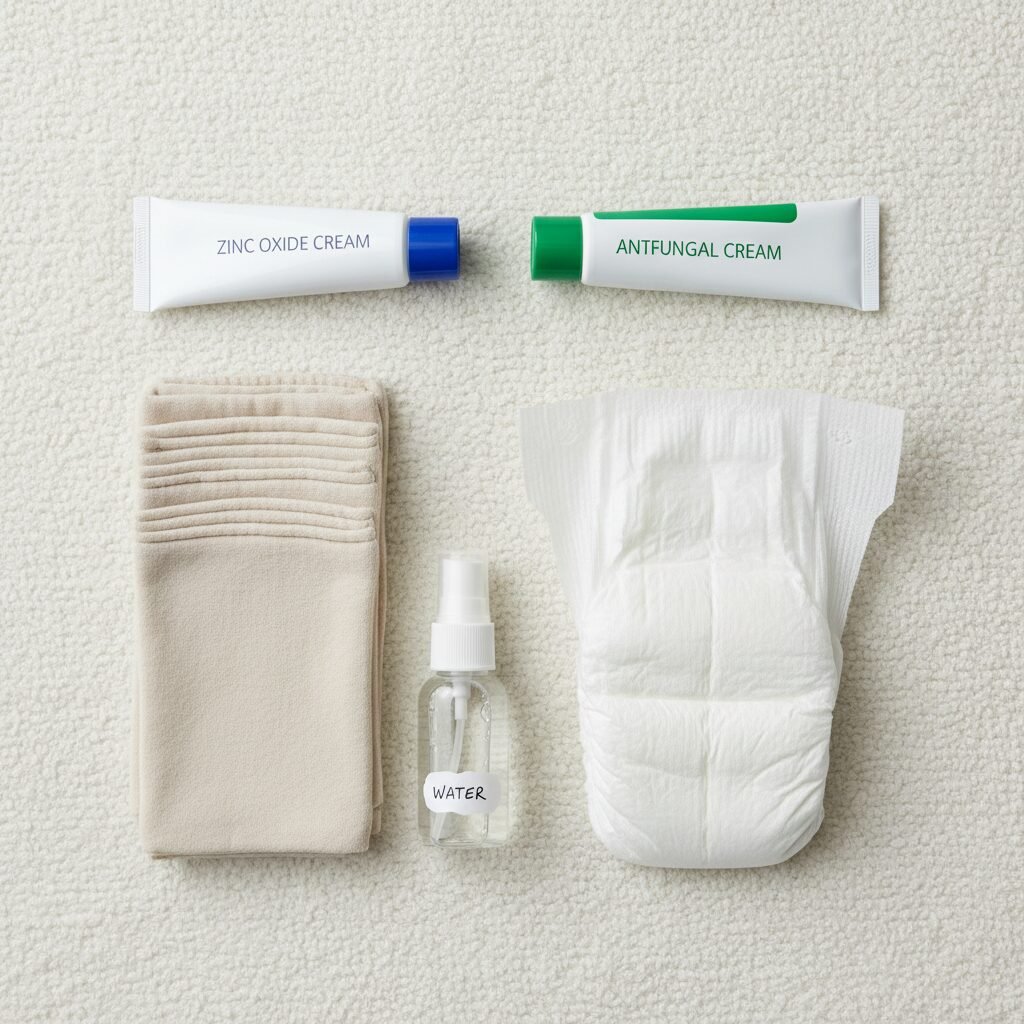
Once you have a better idea of what you’re dealing with, you can start a gentle action plan to help your little one’s skin heal. The foundation of treating any diaper rash is to create a clean, dry, and protected environment.
For a Regular Diaper Rash: The A-B-C-D-Es of Care
This simple acronym is your best friend for tackling a standard irritant rash:
- A is for Air Time: Let that little bottom air out! Lay a towel down on the floor and let your baby go diaper-free for short periods throughout the day. Air is one of the best healers for irritated skin.
- B is for Barrier: Apply a thick layer of a zinc oxide-based diaper cream at every single diaper change. Don’t be shy with it—you want it to look like cake frosting! This creates a protective barrier between your baby’s skin and moisture.
- C is for Clean: Clean the area gently at each change. Use a soft cloth with plain water or a squirt bottle. If you use wipes, choose ones that are fragrance-free and alcohol-free. Pat the skin completely dry before applying cream or a new diaper. Rubbing can make irritation worse.
- D is for Diaper Changes: Change diapers frequently, as soon as you know they are wet or soiled. The goal is to minimize contact time with irritants. Aim for every 2 hours if you can while the rash is active.
- E is for Evaluate: If the rash appeared after you started using a new product (diapers, wipes, soap), consider switching back to what you were using before to see if it helps.
For a Suspected Yeast Rash: An Added Step
You’ll still use all the gentle A-B-C-D-E principles above, but you need to add one more crucial tool to your kit: an antifungal cream. A yeast rash won’t go away with just a barrier cream because you need to treat the underlying fungal overgrowth.
- Use an Antifungal: You can find over-the-counter antifungal creams at any pharmacy—look for ingredients like clotrimazole or miconazole (often found in the athlete’s foot or vaginal yeast infection aisle).
- Application is Key: Apply a thin layer of the antifungal cream to the affected area 2-3 times a day. Let it soak in for a minute, and then you can apply your regular zinc oxide barrier cream right on top. The antifungal treats the yeast, and the barrier cream protects the skin.
- Be Consistent: Keep using the antifungal cream for a few days even after the rash appears to be gone to ensure you’ve fully cleared the infection.
Important Safety Note: Avoid using cornstarch on a suspected yeast rash! While it used to be a common home remedy, we now know that yeast can feed on cornstarch, which can potentially make the rash worse. Stick to a zinc oxide barrier cream.
Knowing When to Pick Up the Phone: Calling Your Pediatrician

Knowing When to Pick Up the Phone: Calling Your Pediatrician
You are an amazing parent, but you don’t have to be a doctor. Your pediatrician is your partner in your baby’s health, and you should never hesitate to reach out. Trust your instincts! If you are worried, it is always, always okay to call.
Here are some specific signs that mean it’s time to check in with your doctor or their nurse line:
- The rash isn’t improving: If you’ve been treating a regular rash for 2-3 days with no improvement, or a suspected yeast rash for 2 days, it’s time to call.
- The rash is getting worse: If the rash is spreading, looking angrier, or developing new symptoms, get it checked out.
- Blisters or open sores appear: Any kind of broken skin, oozing, or bleeding needs medical attention to prevent a bacterial infection.
- Your baby has a fever: A rash accompanied by a fever could be a sign of something more serious and warrants an immediate call.
- Your baby is in significant pain: If your little one seems unusually fussy, cries inconsolably during diaper changes, or seems to be in a lot of pain, let the doctor know.
- The rash spreads: If you see the rash spreading beyond the diaper area to their tummy, back, arms, or face.
Your pediatrician can confirm the diagnosis and may prescribe a stronger, prescription-strength antifungal or other medication if needed. They are there to help, and a quick phone call can provide both an effective treatment plan and invaluable peace of mind.
Conclusion
Navigating the world of baby care can feel like a series of puzzles, and diaper rash is one of the first big ones you’ll solve. Remember the key differences: a regular rash avoids the folds, while a yeast rash thrives in them and brings along its telltale satellite spots. Your gentle care—keeping the area clean, dry, and protected—is the best medicine for either one, with the simple addition of an antifungal cream for yeast.
Most importantly, give yourself grace. Diaper rashes happen. They are a sign of your baby’s incredibly sensitive skin adjusting to a new world, not a reflection of your parenting skills. You are attentive, you are loving, and you are learning every single day. By reading this, you’ve already armed yourself with the knowledge to handle this common challenge with confidence. You’ve got this!