
Is It Eczema Or Just Heat Rash? Spot The Difference Instantly
Hey there, new parent. Take a deep breath. Seeing a new spot or rash on your baby’s perfect skin can send your heart into overdrive, can’t it? One minute you’re admiring those chubby cheeks, and the next you’re down a rabbit hole of internet searches, trying to decipher if those little red bumps are something simple or something serious. You are absolutely not alone in this.
Two of the most common skin complaints we see in little ones are heat rash and eczema. They can look surprisingly similar at first glance, but they have very different causes and require different approaches to soothe them. As a pediatric nurse, I’ve helped thousands of parents play detective with their baby’s skin. My goal here is to give you that same confidence.
This guide is your calm, clear resource. We’re going to walk through what each rash is, how to spot the key differences, what you can do at home to bring your baby relief, and—most importantly—when it’s time to put down the screen and pick up the phone to call your pediatrician. Let’s get your little one comfortable and give you some peace of mind.
What is Heat Rash (Miliaria)? The Prickly Summer Visitor
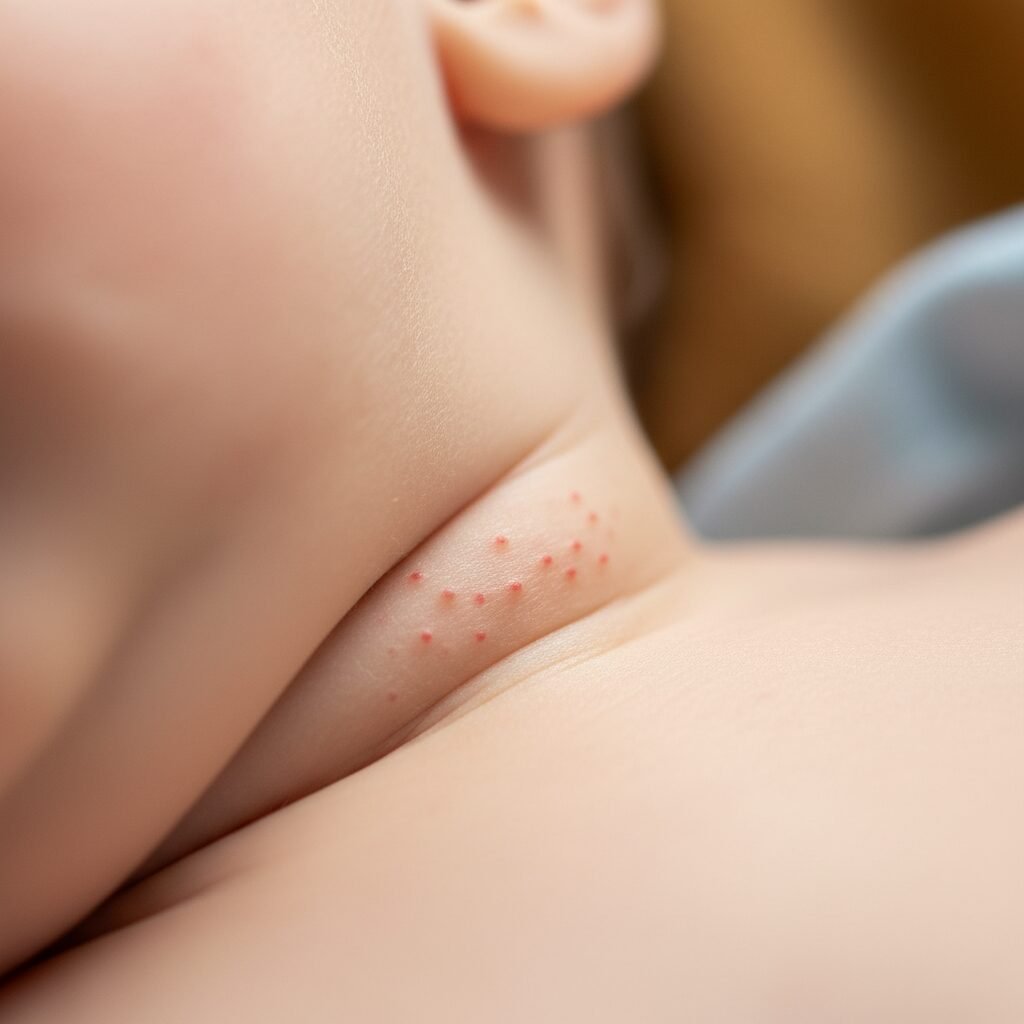
Let’s start with the simpler of the two: heat rash, also known by its fancy medical name, miliaria. Think of it as your baby’s skin telling you, “I’m a little too warm!”
A baby’s sweat glands are brand new and still figuring things out. They’re tiny and can get blocked easily. When your baby gets warm, their body tries to sweat to cool down, just like ours. But if the sweat ducts are blocked, that perspiration gets trapped under the skin. This trapped sweat is what causes the irritation and the classic heat rash bumps.
What Does Heat Rash Look and Feel Like?
Heat rash typically appears as clusters of tiny bumps. There are a few different types, but for babies, you’ll most often see:
- Miliaria crystallina: These look like tiny, clear, superficial blisters that are fragile and pop easily. They aren’t red or inflamed.
- Miliaria rubra: This is the most common type, often called “prickly heat.” It shows up as small red bumps that can feel prickly or itchy to your baby.
The key takeaway is that heat rash is made of small, distinct, individual bumps. It’s not usually a large, solid patch of dry or scaly skin.
Where Does Heat Rash Usually Appear?
You’ll find heat rash in the places where sweat tends to gather and where there’s friction. Think of all those adorable baby rolls! Common hotspots include:
- The neck folds
- The armpits
- The diaper area (especially around the elastic bands)
- The upper chest and back, particularly if they’ve been sleeping on their back in a warm room
- The crooks of their elbows and knees
A Gentle Reminder: Over-bundling is the number one cause of heat rash, even in cooler weather! It’s easy to worry about our babies being cold, but they can overheat much more quickly than adults. A good rule of thumb is to dress your baby in one more light layer than you are comfortably wearing.
Understanding Eczema (Atopic Dermatitis): The Itchy, Persistent Culprit
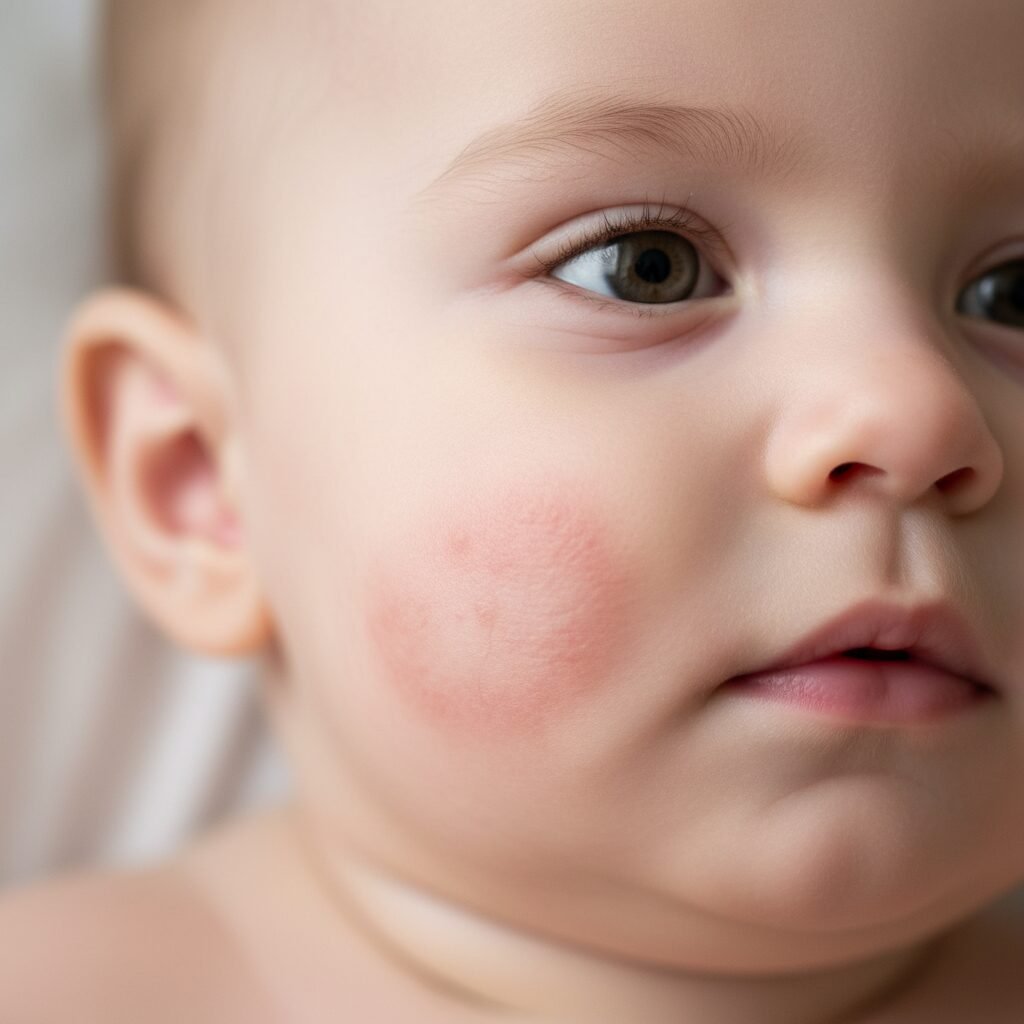
Now, let’s talk about eczema. This one is a bit more complex. Eczema, or atopic dermatitis, isn’t just a reaction to heat; it’s a chronic inflammatory skin condition. This means it can come and go over time and is often linked to genetics, allergies, and asthma.
The root of the problem in eczema is a compromised skin barrier. Think of healthy skin as a brick wall, with skin cells as the bricks and natural fats and oils as the mortar holding it all together. In babies with eczema, that ‘mortar’ is weak. This allows moisture to escape easily, leading to dryness, and allows irritants and allergens to get in, causing inflammation and that maddening itch.
What Does Eczema Look and Feel Like?
Unlike the distinct bumps of heat rash, eczema usually appears in patches. Here’s what to look for:
- Dryness: The skin will feel rough and dry to the touch, almost like fine sandpaper.
- Redness and Inflammation: The patches are typically red and inflamed. In darker skin tones, they might look purplish, brownish, or ashen grey.
- Scaling or Crusting: The patches can be scaly or, if they’ve been scratched a lot, they might weep a clear fluid and form a yellowish crust.
- Intense Itch: This is the hallmark of eczema. The itch can be relentless and is often what makes babies so fussy and miserable, especially at night.
Where Does Eczema Usually Appear?
The location of eczema often changes as a baby gets older. In infants (under 6 months), it’s most common on:
- The cheeks (often the first sign!)
- The forehead and scalp
- The outer surfaces of the arms and legs
You’ll notice it’s less common in the diaper area, where the moisture from the diaper actually helps protect the skin barrier. As they start to crawl, you might see it more on the knees and elbows.
Side-by-Side Comparison: Your Cheat Sheet to Telling Them Apart
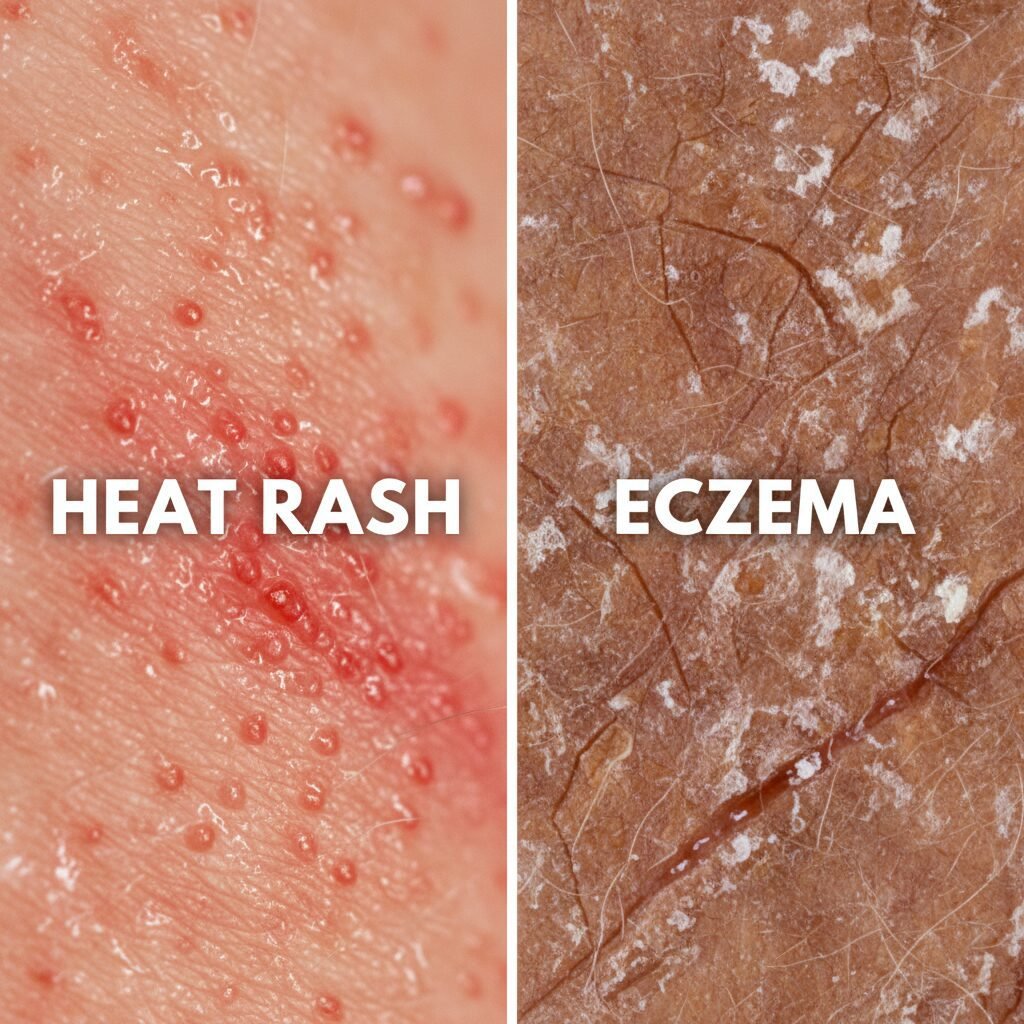
Okay, let’s put it all together. When you’re looking at your baby’s skin, it can be a blur of red spots. This chart is designed to be your quick-glance guide. Save it, screenshot it, or just come back to it whenever you need a refresher.
| Feature | Heat Rash (Miliaria) | Eczema (Atopic Dermatitis) |
|---|---|---|
| Appearance | Small, distinct, raised red or clear bumps (like tiny pimples or blisters). | Dry, thickened, scaly, and inflamed patches of skin. Can sometimes weep or crust over. |
| Texture | Can feel prickly or like fine-grit sandpaper, but the surrounding skin is usually normal. | The affected patch feels very dry, rough, and leathery. Surrounding skin may also be generally dry. |
| Sensation | Described as prickly or mildly itchy. Usually doesn’t cause intense distress. | Intensely itchy! This is the main symptom. Your baby will likely try to scratch or rub the area. |
| Common Locations | Skin folds (neck, armpits, elbows), chest, back, and diaper area. Places that get hot and sweaty. | Cheeks, forehead, scalp, and the outer part of arms and legs in infants. Usually spares the diaper area. |
| Main Cause/Trigger | Blocked sweat ducts from overheating and excess moisture. | A compromised skin barrier, often triggered by irritants (soaps, fabrics), allergens (food, environmental), or dryness. |
| How It Behaves | Appears quickly when baby is hot and often disappears just as quickly once they cool down. | Is a chronic (long-term) condition that flares up and settles down in cycles. Doesn’t disappear with just cooling. |
Soothing Your Baby’s Skin: Gentle Home Care for Both Rashes

Once you have a better idea of what you’re dealing with, you can take steps to make your little one more comfortable. The approaches are different, so it’s helpful to know which path to take.
Cooling Down a Case of Heat Rash
The name of the game here is cool and dry.
- Lower the Temp: Move your baby to a cooler room. Use a fan to circulate air (don’t point it directly at them). If it’s hot out, air conditioning is your best friend.
- Dress Down: Remove extra layers of clothing. Opt for loose-fitting, lightweight, breathable fabrics like cotton. Avoid synthetics like polyester.
- Give a Lukewarm Bath: A cool or lukewarm bath (no soap needed) can be incredibly soothing. Let your baby air dry afterward as much as possible, gently patting the folds dry. Avoid vigorous toweling.
- Keep it Clean and Dry: Pay special attention to keeping those neck and armpit folds clean and dry to prevent sweat from getting trapped.
With these steps, most cases of simple heat rash will clear up on their own within a day or two.
Managing an Eczema Flare-Up
With eczema, the goal is to hydrate the skin and reduce inflammation.
- Bathing Basics: Give short (5-10 minute) baths in lukewarm water. Hot water can strip the skin of its natural oils. Use a gentle, fragrance-free, soap-free cleanser only where needed (like the diaper area).
- Soak and Seal: This is the most critical step! Immediately after the bath, while the skin is still damp, pat it gently with a towel and then apply a thick layer of fragrance-free moisturizer or emollient. This ‘seals’ the moisture into the skin. Look for ointments or creams (like petroleum jelly or products with ceramides) rather than thin lotions.
- Moisturize, Moisturize, Moisturize: Apply that thick moisturizer at least twice a day, and more often if the skin seems dry.
- Identify Triggers: Pay attention to what might be causing flare-ups. Common culprits include scratchy fabrics (like wool), harsh detergents, fragranced products, pet dander, and sometimes food allergens (always discuss this with your doctor before making dietary changes).
Safety First: Never apply over-the-counter hydrocortisone cream to your baby’s skin without first talking to your pediatrician. They can recommend the right strength and tell you how to use it safely.
When to Pick Up the Phone: Calling Your Pediatrician

Your intuition as a parent is powerful. If you are worried, that is always enough of a reason to call your doctor’s office. They are there to support you. However, there are some specific signs that definitely mean it’s time to seek a professional opinion.
Please call your pediatrician or seek medical advice if you notice any of the following:
- Signs of Infection: This is the most important one. If the rash has blisters that are filling with pus, develops a yellow or honey-colored crust, has red streaks leading away from it, or if the area becomes very warm and swollen, it could be a secondary bacterial infection that needs treatment.
- Fever: A rash accompanied by a fever (100.4°F or higher for a newborn) always warrants a call to the doctor.
- Your Baby Seems Unwell: If your baby is unusually fussy, inconsolable, lethargic, not feeding well, or seems to be in pain, it’s time to call.
- The Rash is Spreading Rapidly: If the rash is spreading all over their body very quickly, it’s best to get it checked out.
- It’s Not Getting Better: If you’ve tried the home care tips for a few days and the rash is getting worse instead of better, your doctor can help figure out the next steps.
- You Suspect Eczema: If you think your baby has eczema, it’s a good idea to get an official diagnosis. Your doctor can prescribe stronger creams if needed and help you develop a long-term management plan.
Remember, you are your baby’s best advocate. Describing the rash’s appearance, location, and your baby’s behavior will give your doctor valuable clues. Taking a few clear photos in good lighting can also be incredibly helpful for a telehealth visit or to show the doctor at your appointment.
Conclusion
Navigating the world of baby rashes can feel like a daunting task, but you’re already doing an amazing job by seeking out information. The key difference to remember is this: heat rash is an acute reaction to heat, while eczema is a chronic condition related to skin barrier function. Heat rash likes it cool and dry; eczema needs constant, gentle hydration.
By learning to spot the signs we’ve discussed, you’re empowered to provide the right kind of comfort for your little one right away. And for those times when you’re just not sure, or when your gut tells you something is off, your pediatrician is your trusted partner. There is no prize for figuring it all out on your own.
Trust your instincts, be gentle with your baby’s skin, and be gentle with yourself. You’re learning every single day, and you’ve absolutely got this.