
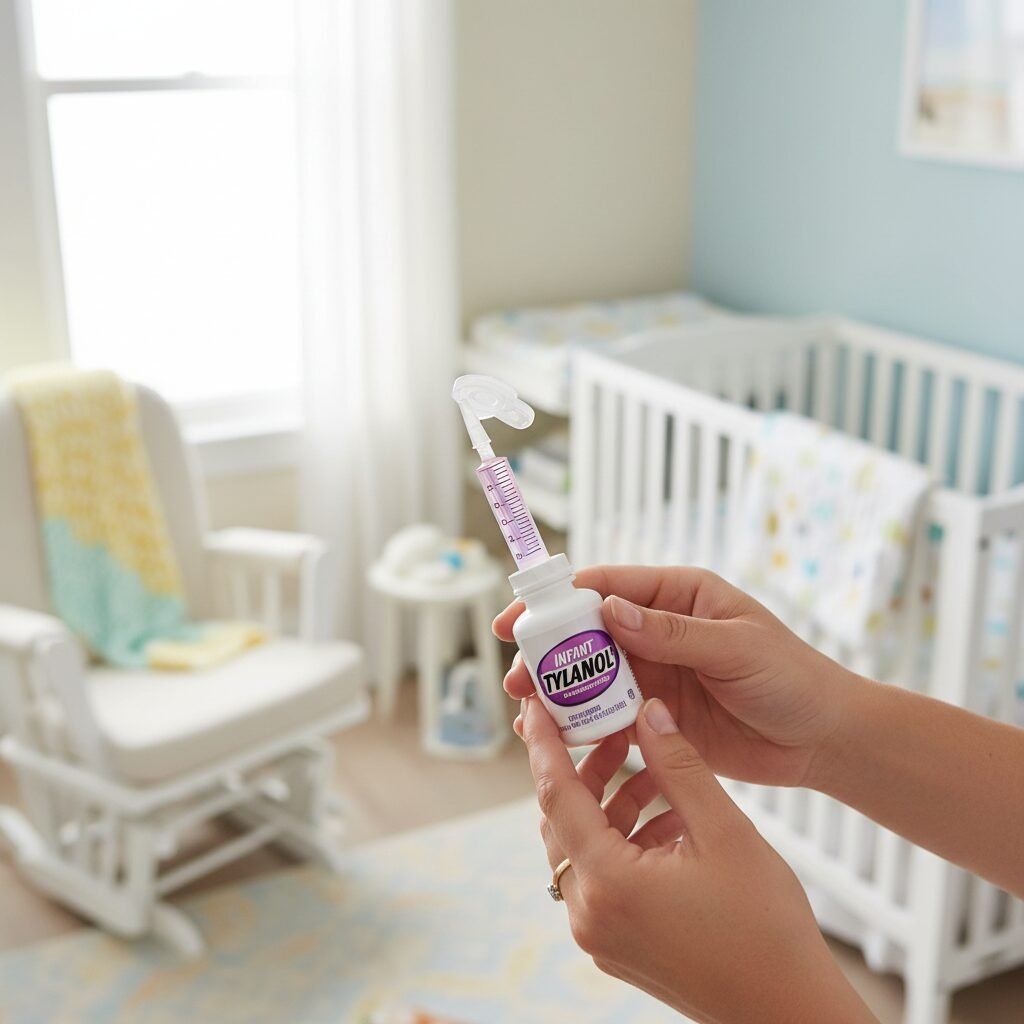
Infant Tylenol Dosage Chart: Exact Amounts by Weight (Printable Guide)
There are few things more stressful for a new parent than seeing your tiny baby feeling unwell. A fever, teething pain, or discomfort after vaccinations can leave you feeling helpless and anxious. Your first instinct is to make them comfortable, and often, that means reaching for a fever reducer like Infant Tylenol. But then the questions start swirling: How much do I give? Is it based on age or weight? Am I doing this right?
Take a deep breath. You’ve come to the right place. My name is Katherine, and I’m a pediatric nurse and certified lactation consultant. For decades, I’ve held the hands of worried parents just like you, guiding them through these exact moments. My goal with this guide is to empower you with clear, safe, and evidence-based information, so you can confidently care for your little one.
We’re going to walk through everything you need to know about Infant Tylenol (the brand name for acetaminophen), from when it’s appropriate to use, to how to measure the exact dose based on the most important factor: your baby’s weight. And yes, we have that easy-to-read, printable dosage chart you’re looking for. Let’s get your baby—and you—feeling better.
First Things First: When is Tylenol a Good Idea for Your Baby?

Before you even open the medicine cabinet, it’s important to understand what you’re treating. Acetaminophen (Tylenol) is a pain reliever and fever reducer. It doesn’t ‘cure’ the illness, but it can make your baby much more comfortable while their little body fights off whatever is bothering them.
Common Reasons to Consider Infant Tylenol:
- Fever: A fever itself isn’t an illness, but a sign that the immune system is working hard. The official definition of a fever is a rectal temperature of 100.4°F (38°C) or higher. We often treat a fever not just because of the number, but because of how it’s making the baby feel. If they have a low-grade fever but are playing and eating happily, you may not need to intervene. If they’re fussy, lethargic, or clearly uncomfortable, Tylenol can help.
- Teething Pain: Oh, teething. For some babies, it’s a breeze. For others, it’s a period of drooly, fussy misery. If non-medicinal comfort measures like cold teethers or gentle gum massage aren’t cutting it, Tylenol can provide temporary relief, especially at nighttime.
- Post-Vaccination Discomfort: It’s common for babies to develop a low-grade fever and have some soreness at the injection site after their shots. Your pediatrician may recommend a dose of Tylenol to help manage this discomfort. Always follow their specific advice.
CRITICAL SAFETY WARNING: Never, ever give Tylenol or any medication to a baby under 12 weeks of age without being explicitly told to do so by your pediatrician. A fever in a newborn can be the only sign of a serious infection, and giving Tylenol can mask the symptom, delaying a crucial diagnosis. For any fever in a baby this young, your first and only step should be to call your doctor or head to the emergency room immediately.
The Golden Rule: Dosage is ALWAYS Based on Weight, Not Age

If you take only one thing away from this guide, let it be this: medication for infants is dosed by weight. While the box may give age ranges, these are just estimates. A chunky 4-month-old might weigh the same as a petite 7-month-old. Using their exact weight is the only way to ensure you are giving a safe and effective dose—not too little to be ineffective, and not too much to be dangerous.
Why Weight is King
A baby’s liver processes medication, and the liver’s capacity is related to the baby’s size (weight). Dosing by weight ensures the amount of medicine is perfectly matched to what their body can handle safely. This is why your pediatrician’s office weighs your baby at every single visit!
Check the Concentration and Use the Right Tool
In the United States, the standard concentration for Infant Tylenol is 160 milligrams (mg) per 5 milliliters (mL). All the information in this guide is based on this specific concentration. Always double-check the box and bottle to confirm this before giving a dose.
Warning: Never use a regular kitchen spoon (a ‘teaspoon’ for baking is not the same as a 5 mL dose!). Also, do not use a dosing cup or syringe from another medication, as the markings can be different. Only use the oral syringe or dropper that came packaged with that specific bottle of Infant Tylenol to ensure you are measuring correctly.
Your Printable Infant Tylenol (Acetaminophen) Dosage Chart

Here is the chart you’ve been looking for. This is based on the standard U.S. concentration of 160 mg / 5 mL. Remember to find your baby’s current weight for the most accurate dose. You can give a dose every 4-6 hours as needed, but do not give more than 5 doses in a 24-hour period.
Bookmark this page, take a screenshot, or use the link below to download a printable version to hang on your fridge or keep in your diaper bag. Being prepared makes stressful moments so much easier.
| Baby’s Weight (Pounds) | Baby’s Weight (Kilograms) | Dosage in Milliliters (mL) |
|---|---|---|
| 6-11 lbs | 2.7-5.3 kg | 1.25 mL |
| 12-17 lbs | 5.4-8.1 kg | 2.5 mL |
| 18-23 lbs | 8.2-10.8 kg | 3.75 mL |
| 24-35 lbs | 10.9-16.3 kg | 5.0 mL |
| 36-47 lbs | 16.4-21.7 kg | 7.5 mL |
Disclaimer: This chart is for informational purposes and is not a substitute for professional medical advice. Always consult your pediatrician for any health concerns or before starting any new medication.
How to Give Your Baby Medicine Without the Mess (and Tears!)

Actually getting the medicine into your baby can sometimes be the hardest part! A wiggly, unhappy baby doesn’t make it easy. Here are some nurse-tested tips to make the process smoother for both of you.
- Prepare Everything First: Before you even pick up your baby, wash your hands thoroughly. Read the label, check the concentration, and measure the exact dose in the syringe. Having it all ready means less time fumbling while holding a fussy baby.
- Stay Calm and Positive: Your baby can sense your stress. Use a calm, reassuring voice. You can say something like, “This will help you feel all better.” A calm parent often leads to a calmer baby.
- Position Them Correctly: Never give medicine to a baby who is lying flat on their back, as they could choke. Hold them in a semi-upright position, similar to how you would for a feeding. You can cradle them in your arm or have them sit on your lap, securely supported.
- Aim for the Cheek Pocket: This is the key to success! Don’t squirt the medicine straight to the back of their throat, as this can trigger the gag reflex and cause them to spit it all out. Instead, gently slide the tip of the syringe into their mouth and aim it towards the inside of their cheek.
- Go Slow: Dispense the medicine slowly, a little bit at a time. This gives your baby a chance to swallow each small amount and prevents overwhelming them.
- Follow Up with Comfort: Once they’ve taken it all, offer lots of praise, cuddles, and kisses. You can offer a pacifier or a little bit of milk/formula (if they’re up for it) to help wash the taste away. You both did a great job!
Safety First: When to Skip the Tylenol and Call the Doctor

While Tylenol is generally safe when used correctly, it’s not always the right answer. It’s crucial to know the warning signs that indicate something more serious might be going on. Trust your parental instincts—if you feel something is wrong, it’s always best to get it checked out.
Call your pediatrician or seek immediate medical care if your baby experiences any of the following:
- Any fever (100.4°F or higher) in an infant under 12 weeks old. This is always a medical emergency.
- A high fever. For babies 3-6 months, call for a fever over 102°F. For babies over 6 months, call for a fever over 104°F, or one that doesn’t come down with Tylenol.
- Signs of dehydration. This includes fewer than 4-6 wet diapers in 24 hours, a dry mouth, crying without tears, or an unusually sunken soft spot on their head.
- Extreme changes in behavior. This could be unusual irritability where they cannot be consoled, or extreme lethargy where they are difficult to wake up.
- Difficulty breathing. Look for rapid breathing, flaring nostrils, or a ‘pulling in’ motion at their neck or ribs.
- A fever that lasts. If a fever persists for more than 3 days, it’s time to call the doctor.
- You are simply worried. You know your baby best. If something feels off, a phone call to the nurse’s line or your doctor’s office can provide peace of mind or direct you on the next steps.
Remember this: You are your baby’s most important advocate. Never hesitate to call your healthcare provider if you are concerned. There is no such thing as a silly question when it comes to your child’s health.
Conclusion
Navigating your baby’s first illness is a parenting rite of passage, and it’s completely normal to feel a mix of worry and uncertainty. But by arming yourself with the right information, you can handle these moments with calm and confidence. Remember the key takeaways: always dose based on your baby’s current weight, double-check the medicine’s concentration, and only use the syringe that comes with it.
Most importantly, know the red flags and trust your intuition. You are the expert on your child. Keep that printable chart handy, and don’t be afraid to lean on your pediatrician for support—that’s what they’re there for.
You’re doing an amazing job. These tough moments will pass, and soon enough, you’ll be back to enjoying sleepless nights for entirely different reasons, like marveling at how quickly your little one is growing. You’ve got this.