
How to Wear Your Newborn in Winter Without Overheating Them
Welcome, new parent! If the winter chill has you feeling a little stir-crazy with your precious newborn, you are not alone. The desire to get some fresh air, run an errand, or simply feel the sun on your face is completely normal. And I’m here to tell you that babywearing can be your magical key to unlocking those winter adventures. There’s nothing quite like the feeling of your baby snuggled up against your chest, warm and content while you navigate the world together.
But I know what’s on your mind, because I’ve heard it from thousands of parents: “How do I keep them warm enough, but not TOO warm?” The fear of overheating is valid, and it can feel overwhelming. It’s a delicate balance, for sure. The good news? It’s much simpler than you think. With a few core principles and easy-to-remember checks, you can become a confident winter babywearing pro. Forget complicated rules and expensive gear. We’re going to focus on simple, safe, and effective strategies to keep your little one perfectly comfortable, allowing you to embrace the season with open arms. Let’s dive in!
The Golden Rule: You and Your Baby are Sharing Heat

Before we even talk about clothes or carriers, let’s get one fundamental concept straight, because it changes everything. Think of yourself as a personal, walking furnace for your baby. Your body generates a significant amount of heat, and when you place your baby against your chest, you are sharing that warmth directly. Now, add a baby carrier—whether it’s a soft wrap or a structured carrier—and you’ve created a super-insulated little cocoon.
This is why the number one mistake I see parents make is over-dressing their baby before putting them in the carrier. They dress the baby for the arctic tundra, then add the carrier, then add their own coat over top. It’s a recipe for a sweaty, unhappy baby.
Remember this: The baby carrier itself counts as at least one full layer of clothing. Some thick, padded carriers or multi-layered wraps can even count as two!
Once you internalize this—that you and the carrier are the primary sources of warmth—the rest of the layering puzzle becomes much easier to solve. You’re not just dressing your baby for the weather; you’re dressing your baby to be in a warm, shared microclimate with you. This mental shift is the first and most important step to preventing overheating.
Mastering the Art of Layering: A Head-to-Toe Guide
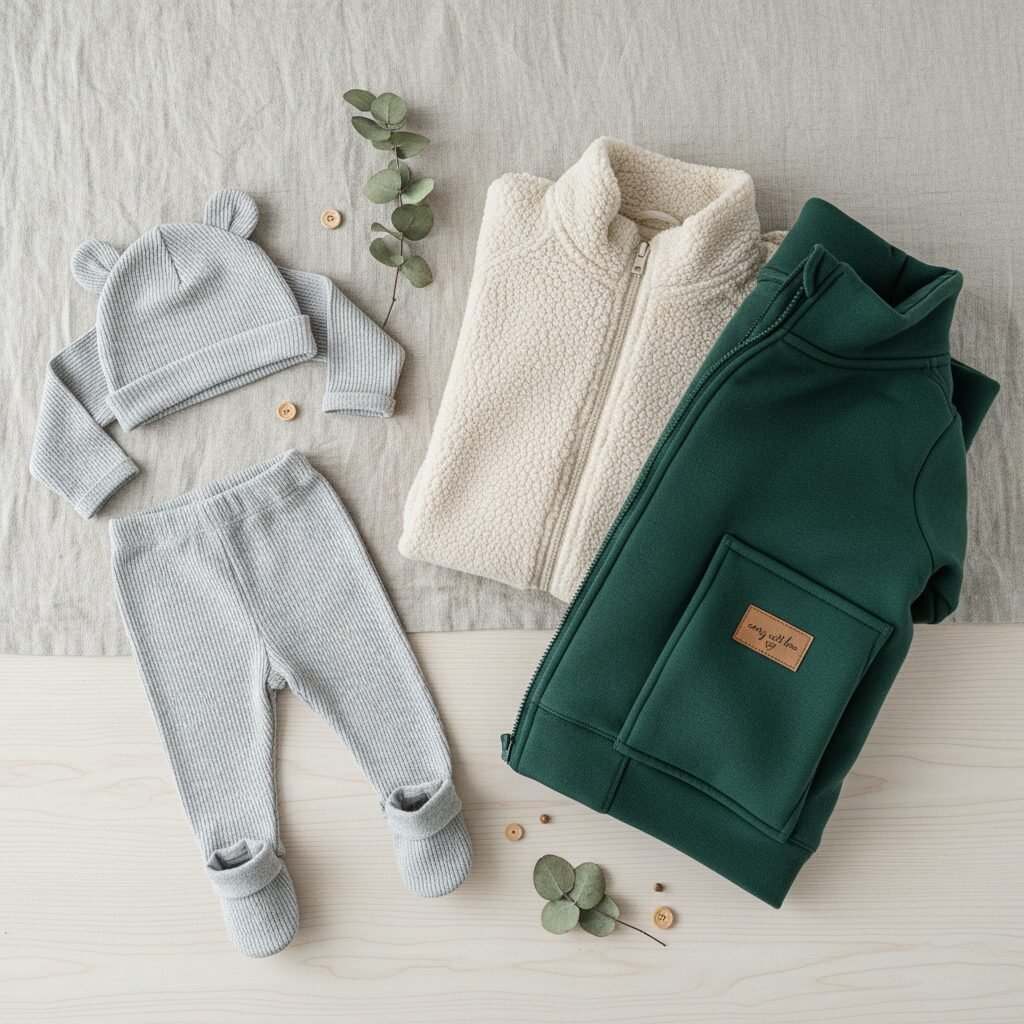
Okay, with our golden rule in mind, let’s get practical. Layering is your best friend in the winter, but it’s a bit different when babywearing. It’s about smart, breathable layers for your baby and easily adjustable layers for you.
For Your Baby: The ‘Less is More’ Approach
Indoors, before you even think about going out, what would your baby comfortably wear around the house? That’s your starting point. For most homes, this is a simple long-sleeved onesie and some soft pants or footie pajamas. This is often the only layer your baby needs on their torso and legs underneath the carrier.
- Focus on Natural Fibers: Fabrics like cotton, bamboo, or merino wool are fantastic. They are breathable, which means they help regulate temperature by wicking away any moisture or sweat, preventing that clammy, cold feeling. Fleece is warm, but it’s synthetic and not very breathable, so use it with caution as a base layer. A thin merino wool base layer is an amazing investment if you plan to be outside often.
- Avoid Bulky Snowsuits: This is a critical safety rule. Never place your baby in a carrier while they are wearing a thick, puffy snowsuit. Not only does it create a serious overheating risk, but the bulky material can prevent you from getting the carrier snug and secure. This can cause the baby to slump into a dangerous position that compromises their airway. Thin, single-layer fleece suits are generally okay, but puffy suits are an absolute no.
For You: Think Like an Onion
Your comfort is important too! If you’re sweating, there’s a good chance your baby is too. The key for you is wearing layers that you can easily remove or adjust without taking the baby out of the carrier.
- Base Layer: Start with a comfortable base layer, just like you normally would.
- Mid-Layer: A zip-up fleece or cardigan is perfect. You can easily unzip it if you start to feel warm when you step into a store.
- Outer Layer: This is where things get creative. You can wear a maternity coat or a coat that’s a size or two too big to zip up around both of you. Better yet, consider a babywearing coat or a jacket extender panel. These are designed to zip into your existing jacket, creating a perfect pouch for your baby. This cocoons you both in a shared space, making it much easier to regulate the overall temperature.
Protecting the Exposed Bits: Head, Hands, and Feet
While your baby’s core will be toasty warm against you, their little extremities are exposed to the elements. This is where you need to focus your bundling efforts.
- A Warm Hat: A well-fitting hat that covers their ears is non-negotiable. A huge amount of heat is lost through the head.
- Cozy Feet: Their feet can get cold easily. Layer a pair of warm, wooly socks or soft-soled booties over their pajamas or pants. Check that their pants haven’t ridden up, which can cut off circulation and make their feet even colder.
- Hands: Little mittens are great, or you can often tuck their hands inside the carrier with them to keep them warm.
Choosing Your Winter Carrier: Material Matters
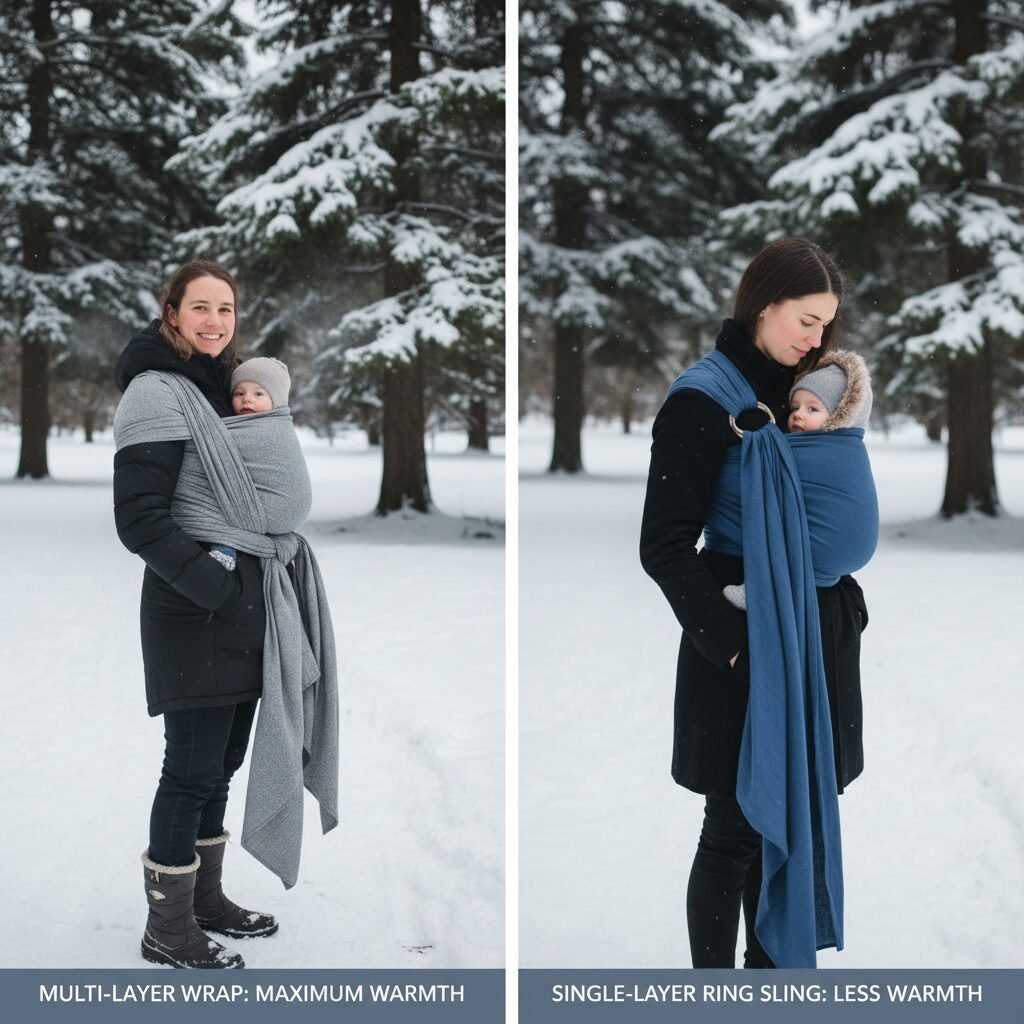
Do you need a special “winter” carrier? Absolutely not! The carrier you already have and love is likely perfect. The key is simply understanding how its material contributes to the overall warmth. A carrier that feels light and breezy in the summer can be perfect for winter layering, while a carrier that already feels thick and cozy might mean you need to dress your baby in even less.
Let’s look at a few common types and how they behave in the cold:
| Carrier Type | Winter Considerations |
|---|---|
| Soft Structured Carrier (SSC) | Often made of cotton canvas with padding. The padded panel acts as a significant layer of insulation. Great for structure and support. Some have mesh panels, which would require warmer layers on your baby. |
| Stretchy Wrap | Usually made of thick cotton jersey. These wraps involve multiple passes of fabric over the baby, creating 2-3 layers. They are incredibly warm and cozy, meaning your baby needs very little clothing underneath. |
| Woven Wrap | Come in various materials. A thin cotton or linen blend will be less warm, while a thick wool or hemp blend will be a veritable furnace. The number of layers in your carry (e.g., a single-pass vs. a triple-pass carry) also dramatically changes the warmth factor. |
| Ring Sling | Typically worn as a single layer of fabric over the baby. This makes them less warm than other carriers, which can be an advantage. You have more control over layering since the sling itself is just one light layer. |
The takeaway here isn’t to buy a new carrier. It’s to become a detective about the one you own. Before you head out, feel the fabric. Is it thick or thin? Padded or breathable? How many layers of fabric will be covering your baby’s back? Answering these questions will help you make the right layering choices.
The Safety Check: How to Spot and Prevent Overheating

You’ve layered correctly, chosen your carrier, and you’re ready to go. But your job isn’t quite done! The most important skill is learning how to do quick, easy checks to ensure your baby is still comfortable, especially when moving between different environments. Babies can’t tell you they’re too hot, so you have to be their thermostat.
The ‘Neck Check’ is Your Best Friend
How do you know if they’re at the right temperature? Don’t feel their hands or feet! It’s normal for a baby’s extremities to feel cool to the touch due to their immature circulatory systems. Feeling them is an unreliable way to gauge their core temperature.
Instead, slip a finger or two down the back of their collar and feel their neck or upper back. Here’s what you’re looking for:
- Just Right: The skin feels warm and dry, similar to your own. Perfect!
- Too Hot: The skin feels hot, sweaty, or clammy. This is a clear sign they are overheated.
- Too Cold: The skin feels cool to the touch. You may need to add a layer or zip up your coat.
Perform this check before you leave the house, and again every 20-30 minutes while you’re out, especially if you go from a cold street into a warm shop.
Signs of Overheating to Watch For
Beyond the neck check, keep an eye out for these visual cues that your baby might be too warm:
- Flushed, red cheeks
- Rapid breathing
- A heat rash (small red bumps) appearing on the chest or neck
- Unusual fussiness or, conversely, lethargy and drowsiness
A Critical Airway Reminder: Safety is always number one. Regardless of temperature, always ensure you can see your baby’s face at all times. Their chin should never be curled down to their chest, as this can restrict their airway. Ensure there is at least a finger’s width of space between their chin and chest. No amount of warm clothing should ever obstruct their breathing. This is part of the T.I.C.K.S. rules for safe babywearing: Tight, In view at all times, Close enough to kiss, Keep chin off chest, Supported back.
From a Warm Cafe to a Snowy Sidewalk: Managing Temperature Changes

One of the trickiest parts of winter babywearing is the constant in-and-out. You’re bundled for the frigid outdoors, and then you step into a super-heated coffee shop or grocery store. This is where your baby can go from perfectly comfortable to overheated in a matter of minutes.
This is why your own layers are so important. The moment you step inside, take these steps:
- Open Your Outer Layer: Immediately unzip or unbutton your coat. This is the single most effective thing you can do. It breaks that shared heat seal and allows fresh, cooler air to circulate around the baby.
- Remove Baby’s Hat: Take off their hat. This allows a lot of excess heat to escape quickly.
- Loosen the Carrier (Slightly): If possible, you can slightly loosen the shoulder straps or side buckles of your carrier to create even more space for airflow. Just ensure the baby remains secure.
- Push Down Their Socks/Booties: If their feet are tucked inside your coat, pushing down their booties can help them cool down a bit.
When it’s time to head back outside, simply reverse the process. Put their hat back on, snug up the carrier, and zip your coat. It might feel like a bit of a dance at first, but you’ll quickly become a pro at this temperature tango. It’s this active management, not just the initial layering, that ensures your baby stays safe and happy throughout your entire outing.
Conclusion
See? You’ve got this. Babywearing in the winter isn’t about complex formulas or fancy equipment. It’s about trusting your instincts and remembering a few simple principles. Remember the golden rule: you are your baby’s furnace, and the carrier is a cozy blanket. Layer your little one lightly, focus on protecting their exposed head and feet, and become an expert at the quick ‘neck check’.
Don’t let the cold weather keep you from making memories. Those walks in the crisp air, the convenience of hands-free errands, and the quiet moments with your baby snuggled against your heart are too precious to miss. Embrace the season, trust in the warmth you share, and enjoy every single cozy moment. Happy winter adventures to you and your little one!