
How To Bond With Baby While Bottle Feeding (It’s Possible)
Hello, new parent. Take a deep breath. I want you to know that I see you. You’re navigating this incredible, overwhelming, beautiful journey of parenthood, and you’re doing a great job. I also know that if you’re reading this, you might be carrying a little bit of worry, or maybe even guilt, about bottle-feeding. In a world full of opinions, it’s easy to feel like you’re missing out on a key bonding experience if you aren’t breastfeeding. As a pediatric nurse and lactation consultant who has supported thousands of families, I want to tell you something unequivocally: The magic of bonding is not in the method of feeding; it’s in the love and connection you pour into it.
Bonding is built through touch, scent, eye contact, and responsive care. It’s about your baby learning that you are their safe space. And guess what? You can create all of that and more with a bottle in your hand. This guide is here to walk you through not just how to do it, but to help you reframe bottle-feeding from a simple task into a cherished ritual of connection. Let’s explore how to make every feeding a beautiful opportunity to strengthen that incredible bond with your little one.
The Science of Connection: It’s All About Oxytocin

Before we dive into the ‘how-tos,’ let’s talk about the ‘why.’ What is bonding, really? At a biological level, it’s driven by a powerful hormone called oxytocin. You might have heard it called the ‘love hormone’ or ‘cuddle chemical,’ and for good reason! It’s released in both parent and baby during moments of close, warm contact. It reduces stress, promotes feelings of calm and contentment, and is the physiological glue of your relationship.
Many people associate oxytocin release exclusively with breastfeeding, but that’s a myth. Your body and your baby’s body produce oxytocin in response to:
- Skin-to-skin contact: The warmth of your skin against theirs is a powerful trigger.
- Loving eye contact: When you gaze at your baby and they look back, your brains are syncing up and releasing oxytocin.
- The sound of your voice: Your gentle, loving tones are soothing and signal safety to your baby.
- Responsive care: When your baby is hungry and you respond by lovingly feeding them, you are building a foundation of trust that is essential for a secure attachment.
See? None of these are exclusive to one feeding method. The key ingredient is a present, loving parent. When you hold your baby close, look into their eyes, and feed them with intention and love, you are creating the perfect hormonal cocktail for bonding, no matter what’s in the bottle.
Remember, a calm, responsive, and loving caregiver is the most important factor in a baby’s emotional development. How they are fed is secondary to how they are loved.
Setting the Stage: Create Your Bottle-Feeding Sanctuary

One of the most effective ways to transform bottle-feeding into a bonding ritual is to be intentional about the environment. In our busy lives, it’s tempting to multitask—propping a baby with a bottle while you scroll through your phone or watch TV. I gently encourage you to resist that urge. Think of this time not as a chore, but as a date with your baby.
Find Your Comfortable Spot
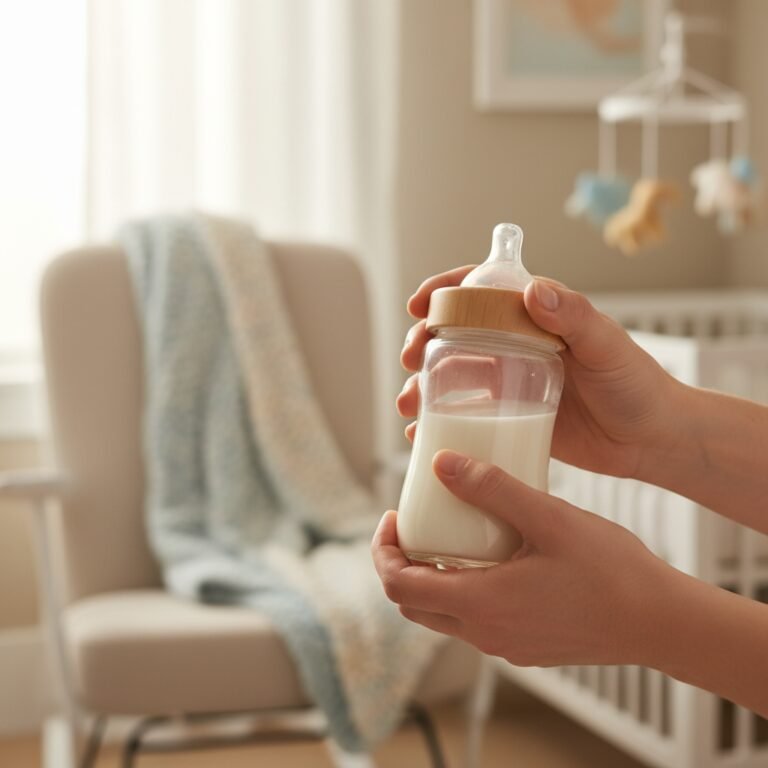
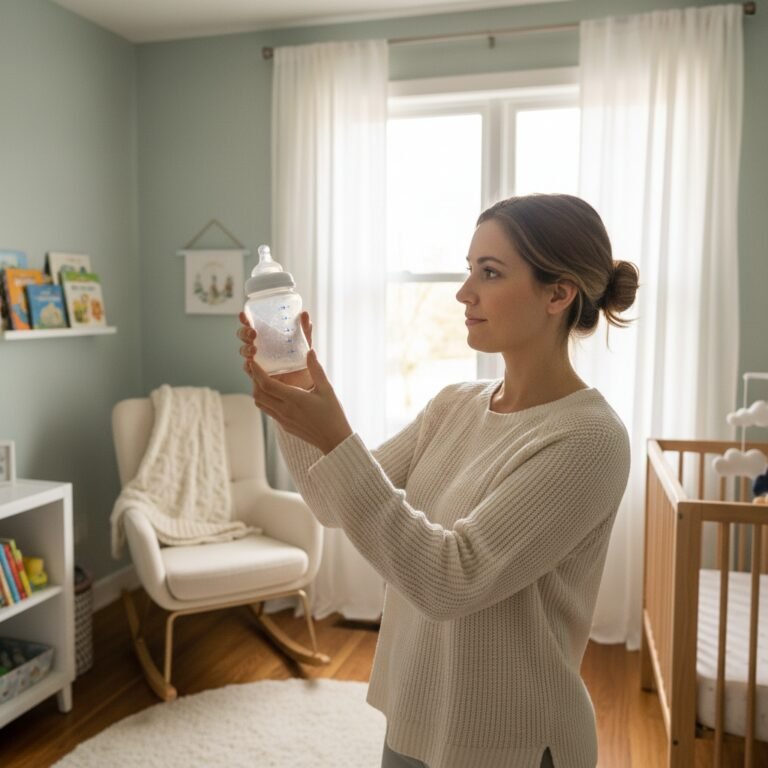
Designate a ‘feeding corner’ in your home. This could be a comfy glider in the nursery, a cozy corner of the sofa with lots of pillows, or even a supportive chair in your bedroom. The key is that it’s comfortable for you. You’ll be spending a lot of time here, so make sure your back is supported and you can relax your shoulders.
Minimize Distractions
This is your time to disconnect from the world and connect with your baby. Put your phone on silent and place it out of arm’s reach. Turn off the television. If you have other children, try to time a feed for when they are napping or engaged in a quiet activity. Let your partner or other support people know that feeding time is protected ‘do not disturb’ time.
Set a Calm Mood
You can make the experience even more special with a few simple touches. Dim the lights to create a soft, womb-like atmosphere. Play some soft, calming music or simply enjoy the quiet. Have a glass of water and a snack for yourself nearby. When you are relaxed and comfortable, your baby will pick up on those calm vibes, making the feeding experience more peaceful for both of you.
Your Bonding Toolbox: Practical Techniques for Every Feed

Now for the heart of it all—the specific actions you can take during each feeding to amplify your connection. These aren’t complicated, but they are incredibly powerful.
Embrace Skin-to-Skin Contact
This is my number one tip for all parents. Skin-to-skin isn’t just for the hospital’s ‘golden hour.’ You can do it anytime, and feeding time is perfect. Unbutton your shirt and let your baby, clad in only a diaper, rest directly on your bare chest. Drape a blanket over their back to keep them warm. This simple act helps regulate their heart rate, breathing, and temperature, and it sends oxytocin levels soaring for both of you. It’s pure, undistracted closeness.
Gaze Into Their Eyes
A newborn’s focal range is about 8 to 12 inches—coincidentally, the exact distance between your face and theirs when you’re cradling them in your arms. Use this! Hold them in a position where you can easily make eye contact. Talk to them about your day, tell them how much you love them, or simply gaze at them and marvel at their tiny features. This is how they learn your face and begin to associate it with comfort and love.
Switch Sides
Breastfed babies naturally switch sides during a feeding. You should mimic this with a bottle! Halfway through the feed, gently move your baby to your other arm. This does two important things: it gives them different visual stimulation, which is great for their brain development, and it helps prevent them from developing a flat spot on one side of their head (plagiocephaly) or tight neck muscles.
Try Paced Bottle Feeding
This technique is a game-changer. It mimics the flow of breastfeeding, which puts the baby in control of the feeding pace and prevents them from guzzling the bottle too quickly. This makes feeding more comfortable and reduces gas and spit-up. Here’s how:
- Position Baby Upright: Hold your baby in a more upright, seated position rather than lying flat.
- Keep the Bottle Horizontal: Hold the bottle parallel to the floor, so the milk only fills the nipple when you tip it slightly.
- Tickle Their Lips: Gently tickle their lips with the nipple to encourage them to open wide, just as they would at the breast.
- Watch for Cues: Let them take a few sucks, then tip the bottle down to give them a short break. Watch their cues. If they seem stressed or are gulping, take a longer pause. This turns feeding into a responsive dance between you and your baby.
The Silver Lining: Sharing the Bonding Experience

Here’s a perspective shift for you: bottle-feeding offers a unique and beautiful opportunity that breastfeeding alone does not. It allows other important people in your baby’s life to experience that profound feeding bond.
Encourage your partner, a grandparent, or another loving caregiver to take over some of the feedings. Teach them the same bonding techniques you’re using. Show them how to do skin-to-skin, how to switch sides, and how to practice paced feeding. This is not just about you getting a break (though that is incredibly important!). It’s about building a village of love and secure attachment around your child. When a partner gets to gaze into their baby’s eyes during a 2 a.m. feed, their bond deepens in a way that is truly special.
A well-rested and supported parent is a more present and joyful parent. Allowing others to feed your baby is an act of self-care, and it’s a gift of connection to both your partner and your child.
This shared experience can strengthen your partnership and create a beautiful co-parenting dynamic from the very beginning. It allows the non-birthing parent to feel deeply involved and capable, fostering a confidence that will last a lifetime.
Beyond the Bottle: Weaving Connection into Your Day

Remember, bonding isn’t confined to feeding times. It’s a rich tapestry woven from thousands of small, loving interactions throughout the day. While feeding is a cornerstone, you can reinforce your connection in many other ways.
Think of these as ‘bonding snacks’ to sprinkle between the main ‘meals’ of feeding:
- Babywearing: Use a soft wrap or carrier to keep your baby snuggled close to you while you go about your day. They will be soothed by your heartbeat and movement, and you’ll have your hands free!
- Infant Massage: After a bath, spend a few minutes gently massaging your baby’s legs, tummy, and arms with a baby-safe oil or lotion. This is a wonderful way to learn your baby’s cues and connect through touch.
- Tummy Time on Your Chest: Instead of the floor, let your baby do tummy time lying on your chest while you recline. They’ll be motivated to lift their head to see your face.
- Take a Bath Together: Once their umbilical cord stump has fallen off and any healing is complete, a warm bath together can be a wonderfully relaxing and sensory experience for both of you.
- Read and Sing: Even the youngest babies benefit from the rhythm and cadence of your voice. Pick a favorite storybook or sing lullabies. It’s not about the words; it’s about the loving sound.
By incorporating these activities, you show your baby in countless ways that they are safe, loved, and cherished. This builds a resilient bond that is so much bigger than any single feeding method.
Conclusion
My dear parent, I hope you can now see that the bottle in your hand is not a barrier to bonding—it’s a tool for it. It’s a vessel that you can fill not only with nourishment, but with intention, presence, and immeasurable love. By creating a peaceful space, gazing into your baby’s eyes, holding them skin-to-skin, and being responsive to their needs, you are doing everything right. You are building a secure and loving attachment that will be the foundation for their entire life.
Please, release any guilt you might be holding. Your baby doesn’t care how the milk gets to their tummy. They care about the warmth of your arms, the love in your eyes, and the safety they feel when they are with you. You are their world. And you are doing a phenomenal job. Cherish these fleeting moments, because you are building a bond that will last a lifetime.