Help! My Baby Has Pimples: The Gentle Breastmilk Trick For Clearing Baby Acne
First of all, take a deep breath, mama or papa. Seeing little red or white bumps on your baby’s impossibly perfect skin can send any new parent into a spiral of worry. You might be thinking, ‘Is it a rash? An allergy? Did I do something wrong?’ Let me reassure you right now: you are doing a great job, and those little spots are almost certainly a very common, very normal thing called neonatal acne, or baby acne.
As a pediatric nurse and lactation consultant, I’ve seen thousands of beautiful baby faces, many of them dotted with these tiny pimples. It’s one of the most frequent concerns I hear from new parents. The good news is that it’s usually temporary and harmless. And the even better news? You might have a gentle, natural, and completely free remedy right at your fingertips. Let’s talk about the magic of breastmilk and how you can use it to help soothe your baby’s delicate skin, along with other simple tips to keep them comfortable and glowing.
What Exactly *Is* Baby Acne (And What It’s Not)?
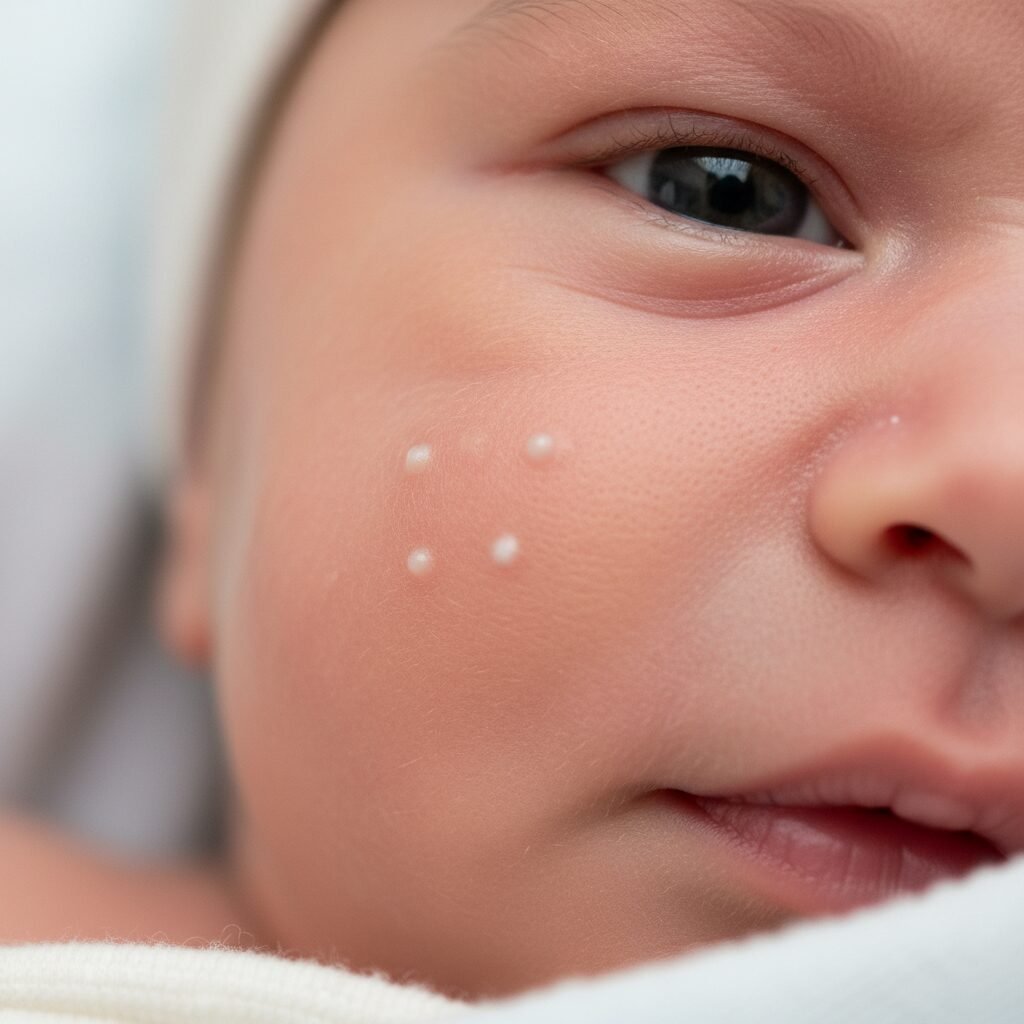
Before we jump into solutions, it’s helpful to understand what you’re looking at. Baby acne looks a lot like the acne you might have experienced as a teenager—small red bumps or whiteheads. It typically appears on the cheeks, nose, and forehead, usually popping up between two to four weeks of age.
What causes it? While we don’t know for sure, the leading theory points to the hormones your baby received from you at the end of your pregnancy. These hormones stimulate your baby’s oil-producing glands, leading to those little breakouts. It’s not a sign of poor hygiene or anything you’ve done!
Is it Acne, Milia, or Something Else?
It’s easy to confuse baby acne with other common newborn skin conditions. Here’s a quick guide to help you tell them apart:
| Condition | What it Looks Like | Typical Location |
|---|---|---|
| Baby Acne (Neonatal Acne) | Small red bumps or whiteheads, sometimes surrounded by reddish skin. | Cheeks, nose, forehead. |
| Milia | Tiny (1-2mm) pearly white bumps. They are not red or inflamed. | Nose, chin, cheeks. They are blocked pores, not pimples. |
| Eczema (Atopic Dermatitis) | Dry, scaly, red patches of skin. Can be very itchy and uncomfortable for baby. | Often on cheeks, scalp, and in the creases of elbows and knees. |
| Heat Rash (Miliaria) | Clusters of tiny red bumps or clear blisters, especially in hot, humid weather. | Neck, armpits, diaper area, skin folds—anywhere sweat can get trapped. |
Remember, most newborn skin bumps and rashes are harmless and resolve on their own. The key is to be gentle and patient with your baby’s developing skin.
The Magic of Liquid Gold: Using Breastmilk for Baby Acne
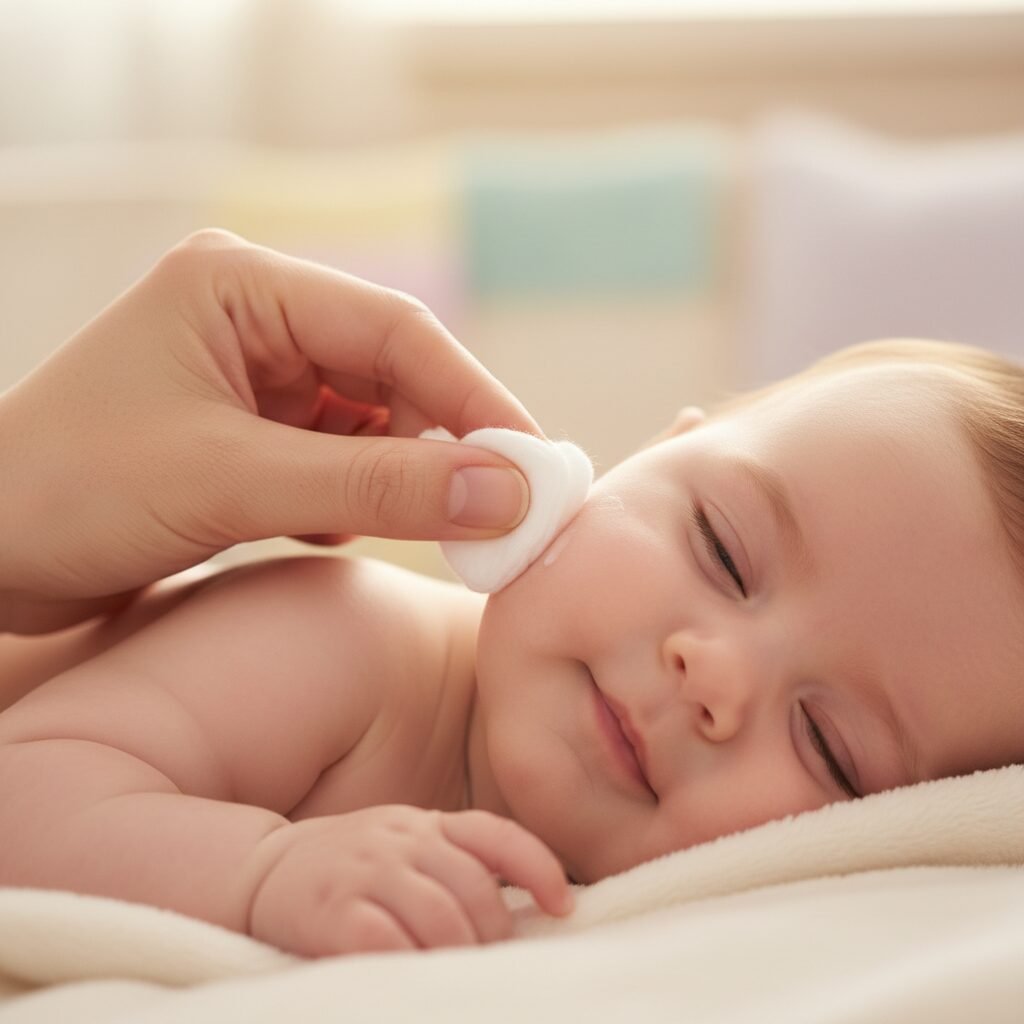
Now for the part you’ve been waiting for! It might sound like an old wives’ tale, but using breastmilk for skin irritations has some science behind it. Your breastmilk, often called ‘liquid gold,’ is packed with amazing properties that go far beyond nutrition.
Specifically, it contains lauric acid, a fatty acid that is also found in coconut oil and has natural antimicrobial and anti-inflammatory properties. When applied topically, it can help gently combat bacteria and soothe irritated skin without any harsh chemicals. It’s nature’s perfect solution for your baby’s perfect skin.
A Simple Step-by-Step Guide:
- Start with a Clean Canvas: Make sure your hands and your baby’s face are clean. You can gently wipe your baby’s face with a soft cloth and lukewarm water, then pat it completely dry. Never scrub.
- Express a Little Milk: Hand express or pump a small amount of breastmilk into a clean container or onto a clean cotton ball or pad. You only need a few drops.
- Gently Dab, Don’t Rub: Soak the cotton ball in the milk and gently dab it onto the areas with acne. Be careful to avoid getting it in your baby’s eyes.
- Let it Air Dry: Allow the thin layer of milk to air dry on your baby’s skin. It will absorb quickly, and you don’t need to rinse it off. The milk creates a light, protective barrier.
- Repeat as Needed: You can try this simple remedy a couple of times a day, perhaps after a feeding. Consistency is helpful, but don’t overdo it.
Many parents report seeing an improvement in just a few days. It’s a wonderfully gentle approach that honors the natural connection between you and your baby.
Gentle Care Dos and Don’ts for Your Baby’s Delicate Skin
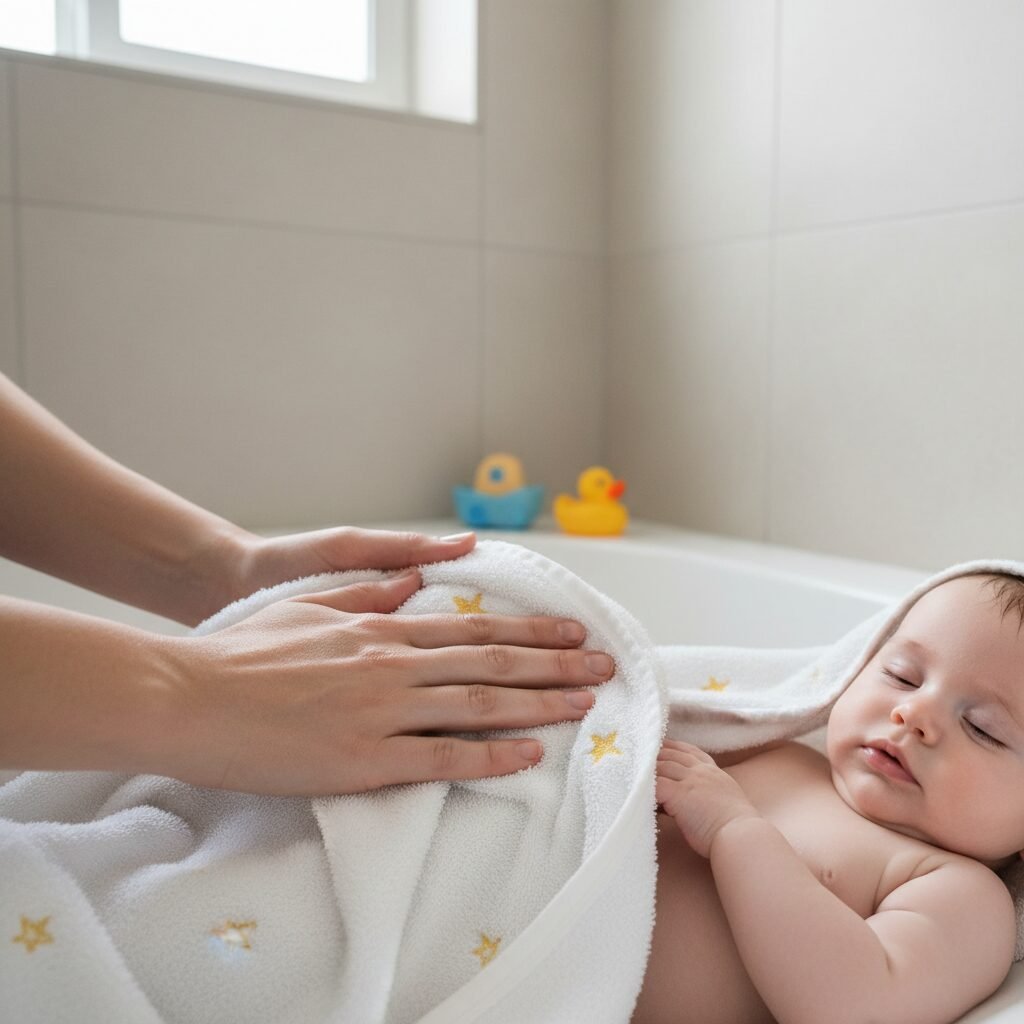
The breastmilk trick is fantastic, but it works best as part of an overall gentle skincare routine. A newborn’s skin is incredibly sensitive and has a delicate pH balance, so less is always more. Here are some essential dos and don’ts to live by while the acne runs its course.
| The ‘Dos’ (What to Do) | The ‘Don’ts’ (What to Avoid) |
|---|---|
| Do wash your baby’s face daily with lukewarm water only. | Don’t scrub, pick, or squeeze the pimples. This can lead to irritation and infection. |
| Do use a mild, fragrance-free baby soap or cleanser if needed, and only 2-3 times a week. | Don’t use oily or greasy lotions and creams on the affected areas. |
| Do pat your baby’s skin dry with a soft, clean towel. | Don’t use over-the-counter acne medications, washes, or wipes meant for adults. |
| Do keep your baby’s bedding clean and free of harsh detergents. | Don’t over-bundle your baby, as overheating and sweat can irritate the skin. |
| Do be patient! Most cases of baby acne clear up on their own within a few weeks to months. | Don’t stress. This is a cosmetic issue that doesn’t bother your baby at all. |
Safety Warning: Please, never use any adult acne products on your baby. Their skin is far too sensitive and can have a severe reaction to ingredients like salicylic acid or benzoyl peroxide.
When Should You Worry? Signs It’s Time to Call the Doctor

While baby acne is typically a ‘watch and wait’ situation, your parental instincts are powerful for a reason. It’s always better to be safe and reach out to your pediatrician if you have any concerns. Trust your gut!
In most cases, a quick phone call can provide immense peace of mind. However, there are a few specific signs that definitely warrant a professional evaluation. These could indicate that what you’re seeing is not simple baby acne or that it might be developing into a more serious skin infection.
Call Your Pediatrician If You Notice:
- Signs of Infection: The pimples look more like blisters or pustules (pus-filled bumps), appear very inflamed, or are weeping or crusting with a yellow-ish fluid.
- Your Baby Seems Unwell: The rash is accompanied by a fever, poor feeding, or significant irritability and fussiness. A skin issue plus other symptoms is always worth a call.
- It’s Spreading or Worsening: The rash is spreading beyond the face to the whole body or seems to be getting significantly worse instead of staying the same or improving over time.
- It Appears Later: While neonatal acne is common, acne that appears after 6 weeks of age (known as infantile acne) can sometimes be a sign of an underlying issue and should be checked out.
- It Seems Very Itchy: If your baby is constantly trying to scratch or rub their face, it might be something more like eczema, which requires a different management plan.
Your pediatrician is your partner in this journey. They can confirm the diagnosis, rule out anything more serious, and provide guidance if a different treatment is needed. Never hesitate to make that call.
Conclusion
Navigating the world of newborn care is a beautiful, messy, and sometimes confusing adventure. Those little pimples on your baby’s face are just one of the many small hurdles you’ll clear with love and confidence. Remember, baby acne is a temporary phase that bothers you far more than it bothers your little one. It’s a sign that their tiny body is adjusting to life outside the womb.
By embracing gentle care, avoiding harsh products, and perhaps trying the wonderfully natural breastmilk remedy, you are doing everything right. And most importantly, by knowing when to seek professional advice, you are being the amazing, attentive parent your baby needs. So give that sweet, spotty face a gentle kiss. This too shall pass, and soon you’ll be on to the next parenting mystery. You’ve got this!