
Gripe Water vs. Gas Drops: Which One Actually Works for Newborn Tummies?
There are few sounds more heart-wrenching to a new parent than the distressed cry of their tiny baby. When you’ve fed, changed, and cuddled them, but the fussing continues, it’s easy to feel overwhelmed and helpless. Often, the culprit is a tiny, immature digestive system working overtime, leading to trapped gas and discomfort. In your late-night searches for a solution, you’ve undoubtedly come across two go-to remedies: gripe water and gas drops. But what’s the real difference? Is one better or safer than the other? As a pediatric nurse and lactation consultant, I’ve walked countless new parents through this exact question. Let’s take a deep breath together, put the marketing aside, and look at what these remedies are, how they work, and which one might be the right choice for your family. This is your friendly, evidence-based guide to soothing that tiny, troubled tummy.
Decoding Your Baby’s Discomfort: Is It Really Gas?

Before we even open a bottle, let’s play detective. Sometimes, what looks like gas pain can be something else entirely. A newborn’s communication tool is crying, and they use it to signal everything! Understanding the classic signs of gas can help you target the problem more effectively.
Common Signs of Gas in Newborns:
- Crying and Squirming: Especially during or after feedings.
- Pulling Legs Up: They may pull their knees toward their chest, arch their back, and clench their little fists.
- A Hard, Distended Tummy: Their little belly might feel tight or swollen to the touch.
- Passing Gas or Burping: You might notice more frequent toots or burps, which can sometimes bring temporary relief.
It’s also important to remember that newborns can be fussy for many other reasons. Before assuming it’s gas, run through a quick mental checklist:
- Hunger: Are they showing hunger cues like rooting or sucking on their hands?
- Dirty Diaper: A simple check can sometimes be the magic fix.
- Tiredness: An overtired baby is a fussy baby. Look for signs like yawning, rubbing their eyes, or staring off into space.
- Temperature: Are they too hot or too cold? Feel the back of their neck.
- Just Needs a Cuddle: Sometimes, your baby just wants to be held close. The need for comfort is powerful!
If you’ve checked all these boxes and the signs still point to a gassy, unhappy baby, then it’s time to explore your relief options.
What Exactly Is Gripe Water? The Herbal Approach

Gripe water has been around for generations—your own grandmother might have even used it! It’s an herbal supplement, not a medication, and its formulation can vary widely between brands. It’s essential to know what you’re looking at on the label.
The History and Ingredients
Originally formulated in the 1850s, the first gripe water contained alcohol and sugar! Thankfully, modern formulations are much safer, but they are still not regulated by the FDA in the same way medications are. This means the potency and purity can differ from bottle to bottle.
Common ingredients you’ll find in today’s gripe water include:
- Dill Seed Oil: Believed to warm and relax the tummy, potentially easing indigestion.
- Fennel Seed Oil: Often used as a natural remedy to reduce gas and muscle spasms in the gut.
- Ginger Root Extract: Well-known for its anti-nausea and digestive-soothing properties.
- Chamomile: A gentle herb known for its calming and anti-inflammatory effects.
How It’s Supposed to Work
The theory behind gripe water is that these herbal ingredients work together to soothe the digestive tract, reduce inflammation, and help ease the muscle spasms that contribute to gas pain. Some formulas also contain sodium bicarbonate, which may help neutralize stomach acid, though this is less common now. The sweet taste can also act as a simple distraction for a fussy baby.
A Word of Caution: While generally considered safe, there is very little scientific evidence to prove that gripe water is effective for treating gas. Its effects are largely anecdotal. Always choose a formula that is free of alcohol, sucrose (sugar), and artificial colors or flavors. Check with your pediatrician before giving your baby any supplement.
Understanding Gas Drops: The Science of Simethicone
Unlike the herbal blend of gripe water, gas drops are a straightforward, FDA-approved over-the-counter medication. The approach here is less about soothing and more about physically breaking down the problem.
The Active Ingredient: Simethicone
The hero ingredient in virtually all infant gas drops is simethicone. It’s a gentle yet effective anti-foaming agent. Imagine your baby’s tummy is full of tiny, painful gas bubbles that are difficult to pass. Simethicone works by breaking down the surface tension of these small bubbles, combining them into larger bubbles. These larger bubbles are much easier for your baby’s system to handle and pass, either as a burp or as flatulence, providing quick relief.
How It Works & Safety
The best part about simethicone is how it works in the body—or rather, how it doesn’t. It is not absorbed into the bloodstream. It simply travels through the digestive tract, does its bubble-busting job, and then exits the body in the stool. This makes it one of the safest options for infants, with very few, if any, side effects. It’s often the first thing pediatricians recommend for gas because its mechanism is well-understood and its safety profile is excellent.
You can typically give gas drops directly into your baby’s mouth with the provided dropper or mix them into a bottle of formula or expressed breast milk. They can often be used several times a day, but always follow the dosage instructions on the package or from your doctor.
Head-to-Head Comparison: Gripe Water vs. Gas Drops
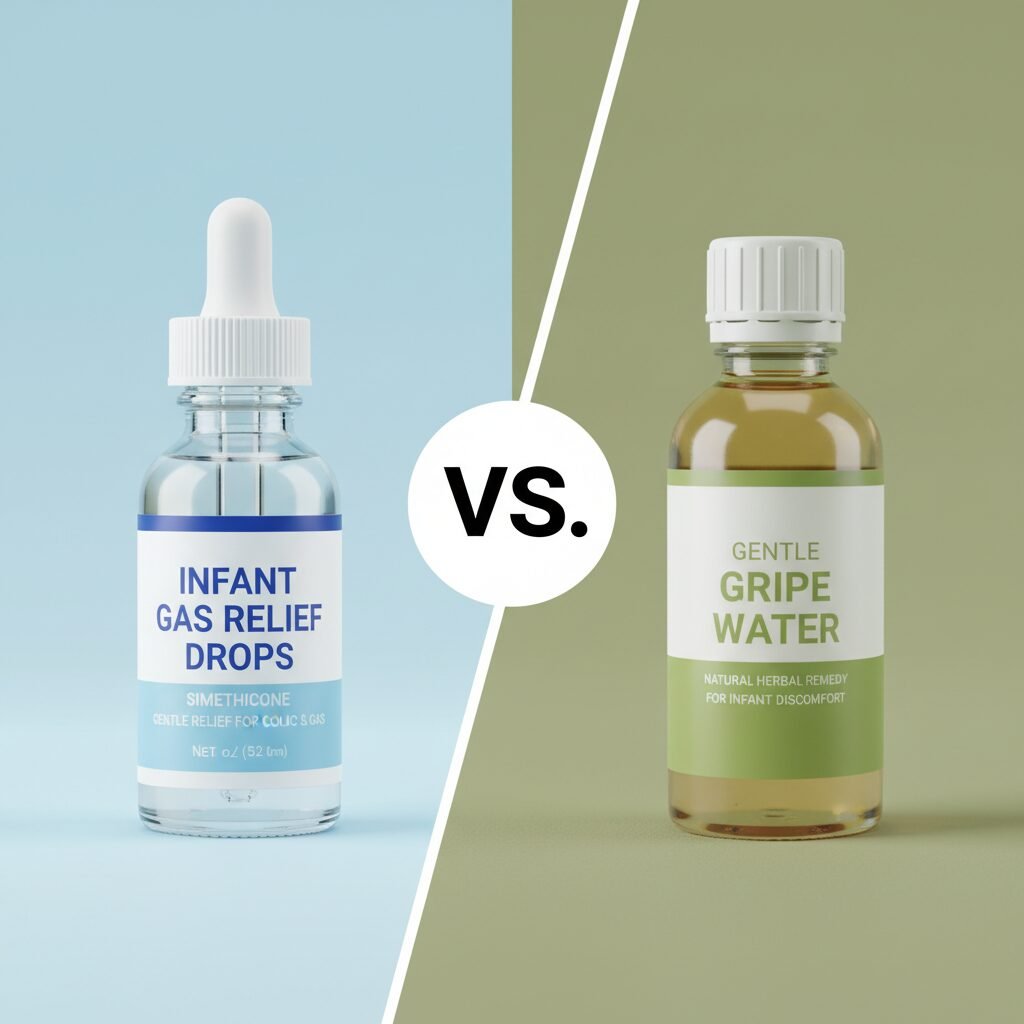
So, when you’re standing in the pharmacy aisle at 2 a.m., which one should you reach for? Let’s put them side-by-side to make the decision clearer. This table breaks down the key differences to help you choose what feels right for your family and your baby.
| Feature | Gas Drops (Simethicone) | Gripe Water |
|---|---|---|
| Primary Ingredient | Simethicone (an anti-foaming agent) | A blend of herbs (commonly dill, fennel, ginger) |
| How It Works | Physically breaks down the surface tension of gas bubbles, combining them into larger, easier-to-pass bubbles. | Theoretically soothes the digestive tract and eases muscle spasms. The sweet taste may also act as a calming distraction. |
| FDA Regulation | Regulated as an over-the-counter (OTC) medication. Approved for treating gas. | Regulated as a dietary supplement. Not evaluated by the FDA for effectiveness or purity. |
| Scientific Evidence | Well-established mechanism of action. Considered effective and safe by the medical community. | Largely anecdotal. Lacks strong, large-scale scientific studies to prove effectiveness. |
| Safety & Side Effects | Considered very safe as it’s not absorbed into the bloodstream. Side effects are extremely rare. | Generally safe, but potential for allergic reactions to herbal ingredients. Must choose brands free of alcohol, sucrose, and sodium bicarbonate. |
| Best For… | Parents looking for a science-backed, FDA-approved remedy that directly targets the physical cause of gas bubbles. | Parents who prefer an herbal, more traditional approach and whose baby may find the sweet taste soothing. |
Ultimately, the choice is personal. Gas drops offer a direct, scientifically-supported solution to the physical problem of gas. Gripe water offers a gentler, herbal approach that may provide comfort, even if the mechanism is less clear. Many parents find that one works better for their baby than the other, and sometimes it’s simply a matter of trial and error.
Beyond the Bottle: Natural Ways to Soothe a Gassy Tummy

Before reaching for any remedy, remember that you have powerful tools right at your fingertips! These gentle, effective techniques can work wonders for a gassy baby and can be used in combination with drops or gripe water.
Movement and Positioning
- Bicycle Legs: Lay your baby on their back and gently move their legs in a bicycling motion. This can help mechanically move gas through the intestines.
- Tummy Time: Supervised tummy time doesn’t just build neck strength; the gentle pressure on the abdomen can help relieve gas. Aim for a few minutes at a time, several times a day (when baby is awake and alert!).
- The Colic Hold: Drape your baby tummy-down along your forearm, with their head supported in your hand. The gentle pressure and warmth can be incredibly soothing.
Feeding Adjustments
- Burp Frequently: Don’t wait until the end of a feeding. If bottle-feeding, burp after every ounce or two. If breastfeeding, burp when you switch sides.
- Paced Bottle Feeding: Use a slow-flow nipple and hold the bottle horizontally. This prevents your baby from gulping too much air along with their milk.
- Check Your Latch: For breastfeeding moms, a deep latch ensures the baby isn’t swallowing excess air. If you’re struggling with pain or clicking sounds, a lactation consultant can be a lifesaver.
Soothing Techniques
- A Warm Bath: The warm water can help relax your baby’s abdominal muscles, allowing them to release trapped gas more easily.
- Gentle Tummy Massage: With your baby on their back, gently massage their tummy in a clockwise motion. This follows the natural path of digestion.
When to Call the Pediatrician: Red Flags to Watch For

Gas and fussiness are normal parts of being a newborn. However, there are times when these symptoms can signal something more serious. Trust your parental instincts—you know your baby best. If something feels off, it’s always better to be safe and make the call.
Important Safety Note: Please contact your pediatrician immediately if your baby’s fussiness is accompanied by any of the following symptoms. This is not a time for home remedies; it’s a time for professional medical advice.
- Fever: A rectal temperature of 100.4°F (38°C) or higher in a newborn is a medical emergency.
- Changes in Stool: Especially blood in the stool, mucus, or severe, watery diarrhea.
- Vomiting: Not just spit-up, but forceful, projectile vomiting.
- Poor Weight Gain: If your baby is not gaining weight appropriately, it could signal an underlying issue.
- Refusal to Eat: Consistently refusing to breastfeed or take a bottle.
- Extreme Lethargy: If your baby seems unusually sleepy, floppy, or is difficult to wake.
- Inconsolable Crying: Crying that lasts for hours on end and cannot be soothed by any means.
Your pediatrician is your partner in this journey. They can help rule out other issues like reflux, a milk protein allergy, or other medical conditions and provide you with a clear plan to help your baby feel better.
Conclusion
Navigating the world of newborn care is a journey of learning and love. When it comes to the great debate of gripe water versus gas drops, there isn’t one single ‘winner.’ The best choice is the one that is safe and effective for your baby. Gas drops (simethicone) offer a direct, science-backed approach that physically targets gas bubbles and is considered extremely safe. Gripe water provides a gentler, herbal alternative that many families swear by for its soothing qualities, even if the scientific evidence is lacking. Remember to always try natural, hands-on techniques like tummy massage and bicycle legs first. And most importantly, give yourself grace. You’re doing an amazing job. When in doubt, your pediatrician is your most trusted resource. You’ve got this!