Failed The Hearing Screen? What It Really Means And What To Do Next
Hearing the word ‘fail’ in connection with your brand-new baby is enough to make any parent’s heart plummet. You’ve just welcomed this perfect little person into the world, and suddenly, you’re faced with a result that sounds scary and definitive. Please, take a deep, calming breath. As a pediatric nurse who has delivered this news and supported countless families through it, I want to tell you the most important thing first: a failed newborn hearing screen is NOT a diagnosis.
It’s simply a sign that we need to take a closer look. Think of it as a smoke detector going off—it doesn’t mean the house is on fire, but it does mean we need to go check things out. This initial screening is designed to be extra sensitive to catch every possible issue, which means it also flags a lot of temporary, perfectly normal newborn situations.
In this guide, we’re going to walk through this together, step by step. We’ll demystify the test itself, explore the very common and benign reasons for a ‘fail’ result, outline exactly what happens next, and most importantly, reassure you that you and your baby are on a well-established path with tons of support available.
First Things First: What Exactly Is the Newborn Hearing Screen?
Before we dive into the ‘why,’ let’s talk about the ‘what.’ Universal Newborn Hearing Screening (UNHS) is a standard practice in hospitals across the country, and it’s a wonderful public health initiative. The goal is simple: identify any potential hearing loss as early as possible. Early detection is absolutely critical for a child’s language development and learning.
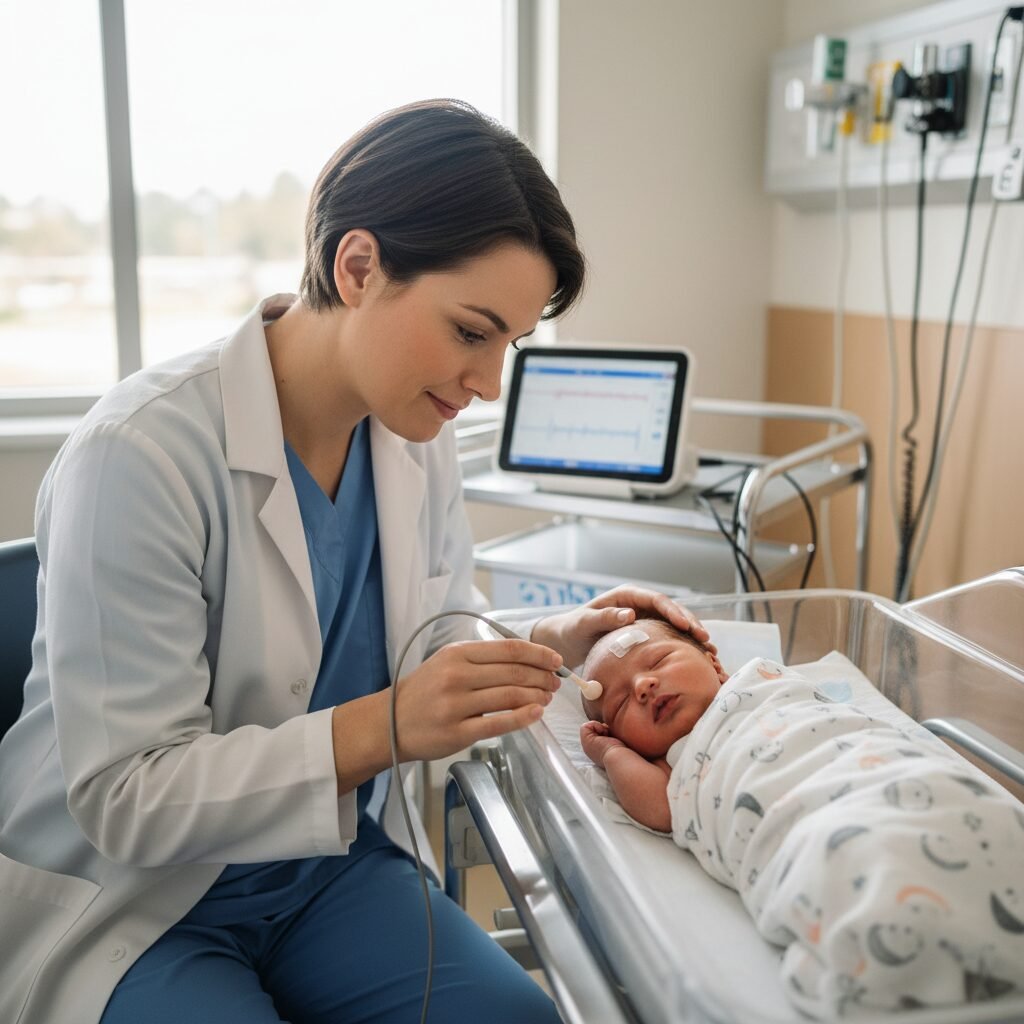
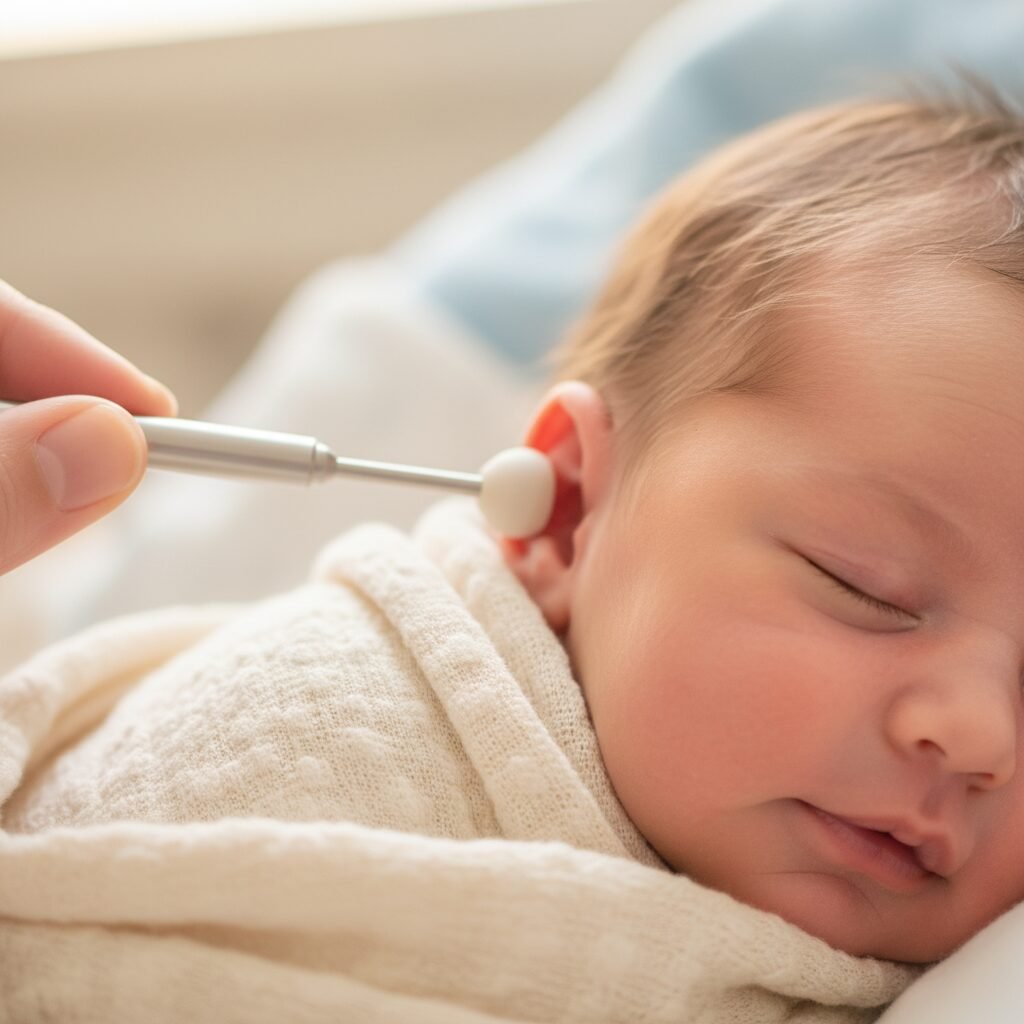
The tests are quick, completely painless, and usually done while your baby is sleeping or resting quietly. A trained technician or nurse will perform one of two common tests:
- Otoacoustic Emissions (OAE): This test checks how the inner ear (the cochlea) responds to sound. A tiny, soft-tipped earphone is placed in your baby’s ear canal, and it plays soft clicking sounds. A microphone then measures the ‘echo’ that a healthy cochlea produces in response. If the echo is present, it’s a good sign the ear is working.
- Automated Auditory Brainstem Response (A-ABR): This test measures how the hearing nerve and the brain respond to sound. Soft earphones are placed over your baby’s ears to play sounds, and small sensors (like little stickers) are placed on your baby’s head to detect the brain’s response to the sounds. It sounds high-tech, but it’s just as gentle as the OAE.
Both tests take only a few minutes. The machine gives a simple ‘pass’ or ‘refer’ result. A ‘refer’ is what we’re calling a ‘fail’—it just means your baby needs to be referred for more testing.
A Nurse’s Note: Please don’t worry that the test hurt or bothered your baby. They are so gentle that most infants sleep right through the entire process! We take every precaution to make it a comfortable experience.
Why Your Baby Might Not Have Passed (Hint: It’s Usually Not What You Think!)

Okay, this is the part I really want you to hear. The overwhelming majority of babies who fail the initial hearing screen go on to have perfectly normal hearing. The screening is sensitive, and there are many temporary, completely harmless reasons for a ‘refer’ result.
Here are the most common culprits:
- Fluid or Debris in the Ear Canal: This is, by far, the number one reason. Babies are born covered in vernix (that cheesy, white substance) and amniotic fluid. It’s very common for some of this fluid to remain in the outer or middle ear for a few hours or even a couple of days after birth. This temporary blockage can prevent sound from getting through cleanly, leading to a failed screen. It usually resolves on its own.
- A Fussy or Active Baby: The tests require the baby to be still and quiet. If your little one was wiggling, crying, or even just sucking vigorously on a pacifier, it can create noise that interferes with the test results.
- A Noisy Room: Similarly, if the test was conducted in a busy hospital room with alarms, conversations, or other background noise, it can affect the sensitive equipment’s ability to get a clear reading.
- Middle Ear Fluid: Sometimes, fluid can be trapped behind the eardrum, a condition known as middle ear effusion. This is also often temporary and resolves without any intervention.
Think about it like trying to listen to a quiet conversation in a noisy, crowded room while you have water in your ears from swimming—it’s difficult to hear clearly! That’s often what’s happening for your baby during that first test. It’s an issue with the testing conditions, not necessarily with their hearing ability.
Okay, So What’s Next? Your Step-by-Step Guide
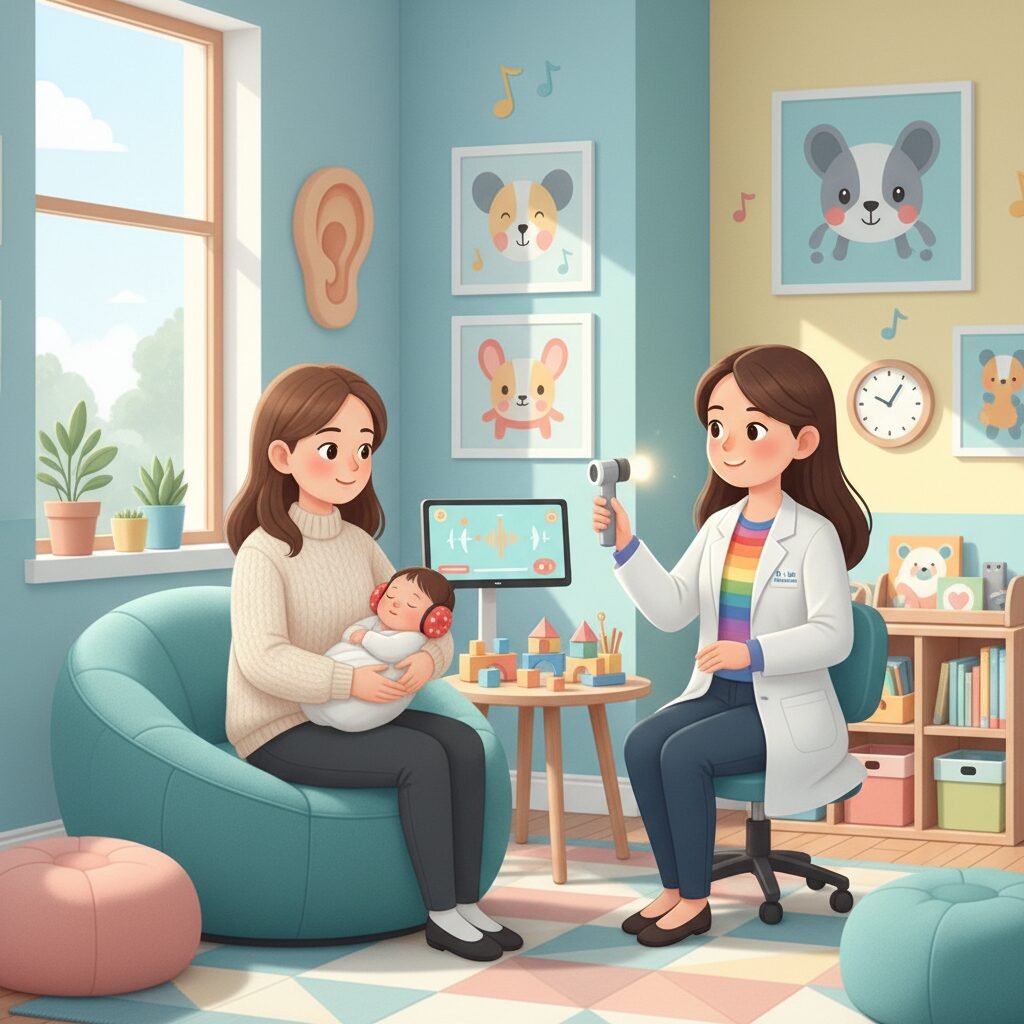
So you have a ‘refer’ result. Your care team isn’t just going to leave you hanging. There is a clear and established protocol to follow, designed to give you answers as quickly as possible. Here’s what you can typically expect:
-
The Re-Screen
The very first step is almost always a second screening. This might happen before you’re even discharged from the hospital, or you may be asked to come back in a week or two. This delay gives any fluid in the ear canal a chance to clear out naturally. Many, many babies who fail the first test pass this second one with flying colors.
-
The Referral to a Pediatric Audiologist
If your baby doesn’t pass the second screening, the next step is a referral to a pediatric audiologist. This is not a reason to panic; it’s a reason to get expert help. A pediatric audiologist is a specialist with advanced training in testing the hearing of infants and children. They have specialized equipment and techniques to get the most accurate results in a baby-friendly environment.
-
Comprehensive Diagnostic Testing
The audiologist will perform a more thorough set of tests, known as a diagnostic evaluation. This is different from the simple screening. These tests will determine not only if there is a hearing loss, but also the type and degree of hearing loss. They can pinpoint exactly what’s going on. This appointment will give you definitive answers. Be sure to write down any questions you have beforehand so you can get all the information you need.
Safety Warning: It is critically important to follow through with these appointments. Do not skip the re-screen or the audiology referral. The ‘wait and see’ approach is not recommended. The sooner a potential hearing loss is identified, the better the outcomes for your child’s development.
Navigating a Diagnosis: You Are Not Alone
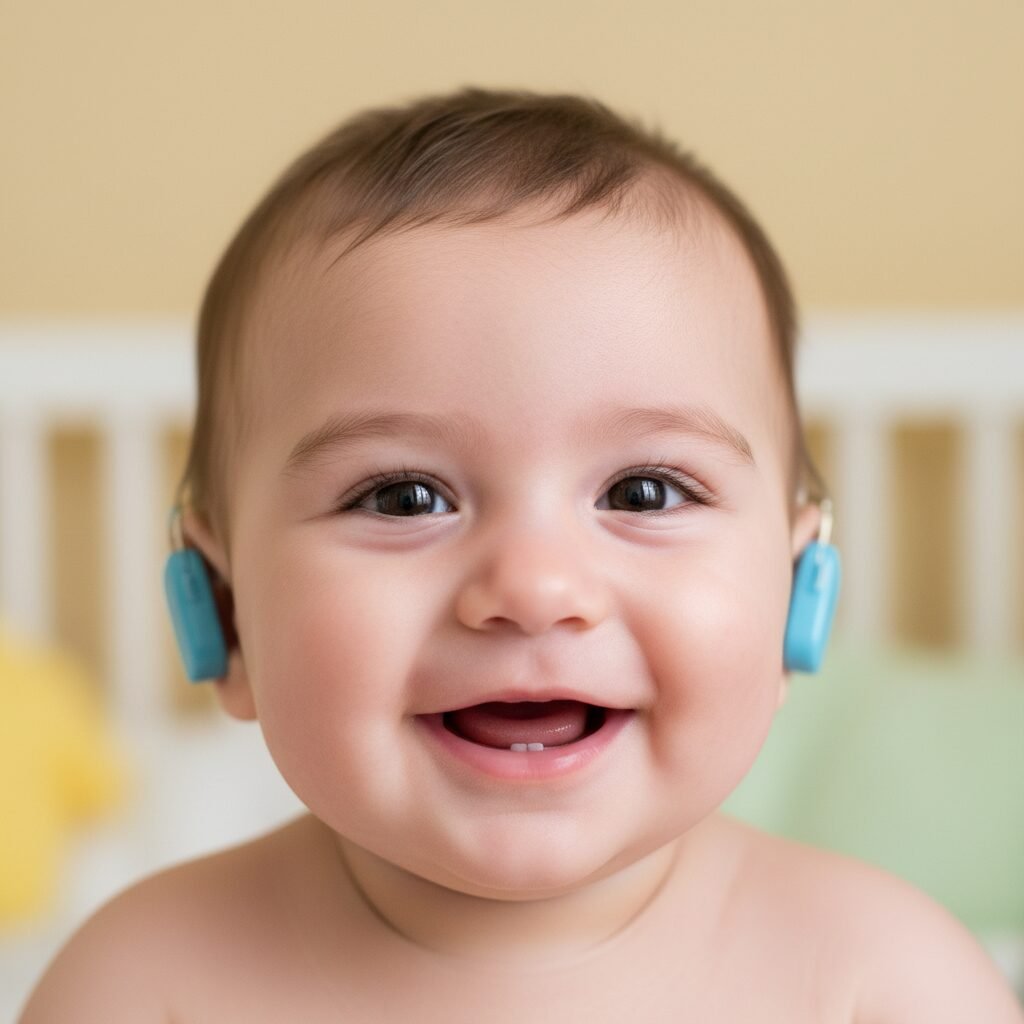
For the small percentage of babies who are diagnosed with a permanent hearing loss, it’s normal to feel a wave of emotions—grief, fear, and uncertainty. Please allow yourself to feel whatever you need to feel. But I also want you to know this: a diagnosis of hearing loss today is not what it was a generation ago. The future for your child is incredibly bright.
Early Intervention is Everything
The entire point of newborn hearing screening is to get your child help early. The human brain is remarkably adaptable in the first few years of life. By starting interventions early (ideally by 6 months of age), children with hearing loss can develop language, social, and learning skills right on par with their hearing peers. You have already given your child a huge head start by following through with this process.
A World of Options and Support
Today’s technology and support systems are amazing. Depending on your child’s specific needs, options may include:
- Hearing Aids: Modern digital hearing aids are tiny, powerful, and come in fun colors. They can be fitted for even the smallest infants.
- Cochlear Implants: For more significant hearing loss, cochlear implants are a surgical option that can provide a sense of sound.
- Communication Approaches: You will learn about various ways to help your child develop language, including Auditory-Verbal Therapy (which focuses on listening and spoken language) and American Sign Language (ASL). Many families use a combination of approaches.
You will be connected with an Early Intervention (EI) program in your state, which provides services and support to families of children with developmental delays or disabilities. These services are often free or low-cost and are an invaluable resource. You will have a team of professionals—audiologists, therapists, educators—partnering with you every step of the way.
How to Support Your Baby—and Yourself—Right Now
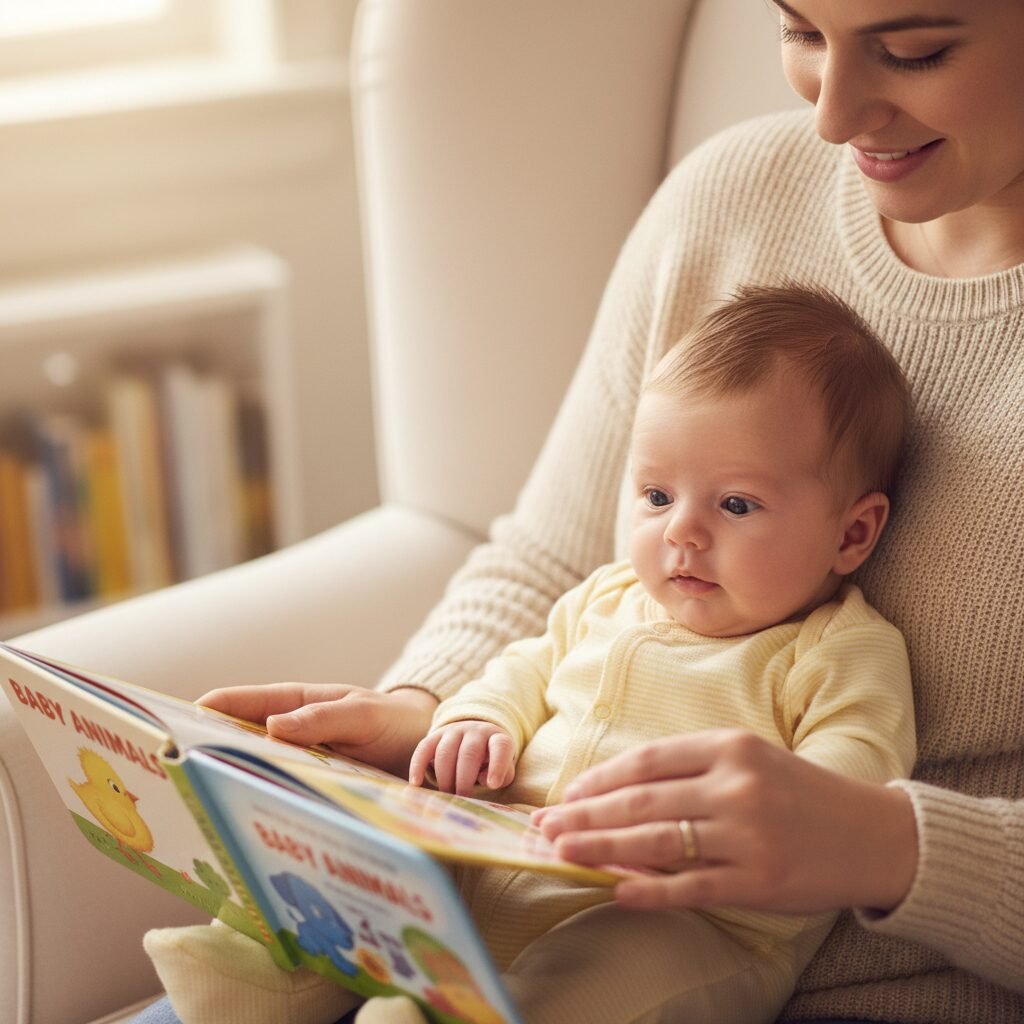
Whether you’re in the waiting period between tests or just received a diagnosis, this can be a stressful time. It’s important to care for your baby and for yourself.
For Your Baby:
- Talk, Sing, Read: Do not stop communicating with your baby! Your voice is a source of comfort. Let them feel the vibrations of your voice by holding them close when you talk or sing. Read colorful books and narrate your day (‘Now we’re changing your diaper! Look at these cute little feet!’). This interaction is vital for bonding and brain development, regardless of what they can hear.
- Don’t Try to ‘Test’ Them at Home: It’s tempting to clap or jingle keys to see if your baby startles. This is not a reliable way to test hearing and will likely only increase your anxiety. Leave the testing to the professionals.
- Focus on All Their Senses: Engage your baby through touch (cuddles, massage), sight (making eye contact, showing them bright objects), and smell. Hearing is just one piece of their rich sensory world.
For You:
- Acknowledge Your Feelings: It is okay to be worried, sad, or overwhelmed. Talk about these feelings with your partner, a trusted friend, or a family member. You don’t have to pretend to be strong.
- Get Reliable Information: Stick to reputable sources for information, like the CDC, the American Academy of Pediatrics, or hearing loss advocacy groups. Avoid late-night internet rabbit holes, which can be filled with misinformation and fear.
- Advocate for Your Child: You are your child’s expert and their best advocate. Write down your questions, make sure you understand the answers, and don’t be afraid to ask for clarification. You are the leader of your child’s team.
Conclusion
That single word, ‘fail,’ on a hospital form can feel enormous, but I hope you can see now that it’s just a tiny first step on a much larger journey. For most families, it’s a short path that quickly ends with the reassurance of a ‘pass’ on the second try. For others, it’s the beginning of a different path, one filled with incredible resources, amazing technology, and a strong, supportive community waiting to welcome you.
Whatever the outcome, remember this: your baby is the same perfect, wonderful child they were before the test. A hearing screening result does not define them. You are their parent, you are their advocate, and you have everything it takes to navigate what comes next. Take it one step at a time, one day at a time. You’ve got this.