
Don’t Miss This! The Strict Deadline for Adding Your Newborn to Insurance
Hey there, new parent, and welcome to the most beautifully chaotic journey of your life! I’m a pediatric nurse and lactation consultant, and I’ve spent decades helping families just like yours navigate these exciting first few weeks. Between the endless diaper changes, the middle-of-the-night feedings, and trying to decipher every tiny coo and cry, your to-do list is probably a mile long. I get it. But there’s one item on that list that is incredibly time-sensitive and non-negotiable: adding your new baby to your health insurance plan.
I know, I know—insurance is the last thing you want to think about when you’re busy staring at your baby’s perfect little face. It can feel like a mountain of confusing paperwork. But trust me on this one, getting it sorted out within the first few weeks is one of the most important things you can do for your baby’s health and your family’s financial peace of mind. Missing this strict deadline can lead to major headaches and uncovered medical bills. But don’t you worry! We’re going to break it down together, step-by-step. This guide is designed to make the process as simple and stress-free as possible, so you can tick it off your list and get right back to the snuggles. You’ve got this!
The ‘Why’ Behind the Rush: Protecting Your Baby (and Your Wallet)

So, why the big hurry? It all comes down to a little thing insurance companies call a Qualifying Life Event (QLE). The birth of a child is a major QLE, which means it triggers a special window of time for you to make changes to your health insurance plan outside of the usual annual Open Enrollment period. This is fantastic news because it means you don’t have to wait to get your baby covered.
Here’s the catch: that window is short. If you miss it, you could be in a tough spot. From the moment your baby is born, they start receiving medical care—screenings, checkups, vaccinations, and of course, the hospital stay itself. For the first 30 days, your insurance plan often temporarily covers your newborn under your policy. But for that coverage to become permanent and for all those initial bills to be paid, you must officially enroll them within the deadline.
A Gentle Warning: If you miss the deadline, your insurer can deny coverage for all the care your baby received after birth. This means you could be personally responsible for paying the full cost of the hospital stay, doctor visits, and any other treatments. We’re not saying this to scare you, but to empower you with the knowledge to act quickly!
Missing the Special Enrollment Period could mean you have to wait until the next Open Enrollment to get your baby covered. Depending on when your baby is born, that could be months away, leaving your little one uninsured. Taking care of this now ensures that from their very first breath, your baby has the protection of health coverage, and you have the peace of mind that comes with it.
Mark Your Calendar: Understanding the 30- to 60-Day Rule
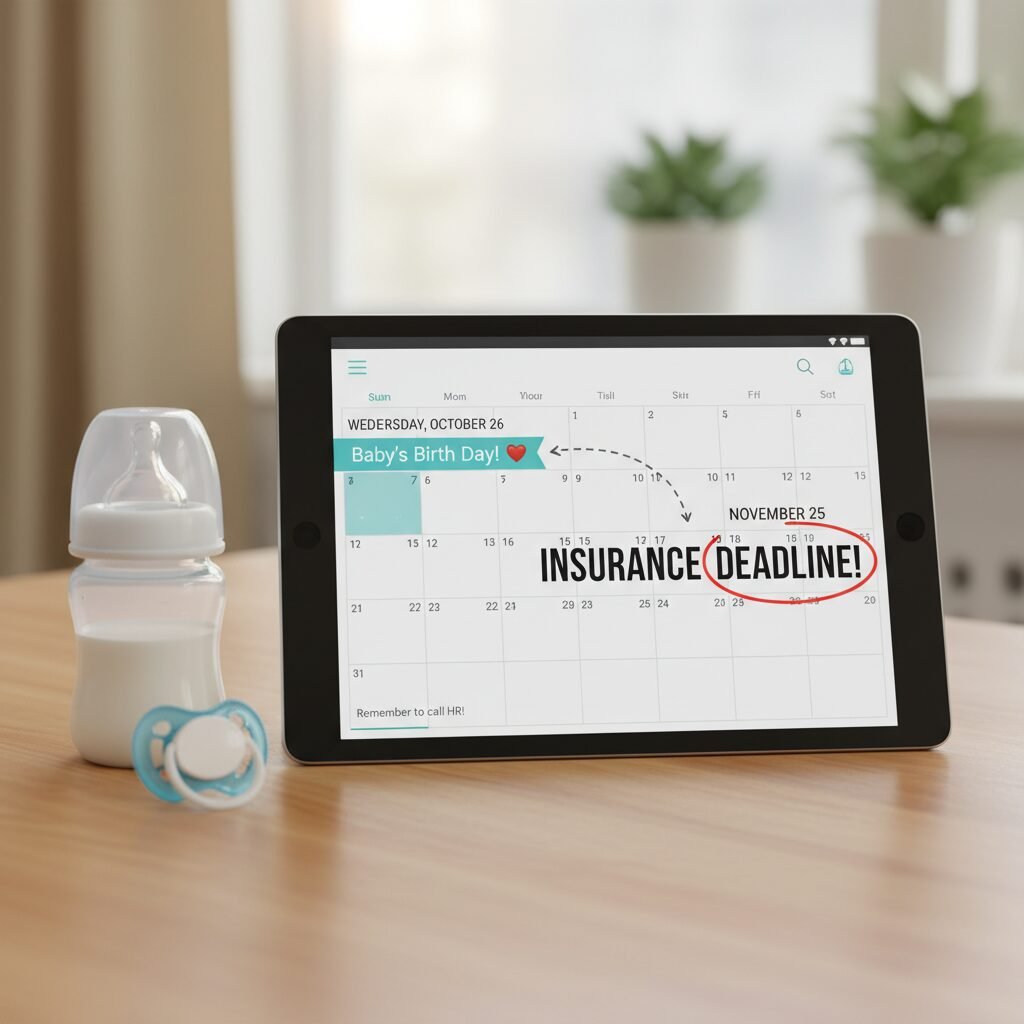
Okay, let’s get specific. How long do you actually have? While the concept of a Special Enrollment Period (SEP) is federally mandated, the exact length of that period can vary depending on your type of insurance. This is why it’s so important to know your plan and act fast.
Think of your baby’s birth date as Day Zero. The countdown starts immediately. You’ll want to circle that deadline on your calendar, set a reminder on your phone, and maybe even stick a note on the fridge. With sleep deprivation in full swing, it’s easy for dates to blur together.
Here’s a general breakdown of the typical deadlines. However, your first step should always be to confirm the specific timeframe with your insurance provider or HR department.
| Type of Insurance Plan | Typical Enrollment Deadline | Best First Step |
|---|---|---|
| Employer-Sponsored Insurance | Usually 30 days from the date of birth. Some employers may offer 60 days, but 30 is more common. | Contact your company’s Human Resources (HR) department the week you get home from the hospital. |
| Marketplace (ACA) Plan | Typically 60 days from the date of birth to report the change and enroll your baby. | Log in to your HealthCare.gov or state marketplace account to report a life change. |
| Medicaid or CHIP | Varies by state, but you should report the birth as soon as possible. Your baby may be automatically eligible. | Call your state’s Medicaid agency to report the new addition to your household. |
Your Most Important Takeaway: Do not assume you have 60 days! Many employer-sponsored plans have a strict 30-day rule. The safest bet is to start the process within the first week of your baby’s life.
Your Action Plan: How to Add Your Baby, Step-by-Step

Feeling ready to tackle this? Great! The actual process is usually straightforward once you know who to talk to. Let’s walk through the steps based on your insurance situation.
If You Have Employer-Sponsored Insurance:
This is the most common scenario for new parents. Your go-to person is in your (or your partner’s) HR department.
- Contact HR Immediately: Send an email or make a call as soon as you can. Simply say, “We’ve had our baby! What is the process for adding them to my health insurance plan?”
- Ask for the Paperwork: They will tell you if you need to fill out physical forms or if the process is handled through an online benefits portal. They will also confirm your specific deadline.
- Complete the Forms: Fill out everything completely. You’ll need your baby’s full name and date of birth. You may be able to submit the forms without a Social Security Number initially, but be sure to ask how to provide it once it arrives.
- Submit and Confirm: Send back the forms or complete the online process. It’s always a good idea to follow up with an email a few days later to confirm they received everything and that your baby has been successfully added.
If You Have a Marketplace (ACA) Plan:
If you get your insurance through HealthCare.gov or your state’s exchange, you’ll handle this online.
- Log In to Your Account: Go to the official marketplace website and log in.
- Report a Life Change: Look for an option like “Report a life change” or “Update my application.” The birth of a child is a key option here.
- Update Your Household Information: You’ll add your baby as a new member of your household. You’ll need their name and birth date.
- Review Your Options: Adding a dependent may make you eligible for different plans or increased financial assistance. You can choose to keep your current plan and add your baby, or you might have the option to switch to a new plan that better suits your family’s new needs.
If Parents Have Separate Insurance Plans:
If you and your partner have different health insurance plans, you have a choice to make. You can add the baby to either plan. It’s wise to do a quick comparison.
| Factor to Compare | What to Look For |
|---|---|
| Monthly Premium | How much will your monthly payment increase on each plan? |
| Deductibles & Out-of-Pocket Max | Which plan has lower costs before insurance starts paying in full? Consider the family deductible vs. individual. |
| Pediatrician Network | Is your chosen pediatrician in-network for both plans? This is a big one! |
| Coverage Details | Compare co-pays for doctor visits, prescription coverage, and specialist care. |
Run the numbers and check the networks to see which plan makes the most sense for your family. You only need to add the baby to one plan.
Gather Your Documents: What You’ll Need to Make the Call

Before you sit down to fill out the forms or make the call, it helps to have all your information ready. This will make the process much smoother. Think of it as your insurance enrollment toolkit!
Here’s a checklist of the documents and information you will likely need:
- Proof of Birth: This is the most important document! The hospital will provide you with paperwork that serves as proof of birth before you leave. This is often called a “Verification of Birth Facts.” It’s usually enough to get the process started.
- Your Baby’s Birth Certificate: You’ll apply for the official birth certificate, but it can take several weeks to arrive. Don’t wait for it! Use the hospital paperwork to meet your deadline, and provide the official certificate later if requested.
- Your Baby’s Social Security Number (SSN): You’ll also apply for this at the hospital, and the card will be mailed to you. Like the birth certificate, you often don’t need to have the physical card in hand to start the enrollment. You can usually add your baby and provide the number once it arrives. Just be sure to ask your HR rep or insurance provider about their specific policy on this.
- Your Insurance ID Card & Policy Number: Have your own insurance information handy.
Start the Process, Even with Pending Paperwork: The key takeaway here is not to wait for official documents to arrive in the mail. The 30-day clock is ticking. Use the proof of birth from the hospital to initiate the enrollment process right away.
Having these items ready will prevent you from having to scramble for information while you’re on the phone or filling out an online form. A little preparation goes a long way when you’re a tired new parent!
Navigating the ‘What Ifs’: Your Newborn Insurance FAQ

It’s totally normal to have a lot of questions about this process. Let’s tackle some of the most common ones I hear from new parents.
What if we miss the deadline?
First, take a deep breath. If you miss the SEP deadline, you will likely have to wait until the next Open Enrollment period to add your child to your plan. In the meantime, you would be responsible for their medical bills. Your best immediate step is to check if your child is eligible for coverage through the Children’s Health Insurance Program (CHIP) or your state’s Medicaid program. These programs often have year-round enrollment for eligible families.
What if we haven’t received the birth certificate or SSN yet?
This is a very common scenario. As mentioned before, do not wait for these documents. Contact your HR department or insurance company, explain the situation, and use the hospital-provided proof of birth to start the enrollment. They have processes in place for this exact situation. You can typically provide the official numbers once they arrive.
Does adding a baby change my premium? And when does that start?
Yes, adding a dependent to your plan will increase your monthly premium. The new premium amount will be retroactive to your baby’s date of birth. This means you’ll likely have to pay the increased difference for the time between the birth and when the enrollment is processed. For example, if your premium goes up by $200 and it takes a month to process, your next paycheck deduction or bill might include that extra $200 to catch up.
What if our baby is in the NICU?
If your little one needs a stay in the Neonatal Intensive Care Unit (NICU), getting insurance sorted out is even more critical, as NICU care is extremely expensive. The process of adding your baby to your plan is exactly the same, but the urgency is heightened. Make this one of your very first calls. The hospital’s financial counselors or social workers can also be incredible resources in this situation and can help you navigate the process.
Conclusion
You did it! You’ve made it through the crash course on newborn insurance. It might seem like just another piece of administrative work, but it’s truly an act of love and protection for your new family member. By understanding the deadline and taking those first few simple steps—making a call to HR, logging into your marketplace account—you are giving yourself an incredible gift: peace of mind.
Remember the key takeaway: act fast. Don’t let this task slide. Get it done in that first week or two, and then you can officially check it off your list. Now you can get back to the most important job you have: enjoying every single one of those precious, fleeting newborn snuggles. Congratulations again on your wonderful new arrival. You’re doing an amazing job.