Coffee Colored Spots? What Cafe Au Lait Marks Mean for Baby
There you are, admiring every perfect inch of your new baby, when you spot it—a small, light brown mark you hadn’t noticed before. Your heart does a little flip. Is it a bruise? A rash? Welcome to parenthood, where every new discovery can feel like a mystery to solve. I’m here to tell you, as a pediatric nurse who has seen countless new babies, that you can take a deep, calming breath. You’re likely looking at a café au lait spot, one of the most common types of birthmarks a baby can have.
The name, French for “coffee with milk,” perfectly describes their color. For most families, these little spots are just that—unique, harmless markings that are part of what makes their child special. However, sometimes they can be a clue that prompts a closer look from your pediatrician. In this guide, we’ll walk through exactly what these coffee-colored spots are, how to tell the difference between a single, innocent mark and a pattern that warrants a conversation, and what to expect if you do bring it up with your doctor. Let’s get you the reassurance and information you need.
What Exactly Are Café au Lait Spots?
First things first, let’s demystify these marks.
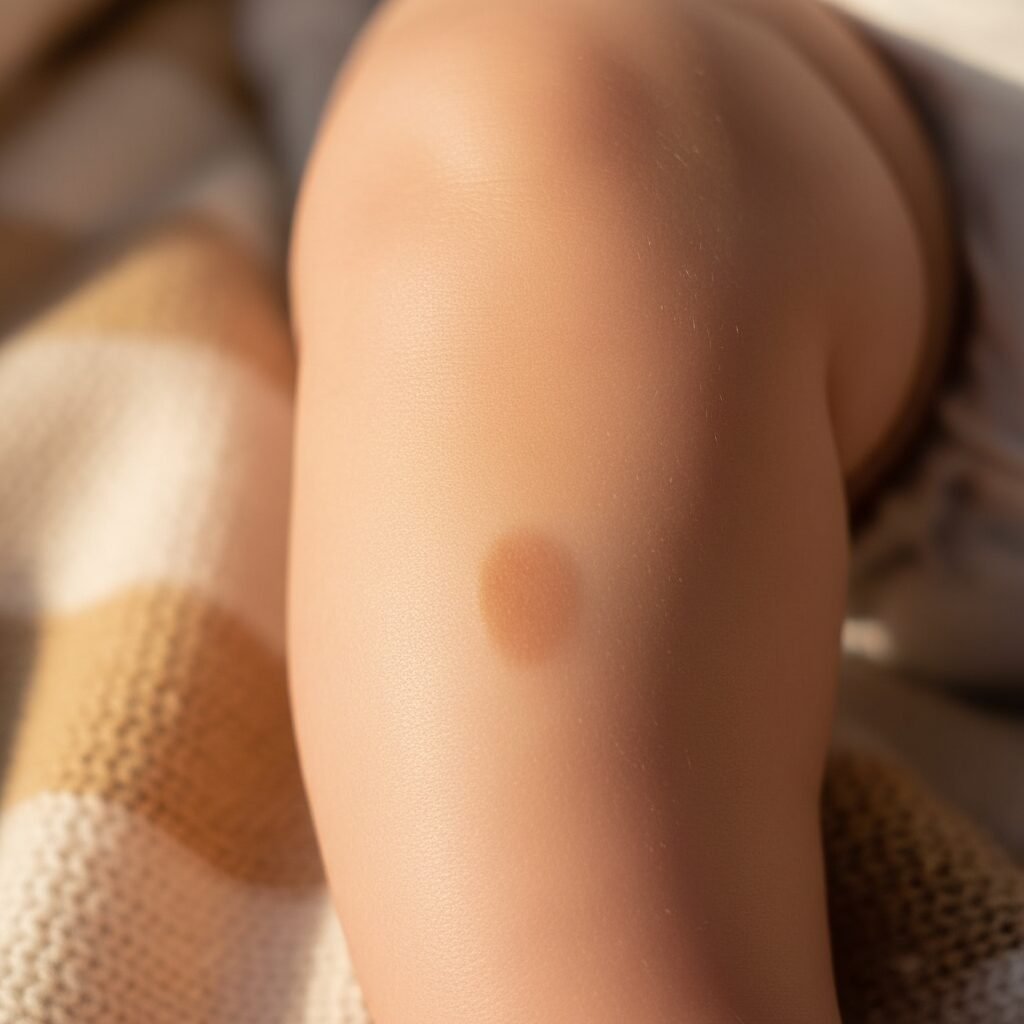
A café au lait spot is simply a flat area of skin that is darker than the surrounding skin. This happens because the pigment-producing cells in that little patch, called melanocytes, have created more melanin (the substance that gives skin its color) than the cells around them. That’s it! It’s not a bruise, not an infection, and not something you caused. It’s a type of birthmark.
Key Characteristics of a Typical Café au Lait Spot:
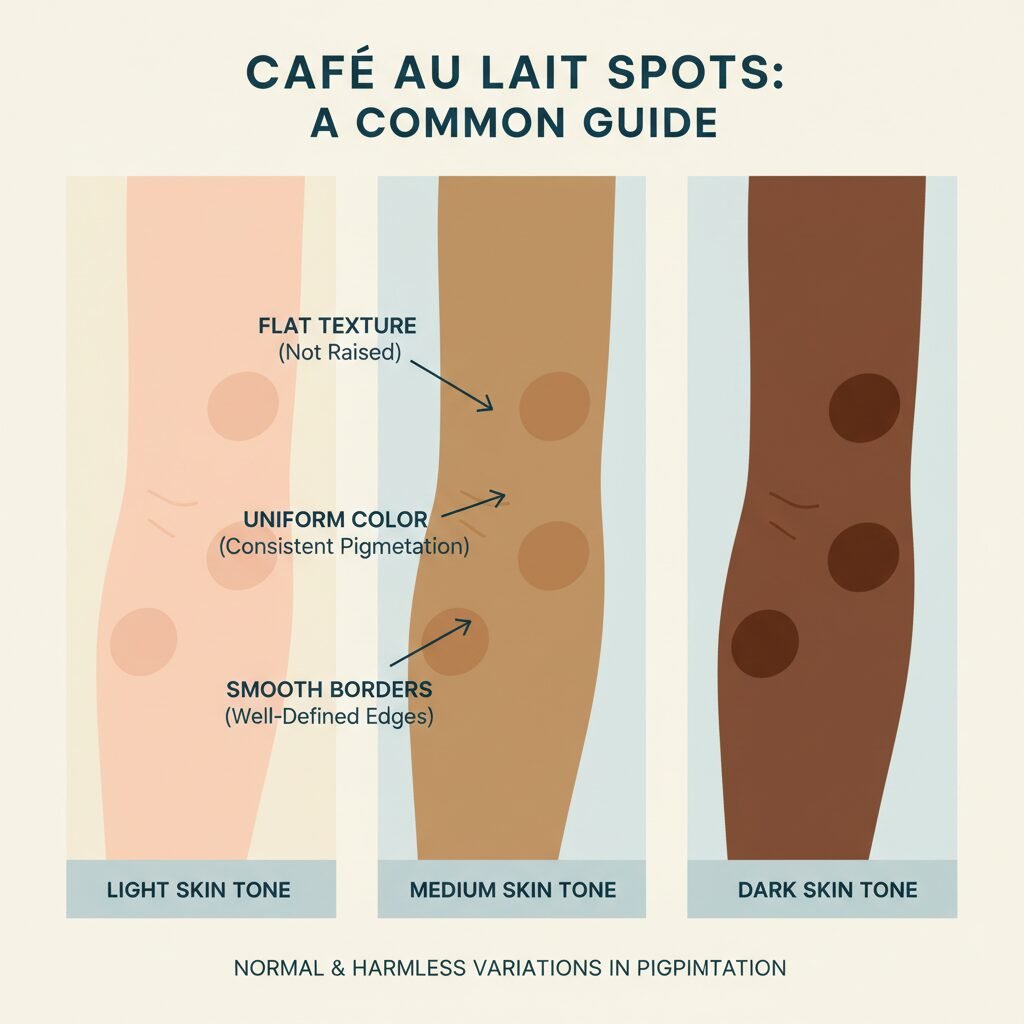
- Color: They range from a very light tan to a deep brown, always depending on your baby’s natural skin tone. The key is that the color is uniform across the entire spot.
- Shape: They usually have a distinct, oval shape with smooth, well-defined borders. Some people describe them as looking like a coastline on a map.
- Texture: They are completely flat (macules) and feel no different from the rest of your baby’s skin. You can’t feel them when you run your finger over them.
- Timing: While some are present right at birth, many become more noticeable in the first few years of life, especially after sun exposure, which can darken them temporarily.
Think of them like freckles, just a bit bigger and usually fewer in number. A single or a few scattered spots are incredibly common and, in the overwhelming majority of cases, are no cause for concern.
They can appear anywhere on the body, and they will grow proportionally as your child grows. A spot that is an inch long on your baby will be bigger when they are a teenager, but it will take up the same relative amount of space on their skin. They don’t typically fade or go away on their own, becoming a permanent and unique part of who your child is.
The ‘Typically Harmless’ vs. ‘Time for a Check-Up’ Guide
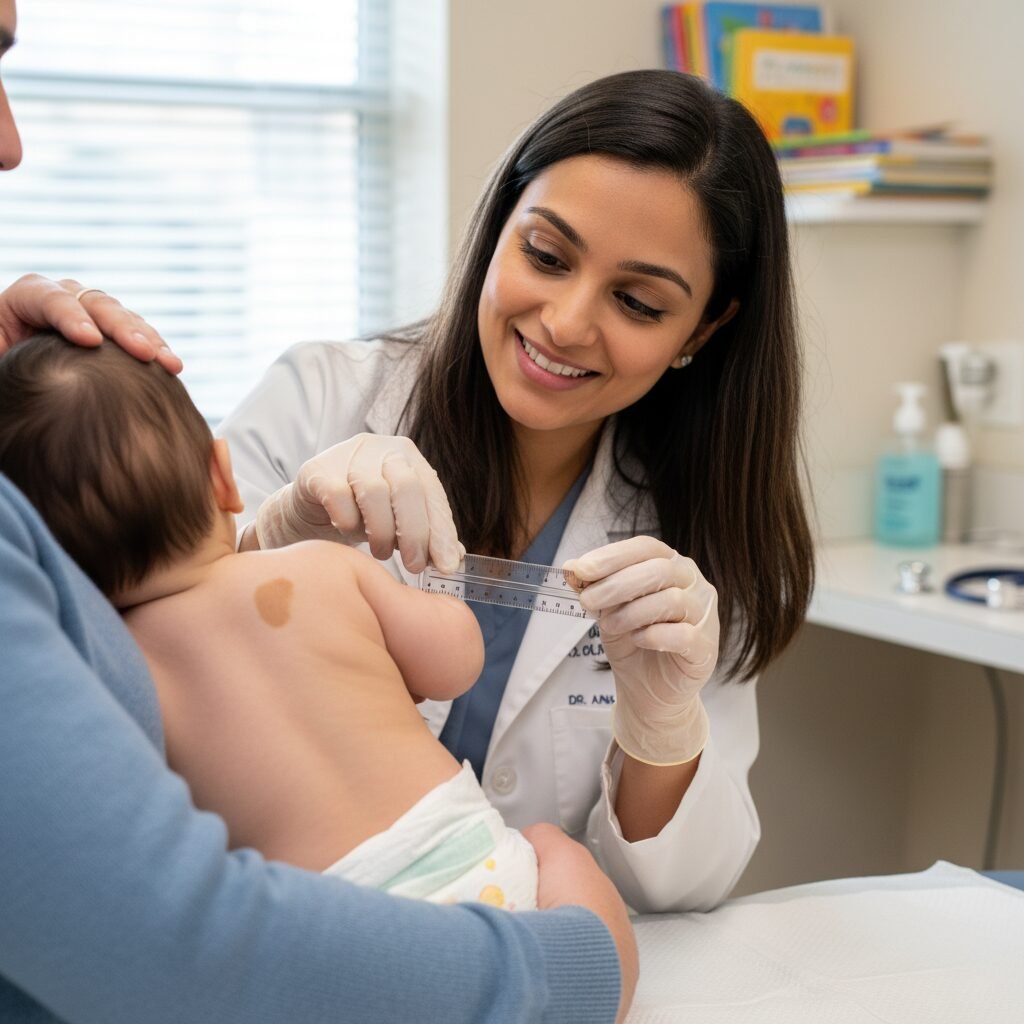
Okay, this is the part you’re likely most interested in. How do you know if your baby’s spots fall into the “completely normal” category or the “worth a mention at your next check-up” category? The main difference isn’t about the appearance of a single spot, but rather about the number and size of the spots. This is where pediatricians start to pay closer attention.
I’ve put together a simple table to help you visualize the difference. Use this as a guide, not a diagnostic tool. Your pediatrician is always the final word!
| Characteristic | Typically Harmless Finding | When to Schedule a Doctor’s Visit |
|---|---|---|
| Number of Spots | Fewer than 6 spots. Most children with these spots have only one or two. | Six or more spots are present on your child’s body. This is the primary indicator for a closer look. |
| Size of Spots | Any size is fine when there are only a few spots. | If there are 6+ spots, the size matters. The guideline is larger than 5 millimeters (about the size of a pencil eraser) in diameter in young children. |
| Associated Symptoms | The spots are the only thing you’ve noticed. Your baby is otherwise healthy and meeting milestones. | You notice other signs, such as freckling in the armpits or groin area, or tiny bumps on the skin (neurofibromas). |
| Family History | No known family history of genetic conditions associated with skin markings. | A parent or sibling has a diagnosis of a condition like Neurofibromatosis Type 1 (NF1). |
Important Safety Note: This table is for informational purposes only. Do not try to self-diagnose. If you have any concerns at all about your baby’s skin, the best and safest course of action is always to point it out to your pediatrician.
Understanding the Connection to Neurofibromatosis (NF1)
If you’ve started Googling (and please, be careful doing that!), you have likely seen the term Neurofibromatosis Type 1, or NF1. It can be a scary-sounding name, so let’s talk about it calmly and clearly.
First and foremost: The vast majority of children with one, two, or even three café au lait spots do not have NF1. These spots are far more common than the condition itself.
NF1 is a genetic condition that can cause a variety of symptoms, including changes in the skin, bones, and nervous system. It’s caused by a mutation in a gene that’s supposed to help control cell growth. One of the most visible and earliest signs of NF1 is the presence of multiple café au lait macules. That is why they are on every pediatrician’s radar.
What are the specific criteria?
For a doctor to consider a diagnosis of NF1 based on skin findings, a child typically needs to meet specific criteria. For café au lait spots, the official diagnostic guideline is:
- Six or more café au lait macules that are:
- More than 5 mm in greatest diameter in prepubertal individuals (before puberty).
- More than 15 mm in greatest diameter in postpubertal individuals.
Notice it’s not just about having the spots. It’s about having a specific number of spots that are a specific size. In addition to the spots, a doctor would look for at least one other sign of NF1, such as:
- Axillary or inguinal freckling: Small freckle-like spots clustered in the armpit or groin area.
- Neurofibromas: Soft, pea-sized bumps on or under the skin. These usually appear later in childhood or adolescence.
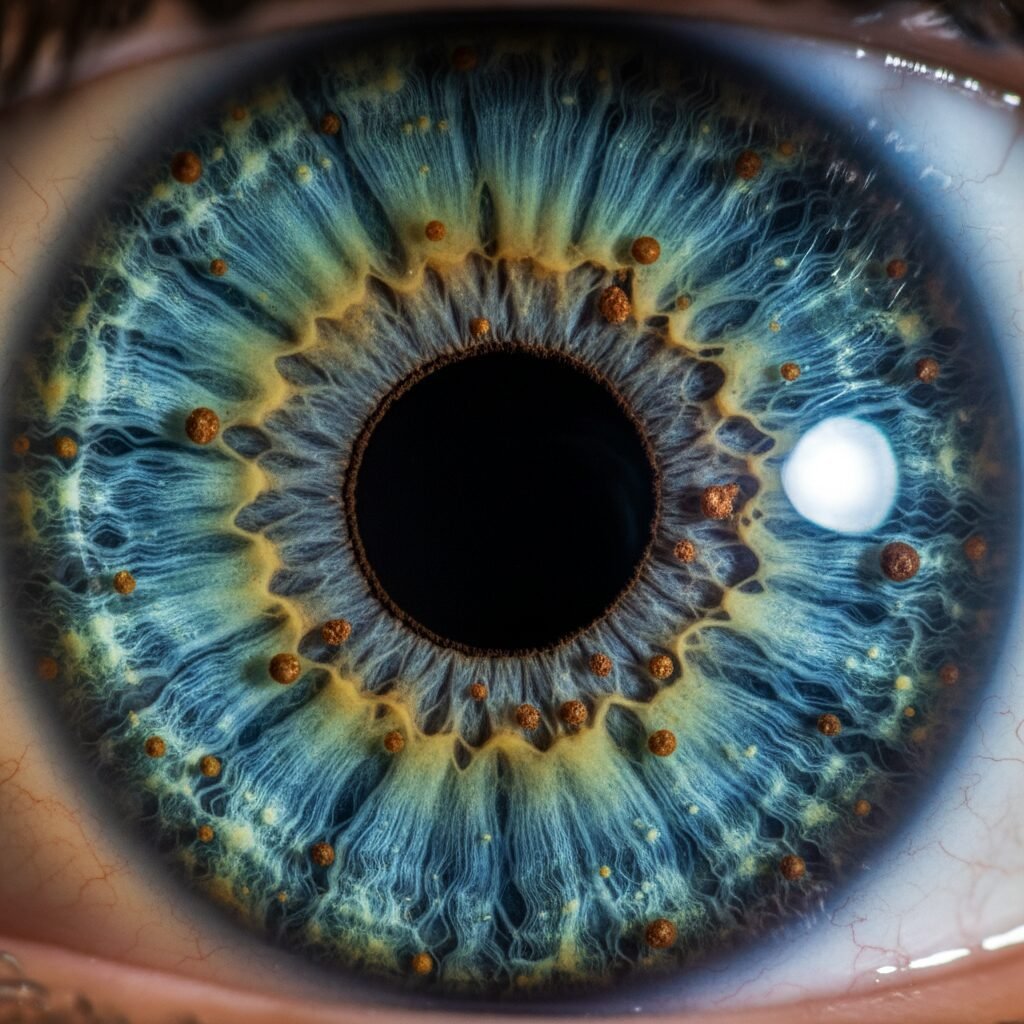
- Lisch nodules: Tiny, harmless brown spots on the iris (the colored part of the eye), which are visible only during a specialized eye exam.
- A distinctive bone abnormality or a tumor on the optic nerve.
The key takeaway is that café au lait spots are just one piece of a much larger puzzle. They are a clue, not a diagnosis. If your child only has the spots and none of these other signs, it is highly unlikely they have NF1. But because the spots can be the very first sign to appear, they serve as an important signal to your doctor to watch your child’s health closely over the years.
What to Expect at the Doctor’s Visit

So, you’ve counted six or more spots that fit the size criteria, and you’ve made an appointment. Feeling nervous is completely normal. Knowing what to expect can help ease some of that anxiety.
Your visit will likely be very calm and methodical. Your pediatrician’s goal is simply to gather information. Here’s what will probably happen:
- A Thorough Skin Exam: Your doctor will carefully examine all of your baby’s skin, not just the spots you’ve noticed. They will count the spots and use a small ruler to measure the largest ones. They will also check for freckling in the armpits and groin.
- Family History Discussion: The doctor will ask if anyone in your family (parents, siblings, grandparents) has been diagnosed with NF1 or has similar skin findings. Since NF1 is a genetic condition, family history is an important clue.
- A Full Physical: Your pediatrician will perform a complete head-to-toe examination, just like at a well-child visit. They will pay special attention to your baby’s head circumference, check their blood pressure, and look at their bone structure.
- An Eye Exam: The doctor will use a light to look into your baby’s eyes, but to see the Lisch nodules associated with NF1, a referral to a pediatric ophthalmologist for a specialized slit-lamp exam is usually needed. This is painless and non-invasive.
Possible Outcomes of the Visit
After the examination, one of a few things may happen:
- Reassurance: The doctor may determine the spots don’t meet the criteria in number or size and will simply reassure you, advising you to keep an eye on them.
- Watchful Waiting: If the criteria for the spots are met, but no other signs of NF1 are present, the most common approach is “watchful waiting.” This means your pediatrician will monitor your child closely at their regular check-ups to see if any other signs develop over time.
- Referral to a Specialist: If there is a strong suspicion of NF1 (for example, multiple spots plus a significant family history), your doctor may refer you to a specialist, such as a pediatric neurologist, geneticist, or a specialized NF clinic for further evaluation and confirmation.
Remember, you are your baby’s number one advocate. Write down your questions before the appointment. It’s okay to say, “I’m worried about this, can you explain it to me again?” Your peace of mind is important, and your pediatrician is your partner in ensuring your child is healthy and thriving.
Conclusion
Navigating the world of newborn health can feel like a rollercoaster of emotions. Every little spot, sneeze, and sigh can seem monumental. When it comes to café au lait spots, the most important thing to remember is that they are incredibly common and, most of the time, just a unique feature of your baby’s skin. They are rarely a sign of something more serious.
Your main takeaway should be the “Rule of Six”: if you notice six or more spots larger than a pencil eraser, it’s a sign to have a conversation with your pediatrician. It’s not a reason to panic, but a reason to partner with your doctor to ensure your child gets the attentive care they deserve. You know your baby better than anyone. Trust your instincts, embrace the learning process of parenthood, and never hesitate to ask questions. Those little coffee-colored kisses are usually just another beautiful detail on the amazing little human you created.