Boost Brain Development With These Simple Newborn Eye Tracking Games
Hey there, new parent. Welcome to this wild, wonderful, and sometimes overwhelming journey! I know your mind is swirling with a million questions, and you’re probably running on caffeine and pure love. I see you, and you’re doing an amazing job. Amidst the diapers and feedings, you might be wondering, ‘How can I help my tiny baby’s brain grow?’ The answer is simpler and sweeter than you think. It’s not about fancy flashcards or expensive toys; it’s about connection.
From the moment they’re born, your baby’s brain is an incredible supercomputer, forming more than a million new neural connections every single second. And one of the most powerful ways to fuel that growth is through their developing sense of sight. Those blurry, beautiful eyes are working hard to make sense of the world, and you are their favorite thing to look at.
In this guide, we’ll explore some beautifully simple ‘games’—really, they’re just moments of intentional connection—that use eye tracking to build crucial pathways in your baby’s brain. These activities support everything from focus and memory to social-emotional skills. So take a deep breath, grab your little one, and let’s play. You’ve got this.
What Your Newborn Can *Actually* See (And Why It’s So Cool!)
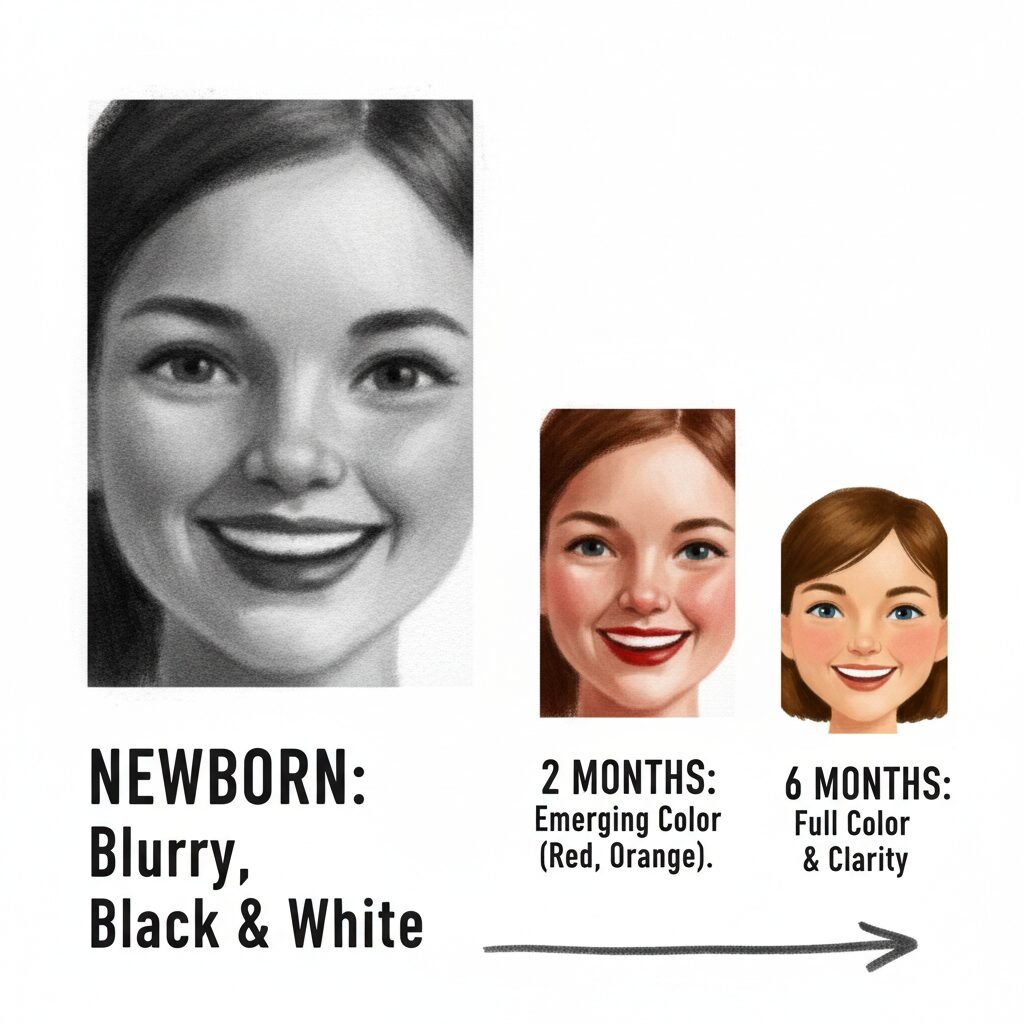
It’s easy to look at your sleepy, precious newborn and assume they can’t see much. And in a way, you’re right! But what they can see is perfectly designed for their most important job: bonding with you. For the first few weeks, a newborn’s world is a bit fuzzy. Their clearest vision is only about 8 to 12 inches away from their face. Think about it—that’s the exact distance from your baby’s eyes to yours when you’re holding them for a feeding. It’s nature’s perfect design for falling in love.
Here’s what’s happening behind those beautiful eyes:
- Focus on Faces: Newborns are hardwired to be fascinated by human faces. The contrast between your eyes, nose, and mouth against your skin is captivating to them. They are literally built to study you!
- High-Contrast is King: Because their color vision is still developing, babies see the world in shades of black, white, and gray at first. This is why they are so drawn to bold, high-contrast patterns. The sharp difference between dark and light is easy for their developing eyes to process and helps stimulate visual development.
- Slow and Steady: Your baby can’t track fast-moving objects yet. Their eye movements are still a bit jerky and uncoordinated. Think of it like they’re learning to control a brand-new piece of equipment. Slow, deliberate movements are key.
Understanding this helps us meet them where they are. We don’t need to overwhelm them with a busy, colorful world just yet. Instead, we can provide simple, engaging visual input that perfectly matches their current abilities, helping them build a strong foundation for a lifetime of learning.
Game Time! Simple Eye Tracking for the First Month
Ready to play? Remember, the goal here is connection, not performance. These ‘games’ should only last for as long as your baby is calm, alert, and interested. A few seconds of focused attention is a massive win! If they turn away, cry, or seem fussy, it’s time for a break. Their brains are working hard, and they get overstimulated easily.
Game 1: The Face-to-Face Dance
This is the simplest and most important game of all. It requires nothing but you.
- Find a time when your baby is in a quiet, alert state. After a diaper change or when they first wake up is often perfect.
- Hold your baby in your arms or lay them on their back, positioning your face about 8-12 inches away.
- Once you make eye contact, simply talk or sing to them softly. Let them study your features.
- Then, very slowly, move your head from side to side. See if their eyes follow you. Don’t worry if they don’t at first! Just making eye contact is the main event.
Game 2: The High-Contrast Card Trick
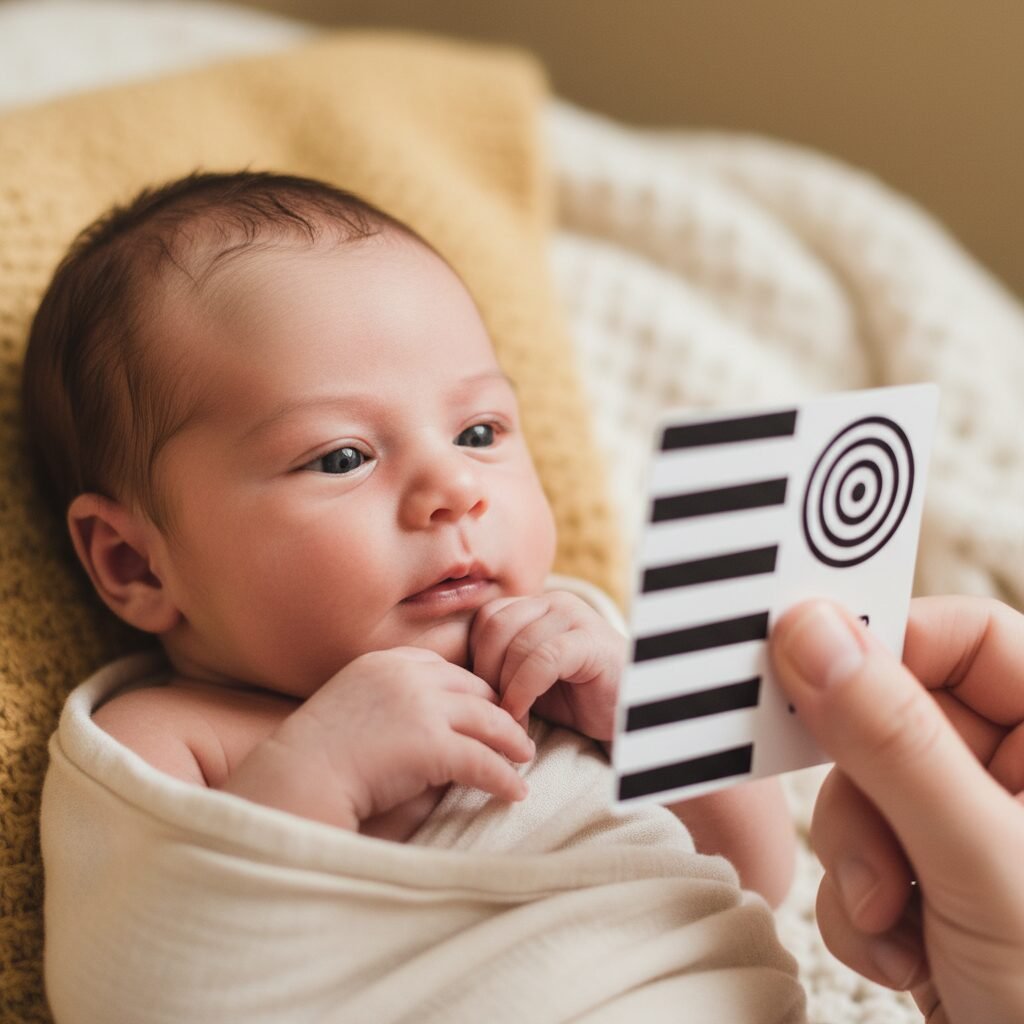
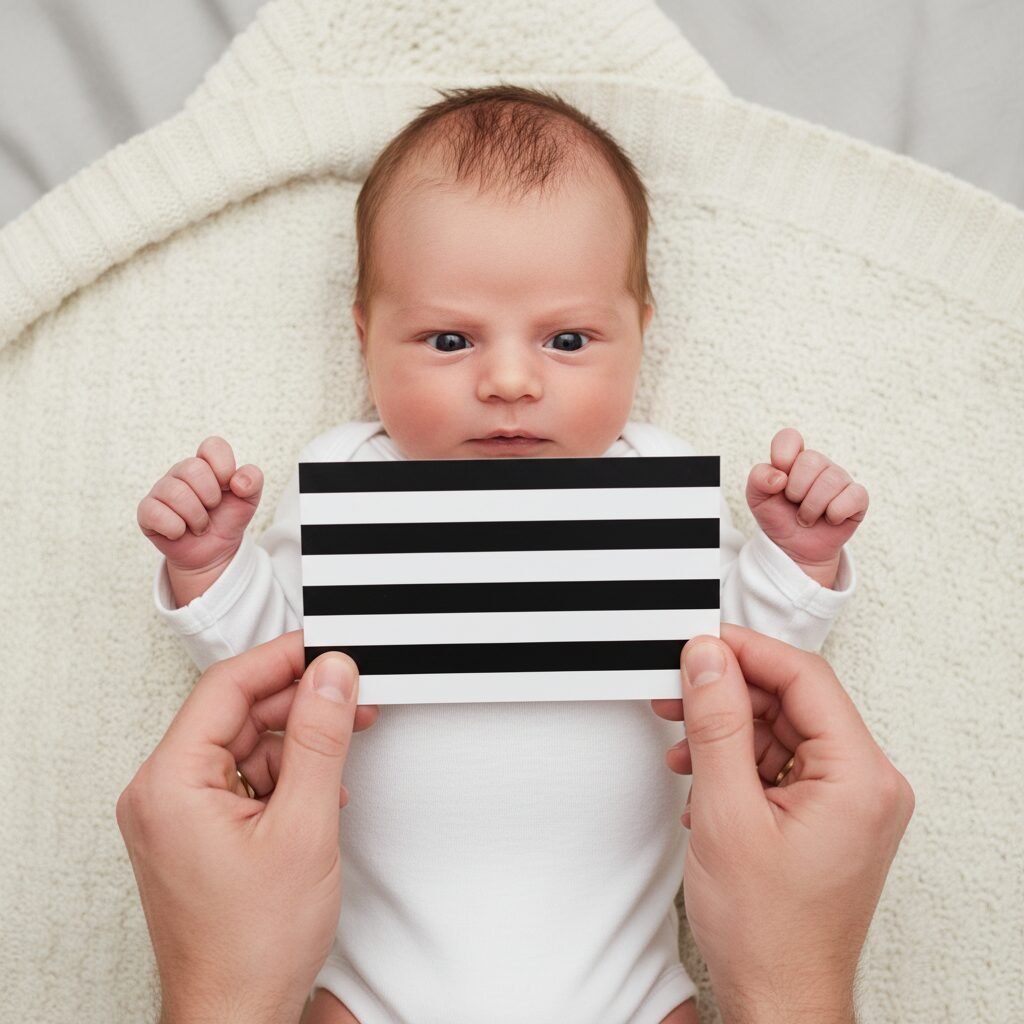
You can buy high-contrast flashcards, but it’s just as easy to make your own with a black marker on white paper. Simple patterns like stripes, bullseyes, or checkerboards are perfect.
- Hold one of the cards about 8-12 inches from your baby’s face.
- Wait for them to focus on it. You’ll see their eyes lock on.
- Once they’re looking, slowly move the card from the center to one side. Watch to see if their eyes, or even their whole head, follow the movement.
- Bring it back to the center and try moving it to the other side. Keep the movements smooth and unhurried.
A Gentle Reminder: Your baby’s attention span is incredibly short right now. A total ‘playtime’ of one or two minutes is plenty. The goal is short, sweet, and frequent interactions throughout the day, not one long session.
Leveling Up: Introducing Color and Movement (1-3 Months)
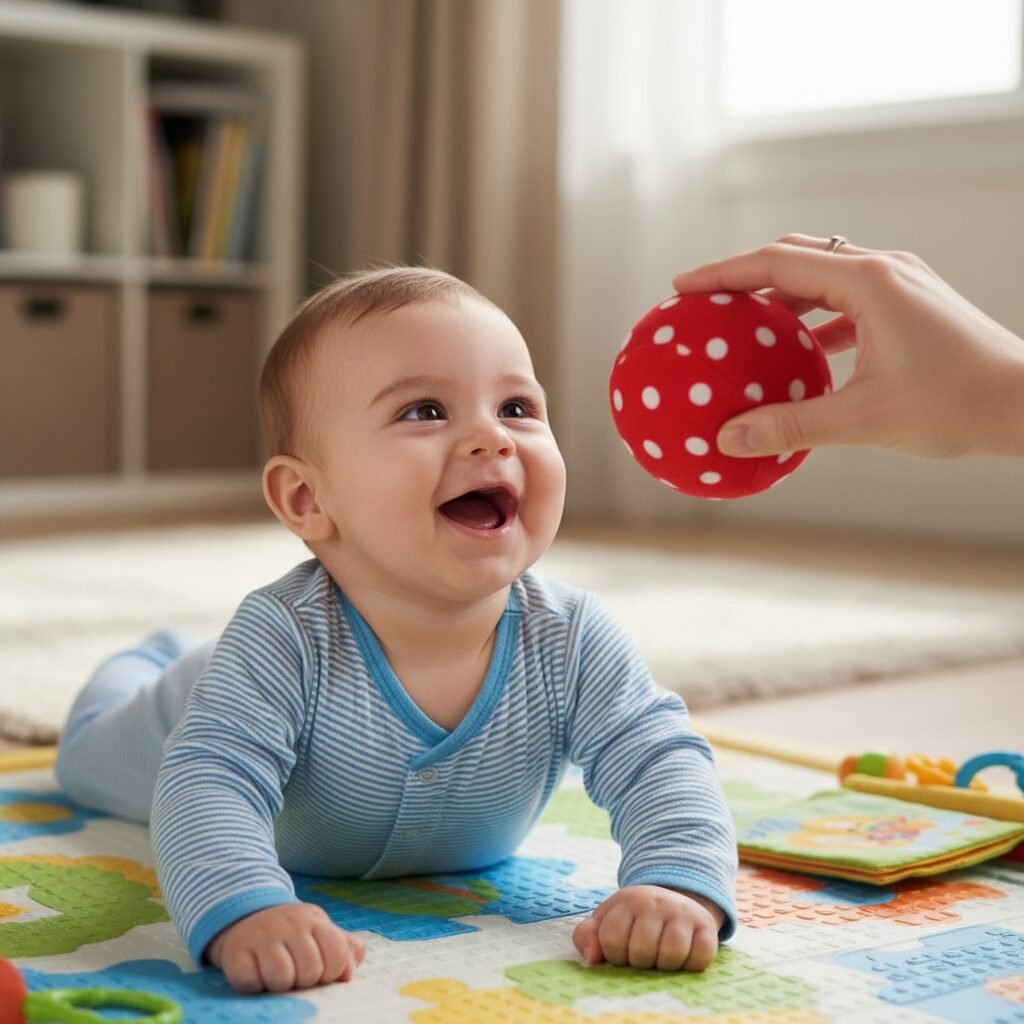
As your baby rounds the one-month mark and heads toward three months, you’ll start to notice some amazing changes. Their eye movements will become smoother, and they’ll be able to track objects more consistently. Plus, their color vision is starting to come online! While they can’t see the full spectrum of pastels just yet, they can typically perceive bold, primary colors—with red often being one of the first and most captivating.
Game 3: The Red Rattle Follow
It’s time to introduce a pop of color. A simple, lightweight rattle or a soft toy in a bright, solid color like red is perfect.
- Get your baby’s attention with the toy by holding it in the center of their vision (about a foot away). You can give it a gentle shake to make a soft sound.
- Once they’ve focused on it, slowly move the toy in a horizontal arc from one side to the other. Their eyes should follow it more smoothly now.
- You can also try moving it in a vertical arc, from their forehead down to their chest. This new direction challenges their tracking skills in a different way.
Game 4: Tummy Time Tracking
We all know tummy time is essential for building neck and core strength, but it’s also a fantastic opportunity for visual development. When they lift their heads, they’re changing their perspective on the world.
- During tummy time, place a colorful toy, a high-contrast card, or even an unbreakable baby-safe mirror on the floor in front of them.
- This will encourage them not only to lift their head but also to lock their eyes onto an object and hold their focus.
- You can slowly slide the toy or mirror from side to side to encourage them to turn their head, which is a precursor to rolling over.
Game 5: The Grand Nursery Tour
Your baby is becoming more aware of their surroundings. You can turn this growing curiosity into a fun tracking game.
- Hold your baby securely, either facing forward in your arms or over your shoulder.
- Walk slowly around a room in your house.
- Point to different objects and talk about them. Say things like, ‘Look at the bright, sunny window!’ or ‘See the round, white lamp?’
- Pause at each object to give them a moment to focus before moving to the next. The contrast of a dark picture frame on a light wall or a bright pillow on the sofa can be especially interesting to them.
Your Baby’s Visual Milestones (And When to Check In)
It’s so exciting to watch your baby learn and grow! But it’s also completely normal to wonder if they’re on track. Remember, every single baby is unique and develops on their own timeline. This chart is not a test to be passed, but rather a gentle guide to help you know what to look for. Think of it as a celebration of the amazing progress your little one is making.
| Approximate Age | Visual Milestones to Watch For |
|---|---|
| By End of Month 1 |
|
| By Month 2 |
|
| By Month 3-4 |
|
When to Chat With Your Pediatrician: Trust your parental instincts. If you have any concerns about your baby’s vision, it’s always best to bring them up with your doctor. Specifically, schedule a check-in if you notice your baby: consistently isn’t making any eye contact by 2-3 months, doesn’t seem to track objects at all by 4 months, has eyes that are consistently crossed or seem to wander after 4 months, or if one eye appears consistently different from the other.
Conclusion
See? You’ve been playing these brain-boosting games all along, probably without even realizing it. Every time you gaze into your baby’s eyes, make a silly face, or sing them a song, you are building their brain and strengthening your incredible bond. These simple moments of connection are the most powerful developmental tools you have.
Don’t ever feel pressured to ‘teach’ your newborn. Your job right now is simply to love them, respond to their needs, and enjoy this fleeting, precious time. By being their safe space and their favorite thing to look at, you are giving them the absolute best start in life. Keep up the amazing work, you’re a natural at this.