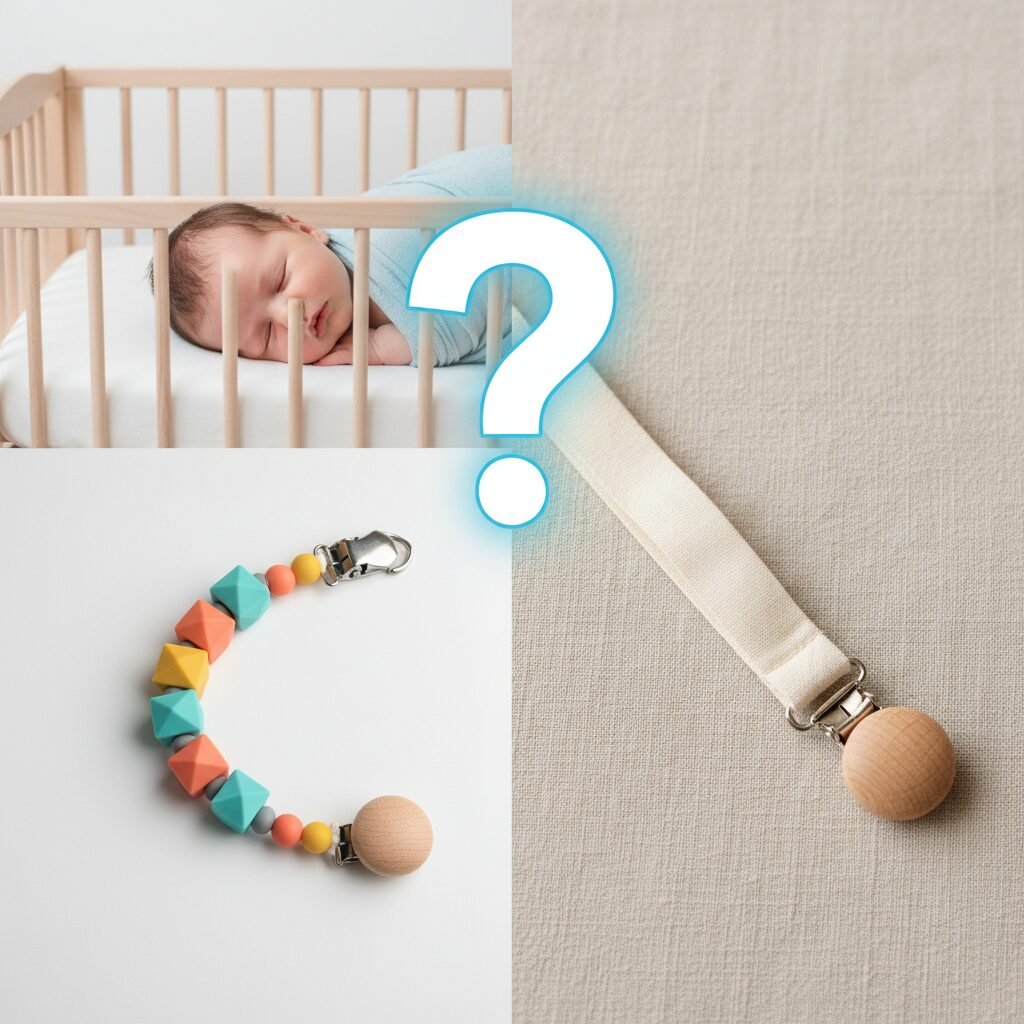
Beads vs. Ribbon: Which Pacifier Clips Are Actually Safe For Sleep?
Ah, the pacifier clip. It’s one of those tiny pieces of baby gear that feels like a complete lifesaver. No more frantically searching under the crib in the dark, no more pacifiers hitting the questionable floor of the grocery store. It keeps that precious soother close, and for that, we are grateful! But as you stand over your baby’s crib, getting ready to sneak out of the nursery, a little voice might pop into your head: ‘Wait… is this thing actually safe for them to have all night?’
If you’ve had that thought, you are not alone. It’s a question I hear all the time from loving, conscientious parents just like you. My name is [Nurse’s Name], and as a pediatric nurse and lactation consultant with years of experience in newborn care, I’ve seen it all. The world of baby products can be overwhelming, and it’s hard to know what’s genuinely safe versus what’s just cleverly marketed. The debate between cute, chunky beaded clips and simple ribbon ones only adds to the confusion.
So, let’s clear this up together, with no judgment, just facts and practical advice. We’re going to dive into what the real safety experts say, break down the specific risks of both beaded and ribbon clips, and give you some truly sleep-safe strategies to keep both you and your baby resting peacefully.
The Golden Rule of Safe Sleep: What the Experts Say

The Golden Rule of Safe Sleep: What the Experts Say
Before we can even talk about pacifier clips, we have to start with the absolute foundation of infant safety: the ABCs of Safe Sleep. This isn’t just a catchy phrase; it’s a life-saving recommendation from the American Academy of Pediatrics (AAP) designed to reduce the risk of Sudden Infant Death Syndrome (SIDS) and other sleep-related deaths.
The ABCs stand for:
- A – Alone: Your baby should sleep alone in their own safe sleep space, without parents, siblings, or pets.
- B – Back: Your baby should always be placed on their back for every sleep, day or night.
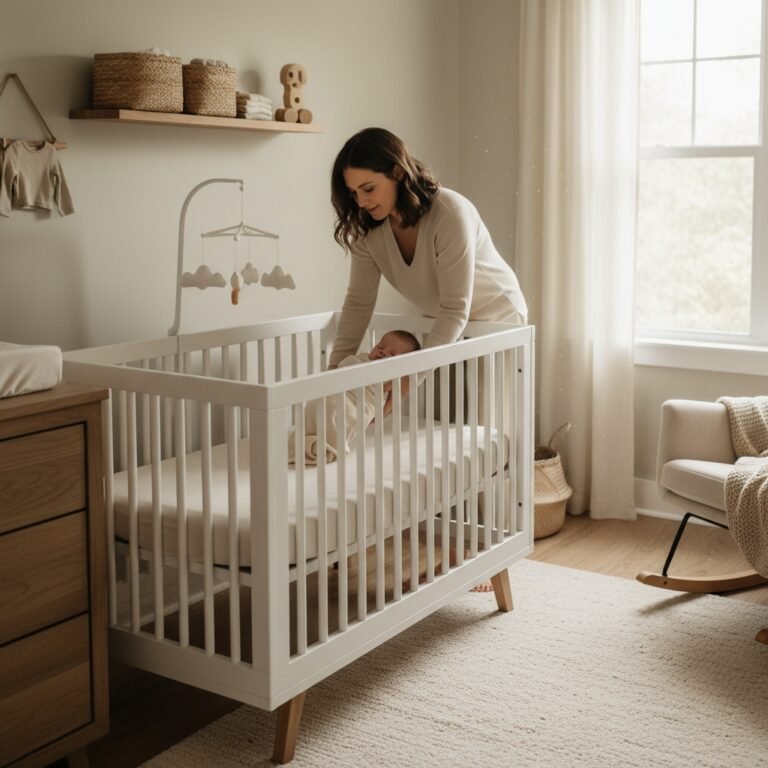
- C – Crib: Your baby should sleep in a crib, bassinet, or portable play yard that meets the latest Consumer Product Safety Commission (CPSC) standards. This also means the sleep space should be empty.
That last part is the one that directly impacts our pacifier clip question. An empty crib means no pillows, no blankets, no bumpers, no stuffed animals, and yes, no items with cords or strings. The official AAP recommendation is to keep soft objects and loose bedding out of the infant’s sleep area.
A key safety takeaway from the AAP is to avoid any items that could pose a strangulation or suffocation hazard. A pacifier clip, with its cord and clip, falls squarely into this category.
So, the short and direct answer from a medical standpoint is that no pacifier clip of any kind is safe for unsupervised sleep. The risk, however small it may seem, is just too significant. Now, let’s explore exactly *why* that is.
Unpacking the Dangers: Strangulation and Choking Hazards
Unpacking the Dangers: Strangulation and Choking Hazards
It can be hard to look at a small, cute accessory and see a potential danger, but understanding the specific risks is key to protecting your little one. When it comes to pacifier clips, we’re primarily concerned with two major hazards: strangulation and choking.
The Strangulation Risk
This is the primary danger for any type of pacifier clip, whether it’s made of beads, ribbon, or leather. Any cord-like item long enough to get wrapped around a baby’s neck is a serious strangulation hazard. Babies move and wiggle in their sleep, and the cord could get twisted around their neck or caught on a part of the crib, leading to a tragic accident. The CPSC has guidelines that pacifier clip cords should be no longer than 7-8 inches for this very reason, but even at that length, the risk isn’t zero, especially in an unsupervised setting like a crib.
The Choking Risk
This is where the ‘beads vs. ribbon’ debate really comes into play. While both can pose a risk, beaded clips introduce a more significant choking hazard.
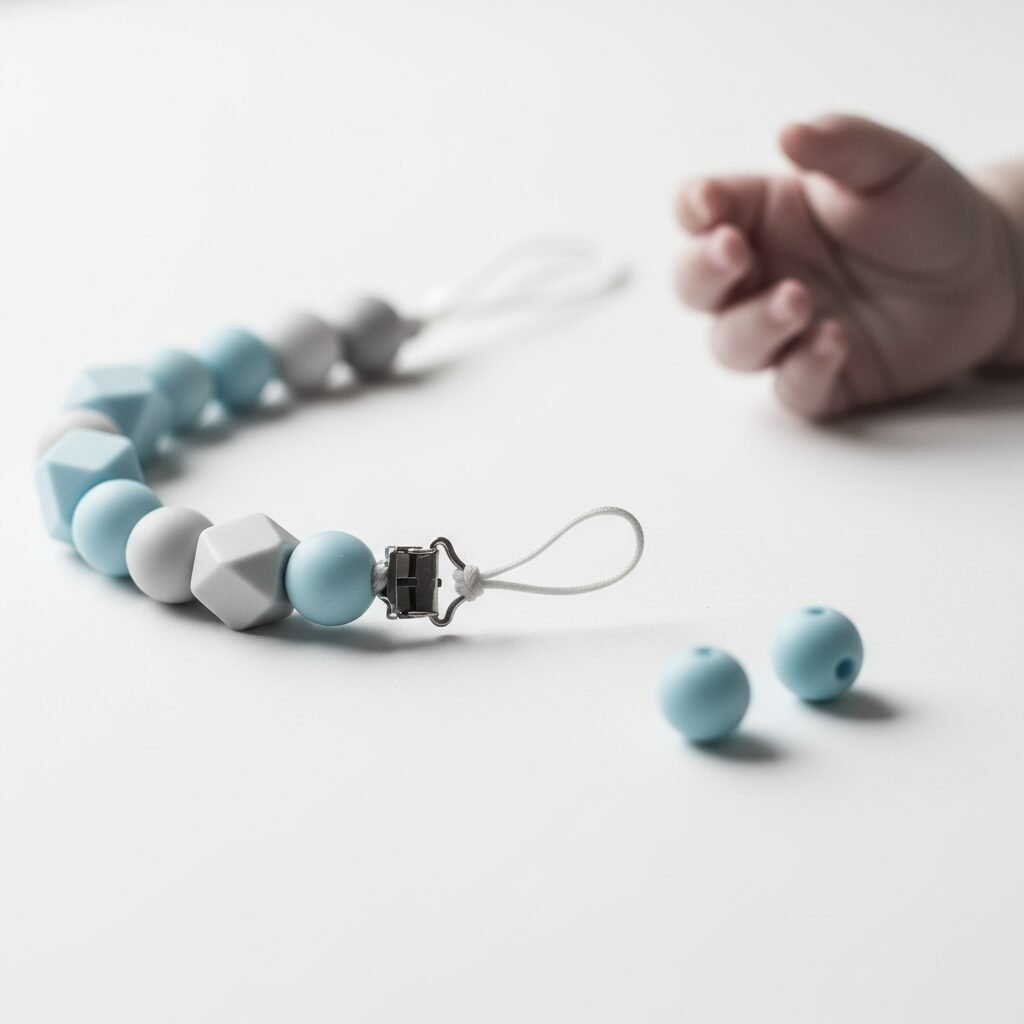
- Beaded Clips: These are often made from silicone, wood, or plastic beads strung on a cord. If the cord breaks or a baby’s strong gums (or first teeth!) manage to damage it, those individual beads become immediate choking hazards. A baby’s airway is incredibly small—about the diameter of a drinking straw—and a single bead is more than large enough to block it.
- Ribbon Clips: While they don’t have small beads, the clip mechanism itself can break, or decorative elements like plastic characters or charms attached to the ribbon could detach, creating a small part that a baby could choke on.
Ultimately, any product that can break down into small parts or has a cord is something we need to be incredibly cautious with around our babies, especially when we’re not right there watching them.
The Great Debate: Beaded vs. Ribbon Clips for Awake Time
The Great Debate: Beaded vs. Ribbon Clips for Awake Time
Okay, so we’ve established that no clip is safe for sleep. But what about for supervised, awake time, like a walk in the stroller or playing on the floor? This is where these clips are designed to be used, and we can absolutely compare them for that purpose. Let’s break it down.
| Feature | Beaded Pacifier Clips | Ribbon Pacifier Clips |
|---|---|---|
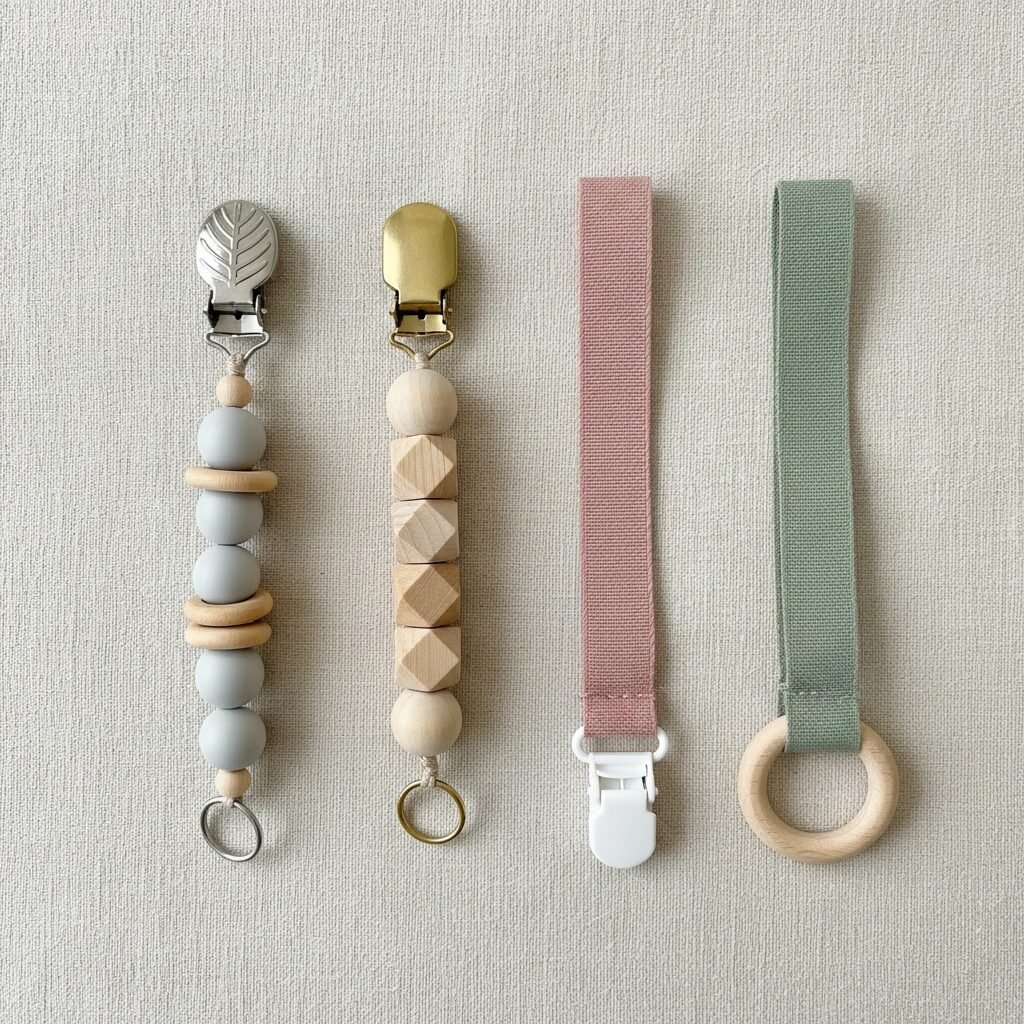
| Choking Hazard | High Risk. If the cord breaks, the individual beads are a significant choking hazard. Requires constant inspection. | Lower Risk. No small beads to break off, but the clip mechanism or decorative elements can still become a hazard if they break. |
| Strangulation Hazard | Moderate Risk. The cord itself is the hazard. Must be CPSC compliant length (under 8 inches). | Moderate Risk. The ribbon is the hazard. Must also be within the safe length guidelines. |
| Durability & Cleaning | Silicone is easy to wipe clean and durable. Wood can be harder to sanitize and may degrade with moisture. | Fabric can get dirty easily and may fray over time. Machine washable is a plus, but check for wear and tear. |
| Sensory/Teething Aspect | Many silicone clips double as a teether, which can be a pro for fussy babies. However, this encourages chewing on the clip, potentially increasing the risk of it breaking. | Generally not designed for teething. The soft ribbon is less appealing for chewing. |
So, which is ‘safer’ for awake time?
If I had to choose, I would lean towards a simple, well-made ribbon clip from a reputable company. Why? Because it eliminates the primary risk of the beads—multiple small parts scattering if it breaks. However, this only holds true if you are diligent about following safety protocols even during the day.
Your Pacifier Clip Safety Checklist (For Awake Time Only!)
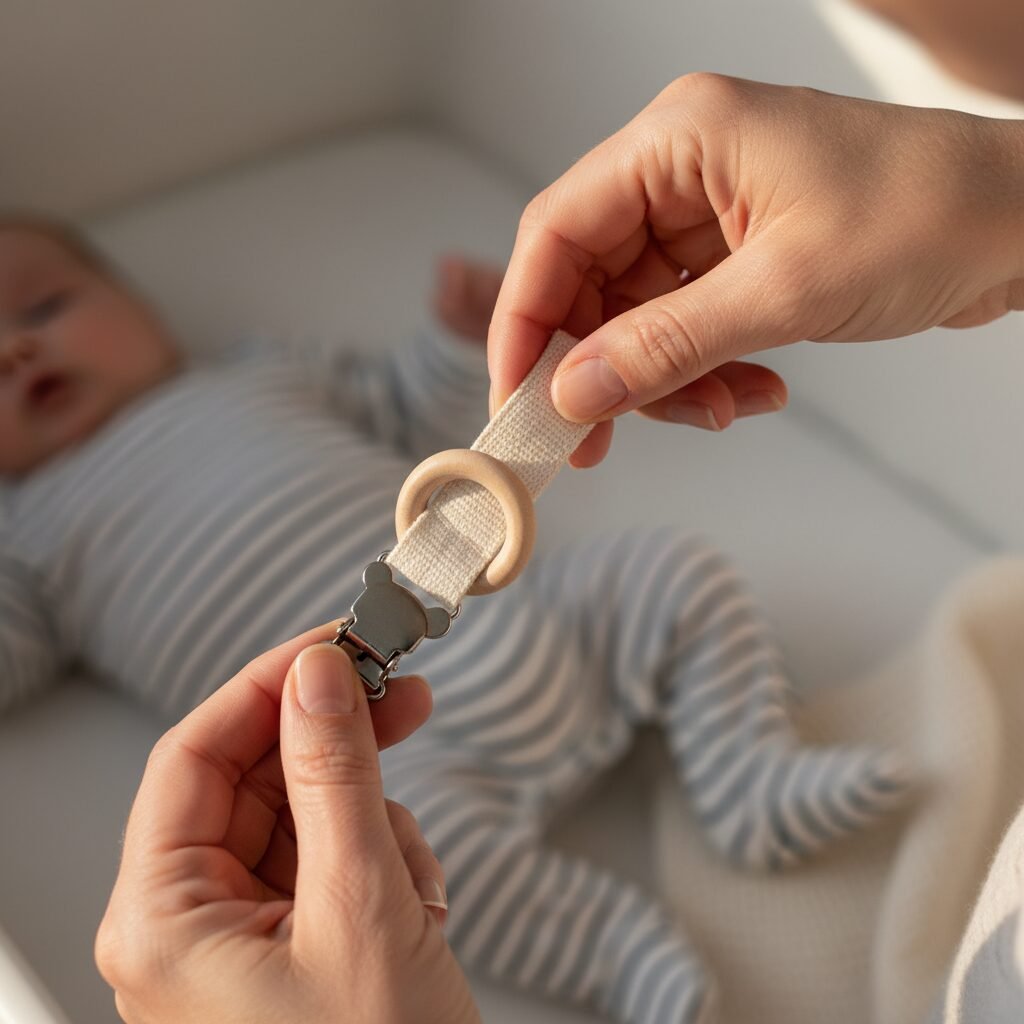
Your Pacifier Clip Safety Checklist (For Awake Time Only!)
If you choose to use a pacifier clip during supervised awake time, you become your baby’s lead safety inspector. It’s a big job, but you are more than up for it! Here is a checklist to run through every single time you use one.
- Rule #1: NEVER in the Crib. We have to say it one more time for good measure. Never, ever let your baby sleep with a pacifier clip, not for a nap and not at night. The same goes for an unsupervised car seat ride where you can’t see them clearly.
- Check the Length. Get out a ruler. The entire clip, from the fastener to the end of the loop, should not be longer than 7-8 inches. If it is, don’t use it.
- Inspect Before Every Use. Make it a habit. Pull firmly on the cord of a beaded clip to ensure it’s secure. Check the beads for any cracks. For a ribbon clip, check for any fraying or tearing, especially around the snaps or seams. Squeeze the metal or plastic clip to make sure the spring is strong.
- Secure Attachment. Clip it to your baby’s clothing on their shoulder or chest, well away from their neck. Avoid clipping it to loose items like bibs or blankets where it could get tangled more easily.
- Buy from Reputable Sources. Be wary of clips from online marketplaces that may not be tested to meet CPSC safety standards. Look for brands that specifically state they are compliant with safety regulations for children’s products.
- Know When to Retire It. At the first sign of wear and tear—a frayed ribbon, a cracked bead, a weak clip—throw it away. It’s not worth the risk to try and repair it.
Tired of the Pacifier Hunt? Safe Sleep-Approved Solutions
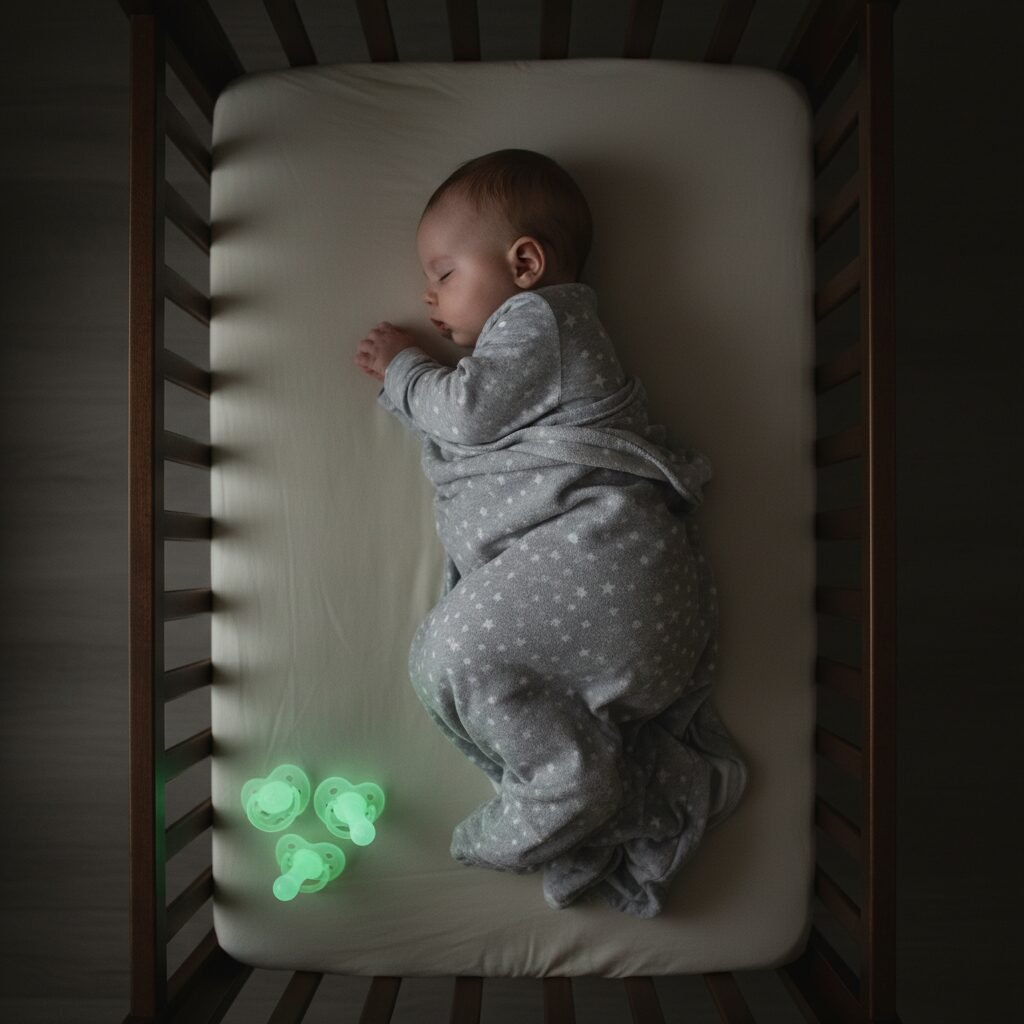
Tired of the Pacifier Hunt? Safe Sleep-Approved Solutions
I completely understand that the practical reason for using a clip at night is to avoid the 3 a.m. ‘pacifier hunt.’ It’s exhausting! The good news is there are some wonderful, sleep-safe alternatives to help you and your baby get more rest.
1. The Glow-in-the-Dark Pacifier
This is, by far, my favorite solution. It’s simple, inexpensive, and genuinely brilliant. A pacifier with a glow-in-the-dark handle is easy for you to spot in a dark room, and as your baby gets a little older (around 5-7 months), they can often find it and pop it back in their mouth themselves! It’s a game-changer for independent sleep.
2. The ‘Pacifier Scatter’ Method
Once your baby has good head control and can purposefully reach for things, try this trick. Place four or five pacifiers in the corners of the crib at the start of the night. When your baby wakes looking for one, their searching hand is much more likely to find one nearby. It increases the odds and can save you a trip into the nursery.
3. A Note on Pacifiers with Stuffed Animals
You’ve likely seen the pacifiers that are permanently attached to a small, lightweight stuffed animal. These are in a bit of a gray area. They don’t have a cord, which eliminates the strangulation risk. However, the AAP’s ‘bare is best’ rule technically includes soft toys. Most pediatric safety experts agree they are a significantly safer alternative to a clip for sleep, but it’s best to wait until your baby is a bit older (past the highest SIDS risk period of 2-4 months) and has good motor control. Always ensure the animal part is small, lightweight, and breathable.
Conclusion
When it comes to the safety of your precious little one, there is no room for compromise. So, in the great debate of beads vs. ribbon pacifier clips for sleep, the definitive answer is neither. The risks of strangulation and choking are simply too high to ever have one in the crib.
But that doesn’t mean you’re doomed to endless nights of searching for lost soothers! By using clips safely during supervised awake time and embracing sleep-safe alternatives like glow-in-the-dark pacifiers at night, you can get the best of both worlds. You are your baby’s greatest protector, and by reading this and asking these important questions, you are already doing an amazing job. Trust your instincts, stick to the ABCs of safe sleep, and rest easy knowing you’re making the safest choice for your family.