
Banish Cradle Cap Forever With This 1 Ingredient Kitchen Staple
When you picture your new baby, you imagine soft, smooth, perfect skin. So, when you spot yellow, greasy, or scaly patches on their scalp, it’s easy to feel a pang of worry. What is this? Is it my fault? Don’t worry, mama or papa, you can take a deep breath. What you’re likely seeing is an incredibly common and harmless condition called cradle cap.
As a pediatric nurse, I’ve reassured countless new parents about these pesky flakes. It’s not a reflection of your hygiene habits, and it doesn’t bother your baby one bit. It just… looks a little less than perfect. The good news? The solution isn’t some expensive, chemical-laden cream. In fact, the most effective remedy is probably already sitting in your kitchen cabinet. Let’s walk through what cradle cap is and how to gently and safely say goodbye to it with one simple, natural ingredient.
Decoding Cradle Cap: What’s Happening on Your Baby’s Scalp?

Before we jump into the solution, let’s understand the ‘problem.’ Knowledge is power, and knowing what you’re dealing with can take away all the anxiety. Medically speaking, cradle cap is known as infantile seborrheic dermatitis. That’s a mouthful, but it basically means it’s an inflammatory skin condition that affects areas with a lot of oil-producing (sebaceous) glands, like the scalp.
What does it look like?
You might notice:
- Thick, crusty patches that can be yellow or brown
- Greasy or oily-feeling skin
- White or yellow skin flakes, similar to dandruff
- Sometimes, mild redness
While it most commonly appears on the scalp, it can sometimes pop up on the eyebrows, eyelids, sides of the nose, or behind the ears. The most important thing to know is that it’s not contagious and not itchy. Your baby is blissfully unaware of their temporary ‘cap’.
So, what causes it?
We don’t know the exact cause, but the leading theory points to the hormones that pass from you to your baby at the end of pregnancy. These hormones can rev up your baby’s oil glands, causing excess oil (sebum) to be produced. This extra oil can make old skin cells stick to the scalp instead of falling off as they normally would, creating the patches you see. It’s a temporary hormonal after-party on your baby’s head, and it typically resolves on its own within a few months. But, if you’d like to speed up the process, we can give it a gentle nudge.
The Gentle, One-Ingredient Solution Hiding in Your Pantry
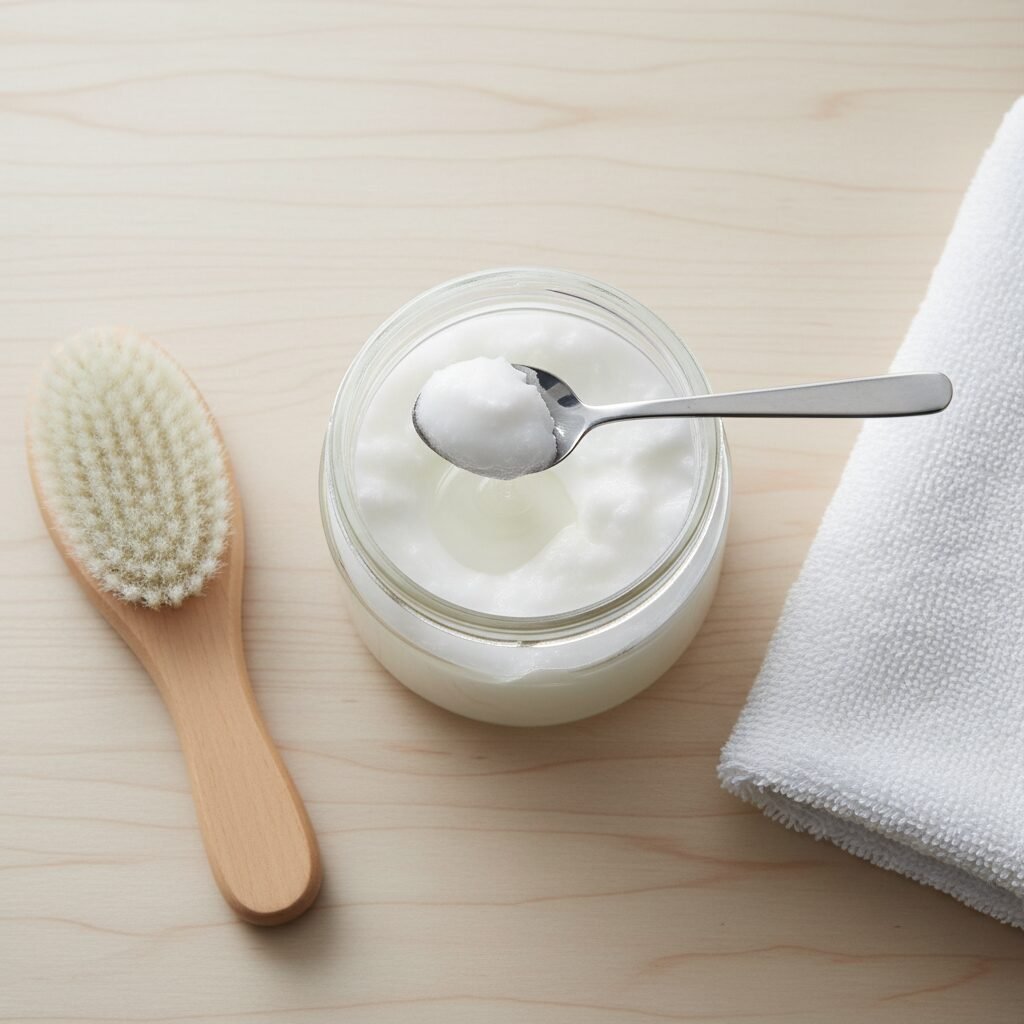
Okay, are you ready for the big reveal? The one-ingredient wonder weapon against cradle cap is… pure coconut oil! That’s it. Simple, natural, and incredibly effective. You can also use other pure, plant-based oils like olive oil or almond oil, but coconut oil is a fan favorite for a reason.
Why Coconut Oil Works So Well
Coconut oil is a powerhouse for this specific task. Here’s why it’s the perfect choice:
- It’s an Emollient: This is a fancy word for a super-moisturizer. The oil saturates and softens the crusty scales, making them much easier to remove without any harsh scrubbing.
- It Has Antimicrobial Properties: Coconut oil contains lauric acid, which has been shown to have gentle antifungal and antibacterial properties. While cradle cap isn’t an infection, this can help keep the scalp’s natural flora in balance.
- It’s Anti-Inflammatory: It can help soothe any mild redness that might accompany the flakes.
Choosing the Right Kind
Not all coconut oil is created equal. For your baby’s delicate skin, you’ll want to choose organic, virgin, or cold-pressed coconut oil. This ensures it’s unrefined and free from any added chemicals or fragrances. It should look solid and white at room temperature and melt into a clear liquid with the warmth of your hands.
A Gentle Warning: Even with the most natural products, there’s always a small chance of a skin reaction. Before you apply the oil to your baby’s entire scalp, please do a small patch test. Apply a tiny amount to a small area of skin (like behind the ear or on their arm) and wait 24 hours to make sure there’s no redness or irritation.
The ‘Cradle Cap Cuddle’: A Step-by-Step Treatment Guide

This process should feel less like a ‘treatment’ and more like a soothing spa moment for your little one. Put on some calming music, make sure the room is warm, and treat this as a special bonding time. Here’s how to perform the ‘Cradle Cap Cuddle’ safely and effectively:
- Get Your Supplies Ready: You’ll need your coconut oil, a soft-bristled baby brush or a fine-toothed comb, your regular gentle baby shampoo, and a warm towel.
- Apply the Oil: Take about a teaspoon of coconut oil and warm it up between your palms until it’s a liquid. Gently and lovingly massage the oil directly onto the patches on your baby’s scalp. Use circular motions and enjoy this sweet moment of connection.
- Let It Soak In: This is the magic step. Let the oil sit and work its softening wonders for about 15 to 30 minutes. If your baby is happy and you’re just cuddling, you can even leave it on for a bit longer. Some parents do this before a nap.
- Gently Loosen the Flakes: Now that the scales are soft and saturated, take your soft baby brush and gently brush the scalp in a circular motion. You can also use a fine-toothed comb to gently lift the loosened flakes away from the scalp. The key word here is gently. The flakes should come away easily. If they don’t, they’re not ready. Don’t force or pick at them!
- Time for a Bath: Now it’s time to wash it all out. Using a mild, tear-free baby shampoo, lather up your baby’s hair and scalp. You may need to shampoo twice to get all the greasy residue out. Make sure you rinse thoroughly so no oil is left behind to clog pores.
- Pat Dry & Admire: Gently pat your baby’s head dry with a soft towel. You should see a noticeable improvement! You may need to repeat this process every few days for a week or so to fully clear the cradle cap.
Cradle Cap Dos and Don’ts: Keeping Treatment Safe and Effective

It’s easy to get a little overzealous when you want to fix something for your baby. But with cradle cap, a gentle, patient approach is always best. Here’s a quick-glance table to keep you on the right track.
The Dos (What You Should Do) |
The Don’ts (What to Avoid) |
|---|---|
| DO be incredibly gentle. The skin on your baby’s head is delicate. Think of it as a massage, not a scrub. | DON’T ever pick, scrape, or force the flakes off. This can break the skin and lead to irritation or even infection. |
| DO use a pure, single-ingredient oil like coconut or olive oil. | DON’T use products with fragrances, essential oils, or harsh chemicals. Adult dandruff shampoos are a huge no-no! |
| DO shampoo the oil out thoroughly after each treatment to prevent oil buildup. | DON’T stop regular hair washing. A clean scalp is a healthy scalp. You don’t need to wash their hair daily, but regular washing prevents buildup. |
| DO be patient. It may take several treatments over a week or two to see full results. | DON’T get discouraged if it comes back. It’s common for cradle cap to reappear until those hormones level out. Just repeat the gentle process. |
When to Wave the White Flag and Call Your Pediatrician

This home remedy is fantastic for a standard case of cradle cap. However, there are times when it’s best to check in with your pediatrician for a professional opinion. You’ve got great instincts, so trust them! Give your doctor’s office a call if you notice any of the following:
- The cradle cap seems to be spreading beyond the scalp to the face or into the diaper area.
- The patches look very red, inflamed, or swollen.
- The area is weeping fluid, bleeding, or looks infected.
- Your baby seems fussy, uncomfortable, or is trying to scratch the area (which is rare, but a sign of irritation).
- You’ve been trying the home treatment consistently for a couple of weeks with no improvement at all.
Your pediatrician can confirm the diagnosis and, if needed, prescribe a medicated shampoo or a mild hydrocortisone cream to calm things down. It’s always better to be safe and get that extra layer of reassurance from a professional.
Conclusion
There you have it! The mystery of cradle cap is solved, and the simple, one-ingredient solution is likely already within arm’s reach. Remember, this is a temporary and harmless phase in your baby’s first year. By using a little coconut oil and a lot of gentle patience, you can manage it beautifully.
Every little challenge in these early days is a learning opportunity. You’re learning about your baby, and you’re learning what an amazing, capable parent you are. So don’t let a few flakes get you down. You’re doing a fantastic job, and your baby is so lucky to have you. Now go enjoy some of those sweet, oily-headed cuddles!