
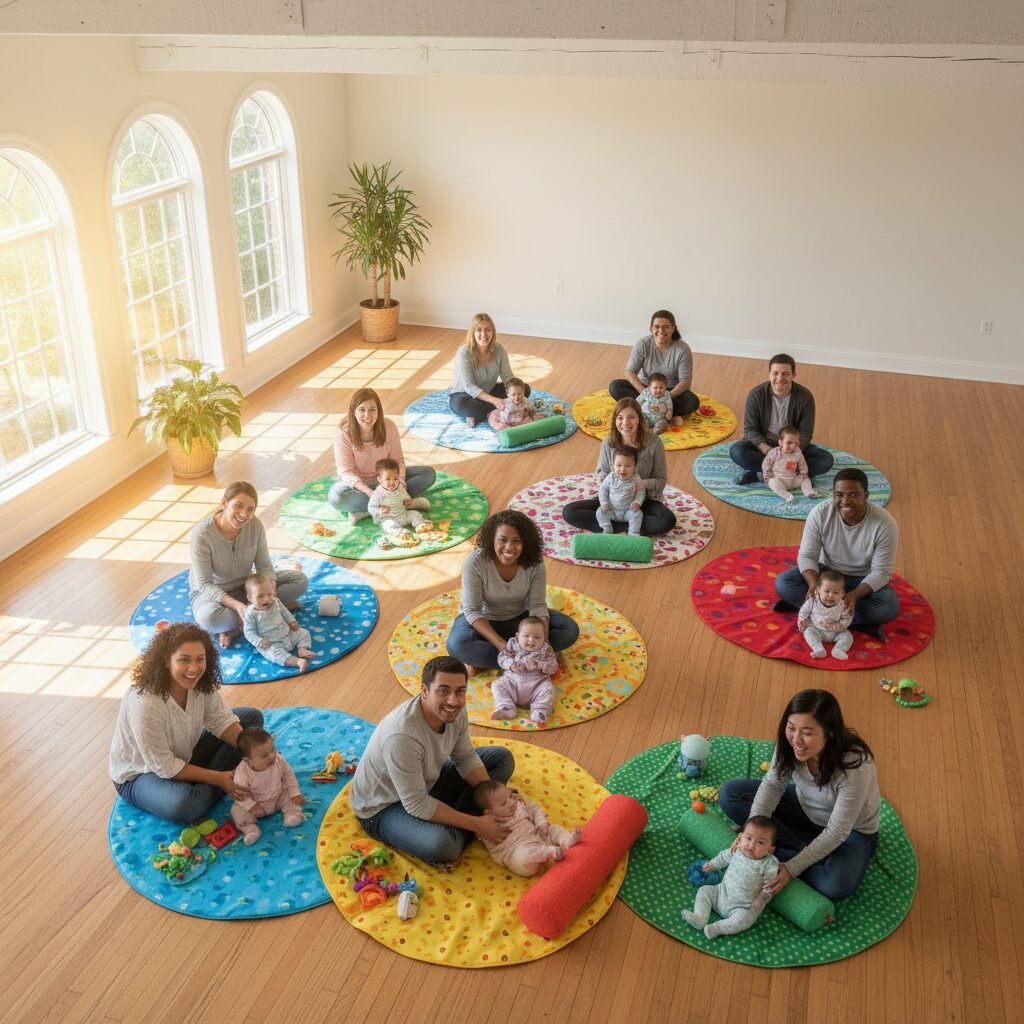
Baby Hates Tummy Time? 8 Fun Ways To Stop The Crying Today
Hey there, new parent. Let me guess: you read all the books, you heard it from your pediatrician, and you know tummy time is important. But every time you lay your precious little one down on their belly, the waterworks start. A full-on, red-faced, I-despise-this-with-every-fiber-of-my-being protest. If this sounds familiar, take a deep breath. You are not alone, and you are not doing anything wrong.
So many babies dislike tummy time at first, and it can be so disheartening for parents. You feel like you’re torturing them! But as a pediatric nurse and lactation consultant who has worked with thousands of new families, I want to reassure you. Tummy time doesn’t have to be a tear-filled struggle. It’s a brand new skill for your baby, and just like any new workout, it takes some getting used to.
In this guide, we’re going to transform tummy time from a daily dread into a fun, bonding activity. We’ll explore why your baby might be protesting and then dive into 8 simple, creative, and gentle ways to stop the crying and start building those crucial muscles for all the exciting milestones ahead. Ready to turn those frowns upside down? Let’s do this together.
First, Why the Tummy Time Tears? (And Why It’s Worth It!)

Before we jump into the fun stuff, let’s quickly understand what’s going on from your baby’s perspective. For the first several months of their life, they’ve been happily curled up. Lying flat on their stomach is a completely new and challenging sensation. It’s hard work!
Common Reasons for Tummy Time Protests:
- It’s a Workout: Lifting that relatively heavy head against gravity is tough! Their neck, back, and shoulder muscles are still developing. Imagine being asked to do a plank without any core strength—you’d complain, too!
- They Feel Isolated: When they’re on their tummy, their view of the world (and you!) is suddenly restricted to whatever is directly in front of their face on the floor. It can feel lonely and frustrating.
- Discomfort or Reflux: For some babies, especially those with reflux, pressure on their little belly can be uncomfortable, leading to more spit-up and fussiness.
Even with the protests, sticking with it is so important. Think of it as your baby’s first exercise program, paving the way for future movement.
The Big Benefits of Tummy Time:
- Builds Muscle Strength: It’s the number one way to strengthen the neck, shoulder, back, and core muscles needed for rolling, sitting up, crawling, and eventually walking.
- Prevents Flat Spots: Spending time on their tummy helps prevent positional plagiocephaly (the medical term for flat spots on the back of the head) that can develop from spending too much time on their back in cribs and car seats.
- Boosts Motor Skills: It helps develop coordination and body awareness as they learn to shift their weight and push up.
- Encourages Sensory Development: It gives them a different perspective of the world and allows them to experience new textures on their hands and face.
Okay, now that we know the why, let’s get to the how. It’s time to make this a happy experience for everyone.
Way #1 & #2: Start with Cuddles – The Chest-to-Chest & Lap-to-Lap

The floor can wait! The easiest and most comforting way to introduce tummy time is by using the one thing your baby loves most in the world: you. These methods are perfect for newborns and sensitive babies because they provide closeness and security.
1. The Tummy-to-Tummy (or Chest-to-Chest)
This is the gold standard for starting out. It barely feels like exercise, but it absolutely counts! It’s all about bonding.
- Find a comfortable, safe spot to recline, like a couch, recliner, or propped up with pillows in bed. Make sure you are awake and alert.
- Lie back at a 45-degree angle. The more upright you are, the easier it is for your baby; the flatter you lie, the more of a workout they get.
- Place your baby on your chest, with their belly against yours. Their head will be turned to one side.
- Talk to them! Sing, make eye contact, and stroke their back. They will be comforted by your scent, your warmth, and the sound of your heartbeat. They may even instinctively try to lift their head to see your face.
2. The Lap Soothe
This is another fantastic variation that provides gentle pressure on the tummy, which can sometimes even help with gas.
- Sit comfortably in a chair with your feet firmly on the floor.
- Lay your baby across your lap, with their belly resting on one of your legs and their head on the other, turned to the side.
- Use one hand to securely hold your baby’s back and the other to gently pat or rub their bottom.
- You can gently sway your legs from side to side for a soothing motion.
Safety First: For any tummy time variation where the baby is on you, ensure you are fully awake and in a secure position where there is no risk of you falling asleep or the baby rolling off.
Way #3 & #4: Get on Their Level & Prop Them Up for Success

Once your baby is a bit more comfortable, you can move to the floor. But don’t just plop them down and walk away! Your presence and a little support can make all the difference.
3. Be Their Floor Buddy
Loneliness is a major reason for tummy time tears. The solution? Get right down there with them and be their entertainment!
- Lay a soft blanket or playmat on the floor.
- Position your baby on their tummy, and then lie down on your own tummy, face-to-face with them.
- Make eye contact, smile, talk, and sing. Make silly faces and funny noises. Let them see that this is a fun, interactive game you’re playing together. Your presence is incredibly reassuring and makes the whole experience feel like playtime instead of a chore.
4. Use a Prop for Support
Sometimes, a little boost is all they need to feel more comfortable and less frustrated. Propping helps take some of the pressure off and gives them a better view, which is far more engaging.
- A Rolled-Up Blanket: Take a small receiving blanket and roll it up tightly. Place it under your baby’s chest, right below their armpits. This little lift makes it easier for them to raise their head and look around.
- A Nursing Pillow: A Boppy or other C-shaped nursing pillow is a perfect tummy time tool! Place the baby with the pillow under their chest and their arms over the top. It provides excellent support and frees up their hands to explore toys.
Using a prop can extend the duration of tummy time significantly because it reduces their fatigue and frustration. Just remember to always supervise them closely when using any kind of support.
Way #5, #6, & #7: Dazzle Their Senses with Fun Distractions
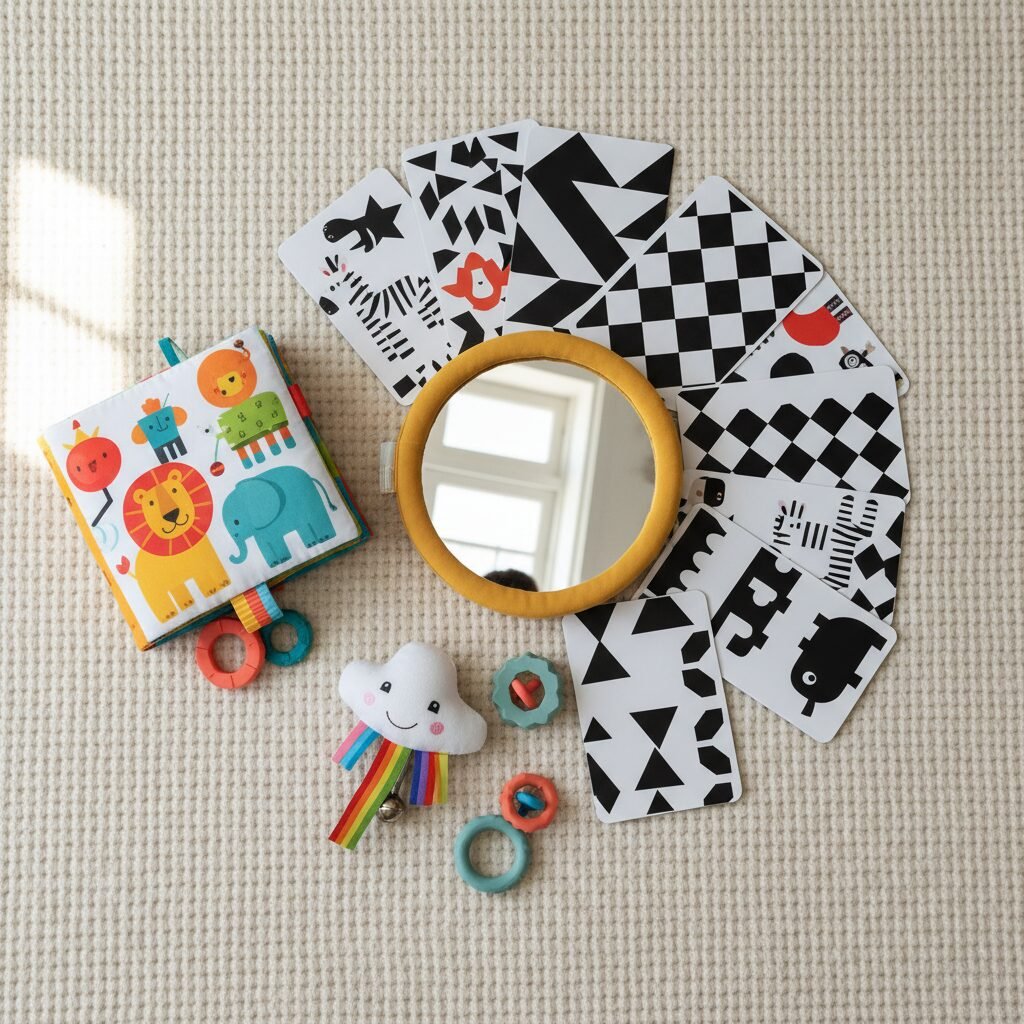
A bored baby is a crying baby. The key to happy tummy time is often a simple, brilliant distraction. Engage their developing senses to capture their attention and make them forget they’re even working out!
5. Create a Visual Wonderland
Your baby’s eyesight is still developing, and they are drawn to high-contrast and reflective objects.
- Unbreakable Mirror: A baby-safe mirror placed in front of them is mesmerizing. They don’t recognize themselves yet, but they will be fascinated by the face looking back at them!
- High-Contrast Cards: Simple black, white, and red flashcards or board books are incredibly engaging for young infants. Prop one up in front of them and watch them stare.
- Water Play Mat: These are shallow, inflatable mats filled with water and floating sea creatures. The gentle movement and bright colors are captivating.
6. Make Some Noise!
Engage their sense of hearing to keep them interested.
- Crinkle Toys: The sound of a crinkly book or toy is endlessly fascinating to a baby.
- Rattles and Shakers: Get down on their level and gently shake a rattle near them, moving it from side to side to encourage them to turn their head.
- Sing Songs: Your voice is their favorite sound. Sing upbeat, silly songs to make the time fly by.
7. The Sibling & Pet Show
If you have an older child or a gentle family pet, enlist them as the official tummy time entertainment committee! An older sibling playing nearby or a calm dog lying a safe distance away can provide a captivating and delightful distraction. Of course, always ensure any interaction with pets and siblings is 100% supervised.
Way #8: Master the Art of Timing & The ‘Little and Often’ Rule
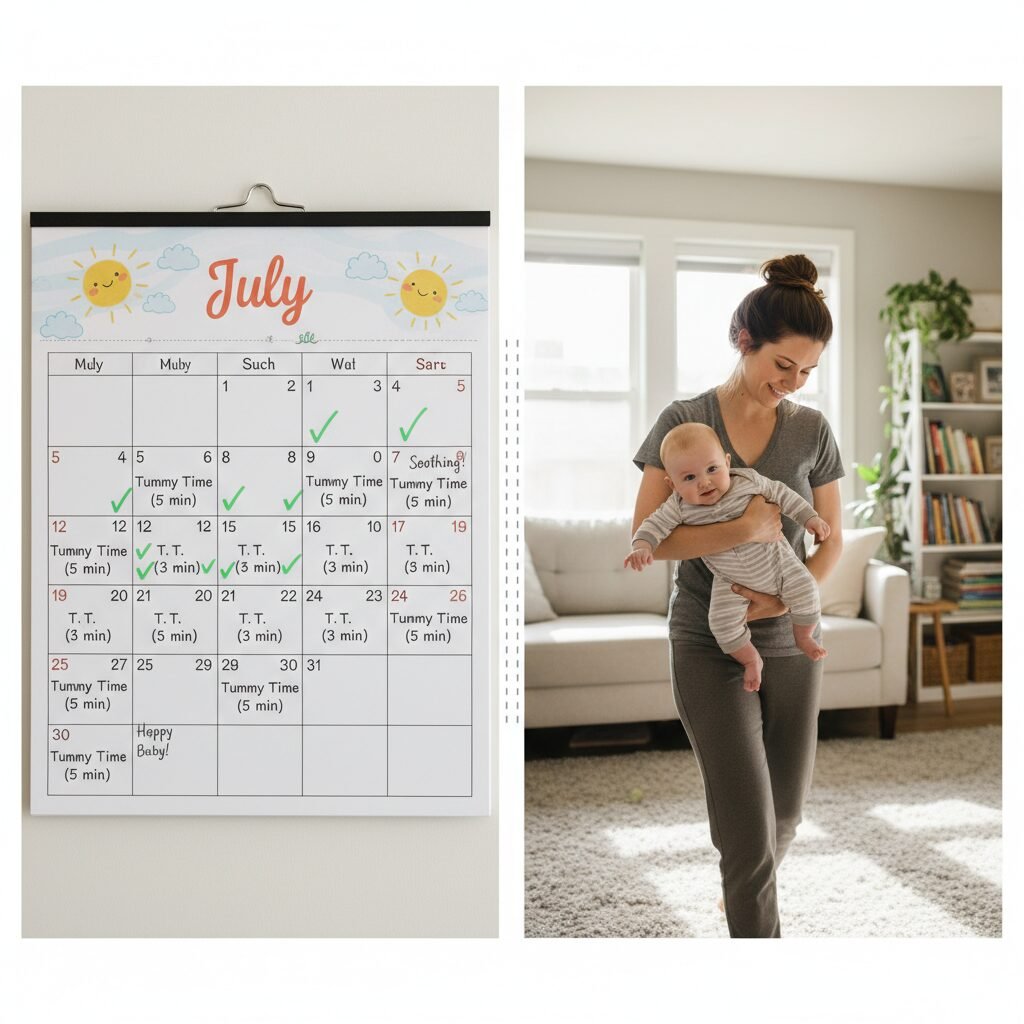
This final tip is perhaps the most crucial of all. You could have the most amazing toys and techniques, but if you try to do tummy time when your baby is tired, hungry, or has a full belly, you’re setting yourself up for failure. Success is all about finding the right window.
The Golden Rule: Little and Often
Forget trying to hit a 15-minute target in one go. For a newborn, a session might only last 30-60 seconds before they get fussy. That’s a success! The goal is to end on a positive note, before the meltdown begins. Aim for multiple short, happy sessions throughout the day. Those little bursts add up quickly.
When is the BEST time for tummy time?
- After a Nap: When your baby is well-rested and content is a perfect time.
- After a Diaper Change: They’re already on the changing table, and their mood is often reset. This is a great time to roll them over for a minute or two of play.
- When They Are Calm and Alert: Look for those ‘quiet alert’ phases when they are awake but not fussy.
When to AVOID tummy time?
- Right After a Feeding: The pressure on a full tummy is uncomfortable and can lead to spit-up. Wait at least 20-30 minutes after they eat.
- When They Are Sleepy: A tired baby is a grumpy baby. Don’t force it.
- When They Are Already Crying: Trying to do tummy time when they’re already upset will just create a negative association with the activity.
Bonus Tip: The Tummy-Down Carry
Incorporate tummy time into your daily routine with the ‘football hold’ or ‘tummy-down carry.’ To do this, slide one hand between your baby’s legs and up to their belly, resting their head in the crook of your elbow. It’s a great way to carry them from room to room while giving them a mini-workout and a new view of the world!
Conclusion
See? You’ve got this. Tummy time doesn’t have to be a source of stress in your day. By understanding your baby’s perspective and turning it into a game of connection, support, and sensory fun, you can transform their entire experience. Remember to start slow, celebrate the small victories (yes, 30 seconds counts!), and always end on a happy note.
Be patient with your little one, and be kind to yourself. You are learning together, and every little effort you make is helping your baby grow strong and confident. Before you know it, these tummy time struggles will be a distant memory, replaced by the joy of watching your baby roll over, sit up, and explore their world with excitement.
A Final Gentle Reminder: Your baby’s safety is paramount. Always actively supervise your baby during tummy time. The rule is ‘Back to Sleep, Tummy to Play.’ Never, ever let your baby sleep on their stomach, as this increases the risk of SIDS.
You’re doing an amazing job, and your baby is so lucky to have you as their guide.