Baby Acne vs Eczema: How to Tell the Difference on Your Baby’s Face
When you first look at your newborn, you see nothing but perfection. Those tiny fingers, that button nose, and that impossibly soft skin. So, when little red bumps or dry patches appear on their face, it’s completely natural for a wave of worry to wash over you. What is this? Is it serious? Am I doing something wrong?
First, take a deep breath. As a pediatric nurse who has seen thousands of new babies, I can tell you that newborn skin is a work in progress, and rashes are incredibly common. More often than not, those spots are one of two very frequent visitors: baby acne or eczema. They might look similar at a glance, but they are quite different in what causes them and how we care for them.
Think of this guide as your friendly, reassuring resource. We’re going to walk through this together, step-by-step. By the end, you’ll feel more confident in playing skin detective, understanding what you’re seeing on your baby’s sweet face, and knowing exactly how to provide gentle, loving care. Let’s get started!
What is Baby Acne (Neonatal Cephalic Pustulosis)? Let’s Decode Those Tiny Bumps
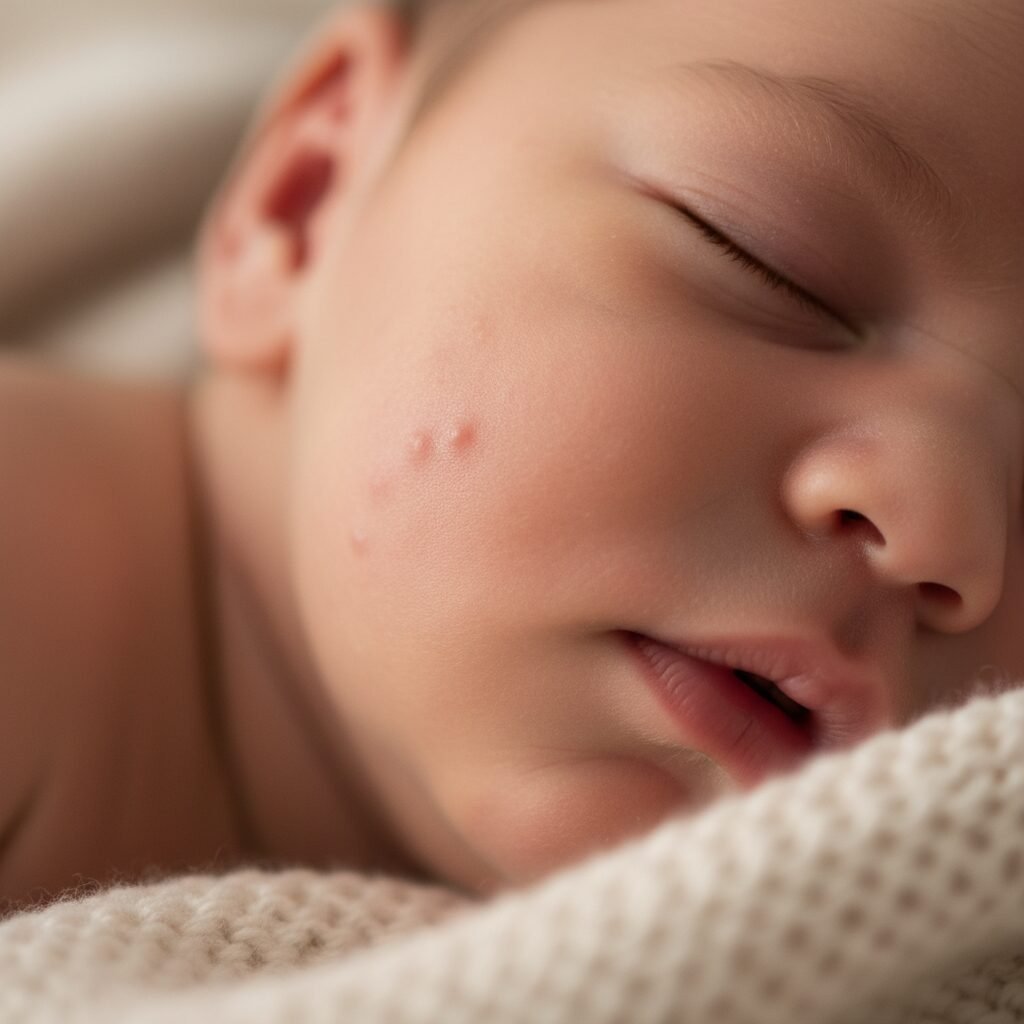
One of the most common surprises for new parents is the sudden appearance of what looks like a teenager’s breakout on their weeks-old baby. This is baby acne, or its official name, neonatal cephalic pustulosis. Before you start having flashbacks to your own high school photos, let me reassure you: this is a completely normal and harmless condition.
What Causes Baby Acne?
Unlike teenage acne, which is often linked to bacteria and clogged pores, baby acne is thought to be caused by the transfer of maternal hormones from you to your baby toward the end of pregnancy. These hormones stimulate your baby’s oil-producing glands, leading to those little bumps. It’s not a sign of poor hygiene or anything you did wrong; it’s just one of the last little gifts from your body to your baby’s!
What Does Baby Acne Look Like?
Here’s what to look for:
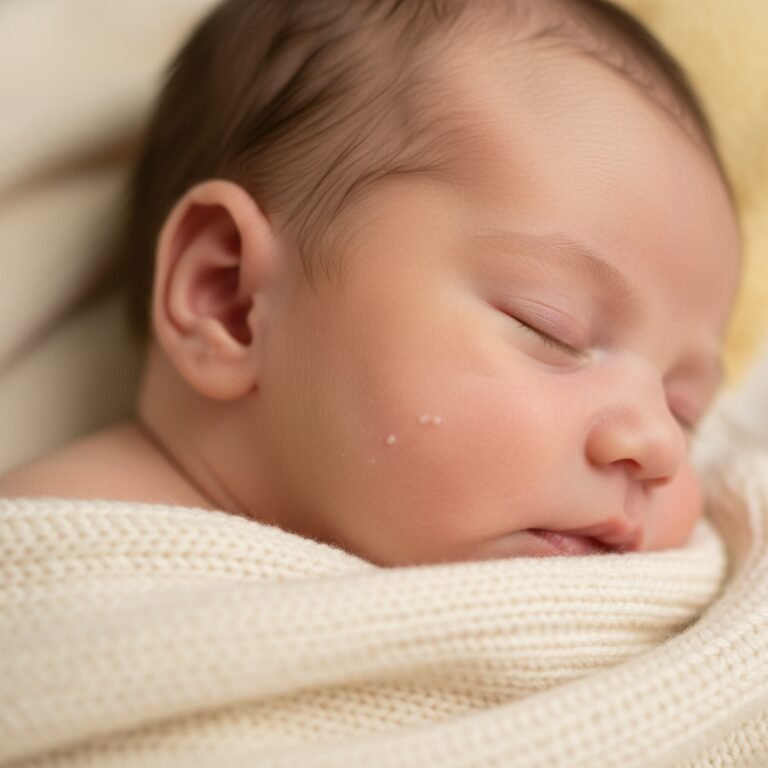
- Appearance: You’ll typically see small, red or white bumps (pustules or papules). They might be surrounded by slightly reddish skin.
- Location: It most often appears on the cheeks, nose, and forehead. Sometimes it can pop up on the chin, scalp, neck, back, or chest.
- Timing: Baby acne usually makes its grand entrance somewhere between 2 and 4 weeks of age.
- Behavior: The bumps can seem to come and go, and they may look more pronounced when your baby is hot, fussy, or if their skin is irritated by saliva, spit-up, or fabric.
A Gentle Reminder: Baby acne does not bother your baby at all. It isn’t itchy or painful. The best course of action is almost always patient, gentle observation.
Most cases of baby acne clear up on their own without any treatment, usually within a few weeks to a few months. The golden rule here is less is more. Your baby’s skin knows what to do, and our job is simply to not interfere with its natural process.
Understanding Baby Eczema (Atopic Dermatitis): More Than Just Dry Skin
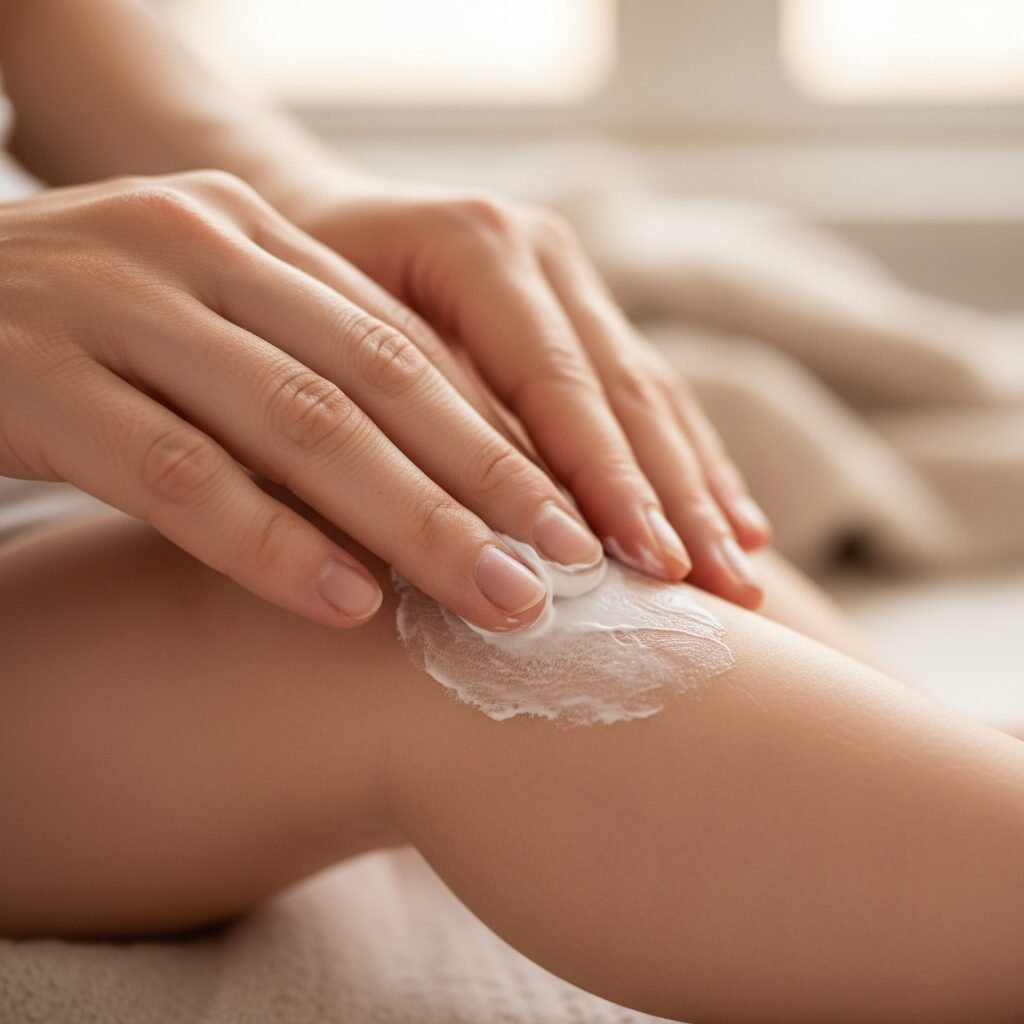
Now let’s talk about the other common culprit: eczema. Eczema, also known as atopic dermatitis, is a bit more complex than baby acne. It’s a chronic condition that causes the skin to become dry, red, itchy, and inflamed. It happens when the skin’s natural barrier is weakened, making it less able to retain moisture and protect against irritants and allergens.
What Causes Baby Eczema?
The exact cause of eczema involves a combination of factors. It often runs in families, so if you, your partner, or other family members have eczema, asthma, or hay fever (the ‘atopic triad’), your baby has a higher chance of developing it too. It’s essentially an overactive immune system response to certain triggers. These triggers can be different for every baby, but common ones include:
- Dry Air: Low humidity can sap moisture from the skin.
- Irritants: Things like scratchy fabrics (wool), certain soaps, detergents, perfumes, and baby wipes can cause a flare-up.
- Heat and Sweat: Overheating can make the itchiness worse.
- Allergens: For some babies, allergens like dust mites, pet dander, or even certain foods (after they start solids) can be a trigger.
What Does Baby Eczema Look Like?
Eczema presents differently than baby acne:
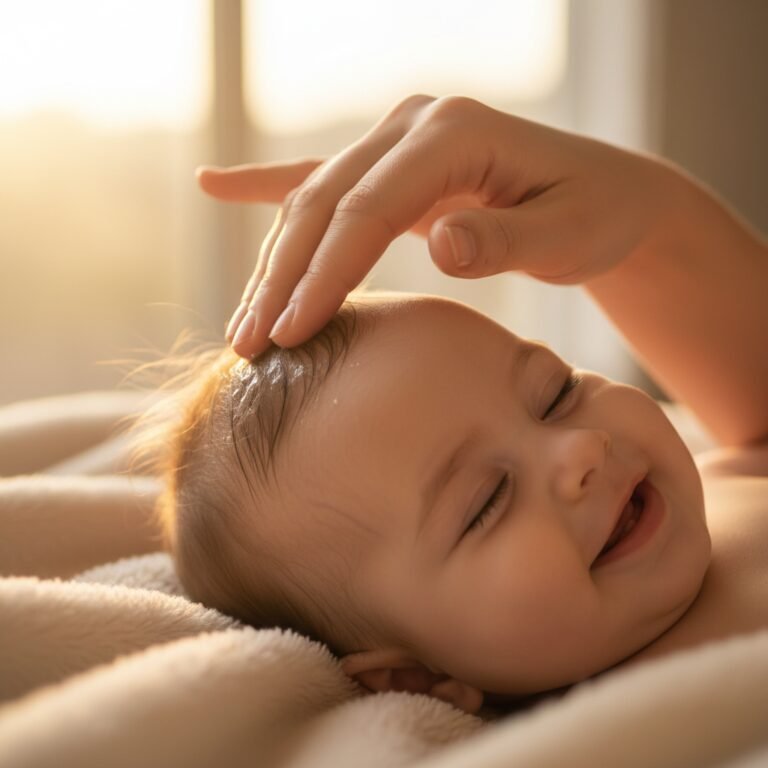
- Appearance: Instead of distinct bumps, eczema typically appears as patches of red, dry, and scaly skin. In more severe cases, these patches might weep clear fluid or become thick and leathery over time.
- Location: While it can appear on the face (especially the cheeks and chin), it’s also very common on the scalp (where it can be mistaken for cradle cap), and in the creases of the elbows and knees as the baby gets older and more mobile.
- Feeling: This is a key difference. Eczema is itchy. You might notice your baby trying to rub their face against their mattress, your shoulder, or their own hands to scratch the itch. This discomfort can make them fussy and disrupt their sleep.
- Timing: Eczema can start a bit later than baby acne, often appearing around 2 to 6 months of age, though it can start earlier or later.
The Face-Off: A Side-by-Side Comparison
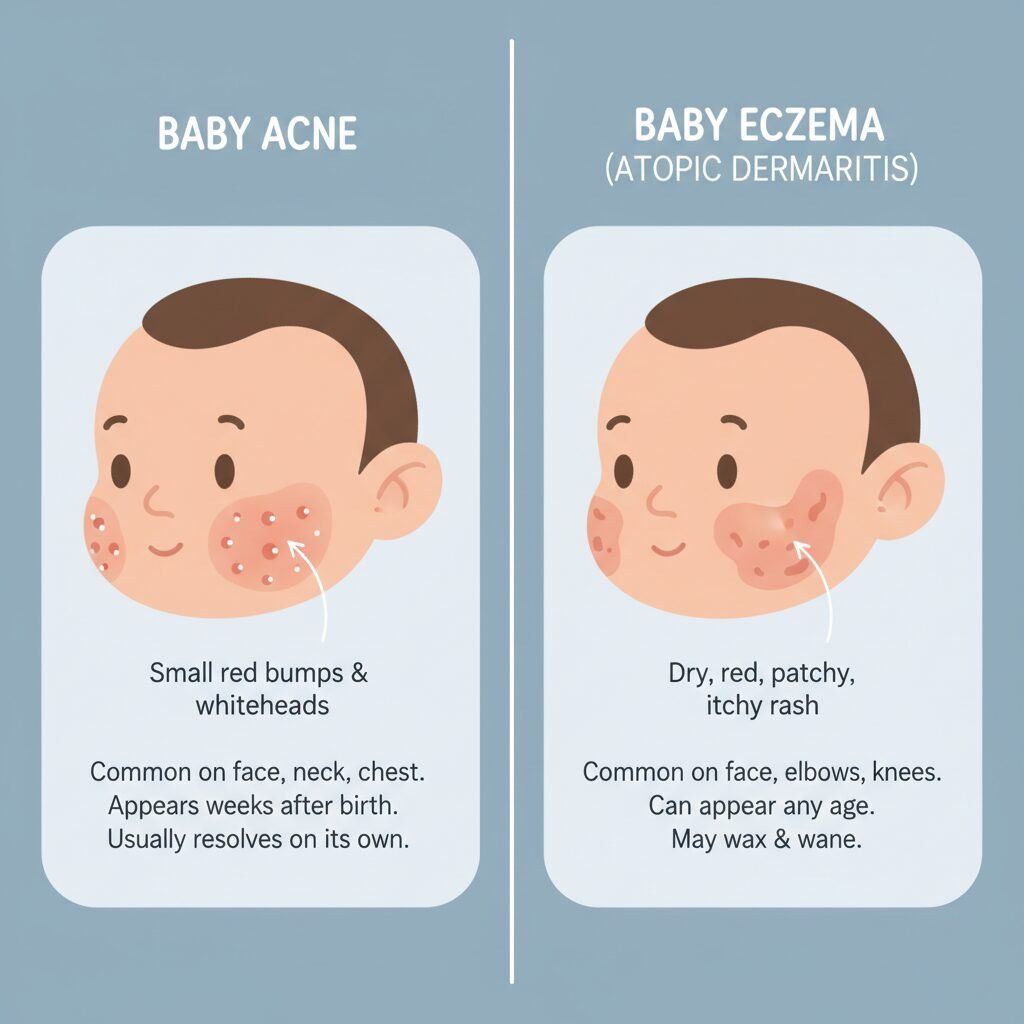
Okay, let’s put it all together. When you’re peering at your baby’s face, trying to figure out what’s what, this quick-glance table can be your best friend. It breaks down the key differences to help you make a more confident assessment.
| Feature | Baby Acne | Baby Eczema |
|---|---|---|
| Appearance | Small, individual red or white bumps (pustules), similar to pimples. | Dry, scaly, and thickened patches of red, inflamed skin. Can sometimes weep fluid. |
| Texture | Bumpy but the surrounding skin is usually normal. | Feels rough, dry, or leathery. Can be flaky. |
| Main Location | Primarily on the face: cheeks, nose, and forehead. | Often starts on the face/scalp but also common in elbow and knee creases. Can appear anywhere. |
| Sensation (Itch) | Not itchy. Your baby is typically unbothered by it. | Very itchy. Your baby may be fussy, irritable, and try to scratch. |
| Typical Onset | Usually appears within the first month (2-4 weeks). | Can appear anytime, but commonly starts after 2 months of age. |
| Primary Cause | Maternal hormones stimulating oil glands. | A combination of genetics, a sensitive immune system, and environmental triggers. |
Using this table can help simplify things. For example, if you see distinct little pimples on your 3-week-old’s nose and they seem completely happy, you’re likely looking at baby acne. If your 3-month-old has dry, red patches on their cheeks and is constantly trying to rub their face on things, eczema is a much more likely candidate.
Caring for Your Baby’s Delicate Skin: Gentle Home Remedies
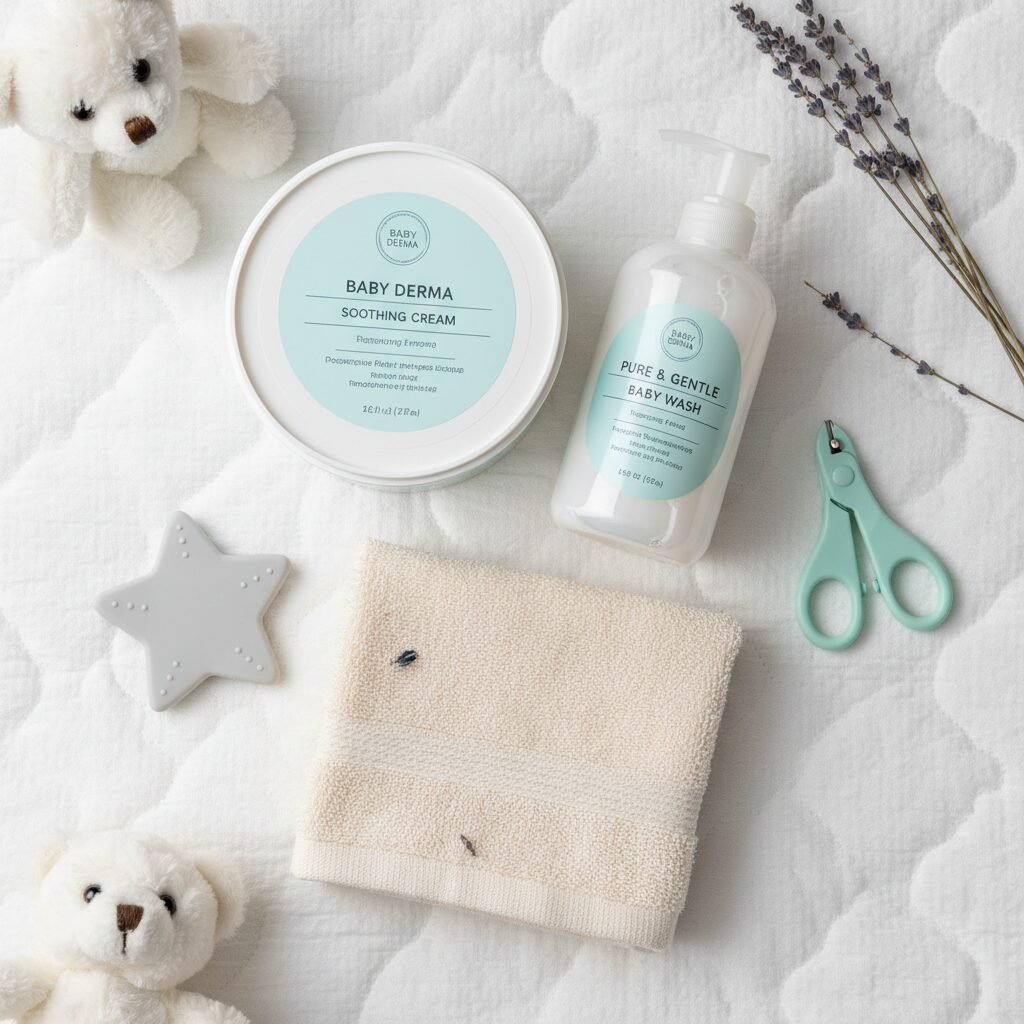
Once you have a better idea of what you’re dealing with, you can tailor your approach. Remember, the goals are different: for acne, it’s a hands-off waiting game; for eczema, it’s active soothing and protection.
Soothing Baby Acne: The ‘Less is More’ Approach
The best treatment for baby acne is, quite simply, patience. Your goal is to not irritate the skin while it clears on its own.
- Cleanse Gently: Once a day, use a soft cloth and lukewarm water to gently wash your baby’s face. No soap is needed.
- Pat, Don’t Rub: After washing, pat the skin completely dry with a soft towel. Rubbing can cause irritation.
- Skip the Creams: Do not use over-the-counter acne medications, lotions, or oils. These can clog pores and make the acne worse.
- Keep it Clean: Gently wipe away any spit-up or drool from your baby’s face with water as soon as you can.
Managing Baby Eczema: The ‘Moisture is Everything’ Approach
With eczema, the focus is on restoring the skin’s barrier, locking in moisture, and avoiding triggers.
- Bathing Basics (Soak and Seal): Give your baby short (5-10 minute) baths in lukewarm, not hot, water. Use a gentle, fragrance-free, soap-free cleanser only where needed.
- The 3-Minute Rule: As soon as you take your baby out of the bath, gently pat them partially dry, leaving the skin slightly damp. Immediately—within 3 minutes—apply a generous layer of thick, fragrance-free moisturizer or emollient all over their body. This ‘seals’ in the moisture from the bath.
- Moisturize, Moisturize, Moisturize: Apply that thick cream at least twice a day, and more often to any flare-up areas. Look for products with ceramides, and choose ointments (like petroleum jelly) or thick creams in a tub over thinner lotions in a pump bottle.
- Choose Soft Fabrics: Dress your baby in soft, breathable materials like 100% cotton. Avoid wool and other scratchy fabrics.
- Mind the Laundry: Wash all of your baby’s clothes, bedding, and towels in a mild, dye-free, and fragrance-free detergent. Consider a second rinse cycle to remove any residue.
- Keep Nails Short: Trim your baby’s fingernails regularly to minimize skin damage from scratching. Little cotton mittens can also help, especially at night.
When to Call the Pediatrician: Trusting Your Parental Instincts

You are the expert on your baby. Your intuition is powerful, and you should never hesitate to use it. While both baby acne and mild eczema can usually be managed at home, there are definitely times when you should check in with your pediatrician or family doctor.
My Most Important Advice: It is never wrong to call your doctor for peace of mind. A quick phone call or visit can ease your worries and ensure your baby gets the right care. There is no such thing as a ‘silly question’ when it comes to your child’s health.
Please make an appointment to see the doctor if you notice any of the following:
- Signs of Infection: If the rash develops yellowish crusts, fluid-filled blisters (vesicles), or areas of weeping pus, it could be a sign of a secondary bacterial or viral infection that needs treatment.
- Extreme Discomfort: If your baby is inconsolable, seems to be in pain, or if the itching is so severe that it’s preventing them from sleeping or feeding well.
- The Rash is Worsening or Spreading: If you’re following the gentle care tips for eczema and the rash is getting worse or spreading rapidly.
- It’s Accompanied by Other Symptoms: If the rash appears alongside a fever, poor feeding, or lethargy, it could be a sign of a more serious illness.
- It Doesn’t Look Right: If the bumps look more like blisters or the rash has a different pattern than what’s described here. There are other, less common infant rashes that your doctor can identify.
- You Need a Stronger Treatment: For moderate to severe eczema, your doctor may prescribe a low-dose steroid cream or other medicated ointments to calm the inflammation and break the itch-scratch cycle.
Your pediatrician is your partner in this journey. They can confirm the diagnosis, rule out other conditions, and provide you with a personalized treatment plan to keep your baby’s skin healthy and comfortable.
Conclusion
Navigating the world of newborn skin can feel like a puzzle, but you’re already on your way to solving it. The key is to observe and respond. Baby acne asks for your patience and a gentle, hands-off approach, reminding us that sometimes the best action is no action at all. Eczema, on the other hand, calls for your proactive, loving care through moisture and protection, helping to soothe and comfort your little one.
Remember to be kind to yourself through this process. You’re learning every single day, and you’re doing an amazing job. Every baby’s skin is unique, and what works for one may not work for another. Trust your instincts, don’t be afraid to ask for help, and cherish all the moments—even the ones spent deciphering mysterious little red bumps. You’ve got this.