Are Baby Loungers Safe? The Truth About DockATot And Sleep Risks
Hey there, new parent. Take a deep breath. You’re doing an amazing job. I know because you’re here, trying to find the best, safest information for your little one. In the whirlwind of late-night feedings and endless diaper changes, any product that promises a moment of hands-free peace can feel like a lifesaver. Enter the baby lounger. You’ve seen them all over social media—gorgeous, cozy little nests like the DockATot or Snuggle Me Organic, with adorable babies snoozing peacefully inside. They’re on every registry and in every influencer’s nursery.
But as a pediatric nurse and lactation consultant who has spent decades helping families, I need to have a gentle but very direct heart-to-heart with you about these products. While they look inviting, they come with serious safety warnings from the very experts we trust to protect our children. This article isn’t about shaming or scaring you. It’s about empowering you with clear, evidence-based facts so you can cut through the marketing hype and make the safest choice for your precious baby. Let’s talk about the truth behind baby loungers and sleep.
The Allure of the Cozy Nest: What Exactly Are Baby Loungers?
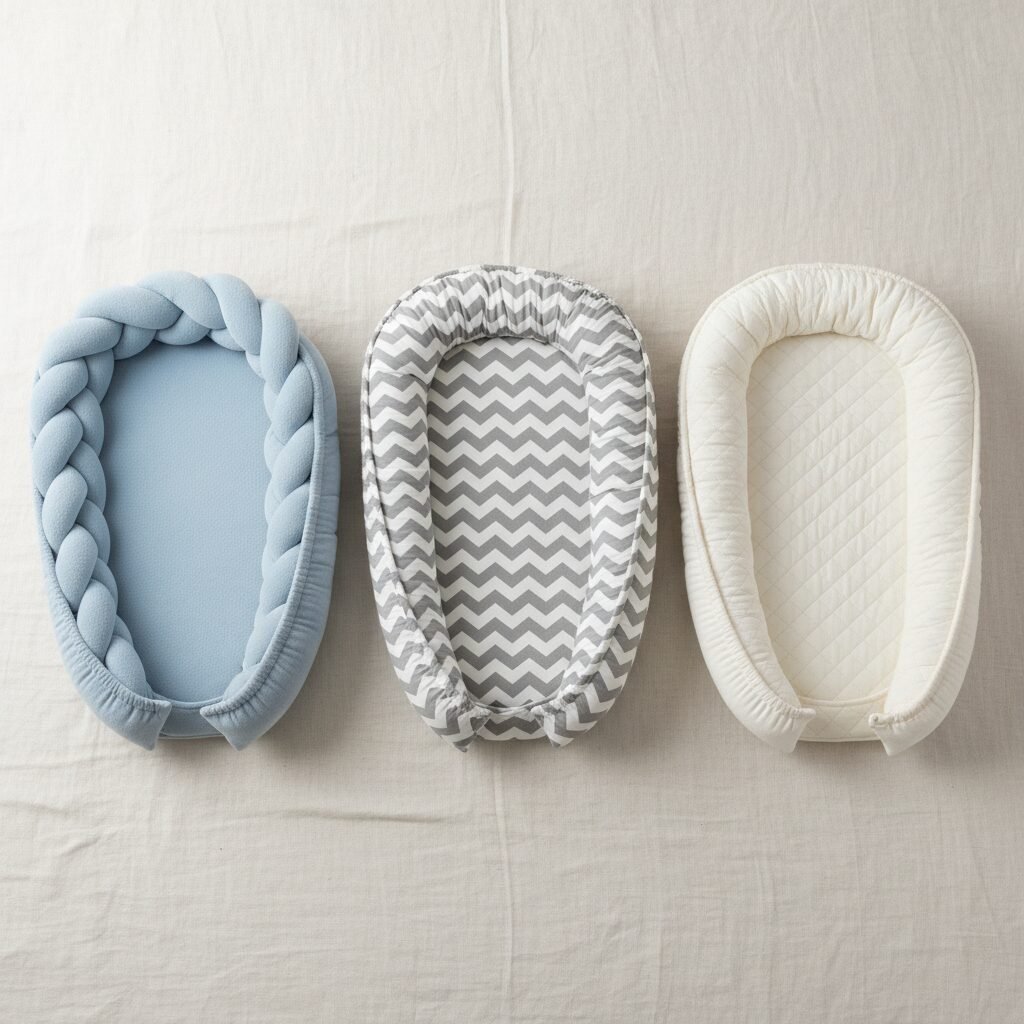
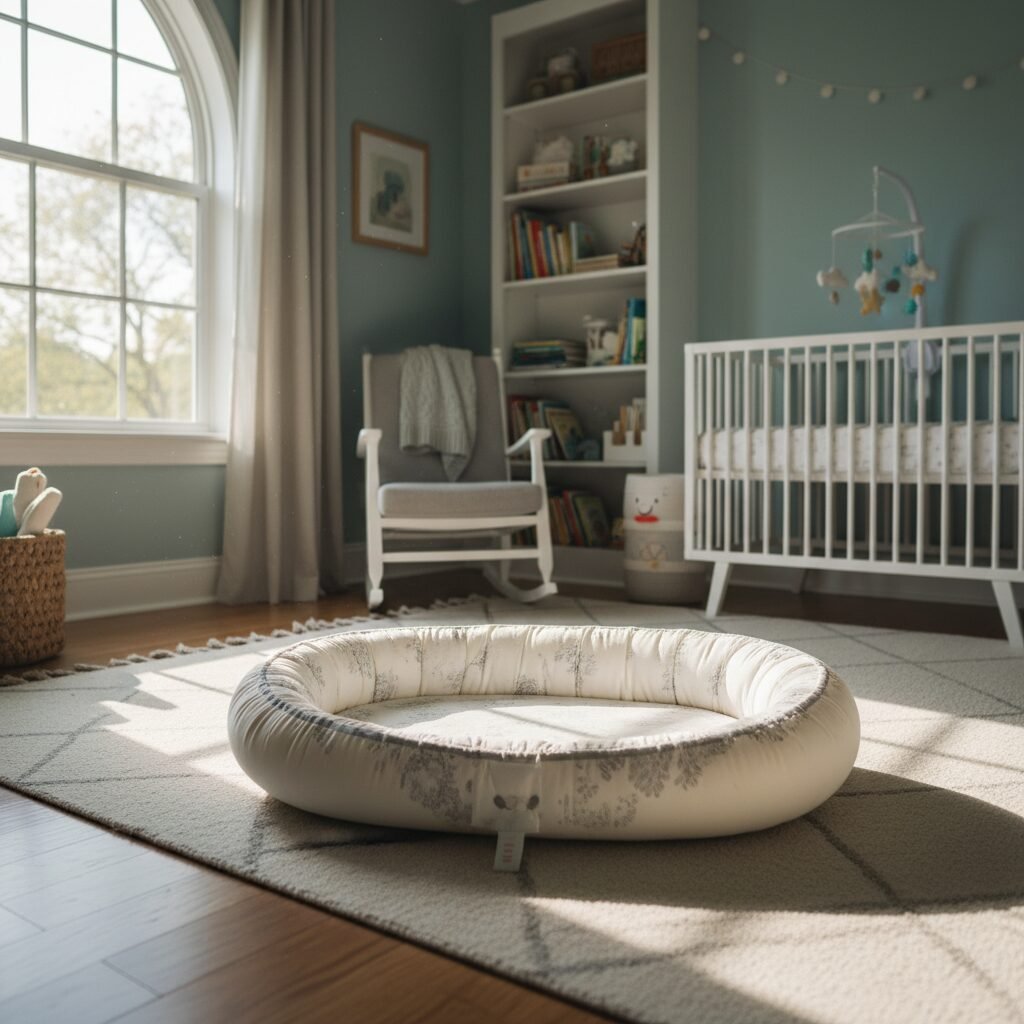
First things first, let’s define what we’re talking about. A baby lounger is essentially a soft, padded cushion with raised, cushioned sides, designed to ‘hug’ a baby. Manufacturers market them for supervised, awake time. They’ll say it’s a comfy spot for your baby to hang out nearby while you fold laundry, a soft surface for tummy time, or a convenient station for a quick diaper change. They are, without a doubt, convenient and incredibly popular.
However, it’s crucial to understand what they are not. Baby loungers are not sleep products. They are not bassinets, cribs, or play yards. This distinction is the most important piece of the puzzle. Sleep products sold in the U.S. must meet strict federal safety standards for infant sleep, which were updated and solidified by the CPSC’s Infant Sleep Product Rule in 2022. These rules require sleep surfaces to be firm and flat with sides that are rigid and high enough to prevent falls and entrapment. Loungers, with their soft, plush surfaces and low, squishy sides, do not meet any of these criteria. The problem is that their cozy, nest-like design looks so perfect for sleep that it’s tempting for exhausted parents to use them for just that, leading to incredibly dangerous situations.
The Official Word: Why Experts Raise Red Flags
This isn’t just my opinion as a nurse; this is the consensus from the highest authorities on child safety. Both the American Academy of Pediatrics (AAP) and the Consumer Product Safety Commission (CPSC) have issued strong warnings against using baby loungers for sleep.
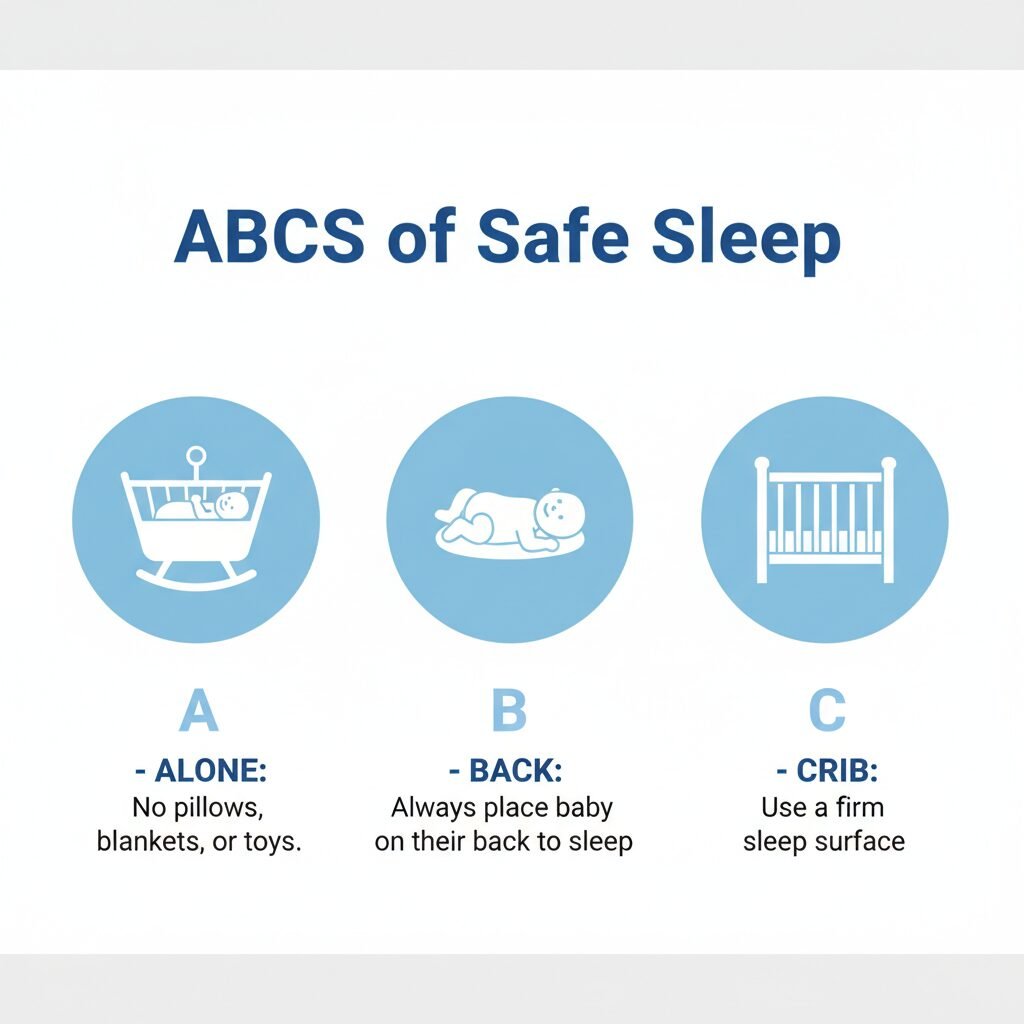
The ABCs of Safe Sleep
The AAP has spent decades researching the causes of Sudden Infant Death Syndrome (SIDS) and other sleep-related infant deaths. Their recommendations are simple and effective, known as the ABCs of Safe Sleep:
- A – ALONE: Your baby should sleep alone in their own sleep space, without any soft bedding, bumpers, blankets, pillows, or toys.
- B – BACK: Your baby should always be placed on their back to sleep for every sleep, including naps.
- C – CRIB: Your baby should sleep on a firm, flat surface in a safety-approved crib, bassinet, or play yard.
A baby lounger violates every single one of these rules. The soft, padded sides are a form of soft bedding, it’s not a firm or flat surface, and it is not a safety-approved crib or bassinet.
The CPSC Warning
The CPSC has gone even further, explicitly warning parents about the deadly risks. They have documented infant deaths linked to loungers and similar products. These tragedies happen in two primary ways:
- Suffocation: An infant can roll or shift, pressing their face into the soft side of the lounger, blocking their nose and mouth. Because young babies lack the neck strength and motor skills to lift and turn their heads, they can suffocate.
- Positional Asphyxiation: The soft, inclined surface of a lounger can cause a baby’s chin to slump down toward their chest. This position can compress their tiny, flexible airway, cutting off their oxygen supply, even without their face being covered.
Safety Warning: Never, ever let your baby sleep in a baby lounger, pillow, or any product that is not a firm, flat surface designed specifically for infant sleep. The risk of suffocation is real and preventable.
Decoding the Dangers: A Closer Look at the Specific Risks
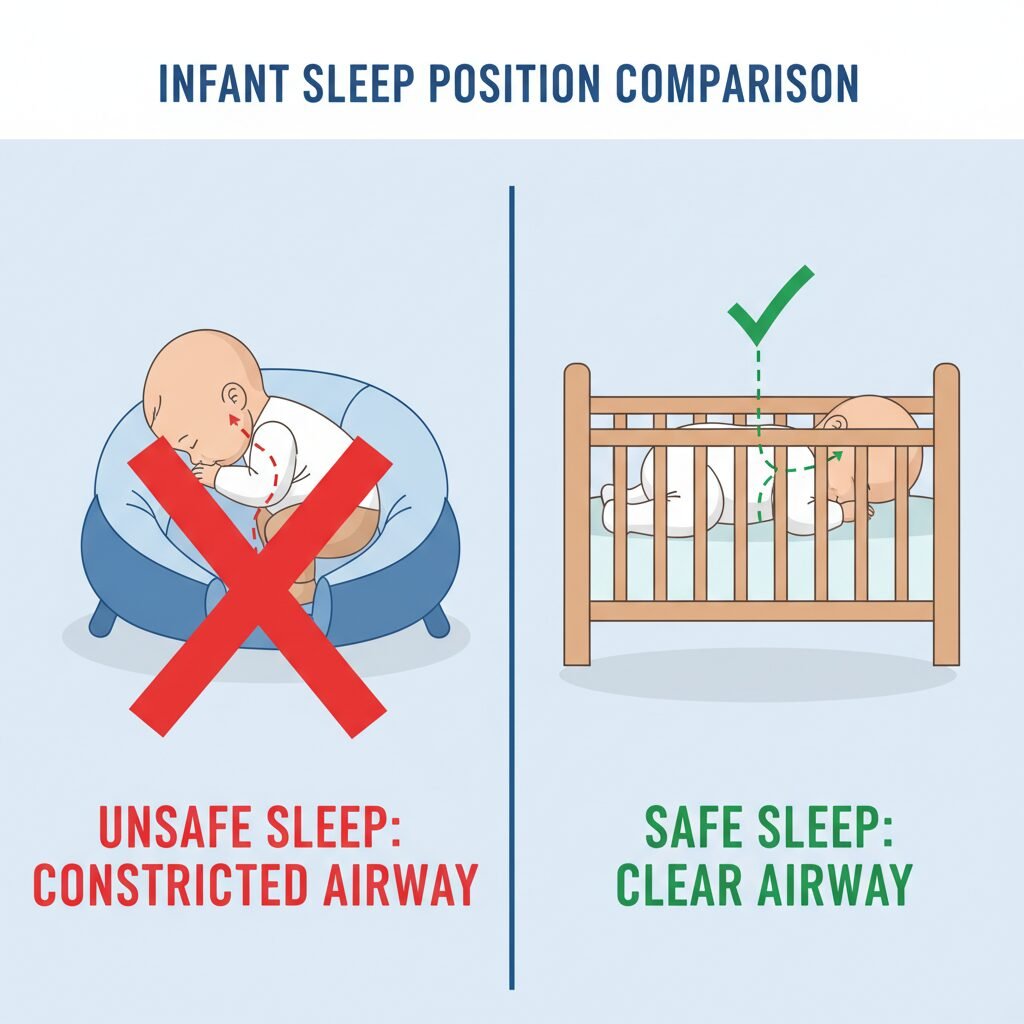
To truly understand why these products are so risky, let’s break down the mechanics of the danger. It’s not about a product being ‘bad’; it’s about the physics and physiology of a newborn.
The Suffocation Hazard in Detail
Imagine your own pillow. Now imagine being a tiny baby with a heavy head and very little neck control. If your face pressed into that pillow, you could easily turn away. A baby cannot. The plush sides of a lounger present the same hazard. A simple turn of the head or a slight wiggle can be enough to press their face into the fabric, and they don’t have the strength to correct their position. This is why all soft bedding is removed from a safe sleep environment.
The Risk of Rolling and Entrapment
You might think, ‘My baby can’t roll yet, so it’s fine.’ But babies can wiggle and move from day one. A baby could wiggle out of the lounger and become trapped between it and another surface, like the cushions of a couch or a wall. Tragically, many deaths have occurred when a lounger was placed on an adult bed or a sofa, and the baby rolled or wiggled into a position where they were trapped and could not breathe. This is why any product used for a baby should be placed on the floor, away from other hazards.
The Problem with Inclines
Any product that props a baby up on an incline for sleep is dangerous. This was the exact reason for the massive recall of the Rock ‘n Play and similar inclined sleepers. When a baby’s head is not supported on a flat surface, gravity can cause it to fall forward, leading to positional asphyxiation. Even a slight incline in a soft lounger can create this life-threatening situation. A baby’s airway is about the width of a drinking straw—it doesn’t take much to block it.
Navigating the Noise: Marketing vs. Reality
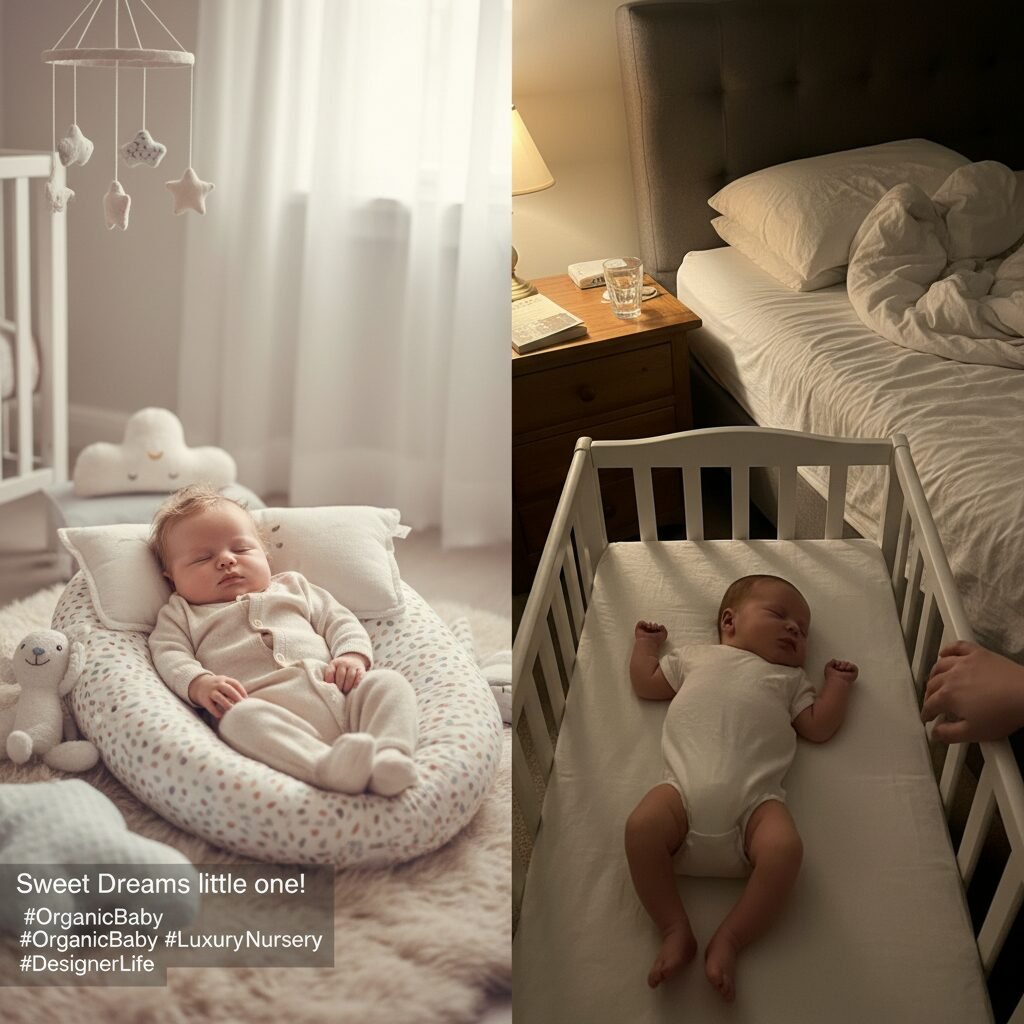
So if these products are so risky, why are they everywhere? It’s a frustrating mix of clever marketing, social media influence, and a culture of well-meaning but sometimes outdated advice from friends and family.
When you see a picture-perfect nursery on Instagram with a baby sleeping soundly in a DockATot, it’s hard not to want that same peace and aesthetic for your own family. But those photos are advertisements, not safety tutorials. Influencers are often paid to promote these products, and the images are staged for a beautiful shot, not for demonstrating safe sleep.
You’ll also hear from friends who say, ‘I used one for all my kids, and they were fine!’ This is something called survivorship bias. While we are so thankful their children were okay, it doesn’t erase the documented cases where children were not. It’s like saying you never wear a seatbelt and have never been in an accident—that doesn’t make driving without a seatbelt safe. As parents, our job is to mitigate risk, not to gamble.
Pay close attention to the language on the product’s packaging and website. Manufacturers are very careful to use words like ‘lounging,’ ‘resting,’ and ‘supervised.’ This is legal protection. They know that exhausted parents will use them for unsupervised naps, but they explicitly state not to, placing the liability on the consumer. Don’t fall for the cozy pictures; read the fine print and listen to the pediatric experts.
Safe & Soothing Alternatives: Your Hands-Free Guide
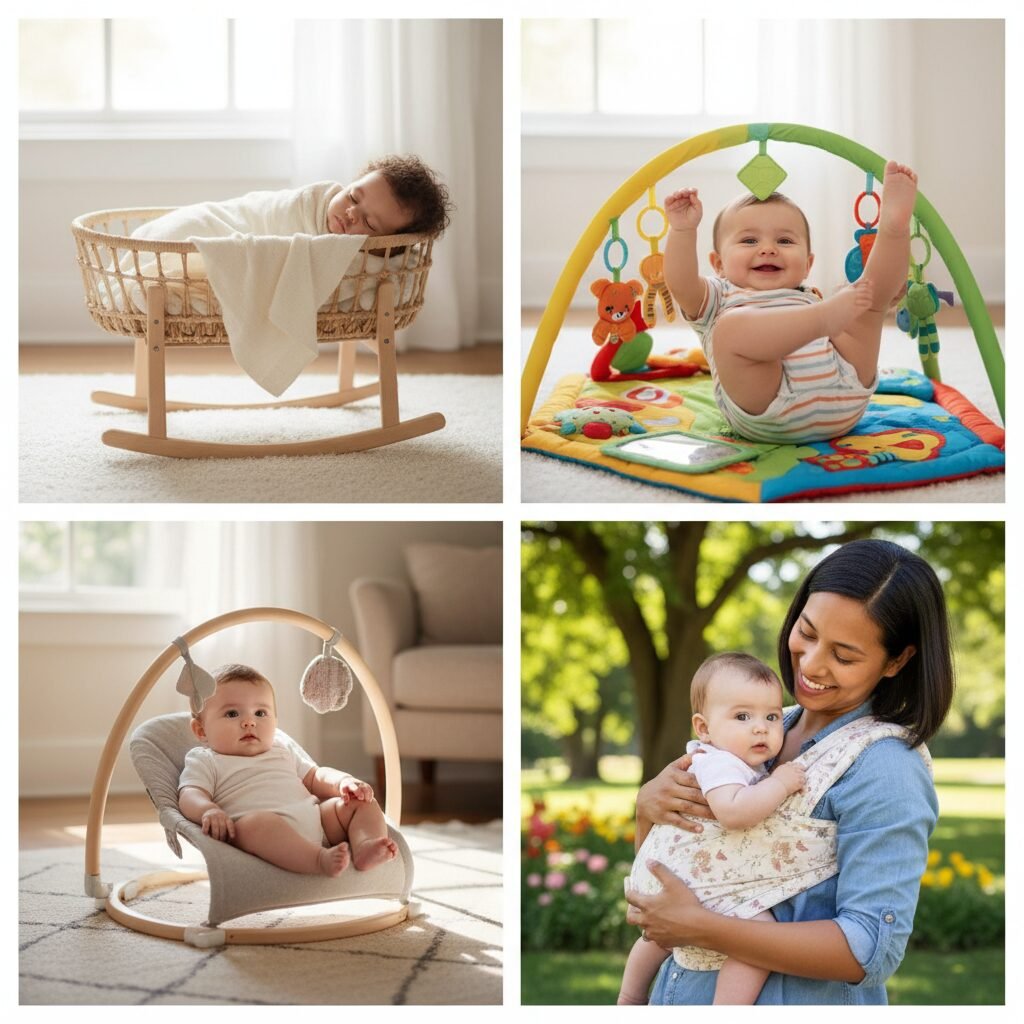
I would never leave you with a list of ‘don’ts’ without providing a list of safe and effective ‘dos’! You absolutely need and deserve a break. The goal isn’t to hold your baby 24/7. The goal is to have safe places to put your baby down, both for sleep and for supervised awake time. Here are some wonderful, safety-approved alternatives.
| Product Type | Best For | Key Safety Feature |
|---|---|---|
| Bassinet or Play Yard | Safe Sleep (Naps & Nighttime) | Meets CPSC standards with a firm, flat surface and secure sides. Keeps baby close and safe. |
| Activity Mat / Play Gym | Supervised Awake & Tummy Time | A firm, flat surface on the floor that encourages motor skill development. No risk of falling. |
| Bouncer or Swing | Brief, Supervised Awake Time | Soothes a fussy baby. CRITICAL: Must be used on the floor. If baby falls asleep, they must be moved immediately to a crib or bassinet. |
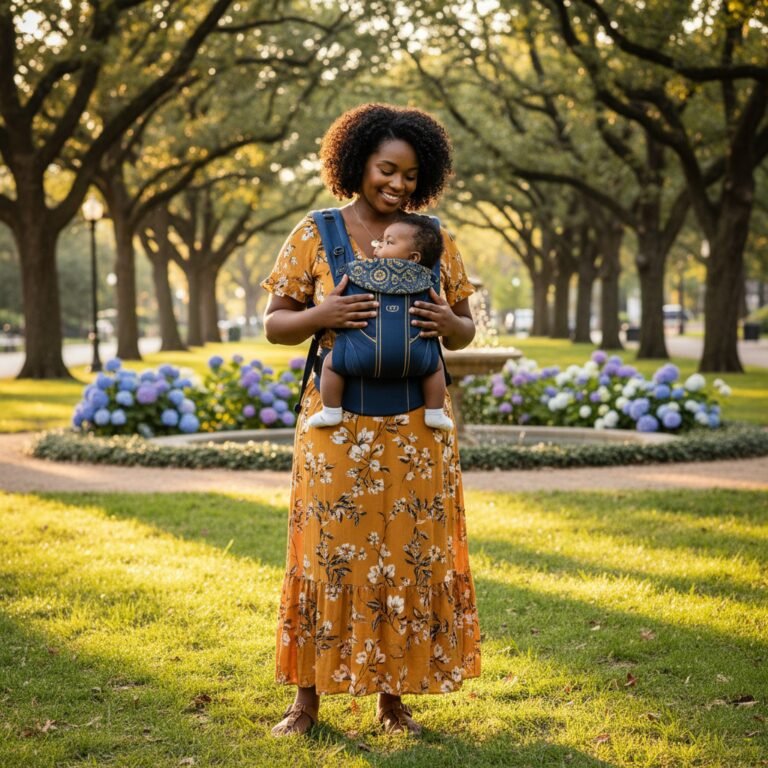
| Babywearing (Carrier/Sling) | Keeping Baby Close & Hands-Free | Allows you to get things done while comforting your baby. Ensure it follows the T.I.C.K.S. rule for safe babywearing (Tight, In view, Close enough to kiss, Keep chin off chest, Supported back). |
| A Simple, Clean Blanket on the Floor | Any Supervised Awake Time | Cost-effective, simple, and perfectly safe. Allows baby freedom of movement on a firm surface. |
The key is to separate ‘awake time’ gear from ‘sleep time’ gear. Anything soft, cozy, and nest-like is for when your eyes are directly on your baby. Anything for sleep needs to be boring: flat, firm, and free of clutter.
Conclusion
I know this can feel like a lot. It might even feel disappointing if you already have a lounger or had your heart set on one. Please know this information comes from a place of deep care and a passion for keeping babies safe. Your desire for a convenient, cozy spot for your baby is completely valid. The most important takeaway, however, is that baby loungers are not safe for sleep—not for a quick nap, and not for nighttime. They should only ever be used for brief, fully supervised awake periods on the floor.
Ultimately, the safest place for your baby to sleep is the simplest: alone, on their back, in a crib, bassinet, or play yard. It may not look as ‘Instagrammable’ as a designer lounger, but providing that boringly safe space is one of the most profound acts of love you can give your child. You’ve got this.