Scary Sharp Edges? How to Baby Proof Your Fireplace Without Ruining Your Decor
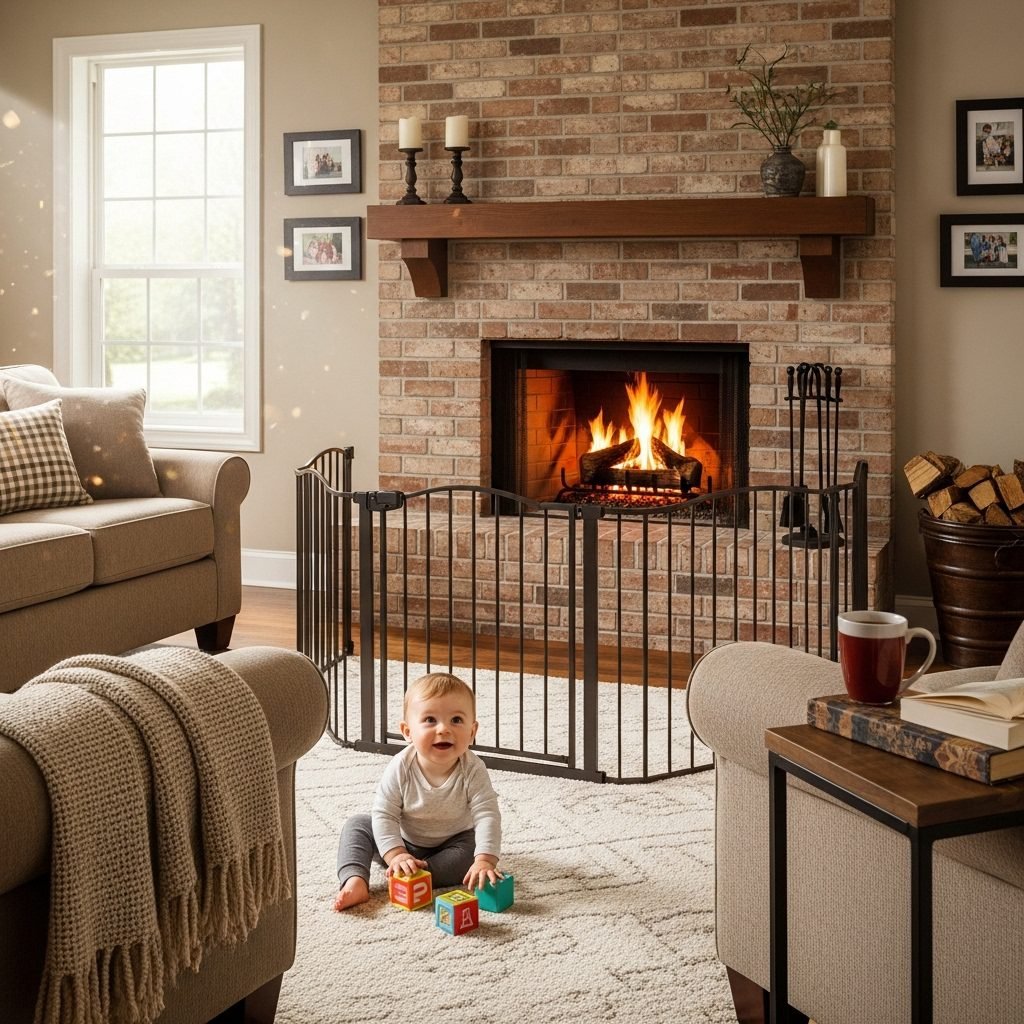
Hey there, new parent. Take a deep breath. I see you, looking at your beautiful living room, and then at your newly crawling baby, and then back at the gorgeous-but-terrifying fireplace. That cozy centerpiece that was once perfect for romantic evenings now looks like a minefield of sharp corners, hard surfaces, and mysterious, sooty openings. It’s a classic new-parent dilemma: how do you protect your precious little explorer from the biggest hazard in the room without turning your stylish home into a fortress of foam and plastic?
As a pediatric nurse and lactation consultant, I’ve sat on the floor with countless families, pointing out those ‘toddler magnets’ that our babies are inevitably drawn to. The fireplace is always number one on the list. But here’s the good news I share with all of them: you absolutely do not have to choose between a safe baby and a beautiful home. It’s all about finding smart, effective, and yes, even stylish solutions.
In this guide, we’re going to walk through everything you need to know to neutralize the fireplace threat. We’ll tackle the sharp hearth, create a safe boundary, secure the dangerous tools, and do it all in a way that complements your decor. Ready to reclaim your peace of mind? Let’s get started.
Tackling the Hearth: Softening Those Sharp Corners
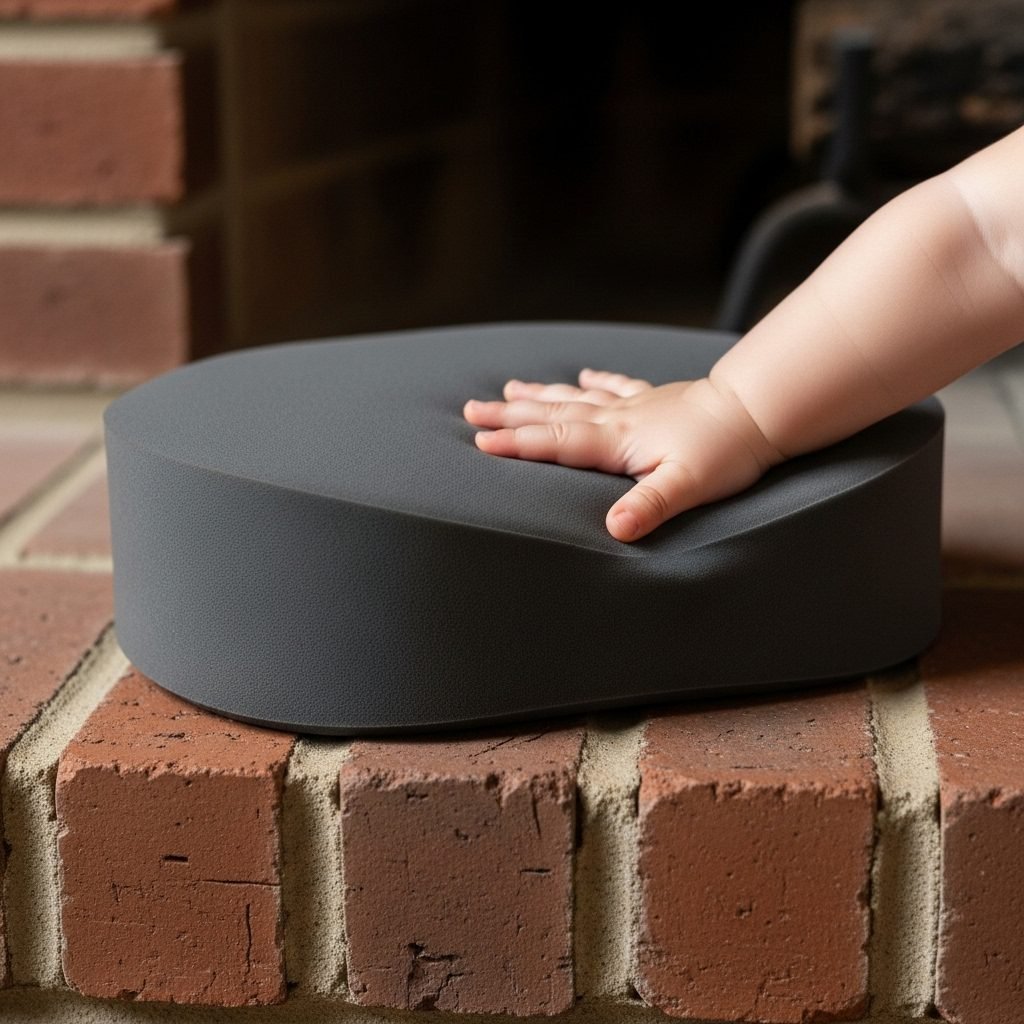
The hearth is usually the first and most constant danger. It’s at the perfect height for a wobbly toddler to fall against, leading to bumps, bruises, and even serious injuries. Your mission here is to cushion the blow. Thankfully, you have several great options that can blend right in.
Edge and Corner Guards
Think of these as the minimalist’s approach to baby proofing. Instead of covering the entire hearth, you just apply soft guards to the sharpest points: the corners and the top edge.
- What they are: Typically long strips of dense foam or soft rubber with an adhesive backing. They come in rolls you can cut to size and matching corner pieces.
- Pros: They are less obtrusive than full pads and can be surprisingly discreet. You can often find them in colors like brown, black, off-white, or gray that match common hearth materials.
- Cons: A determined baby might be able to pull them off or, more likely, test them out with their new teeth. It’s crucial to choose a brand with strong, non-toxic adhesive.
Full Hearth Cushions
For maximum protection, a full hearth pad or cushion is your best bet. This is a single, custom-fitted piece of foam that covers the entire top surface and front edge of your hearth.
- What they are: Thick, dense foam pads that are often custom-cut or come in standard sizes. They attach with heavy-duty double-sided tape.
- Pros: This is the gold standard for impact absorption. It creates a completely soft surface for your little one to bump into without any tears.
- Cons: They are much more noticeable than simple edge guards. However, modern options come in a variety of colors and even some textured finishes to better mimic stone.
A Quick Tip on Installation: No matter which option you choose, clean the hearth surface thoroughly with rubbing alcohol before applying any adhesive. Dust and grime are the number one enemy of a secure baby-proofing product!
Creating a ‘No-Go Zone’: Gates and Screens
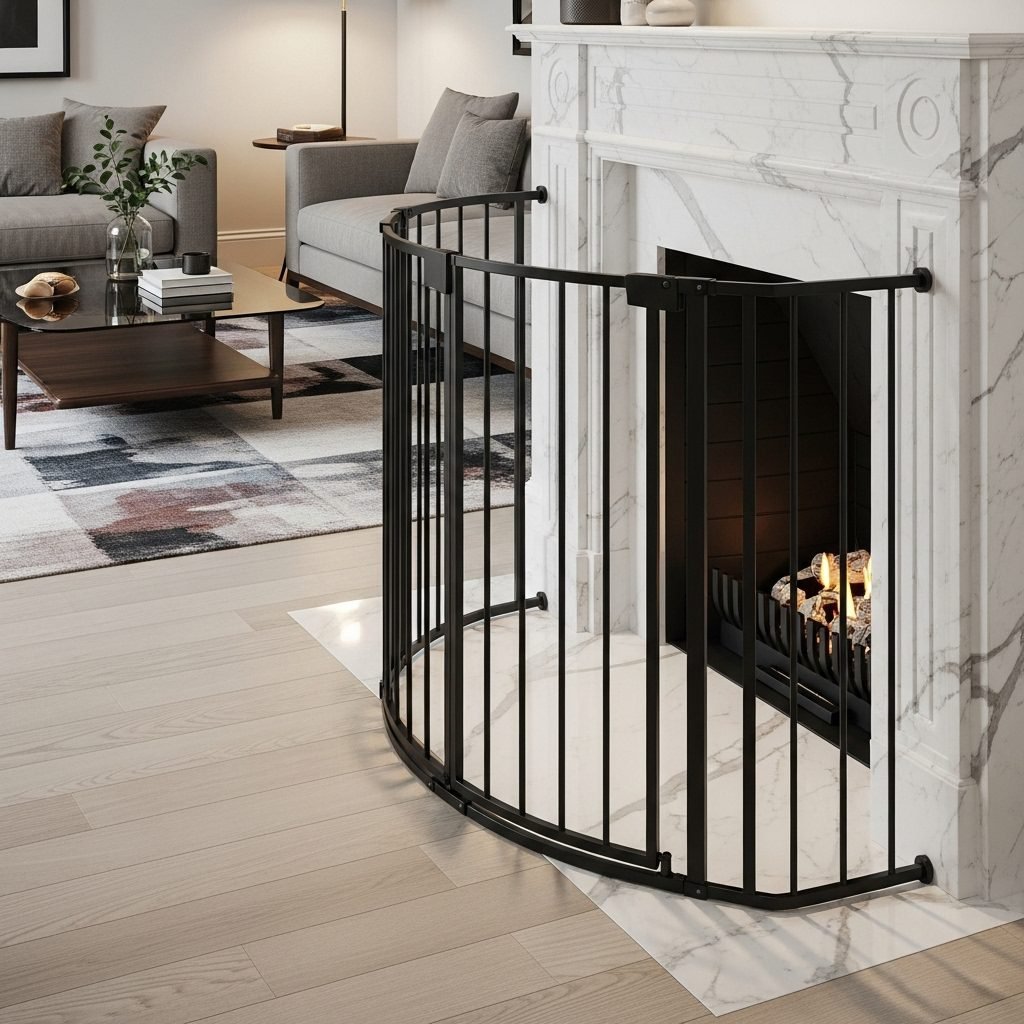
While softening the hearth protects from falls, it doesn’t solve the problem of heat, flames, soot, or sharp tools. For that, you need to create a boundary. This is the most effective way to keep curious crawlers at a safe distance from the entire fireplace area, especially when it’s in use.
The All-Powerful Fireplace Gate
A dedicated fireplace gate is a game-changer. These aren’t your average pressure-mounted baby gates; they are specifically designed to cordon off wide, irregular spaces.
- Hardware-Mounted is Key: For a fireplace, you want a gate that screws into the wall on either side. This makes it incredibly sturdy and impossible for a toddler to push over. Many are made of heat-resistant metal and have a walk-through door for adults.
- Configurable Panels: The best models have multiple panels that you can angle to create the perfect semi-circle or rectangular barrier around your hearth. This allows you to customize the ‘no-go zone’ and decide how much floor space to block off.
- Style Considerations: Don’t worry, they aren’t all white plastic! You can find beautiful gates in black, bronze, and gray metal that can look like an intentional, decorative element in your room.
Heavy-Duty Fireplace Screens
If you have a wood-burning fireplace, a sturdy screen is non-negotiable to stop sparks from flying out. For baby proofing, it serves a dual purpose.
- Weight and Stability: A flimsy, lightweight screen can be easily tipped over by a curious child. Look for a heavy, solid screen with wide feet that is difficult to move. Some even have clamps to secure them to the fireplace opening.
- Discourages Touching: A fine mesh screen puts a barrier between little fingers and hot glass doors or smoldering logs. While a gate is still the safest option, a heavy-duty screen is a good secondary line of defense.
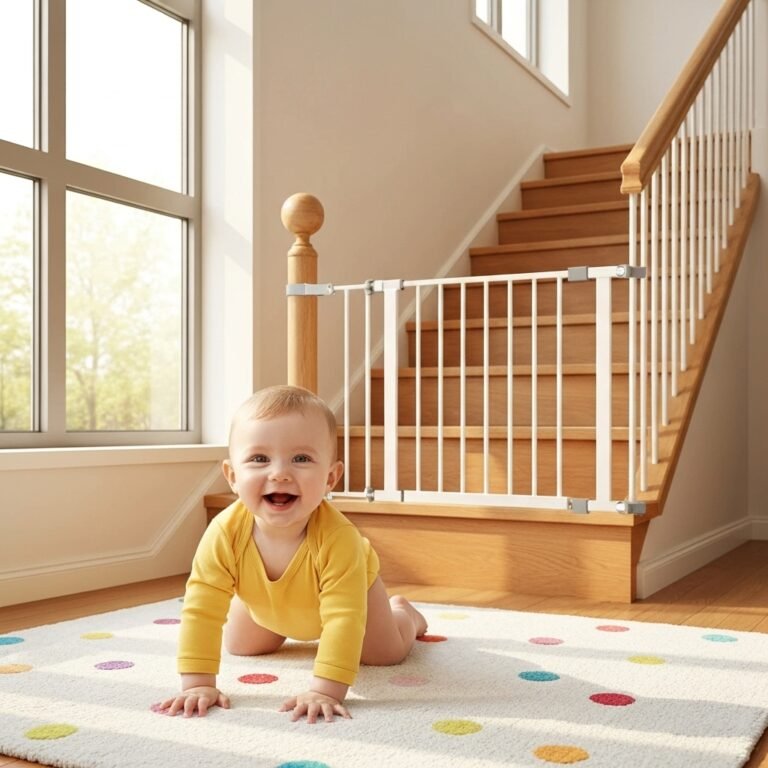
Safety Warning: Never, ever rely on a pressure-mounted gate to block off a fireplace. They are not secure enough and can be dislodged by a determined child, leading to a dangerous fall near the fire. Always choose a hardware-mounted gate for this area.
Beyond the Basics: Securing Tools and Taming the Firebox
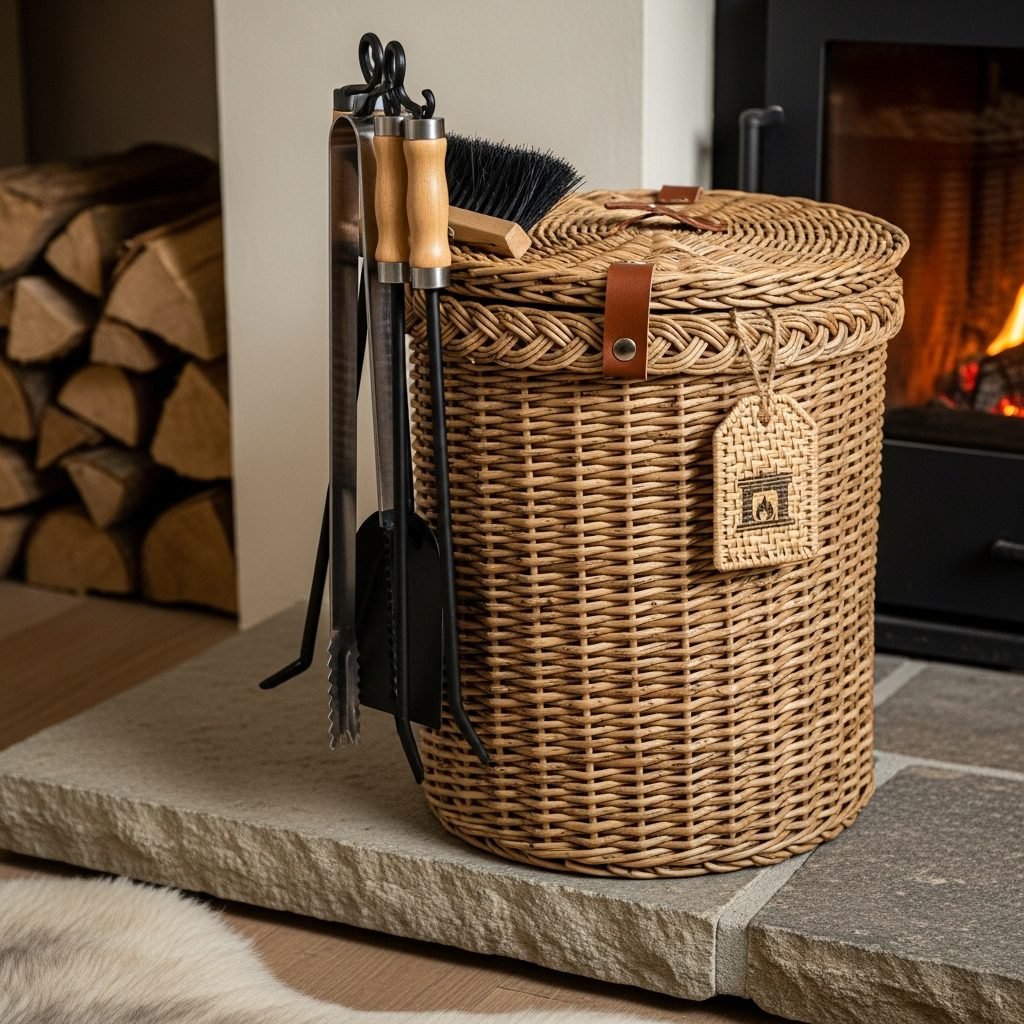
Once you’ve softened the edges and created a barrier, there are a few more details to consider. Babies are incredibly resourceful and will find the one thing you forgot to secure!
Tackling the Tools
Those classic fireplace tool sets—poker, tongs, shovel, and broom—are a huge hazard. They are heavy, often have sharp points, and are covered in soot that you don’t want in your baby’s mouth. The solution is simple: move them.
- Out of Sight, Out of Mind: The best place for them is in a locked closet or a high-up shelf in the garage. If you use your fireplace regularly and need them handy, consider a sturdy, lidded hearth box or a decorative basket with a heavy lid that your baby can’t open.
Managing the Firebox
When the fireplace isn’t in use, the firebox is a dark, fascinating cave just waiting to be explored. And it’s often filled with soot, ash, and splinters.
- Glass Door Locks: If you have glass doors, get a simple latch lock to keep them from being opened. You can find these at any hardware or baby-proofing store.
- Gas Fireplace Safety: For gas fireplaces, the little key that turns on the gas is a major hazard. Keep that key in a completely separate, hidden location your child will never find. Also, be aware that the glass front of a gas fireplace can get dangerously hot in an instant and stay hot long after it’s turned off. A gate is essential for gas fireplaces.
DIY vs. Store-Bought: What’s Right for Your Family?
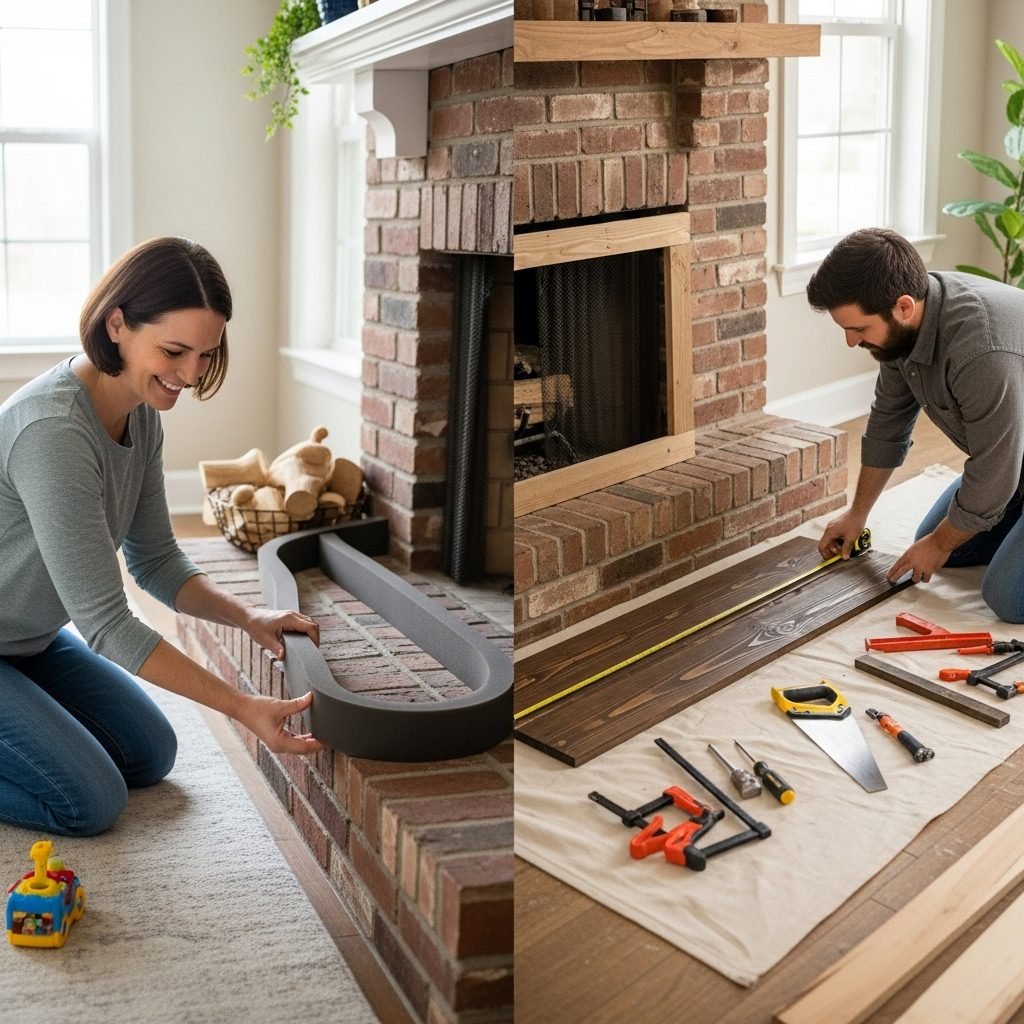
Now that you know the types of solutions available, you might be wondering whether to buy a ready-made product or create a custom DIY solution. Both have their merits, and the best choice depends on your budget, your fireplace’s design, and how handy you are.
Let’s break down the pros and cons of each approach.
| Feature | Store-Bought Solutions | DIY Solutions |
|---|---|---|
| Safety | Professionally tested to meet safety standards. Clear instructions and warnings. | Safety depends entirely on your design, materials, and construction quality. |
| Installation | Generally quick and easy, often requiring minimal tools (e.g., adhesive strips, a drill for gates). | Can be complex and time-consuming. Requires measuring, cutting, and building. |
| Fit & Customization | Designed for standard fireplace sizes. May not work for unique or irregularly shaped hearths. | Can be perfectly customized to fit any fireplace, no matter how unusual. Total control over size and shape. |
| Aesthetics | Limited to the colors and styles available from manufacturers (though options are improving!). | Unlimited aesthetic potential. You can match your exact paint colors, wood stains, and fabrics. |
| Cost | Can range from inexpensive foam guards to pricey, high-end gates. | Cost varies widely based on materials. Can be a budget-friendly option if you use simple materials, or more expensive for custom woodwork. |
A DIY solution, like building a custom wooden cover that doubles as a bench seat, can be a fantastic and beautiful option if you have the skills. However, for most new parents who are short on time and energy, a high-quality, certified store-bought product offers the best combination of safety and convenience.
A Style-Savvy Parent’s Guide to Blending Safety and Decor
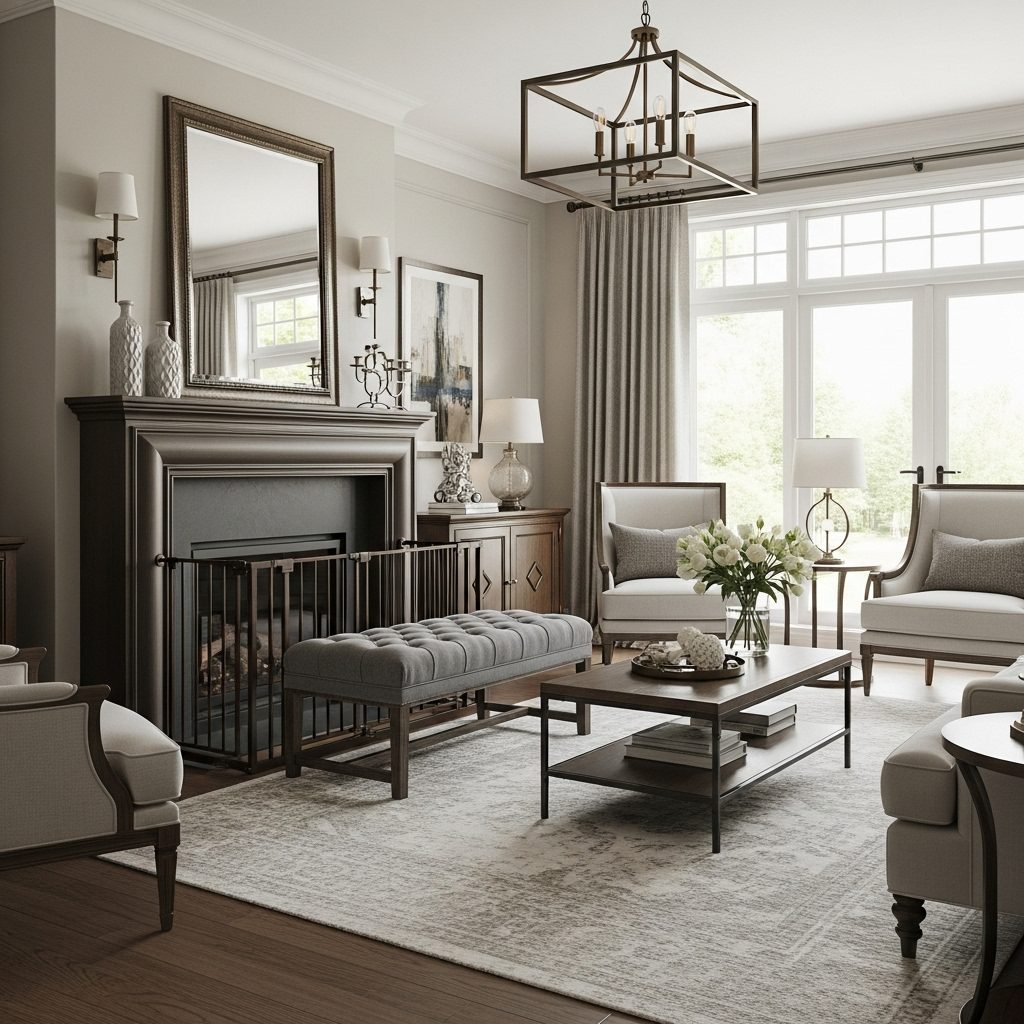
Okay, let’s get to the fun part! Baby proofing doesn’t have to be an eyesore. With a little creativity, you can integrate these safety measures so seamlessly that they actually enhance your decor.
Choose Complementary Colors
This is the easiest trick in the book. Instead of grabbing the first beige foam guard you see, take a moment to consider your room’s palette.
- For a dark brick or stone fireplace, a charcoal gray or black foam guard will virtually disappear.
- For a white-painted brick or marble mantel, a crisp white or soft gray option will blend right in.
- Look for metal gates in finishes like oil-rubbed bronze or matte black to match your light fixtures or other hardware in the room.
Think Multi-Function
The best decor is both beautiful and functional. Why not apply that to baby proofing?
- The Hearth Bench: A popular DIY project is to build a simple, sturdy, upholstered bench that fits perfectly over the hearth. It completely covers the hard surface and provides extra seating! Just make sure it’s easily removable for when you want to use the fireplace.
- Decorative Covers: When the fireplace is out of commission (hello, summer!), you can use a beautiful decorative screen to block the firebox. Think pierced metal, a custom-cut piece of chalkboard for the kids, or even a faux stack of birch logs that are too large for a baby to move.
Embrace the Gate
Instead of seeing the gate as a cage, think of it as a piece of architectural detail. A well-designed, modern metal gate can define the fireplace area, creating a cozy and intentional focal point. Arrange your furniture to honor the new boundary, and it will feel less like a barrier and more like part of the room’s design.
Conclusion
There you have it. Your fireplace, once a source of anxiety, can once again be a source of warmth and comfort for your family. By focusing on the three key areas—softening the hearth, blocking access with a gate, and securing tools—you can create multiple layers of protection for your little one.
Remember, this stage of intense supervision and wobbly first steps is temporary. You’re not ruining your home forever; you’re just lovingly adapting it for this precious, fleeting season of life. Give yourself a pat on the back. Creating a safe and beautiful space for your baby to grow and explore is one of the best things you can do as a parent. You’ve got this!